Pope Leo Draws 800,000 to Paris in Historic Open-Air Mass, Issuing Dire Warning on AI and a ‘Paradise of Machines’
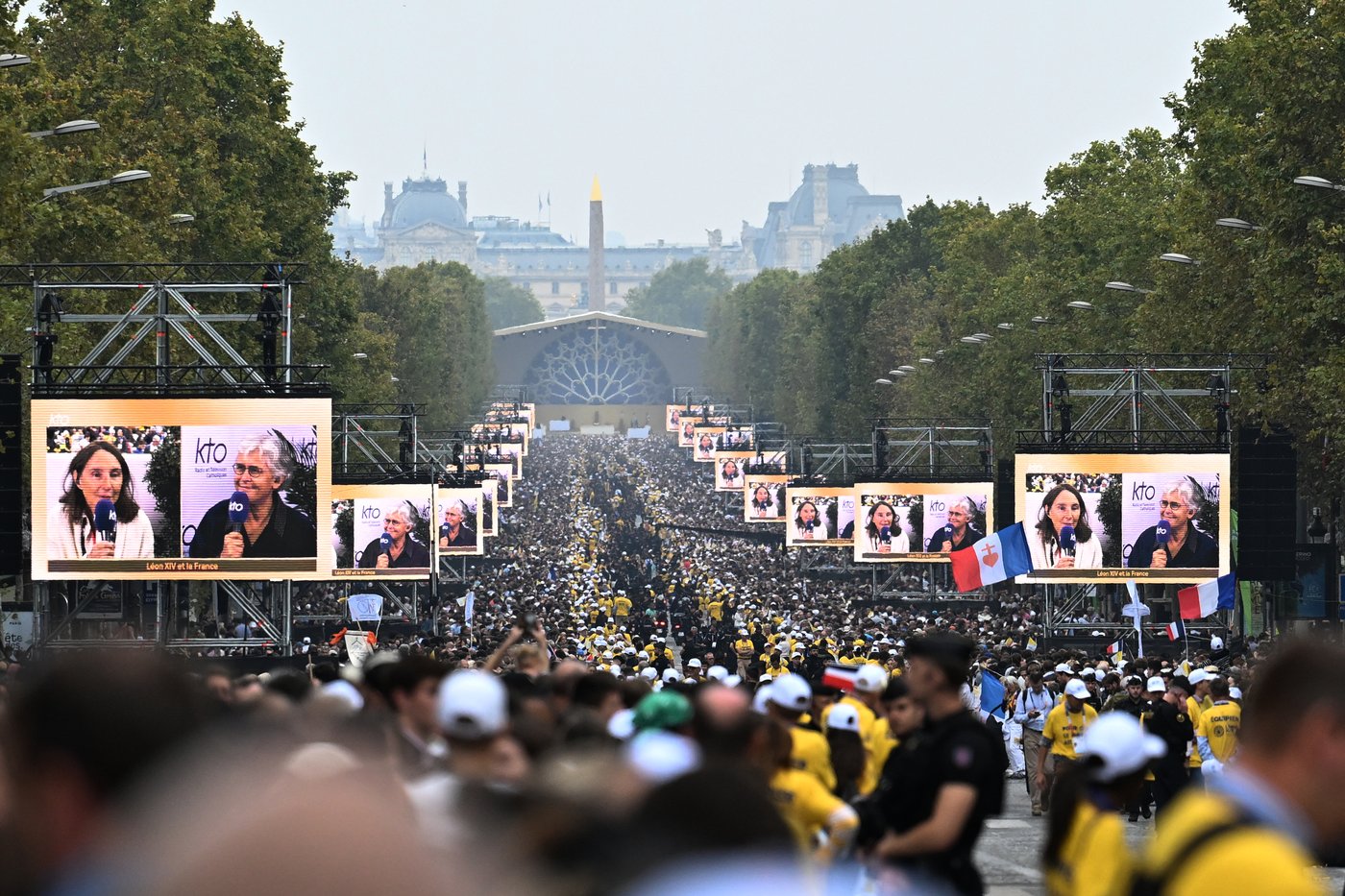
PARIS — In one of the largest public assemblies witnessed in modern European history, Pope Leo drew an estimated 800,000 faithful, global dignitaries, and onlookers to central Paris on Sunday for an unprecedented open-air Mass. Against the sweeping architectural backdrop of the French capital, the Pontiff delivered a blistering, philosophically charged homily that directly targeted the tech era, warning that a seductive “paradise of machines” risks hollowing out human dignity and fracturing global society.
The monumental liturgy transformed the heart of Paris—spanning from the historic Place de la Concorde along the grand avenues of the Seine—into a sprawling cathedral under open skies. The sheer scale of the gathering paralyzed traffic across the city’s central arrondissements, requiring a massive security operation of more than 15,000 police officers and gendarmes. Yet, while the assembly underscored the enduring mobilizing power of the Holy See, the substance of the Pope’s address resonated far beyond traditional theological boundaries, landing directly in the corridors of tech hubs and regulatory capitals.
The Warning: When Algorithmic Efficiency Replaces the Soul
At the center of the Pontiff’s 35-minute homily was a stark appraisal of the global race toward autonomous systems, artificial intelligence, and unbridled digital consumption. Speaking in deliberate French from an elevated, white-canopied altar, Pope Leo cautioned that civilization stands at an existential crossroads where technical mastery threatens to outpace moral stewardship.
“We are constructing, with dazzling speed, a paradise of machines,” Pope Leo proclaimed to a crowd standing in hushed silence. “A world where calculations replace contemplation, where efficiency is crowned king, and where algorithms claim to measure the value of a human soul. But a paradise devoid of human fraternity, where the vulnerable are discarded by automated metrics, is no paradise at all. It is a gilded exile.”
The remarks represent the Vatican’s most aggressive philosophical offensive yet against Silicon Valley and European tech ambitions. Rather than dismissing technological innovation outright, the Pontiff drew an urgent distinction between tools that dignify labor and autonomous frameworks that commodify human existence. He explicitly implored global leaders, executives, and software architects to establish non-negotiable ethical red lines, arguing that the true measure of progress is not the sophistication of neural networks, but how society protects those whom automation threatens to leave behind.
Executive Summary: The Paris Mass at a Glance
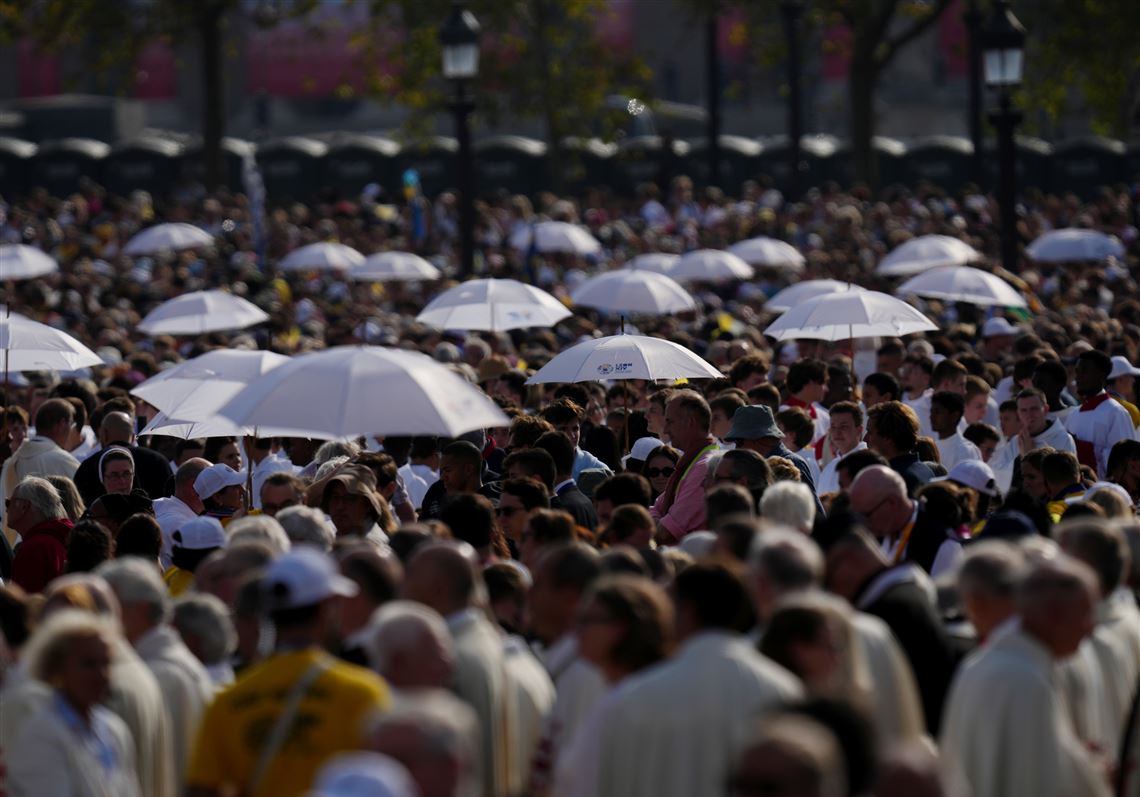
- Historic Turnout: Over 800,000 pilgrims and visitors congregated in central Paris, marking the largest religious gathering in France in decades.
- The “Paradise of Machines” Doctrine: Pope Leo issued a forceful caution against hyper-reliance on artificial intelligence, warning that technological sovereignty cannot come at the expense of human empathy and moral discernment.
- Geopolitical Crossroads: Delivered amid escalating international tensions—including intensifying aerial strikes in the Russia-Ukraine theater—the Pontiff juxtaposed the march of mechanized warfare with the erosion of ethical diplomacy.
- Economic & Regulatory Pressure: The address provides immediate moral capital to European Union policymakers advancing stringent AI regulations, placing Vatican influence squarely into the debate over digital governance.
A Moral Counterweight to Geopolitical Volatility
The papal liturgy unfolded against a somber international backdrop. As news wires reported escalating aerial exchanges between Russia and Ukraine leaving dozens dead, the Pope directly woven references to mechanized destruction into his liturgical prayers. Leo highlighted that the same detached, algorithmic logic transforming consumer commerce is increasingly governing modern warfare, remote-strike technology, and international defense strategies.
Seated in the front rows was a heavyweight delegation of European heads of state, corporate leaders, and international diplomats. For French President Emmanuel Macron and European Union observers in attendance, the homily arrived at a delicate political juncture. European regulators in Brussels are currently grappling with the implementation of comprehensive artificial intelligence standards, balancing the desire to nurture domestic tech giants against mounting concerns regarding privacy, labor displacement, and systemic algorithmic bias.
“The Holy Father is articulating what many capital allocators and policymakers privately fear,” noted a senior European financial delegate on site. “The rapid financialization and deployment of generative systems has created an economic engine operating largely without an ethical compass. Having 800,000 citizens hear this critique in the public square creates a formidable political reality.”
Event Logistics & Security Overview
| Metric / Category | Operational Details | Strategic Significance |
|---|---|---|
| Estimated Attendance | 800,000+ | Largest single public gathering in central Paris since the 1998 World Cup victory. |
| Security Deployment | 15,500 Interior Ministry personnel | Highest-tier anti-drone, perimeter, and counter-terrorism readiness deployed. |
| Core Theme | Ethics of AI & Human Dignity | Direct intervention into Western technological and economic development models. |
| Diplomatic Presence | 40+ International delegations | Underscores Holy See’s ambition to anchor global AI regulatory frameworks. |
The Horizon: A Papal Challenge to Silicon Valley and Brussels
As the final chords of the choir echoed down the Seine and the massive crowd began dispersing into the Parisian afternoon, market analysts and institutional watchers were left to parse the broader ramifications of the Pontiff’s platform. The Vatican has increasingly signaled its desire to position itself as the preeminent neutral arbiter in the global debate over technological ethics, filling a vacuum left by fragmented multilateral institutions.
Pope Leo’s characterization of an uncritical tech adoption as an existential hazard suggests the Church will aggressively mobilize its diplomatic corps and educational networks to counter tech hegemony. For investors, software architects, and political leaders, the message delivered from central Paris was unmistakable: the era of unchecked technological optimism without profound moral accountability has officially closed.
Frequently Asked Questions
Why did Pope Leo choose Paris to deliver this landmark critique of technology?
Paris represents both the intellectual crucible of European humanism and a leading hub for the European Union's contemporary tech ecosystem and AI research. By addressing hundreds of thousands in central Paris, the Pope directly challenged Western secular technocracy on its own philosophical home turf, amplifying his call for regulatory and ethical vigilance across the continent.
How does the Pope's warning affect ongoing artificial intelligence policy?
The Pontiff's warning of a "paradise of machines" provides significant moral and rhetorical backing to proponents of rigorous AI governance. As the EU rolls out the AI Act and American lawmakers debate federal oversight, the Vatican's intervention reframes technological regulation not merely as an economic or competitive issue, but as a critical safeguard for fundamental human rights and social cohesion.