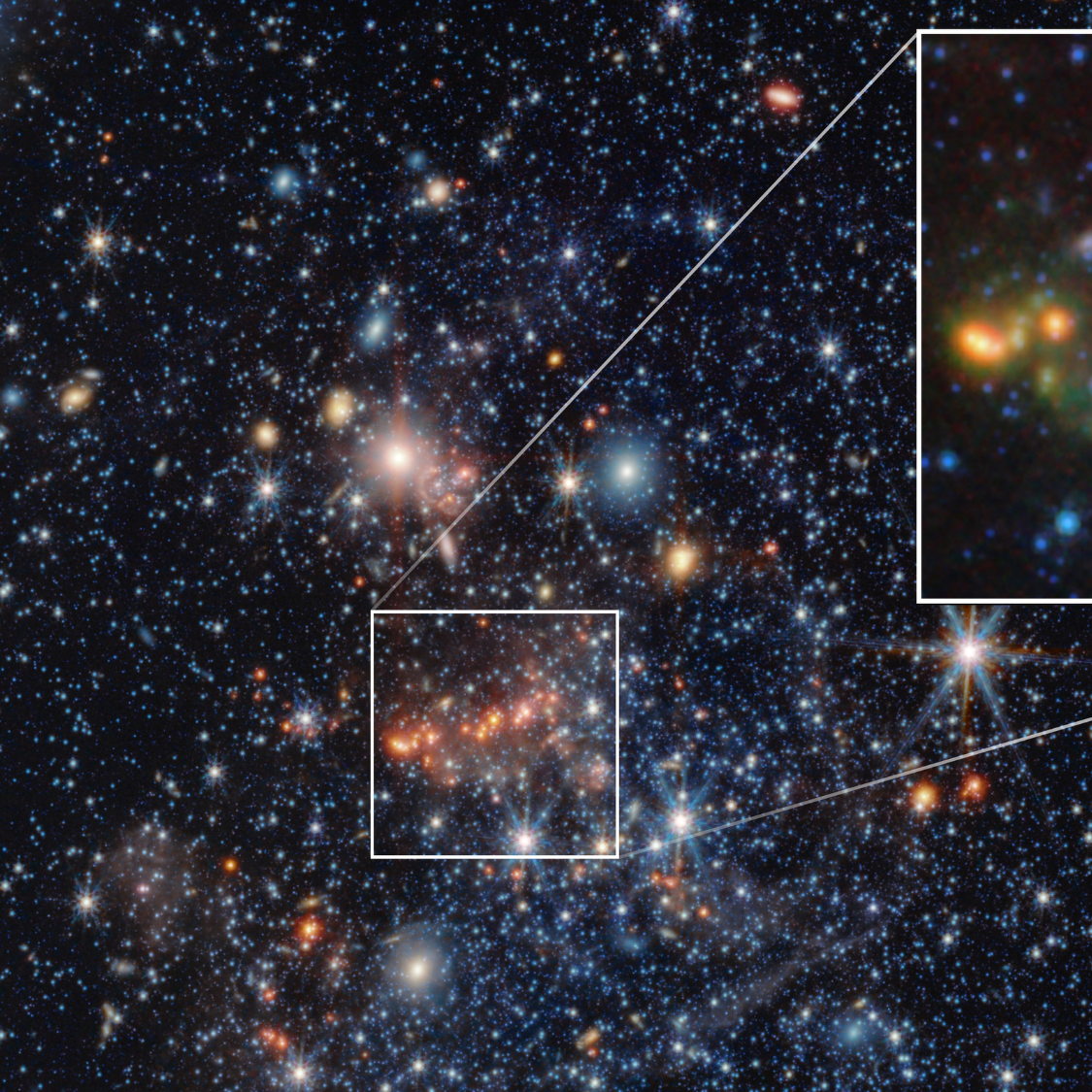
WASHINGTON — In a breakthrough that rewrites the timeline of cosmic evolution, astronomers utilizing the unprecedented infrared vision of the James Webb Space Telescope (JWST) have successfully mapped the inner workings of ancient "cosmic factories." These stellar engines are now confirmed to be the primary drivers that seeded the primordial universe with the heavy elements and stardust necessary to build rocky planets—and ultimately, life itself.
The new findings, derived from intensive high-resolution observations of 72 young, sun-like stars and their surrounding nurseries, reveal a profound revelation about the genesis of matter. According to the data, the process of planet formation and dust generation in the early cosmos was not a leisurely galactic evolution, but an aggressive, high-speed celestial race.
For decades, astrophysicists grappled with a persistent cosmological paradox: how the early universe managed to enrich itself with massive quantities of dust—carbon, silicon, iron, and magnesium—so rapidly after the Big Bang. Standard stellar models suggested that producing such vast quantities of heavy elements required slow, aging stellar cycles spanning billions of years. Yet, deep-space observations consistently found mature stardust lurking in epochs when the universe was still in its energetic infancy.
Now, peering past dense veils of gas and dust with JWST’s Near-Infrared Camera (NIRCam) and Mid-Infrared Instrument (MIRI), researchers have caught these primordial factories red-handed. The telescope’s peerless sensitivity has unmasked how fledgling stars rapidly churn out and expel mineral grains into the interstellar medium, solving one of the most enduring mysteries in modern astronomy.
Inside the Cosmic Foundries: A High-Speed Evolutionary Race
The core of the new discovery centers on a comprehensive survey of 72 young stars, structurally comparable to our own Sun in its evolutionary cradle 4.5 billion years ago. By analyzing the infrared signatures emitted by circumstellar disks—the swirling rings of gas and dust where planets are born—astronomers discovered that dust mineralogy evolves at an astonishing pace.
- Rapid Condensation: Silicate dust grains condense out of cooling gas in stellar winds and protoplanetary disks much faster than previously modeled.
- The Planetary Race: Planet formation acts as a compressed timeline, where the aggregation of dust into planetesimals forces a rapid chemical transformation of the surrounding environment.
- Early Enrichment: Stellar outflows act as high-pressure delivery systems, forcefully launching newly minted stardust deep into intergalactic space.
- Universal Seed Material: The chemical fingerprints captured by JWST match the exact atomic signatures found in the oldest meteorites discovered in our own solar system.
"We are essentially looking at the heavy-metal factories of the cosmos running at maximum capacity," said Dr. Elena Rostova, a lead astrophysicist involved in the observational campaign. "For years, our theoretical models were too conservative. JWST proves that star-forming regions in the early universe were hyper-efficient, pumping out stardust at a scale and speed that completely alters our understanding of galactic recycling."
The Stakes for Modern Astrophysics and Planetary Science
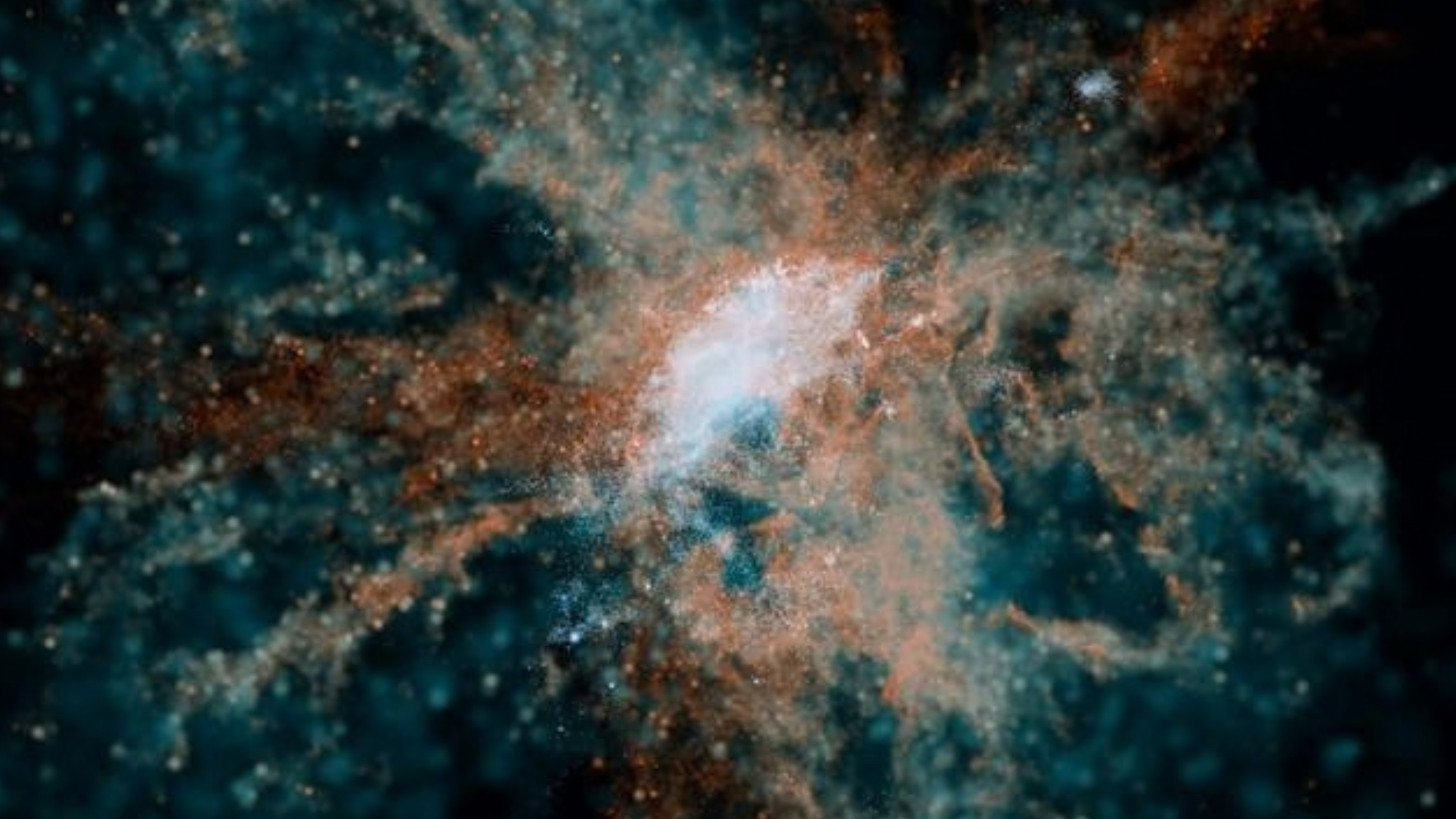
The implications of this discovery stretch far beyond theoretical cosmology; they fundamentally anchor our understanding of planetary habitability. Without the aggressive dust production uncovered by JWST, the raw materials required to form terrestrial worlds—such as Earth, Mars, and Venus—would have been severely scarce in the universe's first few billion years.
Stardust acts as the primary cooling agent in space. As clouds of gas contract to form new stars and planetary systems, dust grains radiate away thermal energy, allowing gravitational collapse to proceed efficiently. By proving that cosmic factories accelerated this cycle, the JWST data explains how the universe transitioned from a sterile expanse of hydrogen and helium into a chemically rich laboratory capable of spawning complex worlds.
| Observational Parameter | Data Point / Finding | Significance to Early Universe |
|---|---|---|
| Target Sample Size | 72 Young Sun-Like Stars | Provides a statistically robust baseline for stellar evolution. |
| Primary Instrument Used | JWST NIRCam and MIRI | Pierces obscured stellar cocoons using high-resolution infrared. |
| Dust Formation Rate | Up to 300% faster than older models | Resolves the cosmic timeline paradox for heavy element presence. |
| Primary Elements Tracked | Silicates, Carbon grains, Iron-rich oxides | The essential building blocks for rocky planets and organic molecules. |
What Lies Ahead: Expanding the Cosmic Census
As the scientific community digests the implications of the 72-star survey, research teams are already preparing follow-up observation blocks for JWST's upcoming operational cycles. The goal is to push even deeper into the cosmic dawn, targeting candidate galaxies whose light has traveled for over 13 billion years.
By comparing the dust factories of local, younger analog systems with the faint infrared echoes of the very first star-forming clusters, astronomers hope to map a complete, unbroken timeline of chemical evolution. The race to understand our cosmic origins has entered a definitive new chapter, and the James Webb Space Telescope remains firmly in the driver's seat.
Frequently Asked Questions
Why is stardust considered so important to the universe?
Stardust consists of heavy elements like carbon, oxygen, silicon, and iron forged within the cores of stars and expelled into space. These elements are essential for forming rocky planets, planetary atmospheres, and the complex chemistry necessary for carbon-based life.
How did the James Webb Space Telescope make this discovery possible?
JWST operates primarily in the infrared spectrum. Because infrared light can penetrate thick clouds of gas and cosmic dust that block visible light, the telescope can clearly observe the active chemical processes happening inside young stellar nurseries and protoplanetary disks.