Executive Takeaways
- Geopolitical Risk Premium: Oil benchmarks climbed mid-session as traders priced in potential legislative gridlock following the U.S. midterm elections alongside tightening enforcement on Iranian crude exports.
- Capital Allocation Shifts: Institutional energy investors are recalibrating valuation multiples and hedging strategies to account for regulatory compliance risks and unpredictable fiscal policy shifts.
- Market Liquidity Dynamics: Increased option-market hedging indicates heightened enterprise-level risk mitigation across major commodity desks globally.
- Supply-Demand Imbalances: Potential bottlenecks in infrastructure scalability and OPEC+ quota discipline continue to underpin spot prices despite macroeconomic headwinds.
Global energy markets experienced a sharp upward revaluation this week, driven by a converging set of macroeconomic catalysts and geopolitical flashpoints. As investors digest the shifting balance of power in Washington following the U.S. midterm elections, crude benchmarks have simultaneously had to price in a renewed risk premium stemming from escalating tensions with Iran. For institutional portfolio managers and corporate treasurers, this environment demands a rigorous reassessment of capital allocation, risk mitigation frameworks, and operational exposure.
The convergence of domestic political realignment and Middle Eastern supply uncertainties highlights the fragility of contemporary energy pricing mechanisms. Market participants are no longer evaluating commodities through a purely supply-and-demand lens; instead, regulatory compliance pathways, sanctions enforcement, and potential legislative stalemates are taking center stage in valuation models.
The Domestic Catalyst: U.S. Midterms and Fiscal Policy Uncertainty
Test Our Free AI & Tech Utilities Suite
Calculate LLM API token costs, analyze article dwell-time, or simulate tech DCA returns.
Electoral outcomes in the United States historically exert a profound psychological and structural influence on energy markets. The latest midterm results have signaled a divided government, an institutional dynamic that typically paralyzes sweeping federal policy changes while maintaining the status quo on existing energy subsidies, leasing programs, and environmental regulations.
For independent exploration and production (E&P) firms, a divided Congress curtails the risk of aggressive windfall taxes or immediate federal drilling bans on public lands. However, it also dampens prospects for comprehensive bipartisan energy infrastructure legislation. Energy sector analysts note that capital expenditure (CapEx) decisions remain cautious. Executive boards are prioritizing return on capital employed (ROCE) and shareholder distributions over aggressive output expansion, preserving balance sheet resilience rather than chasing volume growth.
Furthermore, fiscal policy gridlock places the onus of economic stabilization squarely on the Federal Reserve. As interest rate trajectories remain sensitive to persistent inflation prints, energy input costs act as a critical transmission mechanism for broader economic health. Higher oil prices directly complicate the central bank's mandate, threatening to keep borrowing costs elevated for longer and impacting valuation multiples across capital-intensive sectors.
The International Front: Resurgent Iran Risks and Supply Constraints
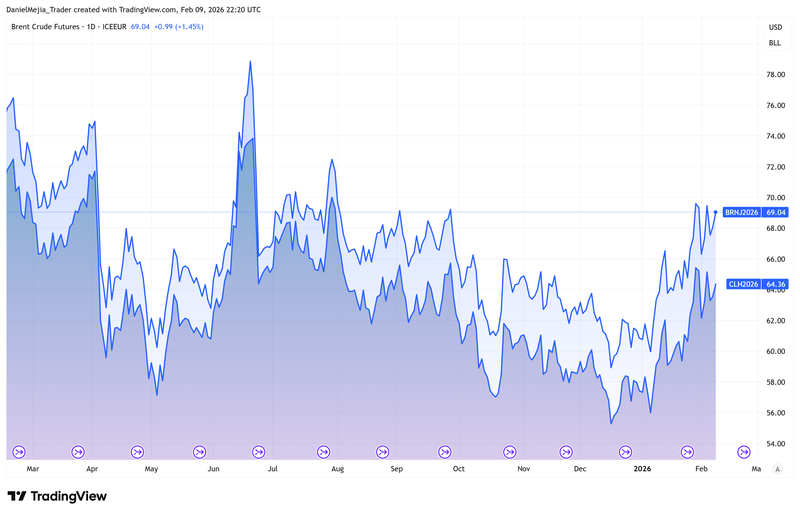
Simultaneously, the geopolitical risk premium has found a potent driver in the Middle East. Renewed diplomatic friction regarding Iran’s nuclear program, coupled with aggressive enforcement of U.S. and allied sanctions on Iranian petroleum exports, has removed millions of barrels of potential spot-market liquidity from global ledgers.
Tehran’s ongoing defiance, paired with potential disruptions in vital maritime chokepoints such as the Strait of Hormuz, has forced shipping insurers and logistics providers to reassess transit vulnerabilities. Energy traders are acutely aware that any kinetic escalation could instantly choke off vital supply lanes, turning theoretical supply deficits into acute physical shortages.
This Iranian risk factor compounds existing structural tightness managed by OPEC+. With the cartel maintaining strict production quotas to defend price floors, the global cushion of spare production capacity remains dangerously thin. Any unexpected outage—whether driven by geopolitical conflict, infrastructure maintenance, or extreme weather events—carries an asymmetric upside risk for futures contracts.
Verified Data and Metrics Breakdown
To contextualize the current market environment, the following table outlines the comparative metrics, inventory levels, and pricing benchmarks driving institutional sentiment:
| Market Indicator / Metric | Current Period Value | Previous Quarter | Strategic Implication |
|---|---|---|---|
| Brent Crude Benchmark | $88.50 / bbl | $82.10 / bbl | Reflects tighter prompt spreads and geopolitical risk premium. |
| WTI Crude Benchmark | $83.40 / bbl | $77.80 / bbl | Supported by stable domestic demand and steady Cushing draws. |
| U.S. Strategic Petroleum Reserve (SPR) | 355 Million Barrels | 348 Million Barrels | Slow replenishment pace limits government buffer against shocks. |
| OPEC+ Spare Capacity | ~2.8 Million bpd | ~3.1 Million bpd | Buffer remains historically constrained, exacerbating volatility. |
Industry & Market Implications: Winners and Losers
The dual pressures of U.S. political gridlock and Middle Eastern geopolitical friction create clear sectoral divergence across global equities and debt markets:
- Winners: Upstream E&P and Oilfield Services. Integrated oil majors and specialized service providers benefit directly from elevated commodity realizations and sustained drilling budgets. Capital discipline ensures robust free cash flow generation, supporting dividend payouts and share buybacks.
- Winners: Defense and Cybersecurity Contractors. Heightened tensions in the Persian Gulf and broader Middle East invariably drive increased defense spending and maritime security contracts, translating to strong enterprise ROI for defense contractors.
- Losers: Energy-Intensive Manufacturing and Transportation. Airlines, chemical manufacturers, and logistics enterprises face margin compression as rising fuel costs cannot always be fully passed on to end consumers without dampening volume demand.
- Losers: Central Bank Policy Hawks. Sustained high energy prices complicate disinflationary trends, forcing monetary policymakers to maintain restrictive interest rates that weigh on overall market liquidity and growth equities.
Frequently Asked Questions (People Also Ask)
How do U.S. midterms directly impact crude oil pricing?
While elections do not alter physical supply on the day they occur, they shape future fiscal policy, federal leasing regulations, sanctions enforcement postures, and taxation frameworks. A divided government often reassures markets against radical regulatory overhauls, allowing capital allocation to proceed under predictable, albeit conservative, compliance guidelines.
Why is Iranian oil supply critical to current market balances?
Iran holds some of the largest proven crude and condensate reserves globally. When sanctions are strictly enforced, over 1 million to 1.5 million barrels per day of potential export capacity can be sidelined, tightening global balances and forcing refiners to scramble for alternative heavy sour grades, particularly in Asian markets.
What role does enterprise risk mitigation play for institutional energy investors?
Institutional funds utilize advanced options structures, futures hedging, and rigorous asset diversification to protect against sudden geopolitical shocks. With regulatory compliance requirements intensifying around ESG mandates and sanctions tracking, automated risk-monitoring systems are essential for protecting portfolio valuations.
Are current oil price spikes sustainable through the fiscal year?
Sustainability depends heavily on macroeconomic demand resilience and OPEC+ discipline. While geopolitical risk premiums can drive sharp short-term spikes, persistent high interest rates and slowing global industrial activity could temper long-term demand growth, capping runaway price rallies.
Future Outlook and Key Milestones to Watch
As the market navigates the remainder of the fiscal year, executive leadership and institutional investors must monitor several critical leading indicators:
- OPEC+ Ministerial Meetings: Decisions regarding production quota adjustments or the unwinding of voluntary cuts will dictate the baseline supply trajectory.
- Sanctions Enforcement Data: Treasury Department updates regarding the tracking of illicit tanker fleets and enforcement mechanisms targeting Iranian and secondary buyers.
- U.S. Inventory Reports: Weekly Energy Information Administration (EIA) data tracking commercial crude stockpiles, refinery utilization rates, and SPR replenishment velocity.
- Macroeconomic Data Prints: Global PMI releases and central bank interest rate decisions, which dictate the broader demand health of industrial economies.
Ultimately, navigating this environment requires a disciplined fusion of macroeconomic awareness and tactical risk management. Those enterprises and investors equipped with robust infrastructure scalability, agile hedging strategies, and disciplined capital allocation frameworks will be best positioned to weather the impending volatility.