Executive Takeaways
- The Structural Split: CVS Health is actively preparing to decouple its pharmacy benefit management (PBM) and retail storefront divisions from its Aetna insurance arm, reversing a multi-decade industry consolidation trend.
- Market Reaction: Wall Street delivered an immediate punishing verdict, sending CVS shares tumbling as institutional investors reprice the conglomerate's valuation multiples and evaluate execution risk.
- Strategic Catalyst: Unrelenting regulatory compliance pressures, margin compression in retail pharmacy, and soaring medical loss ratios (MLR) inside the insurance enterprise forced the board's hand.
- Enterprise ROI & Capital Allocation: The impending restructuring forces a total overhaul of infrastructure scalability, asset liquidity, and risk mitigation strategies across the healthcare supply chain.
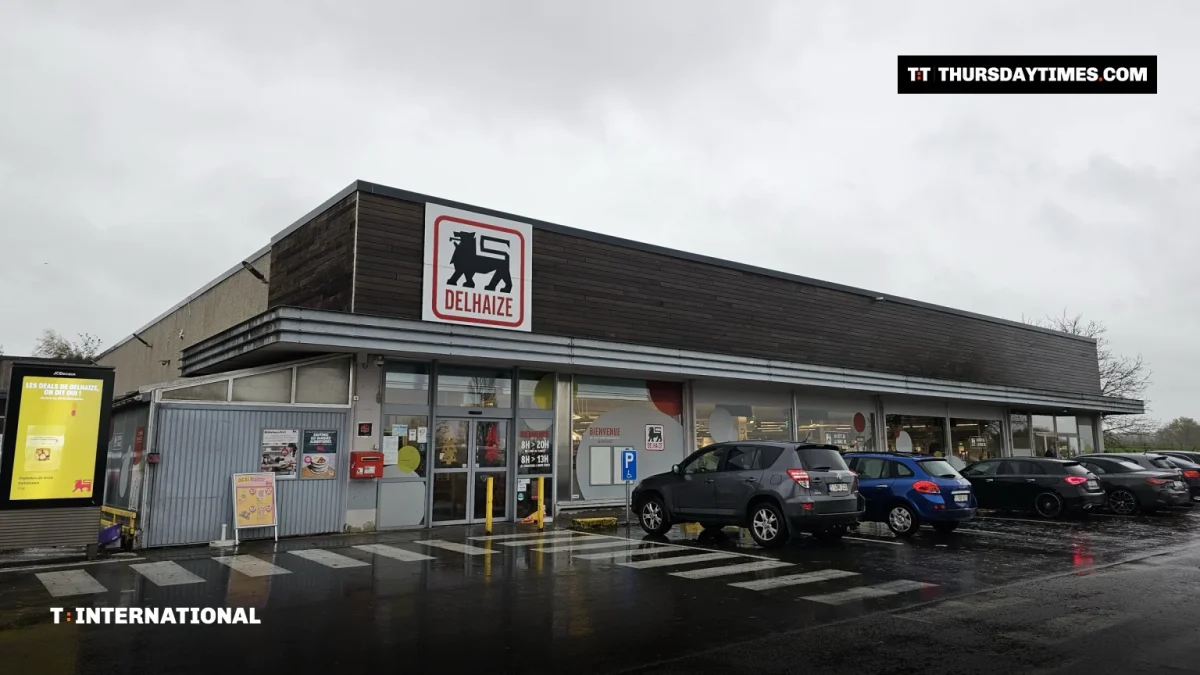
NEW YORK — In what marks one of the most seismic corporate unbundling events in modern American business history, CVS Health is moving to break up its $117 billion enterprise. The strategic pivot will systematically separate its massive retail pharmacy and pharmacy benefit management (PBM) operations from its insurance powerhouse, Aetna. The announcement has sent shockwaves across global capital markets, triggering an aggressive sell-off that highlights deep investor anxiety over the future viability of the modern healthcare conglomerate model.
For years, Wall Street analysts and industry titans championed vertical integration as the ultimate defense against margin erosion. The thesis was simple: combine the insurer, the pharmacy benefit manager, and the physical point of sale into a single closed loop to capture every dollar of the healthcare consumer’s journey. However, mounting operational friction, unprecedented regulatory scrutiny from the Federal Trade Commission (FTC), and compounding macroeconomic headwinds have rendered that thesis obsolete. Today, the board’s capitulation signals that the leviathan has simply become too complex to manage, too inefficient to defend, and too heavily penalized by the market.
The Anatomy of a Corporate Unbundling: From Conglomerate Synergy to Strategic Dismantling
Test Our Free AI & Tech Utilities Suite
Calculate LLM API token costs, analyze article dwell-time, or simulate tech DCA returns.
To understand the magnitude of this divorce, one must examine the ambitious blueprint that brought CVS and Aetna together in the first place. When CVS Health finalized its $69 billion acquisition of Aetna in 2018, the narrative centered on enterprise ROI and ecosystem dominance. Executives promised an era of localized health hubs, seamless chronic disease management, and optimized drug pricing structures. Yet, operational reality proved far more intractable than PowerPoint projections.
Over the past twenty-four months, the conglomerate has faced a brutal convergence of systemic stressors. On the insurance side, Aetna has wrestled with escalating utilization trends—particularly among Medicare Advantage populations—that pushed medical loss ratios to unsustainable levels. Concurrently, the CVS Caremark PBM division has found itself caught in the crosshairs of aggressive legislative and regulatory inquiries targeting spread pricing, rebate management, and anti-competitive practices. Meanwhile, the retail pharmacy storefronts have absorbed continuous body blows from declining generic reimbursement rates, persistent retail theft, and labor shortages.
This structural friction created a profound valuation penalty. Institutional asset managers increasingly refused to value the combined entity at premium multiples, applying a persistent conglomerate discount that eroded shareholder value. By initiating a separation, CVS leadership is executing a high-stakes play to unlock hidden asset value, streamline regulatory compliance, and restore market liquidity.
Financial Impact and Market Liquidity: Why Shares Plunged

Wall Street’s immediate reaction was swift and unforgiving. As news of the impending breakup leaked into trading terminals, CVS shares dropped sharply, reflecting acute investor apprehension regarding execution risk, debt reallocations, and potential tax liabilities associated with a tax-free spin-off.
Managing a portfolio of this scale requires delicate capital allocation. When a company with $117 billion in baseline revenue fractures its core operating units, the immediate impact on free cash flow and credit ratings creates short-term volatility. Bondholders and credit rating agencies immediately placed CVS under review, evaluating how existing debt loads will be apportioned between the newly independent entities. Will the legacy retail-PBM business retain the bulk of the leverage, or will Aetna absorb its proportionate share of corporate obligations? These questions are currently driving algorithmic sell programs and defensive positioning among institutional equity holders.
| Metric / Dimension | Pre-Split Conglomerate (CVS Health) | Post-Split Entity A (Retail / PBM) | Post-Split Entity B (Aetna Insurance) |
|---|---|---|---|
| Core Revenue Baseline | ~$322 Billion (Consolidated) | ~$170+ Billion (Retail & Caremark) | ~$100+ Billion (Aetna Health) |
| Valuation Focus | Conglomerate Discounted Multiple | Retail Efficiency & Volume Yields | Medical Loss Ratios & Enrollment Growth |
| Regulatory Exposure | High (FTC, DOJ, PBM Transparency) | Moderate (Retail Labor & Antitrust) | High (CMS, ACA, Insurance Mandates) |
| Cloud & IT Architecture | Monolithic, Highly Integrated | Decoupled Supply Chain & POS Systems | Secure Health-Data Cloud Infrastructure |
Industry & Market Implications: Who Wins, Who Loses?
The disintegration of the CVS-Aetna axis signals a watershed moment for the broader healthcare ecosystem. For decades, the prevailing economic theory suggested that scale was the ultimate antidote to rising healthcare costs. Competitors such as UnitedHealth Group (with Optum) and Cigna (with Express Scripts) built similar integrated behemoths. CVS's retreat forces every major player to re-evaluate their enterprise architecture and risk mitigation frameworks.
The Winners: Focused Operators and Nimble Competitors
Specialized, pure-play operators stand to gain significantly from this shift. Independent pharmacies, regional health plans, and standalone pharmacy benefit managers operating with transparent pricing models can position themselves as agile alternatives to bureaucratic giants. Furthermore, private equity firms specializing in healthcare infrastructure will likely scout undervalued assets spun off during the restructuring.
The Losers: Legacy Conglomerates and Debt Holders
Integrated giants that doubled down on closed-loop ecosystems now face heightened scrutiny. If CVS—with its immense capital reserves and physical footprint—could not make the vertical model generate acceptable risk-adjusted returns, competitors will struggle to convince skeptical regulators and investors that their own hybrid models are immune to similar structural decay. Additionally, existing bondholders face increased credit risk as balance sheets are bifurcated and cash flows are redirected to fund standalone operational independence.
Frequently Asked Questions (People Also Ask)
Why is CVS Health breaking up its business?
CVS Health is pursuing a separation of its pharmacy/PBM operations from its Aetna insurance unit to escape the persistent conglomerate valuation discount, alleviate mounting regulatory pressure from federal antitrust agencies, and resolve severe margin compression caused by rising medical utilization and declining retail pharmacy reimbursements.
How will the separation impact existing CVS shareholders and stock price?
The announcement triggered immediate downward pressure on CVS shares due to short-term execution uncertainty, restructuring costs, and debt reallocations. Over the long term, management intends for the spin-off to unlock trapped equity value, allowing investors to value the retail/PBM business and the insurance business independently at appropriate sector multiples.
What happens to Aetna insurance and CVS Caremark PBM after the split?
Both entities are expected to operate as fully independent, publicly traded corporations (or pursue distinct strategic pathways). While they may maintain commercial partnerships, their corporate governance, financial reporting, and capital allocation strategies will be entirely decoupled, allowing each entity to focus exclusively on its core competencies.
Is vertical integration in healthcare officially dead?
While CVS’s retreat marks a massive blow to the integrated healthcare model, it does not spell total extinction. Competitors like UnitedHealth Group continue to operate integrated delivery and financing systems. However, the move proves that vertical integration is not a guaranteed success and requires flawless operational execution to survive intense regulatory and financial headwinds.
Future Outlook: Strategic Milestones to Watch
As CVS Health navigates this historic restructuring, institutional investors and industry observers must monitor several critical operational milestones over the next 12 to 18 months:
- Tax-Free Spin-Off Structure: Watch for official filings detailing whether the separation will execute via a tax-free distribution of shares to existing stockholders or through a partial monetization event.
- Debt Apportionment & Credit Ratings: Analyze rating agency responses (S&P, Moody's, Fitch) regarding how the $117+ billion enterprise's debt load is partitioned between the newly independent entities.
- IT & Cloud Infrastructure Decoupling: The technical separation of massive data repositories—including patient health records, claims processing engines, and supply chain logistics platforms—will require sophisticated cloud compute architecture and robust cybersecurity risk mitigation.
- <Regulatory Sign-Offs: While a voluntary corporate breakup faces fewer antitrust hurdles than a merger, federal and state insurance commissioners must still approve the restructuring of Aetna’s regulatory licenses.
The dismantling of the CVS-Aetna conglomerate closes a defining chapter in modern corporate healthcare. As the dust settles on Wall Street, the ultimate verdict will depend entirely on execution: whether separate, focused management teams can generate superior enterprise ROI on their own than they ever could together.