EXCLUSIVE: Global Cyber Alliance Crushes P2PInfected Botnet, Liberating 1.3 Million Devices from a Covert Proxy Empire
Test Our Free AI & Tech Utilities Suite
Calculate LLM API token costs, analyze article dwell-time, or simulate tech DCA returns.
Executive Takeaways
- A monumental, multi-firm cybersecurity operation, spearheaded by Google's Threat Analysis Group (TAG) and Mandiant, in collaboration with Lumen Technologies' Black Lotus Labs, Chainalysis, and other partners, has successfully dismantled the "P2PInfected" botnet, which silently hijacked over 1.3 million consumer Android TV boxes globally.
- Operating for years, P2PInfected transformed these devices into a vast, illicit proxy network, sold to cybercriminals for activities ranging from credential stuffing and ad fraud to anonymizing sophisticated attacks, generating significant untraceable revenue for its operators.
- The takedown involved intricate legal maneuvers and precise technical disruption, cutting off the botnet's command and control infrastructure and severing its financial lifelines, underscoring the critical importance of cross-industry risk mitigation and coordinated digital defense.
- This intervention sets a new precedent for proactive cyber offense against financially motivated botnet operations, highlighting the growing complexity and infrastructure scalability of cybercrime while demonstrating the potent collective power of tech giants and law enforcement in securing the digital ecosystem.
The Shadow Empire Unmasked: Anatomy of the P2PInfected Botnet
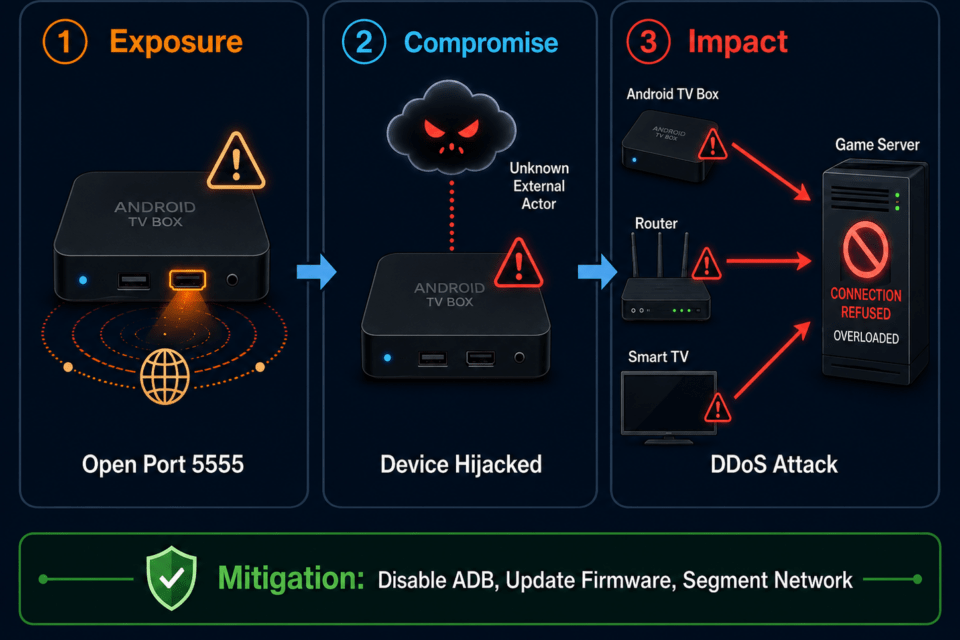
In a rare and coordinated global cyber offensive, a consortium of leading technology firms, cybersecurity experts, and law enforcement agencies has delivered a decisive blow to one of the internet's most pervasive and insidious threats: the P2PInfected botnet. For years, this sophisticated cybercriminal enterprise clandestinely co-opted over 1.3 million consumer-grade Android TV boxes, transforming these innocuous household devices into a sprawling, illicit proxy network. The operation, a testament to the evolving strategies in digital warfare, represents a significant victory against the shadowy economy of cybercrime.
At its core, P2PInfected leveraged a potent strain of malware distributed through compromised apps and firmware updates targeting low-cost, unbranded Android TV boxes. Once installed, the malware surreptitiously rooted the devices, granting its operators full administrative control. These compromised boxes then became nodes in a vast residential proxy network, offering cybercriminals a seemingly legitimate, untraceable digital footprint. This allowed them to launch a myriad of nefarious activities, from circumventing geo-restrictions and performing large-scale credential stuffing attacks against financial institutions and e-commerce platforms, to conducting extensive ad fraud schemes that bled millions from legitimate advertisers and publishers. The sheer scale provided by 1.3 million unique IP addresses offered an unparalleled level of anonymity and resilience, making traditional detection and blocking methods exceptionally challenging.
Sources close to the investigation reveal that the botnet's operators monetized this vast infrastructure by selling access to the proxy network on dark web forums and specialized underground services. This generated a substantial, highly liquid revenue stream, estimated to be in the tens of millions of dollars annually, enabling further investment in the botnet's infrastructure scalability and evasion techniques. The financial incentives were enormous, attracting a sophisticated criminal network adept at exploiting supply chain vulnerabilities in cheap electronics and maintaining complex command-and-control (C2) architectures across multiple jurisdictions.
Catalytic Events and the Global Counter-Offensive
The unraveling of P2PInfected began with discrete observations by threat intelligence teams across various organizations. Google's Threat Analysis Group (TAG) and Mandiant, known for their prowess in tracking state-sponsored and financially motivated threat actors, identified anomalous traffic patterns emanating from residential IP addresses linked to these specific TV boxes. Simultaneously, Lumen Technologies' Black Lotus Labs, renowned for its global network visibility, was independently tracking a large-scale SOCKS5 proxy network that exhibited hallmarks of automated infection and exploitation.
The critical turning point was the convergence of these independent intelligence streams. By cross-referencing telemetry data, behavioral analyses, and malware reverse engineering, the consortium pieced together the full scope of the P2PInfected operation. Chainalysis provided crucial insights into the botnet's financial transactions, tracking cryptocurrency flows and uncovering the digital wallets used to launder the proceeds, thereby exposing the capital allocation strategies of the criminal enterprise.
The takedown operation itself was a masterclass in global cyber collaboration. It involved:
- **Infrastructure Disruption:** Identifying and seizing key command-and-control servers strategically located across various countries. This required intricate legal processes and coordination with international law enforcement bodies to ensure regulatory compliance.
- **Domain Sinkholing:** Rerouting traffic from compromised devices to controlled servers, effectively neutering the botnet's ability to receive new commands or update its malware.
- **Malware Analysis & Remediation:** Developing tools and methods to help device manufacturers and internet service providers (ISPs) identify and, where possible, cleanse infected devices.
- **Financial Interdiction:** Working with cryptocurrency exchanges and financial intelligence units to freeze or seize assets linked to the botnet operators, impacting their market liquidity and operational funding.
This multi-pronged approach not only disabled the botnet but also aimed to inflict significant economic damage on its operators, diminishing the enterprise ROI for future criminal ventures of this nature.
Verified Data / Metrics Breakdown
| Metric | Detail |
|---|---|
| Estimated Infected Devices | Over 1.3 Million Android TV Boxes |
| Primary Malware | P2PInfected (variants identified) |
| Operational Lifespan | Years (exact start date unclear, active since at least 2021) |
| Proxy Protocol Utilized | SOCKS5, HTTP/HTTPS |
| Estimated Annual Revenue for Operators | Tens of Millions of USD (via proxy service sales) |
| Key Collaborators in Takedown | Google (TAG, Mandiant), Lumen Technologies (Black Lotus Labs), Chainalysis, International Law Enforcement |
| Targeted Device Vulnerability | Supply chain compromise, unofficial firmware, malicious applications on unverified marketplaces |
Industry & Market Implications: Who Wins, Who Loses?
The takedown of the P2PInfected botnet sends a powerful message to the cybercriminal underworld. It signifies a collective shift towards more aggressive, coordinated, and proactive counter-cybercrime strategies. This is a clear win for cybersecurity firms, whose advanced threat intelligence platforms and collaborative frameworks proved instrumental. It also benefits legitimate businesses by reducing the attack surface for credential stuffing, ad fraud, and DDoS attacks, thus safeguarding their enterprise ROI and brand reputation.
However, the existence of such a massive botnet highlights persistent vulnerabilities in the global supply chain for consumer electronics. Manufacturers of low-cost Android TV boxes face increased scrutiny regarding their security practices and firmware integrity. This incident underscores the urgent need for enhanced due diligence and security audits throughout the product lifecycle, especially for devices connected to the internet. Consumers, often unaware their devices are compromised, bear the indirect cost through heightened security risks and potential data exposure. The incident may prompt calls for stronger regulatory compliance around IoT device security standards.
For the broader digital economy, this takedown improves overall trust and reduces friction. Financial institutions benefit from a decrease in automated fraud attempts, leading to lower operational costs and better resource allocation. Advertisers and publishers stand to regain millions lost to ad fraud, improving the efficacy and valuation multiples of digital ad spend. This collective action bolsters the overall resilience of global cloud compute architecture and internet infrastructure.
People Also Ask (FAQ)
How did the P2PInfected botnet specifically compromise consumer Android TV boxes?
The P2PInfected botnet typically gained control through a combination of supply chain compromises and unsuspecting users installing malicious applications. Many low-cost, unbranded Android TV boxes sold online or through informal channels arrive with pre-installed, unofficial firmware that contains backdoors or vulnerabilities. Additionally, users might inadvertently download compromised apps from unofficial app stores or links, which then exploit known Android vulnerabilities to gain root access. Once rooted, the P2PInfected malware establishes persistent control, turning the device into a SOCKS5 proxy without the owner's knowledge, effectively leveraging their residential IP address for illicit activities.
What are the tangible financial implications for businesses targeted by P2PInfected's proxy network?
Businesses faced significant financial implications from attacks launched via the P2PInfected proxy network. E-commerce sites and financial services were prime targets for credential stuffing, leading to account takeovers, fraudulent transactions, and customer data breaches. This resulted in direct financial losses, reputational damage, increased customer support costs, and heightened fraud detection expenses. Advertising platforms suffered from massive ad fraud, where bot-generated traffic consumed advertising budgets without delivering legitimate engagement, directly impacting enterprise ROI for marketing campaigns and skewing analytical data. The ability of the botnet to generate requests from residential IP addresses made these attacks particularly difficult to distinguish from legitimate user activity, escalating the risk mitigation efforts required by affected companies.
How can individuals protect their smart devices, especially Android TV boxes, from similar botnet threats?
Individuals can significantly reduce their risk by exercising caution and implementing best practices. Firstly, always purchase smart devices, including Android TV boxes, from reputable manufacturers and authorized retailers. Avoid generic or unbranded devices that may come with pre-installed unofficial or compromised firmware. Secondly, be vigilant about what you install: stick to official app stores (like Google Play Store for Android TV) and avoid sideloading apps from unknown sources. Regularly check for and apply official firmware and software updates provided by the manufacturer. Employ a robust network firewall and consider segregating IoT devices onto a separate network segment where possible. Finally, monitor your internet usage for unusual activity, as a compromised device might exhibit higher-than-normal data consumption.
What role did cryptocurrency analysis play in the takedown of P2PInfected?
Cryptocurrency analysis, spearheaded by firms like Chainalysis, played a pivotal role in mapping the financial architecture of the P2PInfected botnet. By tracing transactions on public blockchain ledgers, investigators were able to identify the digital wallets associated with the sale of proxy services and the laundering of illicit gains. This provided crucial intelligence into the operators' financial infrastructure, estimated revenue, and operational sustainability. The ability to follow the money trail allowed law enforcement and the consortium to target the economic incentives of the botnet, potentially leading to asset freezing and disrupting the criminals' ability to fund future operations, thereby impacting their market liquidity and long-term viability.
Future Outlook: A New Era of Cyber Warfare?
The P2PInfected takedown signals a critical evolution in the fight against cybercrime. It underscores the undeniable power of cross-sector collaboration – uniting threat intelligence, legal expertise, and technical prowess from private industry and government agencies. This collaborative blueprint is likely to become the standard for future high-impact operations against sophisticated, globally distributed cyber threats.
Looking ahead, the battleground will shift. As traditional botnet infrastructure becomes harder to maintain, cybercriminals will likely pivot towards more ephemeral and decentralized attack vectors, potentially leveraging emerging technologies like Web3 infrastructure or advanced peer-to-peer protocols that are more resistant to centralized takedowns. The pressure on device manufacturers to bolster their security by design will intensify, with increased calls for secure boot processes, regular patch management, and transparent supply chain audits. We anticipate further investment in AI-driven threat detection and automated response systems to keep pace with the evolving tactics of threat actors, impacting capital allocation decisions for cybersecurity budgets across the enterprise landscape.
Key milestones to watch include the legal repercussions for the P2PInfected operators, the development of new international frameworks for faster legal action against cybercrime, and the success of public awareness campaigns aimed at securing consumer IoT devices. This takedown is not merely the end of one botnet; it is a critical step in reshaping the defensive posture of the global digital economy, fostering a more resilient and secure environment for businesses and consumers alike.