Executive Takeaways
- Epigenetic Breakthrough: Researchers have successfully reconstructed the facial anatomy and skeletal phenotype of Denisovans using ancient DNA methylation patterns rather than complete fossil records.
- Distinctive Morphology: Unlike modern humans (*Homo sapiens*) or Neanderthals, Denisovans possessed a wider dental arcade, a pronounced cranial breadth, and a remarkably sloping forehead housing a forward-projecting jaw.
- Commercial & Scientific Capital: The methodologies driving this discovery unlock new paradigms in paleogenomics, setting the stage for advanced bioinformatics infrastructure scalability and biotech valuation multiples.
- Introgression Legacy: Traces of Denisovan DNA persist in modern indigenous populations across Oceania and Asia, directly influencing physiological traits ranging from high-altitude adaptation to immune system regulation.
For decades, one of the most compelling ghost lineages in paleoanthropology existed as little more than a genetic whisper. Discovered in 2010 within the freezing confines of Denisova Cave in the Altai Mountains of Siberia, the Denisovans were initially introduced to the scientific community through a microscopic haul: a single distal hand phalanx bone and a pair of extraordinarily large molars. For a long time, physical anthropologists faced a frustrating impasse. While high-coverage genome sequencing extracted from these fragments allowed geneticists to map their ancestry with breathtaking precision, the physical vessel—the actual phenotype, skeletal structure, and facial architecture of our archaic cousins—remained entirely unknown.
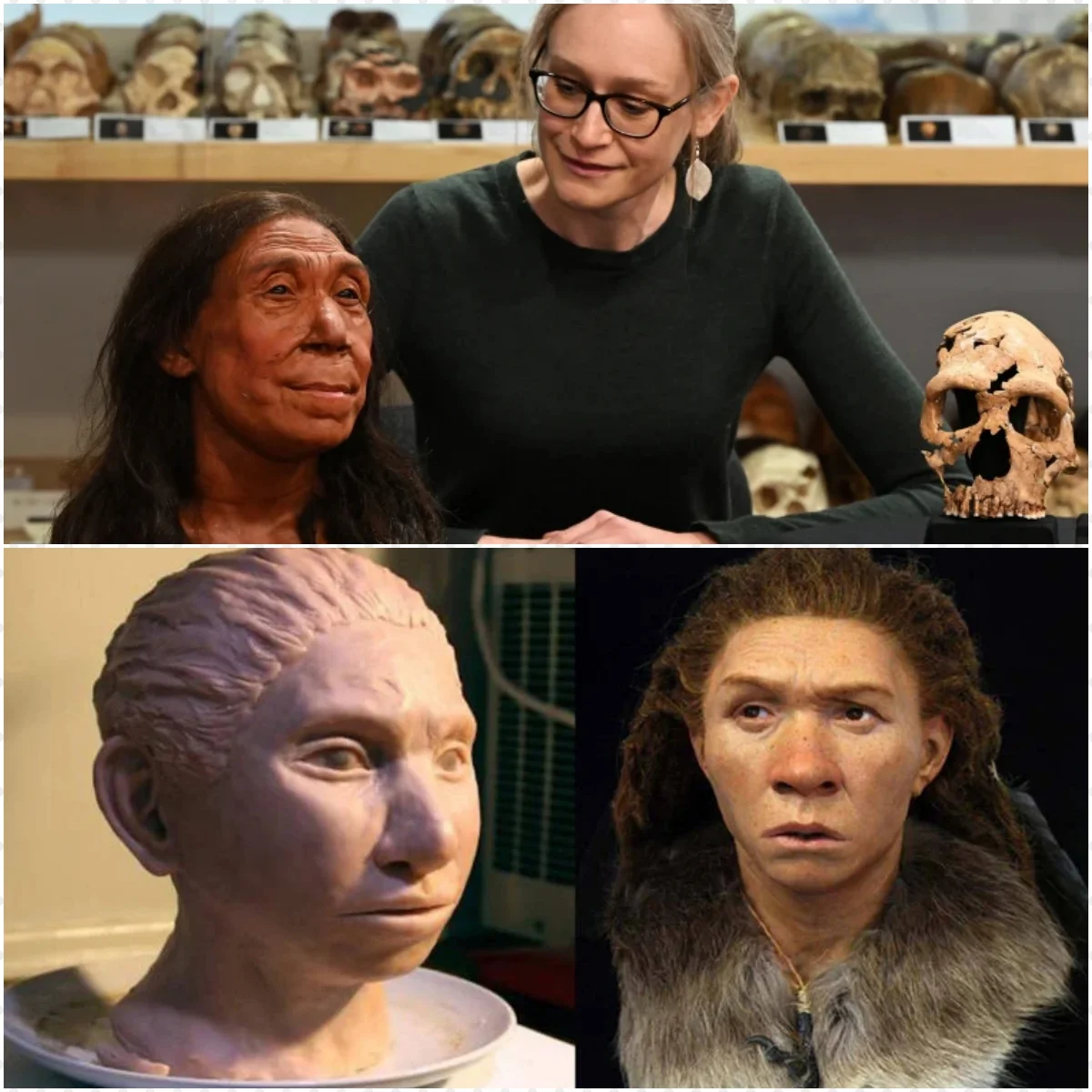
Now, cutting-edge paleogenomics has shattered that barrier. By harnessing the predictive power of DNA methylation—a biochemical mechanism that regulates gene expression without altering the underlying genetic code—researchers have finally rendered a high-confidence visual profile of what the Denisovans looked like. This breakthrough represents a watershed moment not only for evolutionary biology but also for the high-performance computing architectures and bioinformatics platforms required to process billions of epigenetic data points.
The Epigenetic Revolution: Reading Bone Through Chemistry
To understand how scientists bypassed the absence of complete cranial fossils, one must look beyond standard DNA sequencing. Traditional paleogenomics reads the four-letter nucleotide alphabet of adenine, cytosine, guanine, and thymine. However, gene expression is modulated by epigenetic tags—specifically, methyl groups attached to cytosine bases. These methylation patterns dictate whether a gene is active or silenced, actively shaping skeletal growth, craniofacial development, and metabolic pathways.
Led by a multidisciplinary team of evolutionary geneticists and computational biologists, researchers mapped the methylation maps of Denisovans and Neanderthals, comparing them against the baseline epigenomes of chimpanzees and modern humans (*Homo sapiens*). By identifying regions where DNA methylation patterns differed across species, the team could predict how these chemical alterations affected anatomical traits—effectively working backward from gene regulation to physical form.
The resulting anatomical reconstruction stunned the scientific community. The Denisovan skull was significantly wider and more robust than that of a modern human, featuring a pronounced cranial breadth that would have accommodated a braincase matching or exceeding our own in volume. Unlike Neanderthals, who were characterized by a prominent midfacial projection and sweeping cheekbones, Denisovans possessed a wider dental arcade, a remarkably sloping forehead, and a distinctively robust lower jaw lacking a prominent chin. Their dental architecture, initially hinted at by the oversized Altai molars, pointed toward a heavy reliance on masticatory stress—chewing tough, fibrous foods in punishing Pleistocene climates.
Comparative Morphology: Denisovans vs. Neanderthals and Sapiens

To contextualize the Denisovan phenotype, scientists cross-referenced the newly minted epigenetic map against known hominin fossils. The table below outlines the core anatomical and genomic divergences that define our closest evolutionary relatives.
| Anatomical / Genomic Feature | Denisovans | Neanderthals (*Homo neanderthalensis*) | Modern Humans (*Homo sapiens*) |
|---|---|---|---|
| Cranial Breadth & Volume | Extraordinarily wide skull; large brain volume | Long, low cranium; large occipital bun | Globular braincase; vertical forehead |
| Facial Structure & Jaw | Sloping forehead; wide dental arcade; robust jaw without chin | Pronounced midfacial projection; large nose; no chin | Flat face; vertical symphysis; prominent mental eminence (chin) |
| Dental Morphology | Massive molars; robust root structures | Large teeth with enlarged pulp cavities (taurodontism) | Reduced tooth size; parabolic dental arch |
| Primary Geographic Range | Siberia, East Asia, Southeast Asia, Oceania | Europe and Western/Central Asia | Global dispersal originating in Africa |
Industry & Market Implications: The Economics of Paleogenomic Infrastructure
While this discovery is fundamentally an anthropological triumph, it holds profound resonance for the commercial tech and life sciences sectors. The algorithms developed to parse ancient methylation maps, clean degraded DNA samples, and model complex physiological traits require immense cloud compute architecture and machine learning prowess.
As genomic sequencing costs plummet and data density explodes, enterprise investments in bioinformatics tooling are seeing accelerated capital allocation. Venture capital and institutional private equity firms are actively monitoring biotech startups specializing in high-throughput sequencing and algorithmic phenotyping. The infrastructure scalability required to process multi-terabyte genomic datasets mirrors the computational demands of enterprise artificial intelligence training.
Furthermore, understanding how ancient genomes adapted to extreme environments—such as Denisovan alleles enabling modern Tibetans to thrive at high altitudes via the EPAS1 gene variant—provides pharmaceutical and biomedical researchers with unprecedented targets for hypoxia-related therapeutics and risk mitigation in clinical drug development. In the modern biotech marketplace, intellectual property tethered to functional genomics commands premium valuation multiples, proving that deep-time scientific inquiry can yield immediate commercial dividends.
Frequently Asked Questions (People Also Ask)
How do scientists reconstruct Denisovan facial features without a complete skull?
Researchers use DNA methylation maps—epigenetic modifications that control gene expression. By analyzing how chemical tags alter bone and cartilage development in the genome, computer models predict skeletal and facial anatomy with a high degree of statistical confidence.
Where did the Denisovans live, and do modern humans share their DNA?
Denisovans inhabited a vast geographic range stretching from Siberia down through Southeast Asia and into Oceania. Today, Indigenous populations in Papua New Guinea, Australia, and parts of Island Southeast Asia carry up to 4% to 6% Denisovan ancestry, while modern East Asians carry smaller, measurable traces.
What traits did Denisovans pass on to modern human populations?
Introgression from Denisovans provided modern humans with advantageous physiological traits, most notably the EPAS1 gene variant which allows high-altitude populations like Tibetans to process oxygen efficiently in low-oxygen environments. Other introgressed genes have been linked to enhanced immune system responses.
Why are Denisovans sometimes referred to as a "ghost lineage"?
They earned the moniker "ghost lineage" because their existence was initially deduced entirely through DNA extracted from tiny fragments rather than distinct, identifiable skeletal remains. Even as physical reconstructions emerge, much of their population history remains hidden in the genetic code of living humans.
Future Outlook: What Comes Next in Paleogenomic Exploration
The successful phenotypic reconstruction of the Denisovans marks the end of an era of guesswork and the beginning of a new chapter in digital anthropology. As next-generation sequencing platforms evolve and algorithmic error-correction software improves, researchers anticipate extracting usable epigenetic and proteomic data from even more degraded, fragmentary fossil remains recovered from cave sediments across Asia.
Key regulatory milestones and technological developments to watch over the next 24 to 36 months include:
- Enhanced Proteomic Sequencing: The expansion of collagen fingerprinting (ZooMS) and mass spectrometry to identify hominin bone fragments embedded in unexamined cave sediment layers without destroying the sample.
- Cloud Infrastructure Scaling: Greater integration of decentralized cloud compute grids to accelerate the processing of complex, multi-layered methylation and ancient metagenomic datasets.
- Biomedical Translation: Increased venture capital deployment into biotech firms translating archaic gene variants into novel therapeutic pathways for autoimmune disorders and metabolic stress adaptation.
Ultimately, uncovering what our mysterious Denisovan cousins looked like does more than satisfy historical curiosity. It forces a fundamental reevaluation of human evolution, illustrating that our family tree was not a solitary ladder, but a vast, interconnected network of interbreeding populations whose physical and genetic legacy continues to resonate within our modern world.