Wall Street’s New Peak: Why Palantir’s Surging AI Profits and Slumping Oil Just Ignited a Historic Market Rally
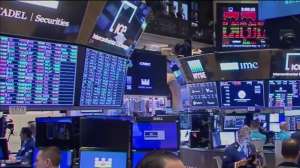
NEW YORK & MUMBAI — The U.S. stock market climbed to fresh, historic heights as a powerful double-engine of blockbusting corporate earnings and retreating energy costs gave investors a green light to push equity valuations to record levels. The S&P 500 and the tech-heavy Nasdaq Composite both scaled new peaks, signaling robust investor confidence in the resilience of corporate America amid a shifting macroeconomic landscape.
Leading the charge was data-analytics powerhouse Palantir Technologies, whose blockbuster earnings report acted as a lightning rod for tech bulls, proving that the generative AI boom is rapidly converting into hard, bottom-line cash. Simultaneously, a sharp pullback in global crude prices alleviated persistent inflation anxieties, offering the Federal Reserve clear runway to sustain its monetary easing cycle. For institutional and retail investors alike, the market’s latest milestone represents a sweet spot: accelerating growth paired with cooling price pressures.
“We are seeing a transition from a market driven purely by multiple expansion and promise to one backed by tangible, high-quality earnings execution,” said a senior equity strategist at a major Wall Street investment bank. “When you combine surging enterprise AI adoption with a structural decline in input costs like energy, it creates a highly stimulative environment for corporate profit margins.”
Executive Summary: Key Takeaways from the Historic Session
- Record-Breaking Runs: The S&P 500 and Nasdaq Composite both surged to all-time intraday and closing highs, driven by aggressive buying in technology, communication services, and consumer discretionary sectors.
- The Palantir Catalyst: Palantir (NYSE: PLTR) shares skyrocketed after reporting a massive earnings beat and upwardly revising its full-year guidance, fueled by what CEO Alex Karp described as an "unrelenting" demand for enterprise AI.
- Oil Prices Retreat: West Texas Intermediate (WTI) and Brent crude futures fell sharply, easing input costs for logistics and manufacturing while boosting consumer discretionary spending power.
- Macroeconomic Tailwinds: The combination of strong balance sheets and easing commodity inflation has solidified hopes of a "soft landing" for the U.S. economy, keeping the Federal Reserve’s rate-cut path viable.
The Palantir Phenomenon: Proof of Real-World AI Monetization
For quarters, skeptical voices on Wall Street have questioned when the massive capital expenditure on artificial intelligence would translate into meaningful corporate revenues. Palantir provided the definitive answer. The Denver-based firm reported a massive 30% year-over-year revenue surge, driven primarily by an explosive 44% growth in its U.S. commercial business. Net income hit an all-time high, marking the company’s eighth consecutive quarter of GAAP profitability.
The stellar results triggered a buying frenzy, propelling Palantir’s stock to its own record territory. The company’s Artificial Intelligence Platform (AIP) has quickly transitioned from a speculative enterprise software tool to an essential operating system for both government defense agencies and Fortune 500 companies seeking to integrate large language models into their core operations.
“Our business is growing at an unprecedented rate because the demand for AI that actually works is unrelenting,” Alex Karp, Co-Founder and CEO of Palantir, noted in his letter to shareholders. “The U.S. commercial market is leading the charge, and we are capturing a structural shift in how organizations operate.”
Market Snapshot: How the Major Assets Performed
The following table outlines the closing metrics of major indices, benchmark energy contracts, and key corporate movers during the record-setting trading session:
| Asset / Index | Ticker / Symbol | Closing Price / Level | Daily Percentage Change | Market Sentiment / Context |
|---|---|---|---|---|
| S&P 500 Index | SPX | 5,929.04 | +1.23% | Closes at historic highs; broad-based rally. |
| Nasdaq Composite | IXIC | 18,439.17 | +1.45% | Led by mega-cap tech and semiconductor gains. |
| Palantir Technologies | PLTR | $51.40 | +23.50% | Record-high close following blowout Q3 earnings. |
| WTI Crude Oil | CL1! | $69.49 / bbl | -2.15% | Easing geopolitical premium and weak global demand. |
| Brent Crude Oil | CO1! | $73.10 / bbl | -1.98% | Slipping refining margins in Asia pressure global benchmarks. |
Oil Eases: The Double-Edged Sword Boosting Corporate Margins
Crucial to the broader equity rally was the continued cooling of global oil benchmarks. West Texas Intermediate (WTI) slipped back below the $70-per-barrel mark, while international benchmark Brent crude hovered near $73. The decline was largely driven by a combination of recovering domestic oil production in the United States, easing geopolitical tensions in key Middle Eastern transit corridors, and persistent concerns over industrial demand in China.
For the broader equity market, cheaper oil acts as a stealth stimulus. It directly reduces transportation, shipping, and manufacturing costs for businesses, thereby preserving operating margins even in a moderating economic environment. For consumers, lower gasoline prices act like an immediate tax cut, freeing up disposable income to be spent across retail, travel, and entertainment sectors.
“We are looking at a highly favorable supply-demand dynamic in the energy complex,” explained an energy analyst at a global research firm. “With OPEC+ holding spare capacity and the U.S. pumping record volumes of crude, the upside risks to inflation from the energy channel have drastically diminished. This gives central banks a green light to support growth.”
The Road Ahead: Valuations, Earnings, and Federal Reserve Policy
While the mood on Wall Street remains overwhelmingly celebratory, some portfolio managers advise caution regarding elevated valuations. With the S&P 500 trading at a forward price-to-earnings (P/E) multiple well above its long-term historical average, companies will face immense pressure to sustain this high level of earnings execution in the coming quarters.
All eyes now turn to the upcoming Federal Reserve policy meeting. Futures markets are pricing in a high probability of another quarter-point interest rate reduction, a move that would further lower borrowing costs for corporations and consumers. If corporate profits continue to expand alongside falling inflation and declining interest rates, this historic bull market may still have plenty of room to run.
Frequently Asked Questions (FAQ)
1. Why did Palantir’s earnings have such a massive impact on the broader stock market?
Palantir’s blowout earnings served as a critical proof point for the entire technology sector. Investors have been searching for concrete evidence that the massive corporate spend on artificial intelligence (AI) is generating actual revenue and profit. By demonstrating explosive growth in its U.S. commercial AI business and lifting its future guidance, Palantir validated the secular growth thesis, triggering a wave of buying across the broader enterprise software and semiconductor sectors.
2. How does falling oil support higher stock valuations?
Lower oil prices reduce the cost of fuel and raw materials, which immediately lowers operating expenses for companies in key sectors such as transportation, manufacturing, and consumer goods. Additionally, cheaper energy reduces overall inflationary pressures, allowing the Federal Reserve to continue cutting interest rates. Lower interest rates increase the present value of future corporate earnings, which naturally justifies higher stock prices and multiples.