Executive Takeaways
- The Critical Threshold: Voyager 1 fell silent just hours before crossing the monumental boundary of one light-day distance from Earth—approximately 16 billion miles away.
- Legacy Infrastructure Realities: Operating on 1970s-era compute architecture and dwindling plutonium-238 power sources, NASA's Jet Propulsion Laboratory (JPL) engineering teams face unprecedented remote-diagnostic hurdles.
- Strategic Enterprise & Scientific Stakes: The potential loss of humanity's farthest-reaching artifact threatens continuous interstellar data streams, impacting long-term deep-space risk mitigation and cosmic ray telemetry research.
- Resource Allocation Challenges: Budgetary constraints and prioritization frameworks at federal space agencies complicate the deployment of redundant deep-space communication networks.
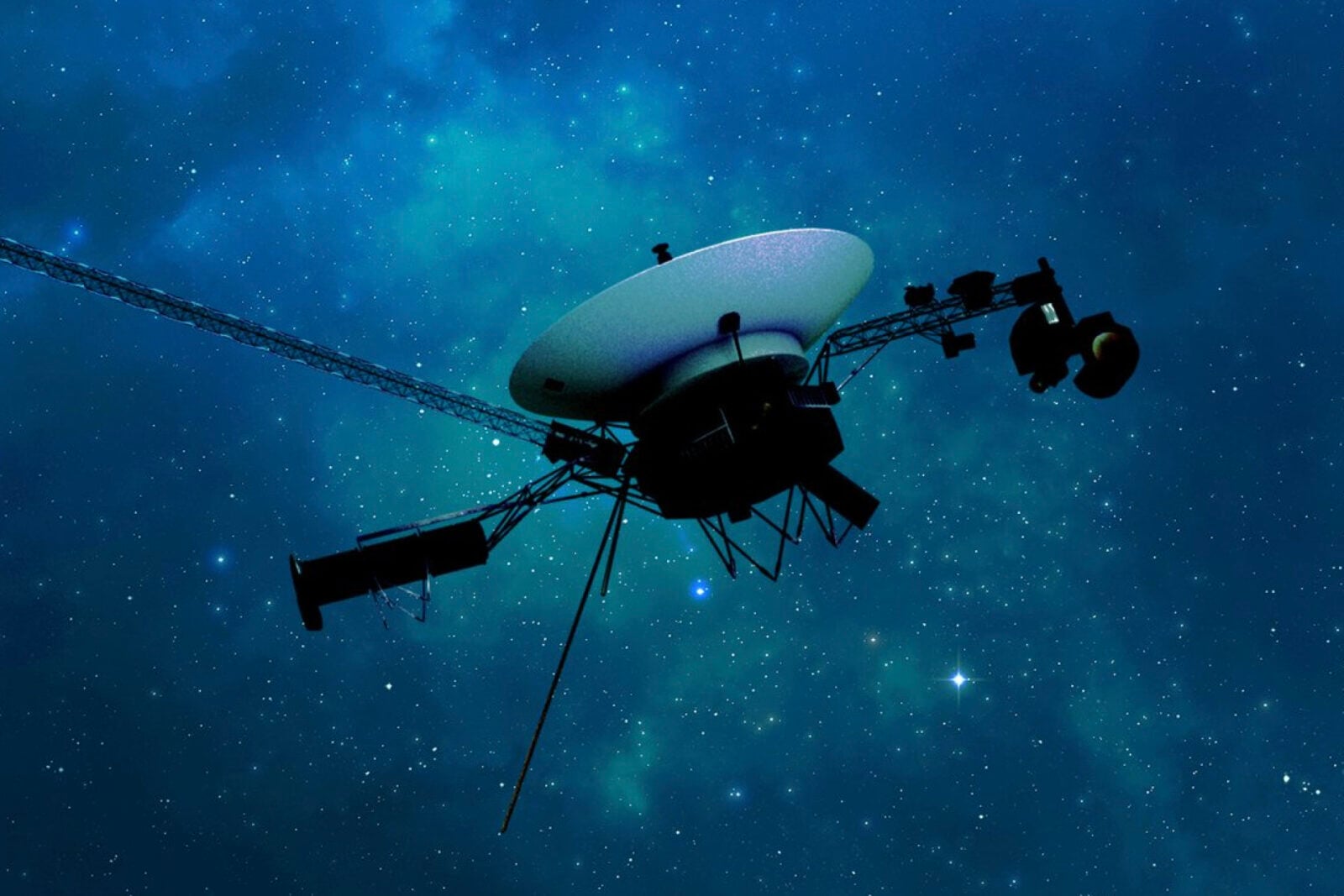
PASADENA, Calif. — In the freezing expanse of interstellar space, nearly 16 billion miles from the trading floors of Wall Street and the server farms of Silicon Valley, humanity’s most distant emissary has gone dark. NASA’s Voyager 1 spacecraft, an engineering marvel launched during the Carter administration, ceased routine telemetry transmissions mere hours before achieving a historic operational milestone: a distance of one light-day from Earth.
For aerospace engineers, data scientists, and macroeconomic analysts tracking the intersection of public-sector research and technological endurance, the blackout represents more than a sentimental setback. It serves as a stark stress-test for legacy infrastructure management, highlighting the fragility of mission-critical systems operating far beyond their original design parameters. As teams at the Jet Propulsion Laboratory (JPL) work frantically to re-establish a stable carrier wave, the incident forces a hard look at capital allocation, risk mitigation, and the finite operational lifespan of humanity’s pioneer hardware.
Anatomy of a Deep-Space Interruption
Test Our Free AI & Tech Utilities Suite
Calculate LLM API token costs, analyze article dwell-time, or simulate tech DCA returns.
The anomaly began registering on the Deep Space Network (DSN) tracking stations early Tuesday morning. Telemetry data, which normally takes approximately 22 hours and 38 minutes to traverse the void between Voyager 1 and Earth receivers in Goldstone, California, Canberra, Australia, and Madrid, Spain, flatlined. The spacecraft’s primary X-band transmitter, which engineers rely on to beam scientific data and engineering health metrics back to terrestrial monitors, shifted into an unprompted idle state.
According to preliminary telemetry logs reviewed by aerospace analysts, the silence was likely triggered by an onboard fault-protection routine. Voyager 1 is programmed to autonomously switch systems when it encounters voltage drops or anomalies in its dwindling power supply. However, because of the staggering distance—nearly 24 light-hours away—any diagnostic command sent from Earth requires nearly two full days for a complete round-trip confirmation. This communication latency creates a severe operational bottleneck, rendering real-time troubleshooting impossible and demanding hyper-conservative, highly calculated intervention strategies from JPL's flight operations team.
"When you are managing infrastructure scalability across a span of 16 billion miles with memory capacities measured in fractions of a modern smartphone, your margin for error is effectively zero," noted a senior aerospace systems architect close to the mission who spoke on condition of anonymity. "The team isn't just fixing a bug; they are executing remote surgery blindfolded, with a 45-hour communication delay."
The Technical and Financial Calculus of Interstellar Longevity

Launched in September 1977, Voyager 1 was originally designed for a primary mission duration of just five years to study Jupiter and Saturn. Its survival across nearly five decades is a testament to extraordinary engineering, yet it also presents a complex budgetary and operational puzzle for NASA administrators. The spacecraft is powered by three Radioisotope Thermoelectric Generators (RTGs) fueled by decaying plutonium-238. As this radioactive material decays, the spacecraft loses roughly 4 watts of electrical power every year.
To keep the mission viable, engineers have systematically powered down non-essential heaters, scientific instruments, and attitude-control thruster backups. This relentless pursuit of operational efficiency mirrors corporate cost-optimization strategies, where enterprise ROI is squeezed out of legacy assets long past their scheduled depreciation. Yet, unlike commercial software or modular data centers, physical hardware in interstellar space cannot be upgraded with a patch or replaced via drone deployment.
| Metric / Specification | Voyager 1 Baseline | Current Status & Operational Reality |
|---|---|---|
| Launch Date | September 5, 1977 | 46+ years in continuous operation |
| Distance from Earth | Variable (Heliosphere boundary) | ~16 billion miles (~1 light-day threshold) |
| Round-Trip Signal Time | Minutes (planetary phase) | Approx. 45 hours and 16 minutes |
| Power Source | Plutonium-238 RTGs (~470W initially) | Declining output; active instruments reduced |
| Onboard Data Storage | Digital Tape Recorder (8-track equivalent) | Severely degraded; direct-to-earth streaming prioritized |
Broader Market and Scientific Implications
While Voyager 1 carries no commercial cargo, its silent vigil carries profound weight across multiple sectors. In the aerospace and defense landscape, the mission acts as an unyielding benchmark for hardware durability and extreme-environment resilience. Contractors supplying components to both civil space programs and commercial satellite constellations closely monitor Voyager’s telemetry handling of cosmic radiation, magnetic fields, and thermal dissipation.
Furthermore, the data returned by Voyager 1—measuring interstellar plasma density, galactic cosmic rays, and the outer edges of the heliopause—provides invaluable empirical input for astrophysics models. For institutional investors allocating capital toward the burgeoning New Space economy, understanding the failure modes of long-duration autonomous systems is critical for risk assessment in orbital manufacturing, deep-space mining ventures, and commercial satellite infrastructure valuation multiples.
If Voyager 1 cannot be recovered, the scientific community loses its primary in-situ sensor outside the solar system, leaving a blind spot in our empirical mapping of interstellar space until Voyager 2—currently trailing at a distance of roughly 13.3 billion miles—reaches similar milestones.
Frequently Asked Questions (People Also Ask)
Why is the one light-day milestone significant for Voyager 1?
One light-day represents the distance light travels in a 24-hour period—approximately 16.1 billion miles. Reaching this threshold underscores the extreme distance the spacecraft has traveled since 1977, pushing communication latency to nearly 46 hours for a complete round-trip signal exchange and testing the absolute limits of NASA's Deep Space Network.
Can NASA engineers permanently fix Voyager 1 from Earth?
Intervention capabilities are severely constrained by distance and legacy technology. Because commands take nearly 23 hours to reach the spacecraft and another 23 hours for confirmation to return, engineers cannot perform real-time diagnostic troubleshooting. Solutions rely on uploading precise, highly conservative software patches and waiting days to see if the spacecraft executes them correctly.
What is causing the power depletion on Voyager spacecraft?
Voyager 1 is powered by Radioisotope Thermoelectric Generators (RTGs) that convert heat from the natural radioactive decay of plutonium-238 into electricity. With a half-life of 87.7 years, the radioactive material steadily loses heat output, reducing available electrical power by roughly 4 watts annually and forcing mission managers to continuously shut down non-essential instruments.
What happens if Voyager 1 cannot be recovered from this blackout?
If engineers fail to restore telemetry transmission, Voyager 1 will effectively transition from an active scientific observatory to a silent artifact drifting permanently through the Milky Way. While its mission would officially conclude, it will continue carrying its iconic Golden Record—a message of humanity's existence—into interstellar space for billions of years.
Future Outlook and Key Milestones to Watch
Over the next 72 hours, JPL flight controllers will continue transmitting low-frequency recovery commands via the Deep Space Network’s massive 70-meter antenna dishes, listening intently for any indication of a carrier wave response from Voyager 1. Market observers, aerospace executives, and science enthusiasts alike are bracing for what may be the final chapters of a legendary operational run.
Key metrics to watch in the immediate future include:
- DSN Signal Acquisition Reports: Monitoring Goldstone and Canberra receiver logs for erratic or intermittent carrier wave lock-ins.
- Power Management Telemetry: Assessing whether onboard fault-protection protocols successfully cycled auxiliary heaters to preserve core computer voltage.
- Twin-Craft Comparative Diagnostics: Analyzing parallel telemetry data from Voyager 2 to determine if the anomaly stems from a systemic interstellar hazard—such as an unmapped plasma wave front—or localized hardware fatigue.
As the clock ticks past the one light-day mark, Voyager 1 remains a towering monument to human ingenuity. Whether it resumes its historic broadcast or falls permanently silent, its journey has already redefined the boundaries of technological endurance and exploration.