Executive Takeaways
- Pioneering Sample Return: Japan’s space agency embarks on an unprecedented mission to retrieve pristine soil samples from Phobos and Deimos, bridging a critical gap where NASA and ESA have historically fallen short of a Martian-system return.
- Braving Brain Drain: The mission highlights a strategic shift as top-tier global researchers migrate from traditional U.S. academic and federal institutions to agile, high-impact international programs.
- Commercial and Scientific Convergence: The multi-billion-dollar initiative signals a massive leap in deep-space infrastructure scalability, holding profound implications for long-term capital allocation in aerospace and resource prospecting.
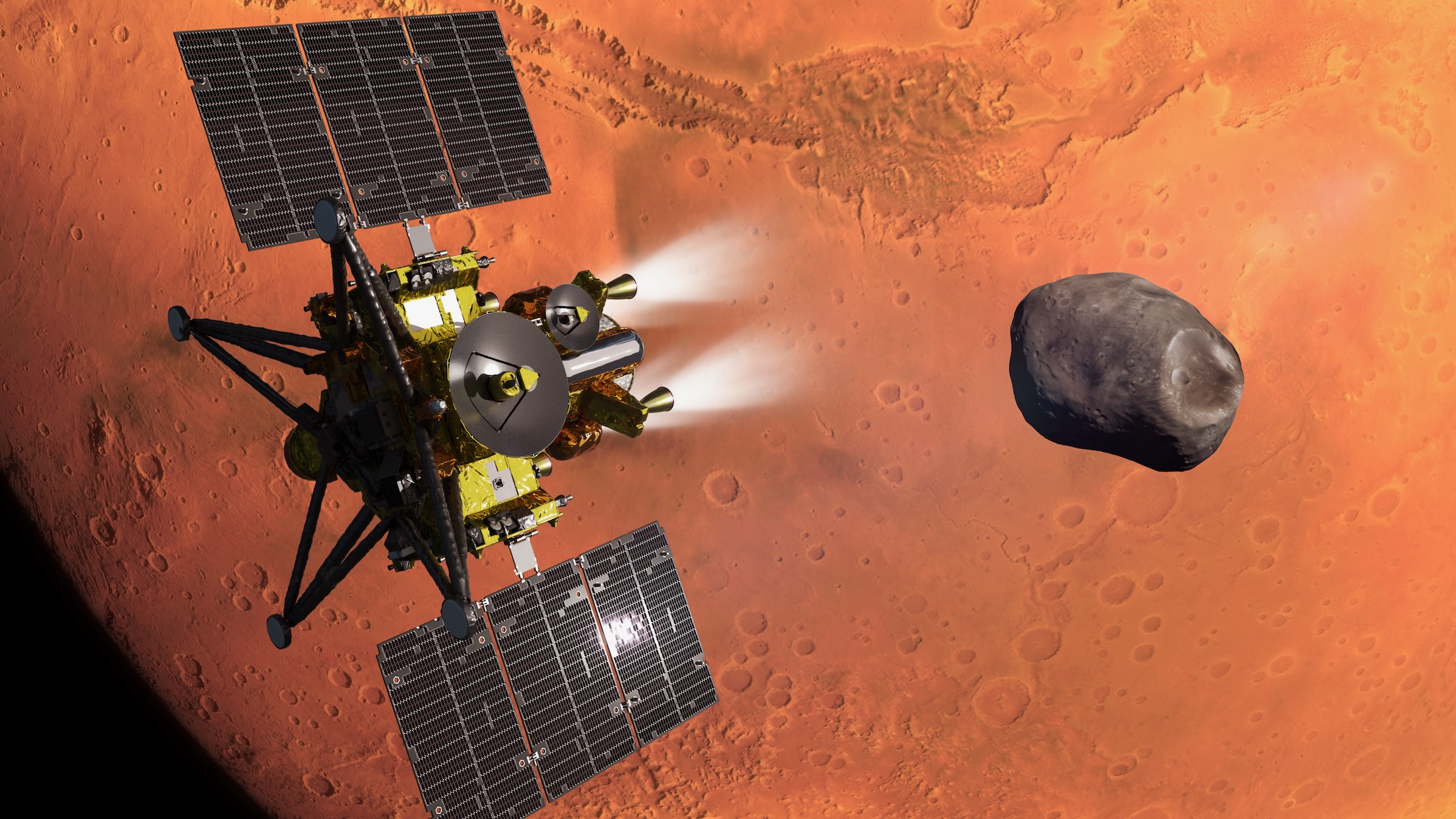
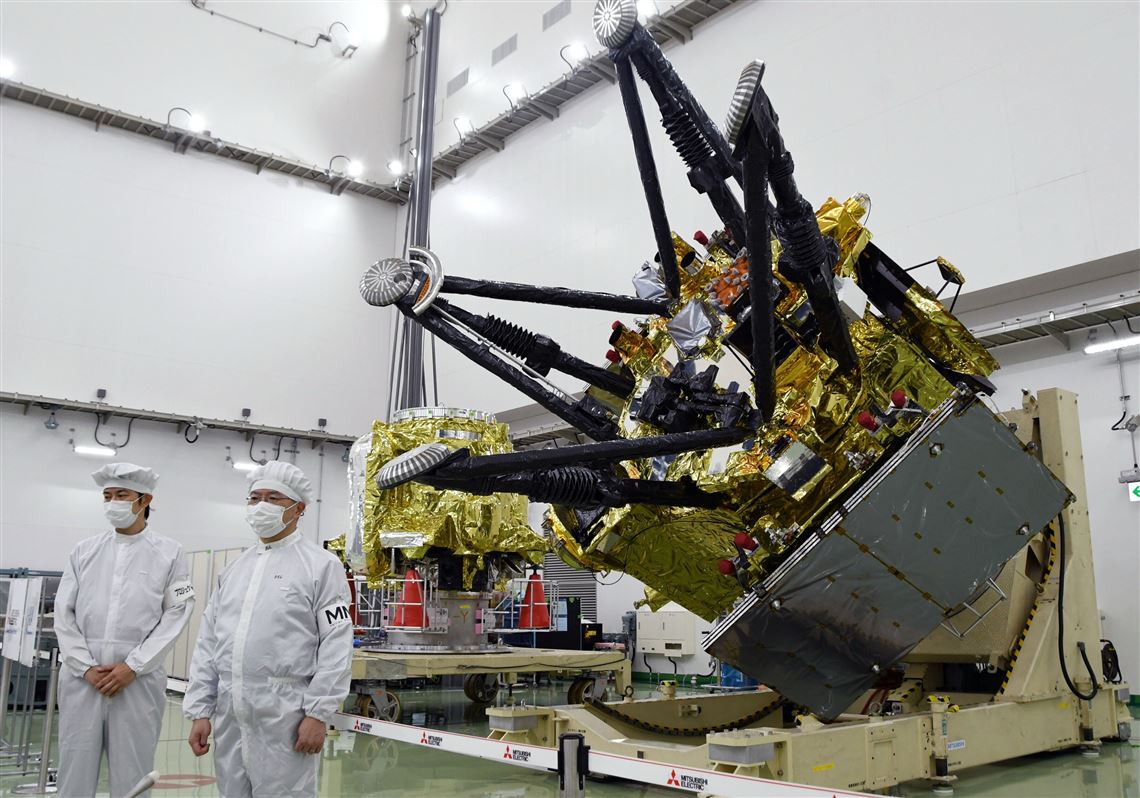
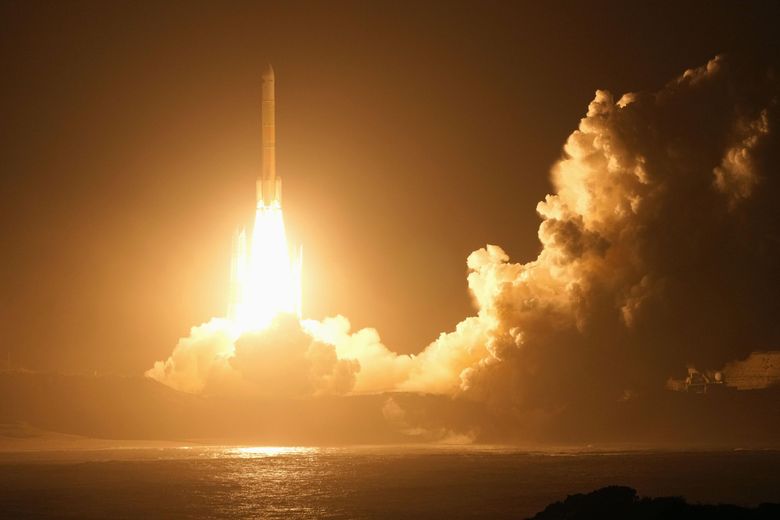
TOKYO — In an era where commercial space ventures frequently capture public imagination with sub-orbital tourism and low-Earth-orbit constellations, nation-states continue to quietly wage high-stakes geopolitical and scientific chess matches in deep space. Today, the Japan Aerospace Exploration Agency (JAXA) formally launched its most ambitious interplanetary endeavor to date: a precision-engineered spacecraft destined for the enigmatic, potato-shaped moons of Mars, Phobos and Deimos. The ultimate objective is not merely orbital reconnaissance, but a treacherous, highly complex round-trip journey to capture and return physical regolith and soil samples back to Earth.
For decades, planetary scientists have pursued pristine materials from the Martian system to unlock the fundamental building blocks of our solar system. While rovers on the Martian surface have revolutionized our understanding of ancient habitability, no space agency has successfully executed a round-trip sample return mission from Mars or its immediate orbital environment. By targeting Phobos and Deimos—bodies whose origins remain fiercely debated between captured asteroid theories and debris accretion from catastrophic planetary impacts—Japan is positioning itself at the absolute bleeding edge of deep-space exploration and asset retrieval.
The Catalytic Race for Martian Regolith
The urgency driving today’s launch cannot be divorced from the broader geopolitical and scientific landscape. For the United States, budgetary friction, shifting presidential mandates, and congressional scrutiny surrounding NASA’s Mars Sample Return (MSR) architecture have repeatedly delayed timelines and inflated valuation multiples for projected mission costs. As traditional Western programs grapple with infrastructure scalability hurdles and regulatory compliance bottlenecks, JAXA has methodically executed a lean, high-efficiency capital allocation strategy.
This mission also underscores a quiet human capital migration. A growing cadre of premier researchers—frustrated by bureaucratic stagnation and shifting grant allocations in the United States—are leaving domestic institutions to collaborate directly with Japanese aerospace engineers and academic centers. This "brain drain" from Western labs to Tokyo’s advanced research facilities has injected vital technical talent into JAXA’s development pipeline, accelerating innovation cycles in autonomous navigation, ion propulsion, and surface-sampling robotics.
Phobos and Deimos present unique tactical advantages over landing directly on Mars. Their negligible gravity wells eliminate the necessity for heavy retro-rockets and complex sky-crane descent systems required for Martian surface landings. However, operating within the localized gravitational complexities of these small bodies introduces severe engineering challenges. The spacecraft must execute pinpoint autonomous rendezvous maneuvers millions of miles from Earth, operating under profound communication latency where real-time human intervention is impossible.
Data & Specifications Breakdown
To fully grasp the magnitude of JAXA’s interplanetary undertaking, consider the following comparative metrics outlining the mission architecture against historical deep-space sample return efforts:
| Mission Parameter | JAXA Martian Moons Return | Historical Lunar / Asteroid Returns (Average) |
|---|---|---|
| Target Destination | Phobos & Deimos (Mars Orbit) | Lunar Surface / Near-Earth Asteroids (e.g., Ryugu) |
| Round-Trip Distance | Tens of millions of kilometers | 384,000 km (Lunar) to millions (Asteroid) |
| Primary Scientific Goal | Determine moon origin; capture unweathered regolith | Catalog primordial solar system composition |
| Autonomous Systems Reliance | Extremely High (Due to deep-space signal delay) | Moderate to High |
Industry & Market Implications
While framed primarily as a triumph for pure science, missions of this scale exert a profound influence on the global aerospace and defense markets. As governments look toward extraterrestrial resource prospecting, the technologies proven during JAXA’s mission—ranging from long-duration ion propulsion to ultra-reliable autonomous docking—will serve as foundational intellectual property for future commercial space infrastructure.
- Aerospace Manufacturers & Supply Chains: Component suppliers specializing in radiation-hardened semiconductors, advanced thermal protection systems, and precision actuators stand to capture lucrative contracts as deep-space exploration ramps up.
- Risk Mitigation & Insurance Markets: As the frequency of interplanetary payloads increases, specialty marine and aviation underwriters are developing novel risk-mitigation frameworks and valuation models for catastrophic deep-space mission failure.
- Global Competitiveness: For Tokyo, maintaining technological preeminence in high-value scientific hardware reinforces its diplomatic and industrial standing, proving that disciplined, long-term capital allocation can outpace fragmented, politically volatile space programs.
Frequently Asked Questions (People Also Ask)
Why are scientists targeting the moons of Mars instead of the Martian surface directly?
Landing on the surface of Mars requires navigating a thick atmosphere, managing extreme descent velocities, and executing complex landing sequences with heavy propulsive systems. In contrast, the moons Phobos and Deimos have virtually no atmosphere and extremely low gravity. This makes rendezvous, sample collection, and subsequent return-launch significantly less complex, acting as a strategic stepping stone for broader Martian system exploration.
How long will it take for the spacecraft to reach the Martian moons and return samples to Earth?
Due to orbital mechanics and the vast distances involved, the mission spans several years. The spacecraft must cruise to Mars, enter a stable orbit around the planet and its moons, spend extensive time conducting high-resolution mapping and targeted sample acquisition, and finally execute a multi-year return trajectory back to Earth's atmospheric entry corridor.
What can Martian moon soil tell us that we don't already know?
Phobos and Deimos are central to a long-standing planetary science debate. Are they captured asteroids from the outer asteroid belt, or are they chunks of Mars that were blasted into orbit by a massive ancient asteroid impact? Analyzing pristine core samples in terrestrial laboratories will provide definitive isotopic signatures, resolving their true origin and shedding light on the early formation history of the inner solar system.
Future Outlook and Critical Milestones
As the spacecraft breaks free of Earth's gravitational embrace and settles into its deep-space cruise trajectory, all eyes turn to JAXA’s mission control center in Tsukuba. The coming months will test the long-term durability of the craft's advanced propulsion architecture and deep-space communication arrays.
Key milestones to watch over the next 36 months include the successful execution of mid-course trajectory correction maneuvers, the intricate Mars orbit insertion burn, and the subsequent high-resolution imaging campaign used to select optimal touch-down zones on Phobos. Should JAXA successfully navigate these technical hurdles and secure the first-ever regolith samples from the Martian system, it will cement a historic paradigm shift in interplanetary exploration, establishing a new benchmark for international scientific supremacy and high-ROI aerospace engineering.