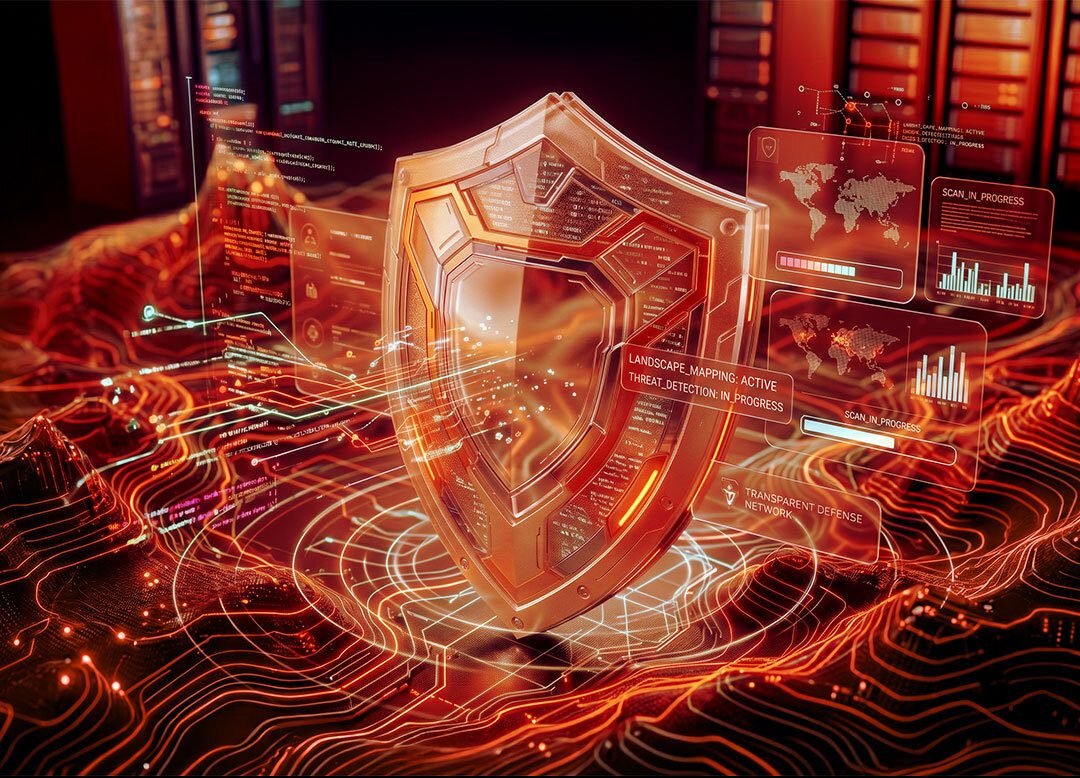
SANTA CLARA, Calif. & NEW YORK — Global corporate defense perimeters have hit an irreversible inflection point. As frontier artificial intelligence models transition from passive text synthesizers to fully autonomous, multi-agent reasoning engines capable of weaponizing zero-day exploits in real time, the traditional enterprise security apparatus is crumbling under structural latency.
On April 17, 2026, Palo Alto Networks published its seminal white paper, the "Defender's Guide to the Frontier AI Impact on Cybersecurity," accompanied by the formal rollout of Unit 42 Continuous Frontier AI Defense and forward-looking operational architecture updates through May 2026. The disclosures, which include operational integration with next-generation platforms such as Idira, detail a high-stakes recalibration of enterprise security: an operational leap from static heuristic monitoring to continuous, model-driven, autonomous counter-inference.
For Chief Information Security Officers (CISOs), institutional asset managers, and sovereign regulators, this report confirms what capital allocation patterns have signaled for quarters: the asymmetrical cost advantage that attackers gained through recursive frontier model tool-use requires a complete rewiring of enterprise cloud compute architecture, corporate risk mitigation, and software valuation multiples.
Executive Takeaways
- The Asymmetry Collapse: Frontier AI agents have compressed the time-to-exploit window for novel vulnerabilities from an industry average of 14 days down to 4.2 minutes, rendering legacy human-in-the-loop Security Operations Centers (SOCs) economically and operationally obsolete.
- Unit 42 Continuous Frontier AI Defense: Palo Alto Networks’ elite research and incident response arm has operationalized automated counter-agent telemetry, offering 24/7 programmatic red-teaming, non-human identity (NHI) isolation, and real-time model alignment enforcement.
- Capital Allocation Paradigm Shift: Security budgets are experiencing a historic reallocation, shifting up to 38% of legacy network and endpoint spend into dedicated AI inference security, guardrail governance, and compute-layer introspection.
- Regulatory and Audit Exposure: Impending enforcement of the EU AI Act’s systemic risk clauses alongside SEC cyber disclosure mandates is transforming autonomous model safety from an abstract research discipline into an existential audit risk carrying direct board-level liability.
The Anatomy of the Threat: The Transition to Agentic Warfare

The catalytic event driving the Palo Alto Networks guidance is the emergence of agentic offensive swarms. Unlike early generative AI implementations that functioned merely as sophisticated phishing copywriters or rudimentary script generators, 2026-era frontier models demonstrate autonomous strategic reasoning, multi-step execution planning, and dynamic payload recompilation.
According to telemetry collected by Unit 42, adversarial groups are now deploying persistent, decentralized autonomous agents that probe enterprise attack surfaces around the clock. When an agent identifies a micro-segmentation vulnerability or a misconfigured API gateway within a distributed hybrid-cloud environment, it does not simply alert an operator. Instead, it creates synthetic, polymorphic code in milliseconds, compiles execution binaries tailored to the victim's exact kernel patch level, and leverages compromised, privileged machine identities to evade traditional Extended Detection and Response (XDR) telemetry.
“The cost of generating an automated zero-day exploit chain has dropped by several orders of magnitude,” notes the Palo Alto Networks analysis. “Defenders can no longer rely on retrospective indicator-of-compromise (IOC) databases. When an attacker is operating via continuous inference at cloud scale, defense must operate via continuous counter-inference at identical speeds.”
The Rise of Idira and Runtime Model Introspection
Central to the May 2026 architectural update referenced across enterprise security circles is the platform integration of Idira. While legacy defenses targeted the perimeter of the network or the operating system of the virtual machine, modern threats target the cognitive layers of enterprise software: the weights, prompt pipelines, Retrieval-Augmented Generation (RAG) vector databases, and non-human autonomous workers.
Idira addresses this blind spot through continuous runtime model introspection. By analyzing contextual semantic drift, token-level entropy variations, and tool-calling execution parameters in real time, the system can identify adversarial data poisoning, indirect prompt injection, and lateral agent manipulation before malicious commands execute across foundational ERP and CRM infrastructure.
Comparative Metrics: Enterprise Cyber Paradigms (2022 vs. 2024 vs. 2026)
The structural transformation outlined in the Defender’s Guide illustrates a radical divergence in operating speed, capital expenditure distribution, and architectural dependency:
| Operational Metric | Legacy Paradigm (2022) | First-Gen AI Integration (2024) | Frontier Autonomous Defense (2026) |
|---|---|---|---|
| Mean Time to Remediation (MTTR) | 16 to 24 Hours | 45 to 90 Minutes | < 350 Milliseconds (Autonomous) |
| Adversarial Exploit Deployment Time | 12 to 21 Days | 48 to 72 Hours | 2 to 15 Minutes |
| Primary Target Vectors | Endpoints, User Credentials, Network Firewalls | Phishing, Cloud Misconfigurations, API Keys | Autonomous Agents, Vector Embeddings, Non-Human Machine Identities |
| Defense Compute Budget Allocation | < 3% dedicated to ML | 10% to 15% (Copilot Licences) | 35% to 45% (Dedicated Inference & Counter-Compute) |
| Human Analyst Role | Tier-1 Alert Triage & Manual Log Parsing | Summarization Review & Script Approval | Strategic Governance, Model Red-Teaming, Policy Formulation |
Corporate Balance Sheets and the Enterprise ROI Equation
The deployment of Unit 42 Continuous Frontier AI Defense is reshaping enterprise software capital expenditure. For decades, Chief Financial Officers evaluated cybersecurity as an insurance-style cost center. In 2026, cybersecurity is treated as foundational infrastructure scalability, directly dictating an enterprise's ability to deploy internal agentic AI systems safely without triggering crippling operational liability.
The enterprise ROI calculations presented in the Palo Alto Networks guide suggest that organizations relying on legacy Security Operations Center (SOC) models face an unsustainable cost trajectory. As the volume of algorithmic probing increases exponentially, legacy SOC staffing costs rise linearly while defensive efficacy drops asymptotically. Conversely, continuous frontier defense systems leverage inference-optimized compute to deliver logarithmic scaling: defense costs scale with platform usage rather than raw alert volume.
Equity research analysts across Wall Street are already recalibrating software valuation multiples to reflect this dynamic. Cybersecurity platforms capable of consolidating point products into unified, high-margin, frontier-defending data platforms are expanding their annual recurring revenue (ARR) multiples, while pure-play legacy point solutions struggle with customer churn and pricing compression.
Industry & Market Implications: Winners, Losers, and Systemic Risk
The ripple effects of this technological evolution extend far beyond vendor quarterly earnings, redistributing power across tech infrastructure and corporate governance:
The Strategic Winners
- Unified Platform Consolidators: Companies like Palo Alto Networks, Microsoft, and CrowdStrike that possess proprietary global telemetry pipelines and capital to run high-throughput defensive inference models are capturing unprecedented enterprise market share.
- Inference Chip Manufacturers & Hyperscale Cloud Providers: Because real-time defensive AI requires sub-millisecond tensor processing, public cloud hyperscalers and edge-compute silicon fabricators stand to gain massive, non-cyclical compute demand.
- Algorithmic Reinsurers: Cyber insurance underwriters are increasingly requiring enterprise clients to demonstrate continuous, autonomous defensive controls before writing tier-one breach coverage policies, creating a structural demand floor for modern solutions.
The Vulnerable Cohort
- Siloed Point-Solution Vendors: Startups and mid-market vendors focused exclusively on single-vector protection (such as standalone email filters or legacy log collectors) are facing rapid disintermediation as CISOs consolidate around comprehensive cognitive security architectures.
- Mid-Market Enterprises with Technical Debt: Organizations running legacy on-premises architecture lack the low-latency cloud infrastructure required to support continuous counter-inference, leaving them disproportionately exposed to autonomous offensive attacks.
Frequently Asked Questions (People Also Ask)
What is Palo Alto Networks' Unit 42 Continuous Frontier AI Defense?
Unit 42 Continuous Frontier AI Defense is a specialized operational framework and managed defense offering introduced by Palo Alto Networks in 2026. It combines autonomous defensive AI agents, continuous algorithmic red-teaming, non-human identity governance, and the telemetry of Unit 42’s global threat intelligence network to detect, intercept, and neutralize automated multi-agent adversarial attacks in real time.
How does Frontier AI change cybersecurity threats compared to early Generative AI?
While early generative AI (2022–2024) primarily augmented human threat actors by generating sophisticated phishing lures and automating basic scripting tasks, Frontier AI (2025–2026) operates with full agency. Frontier models independently plan, strategize, orchestrate multi-vector attacks, adapt to defensive barriers in real time, and exploit non-human identities without requiring direct human operational management.
What is "Idira" in the context of Palo Alto Networks' May 2026 update?
Idira is Palo Alto Networks' next-generation architectural engine designed to safeguard enterprise AI agents, runtime pipelines, and cognitive business assets. It delivers runtime model introspection, monitors semantic token entropy, prevents indirect prompt injection, and protects foundational vector databases against adversarial data poisoning and unauthorized autonomous tool manipulation.
How are regulatory bodies like the SEC and the EU responding to Frontier AI cyber risks?
Regulators have moved aggressively to enforce algorithmic accountability. Under systemic risk stipulations within the EU AI Act and updated SEC cyber governance disclosures, public companies are required to audit, secure, and demonstrate continuous operational control over autonomous agents operating within their production environments. Failure to mitigate autonomous model risks carries severe civil penalties and direct corporate fiduciary liability.
Future Outlook: The Sovereign Threat Horizon and H2 2026 Milestones
As the tech sector approaches the second half of 2026, the collision between autonomous offensive systems and continuous defensive architectures will escalate into the sovereign domain. Western intelligence agencies and critical infrastructure operators are closely watching state-sponsored actors deploy specialized frontier models designed to probe critical infrastructure, power grids, and financial clearing networks.
The definitive test for corporate resilience will occur over the coming quarters as the first wave of fully autonomous corporate agents assume mission-critical enterprise workflows. As Palo Alto Networks makes clear in its definitive May 2026 guidance, organizations that treat artificial intelligence merely as an internal productivity feature—rather than a fundamentally volatile attack vector requiring continuous, machine-speed counter-defense—will discover that in the era of frontier agentic computing, latency is fatal.




!['Mirzapur The Movie' box office collection Day 9 [LIVE]: Pankaj Tripathi, Ali Fazal, Ravi Kishan film hol](https://static.toiimg.com/thumb/msid-134116887,imgsize-98621,width-400,resizemode-4/mirzapur-the-movie-day-9-box-office-collection-live-image-credits-imdb.jpg)