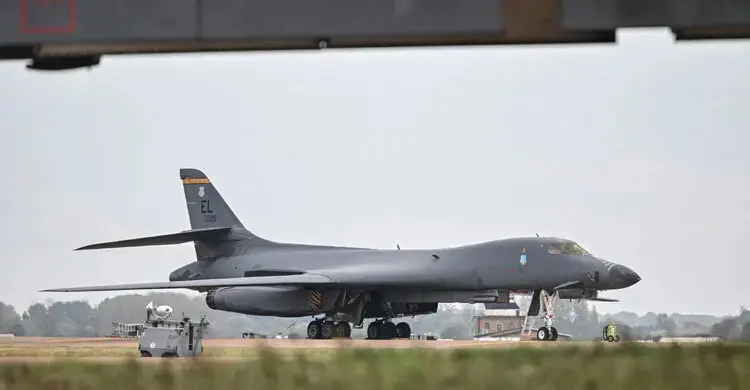
LONDON & WASHINGTON — In a sudden and high-stakes strategic shift, the United States Air Force has withdrawn its formidable B-1 Lancer strategic bomber aircraft from the Royal Air Force (RAF) Fairford base in Gloucestershire, United Kingdom. The abrupt redeployment comes against a backdrop of spiraling geopolitical friction in the Middle East, specifically mounting concerns over potential military escalations involving Iran and its regional proxies.
The movement of these supersonic heavy bombers—long considered the backbone of America’s long-range conventional strike capability—has sent ripples through international defense circles. Defense analysts and market watchers are scrambling to assess whether this relocation signals an operational repositioning closer to active theaters or a strategic consolidation of assets amid escalating global security threats.
Strategic Realignment or Tactical Withdrawal?
RAF Fairford has historically served as a critical forward operating location for US strategic bombers conducting European theater operations, NATO integration exercises, and strategic deterrence missions. The presence of the B-1 Lancers at the UK facility had provided a visible, high-readiness deterrent posture within striking distance of Eastern Europe and the broader European Command (EUCOM) area of responsibility.
However, the sudden departure of the aircraft from British soil points to shifting Pentagon priorities. With tensions in the Middle East reaching a boiling point following recent exchanges between Israel, Iran, and various regional militia groups, United States Central Command (CENTCOM) requires maximum flexibility and concentrated strike assets within range of the Persian Gulf and Levant.
- Asset Mobility: B-1B Lancers can travel intercontinental distances rapidly, allowing US command to shift projection power from European staging grounds to Middle Eastern or Indo-Pacific theaters within hours.
- Deterrence Posture: The redeployment underscores the volatile nature of current US defense posture, balancing commitments to NATO security against acute Middle Eastern flashpoints.
- Logistical Footprint: Maintenance crews and support personnel associated with the Fairford deployment are concurrently adjusting operations, signaling a comprehensive rather than temporary shift.
Market and Macroeconomic Fallout
For global investors, shifts in military posture of this magnitude rarely happen in an economic vacuum. Geopolitical risk premiums across global energy and financial markets immediately react to sudden troop and asset movements in regions touching the Middle East.
Crude oil benchmarks experienced immediate intraday volatility following reports of the bomber redeployment. Markets remain highly sensitive to any indicators suggesting direct military engagement involving Iran, which could threaten vital transit corridors such as the Strait of Hormuz—a chokepoint through which a significant portion of the world's petroleum supply passes.
| Strategic Metric | Operational Status | Implications for Global Markets |
|---|---|---|
| Asset Type | B-1B Lancer Strategic Bomber | High-payload, long-range conventional deterrence |
| Previous Staging | RAF Fairford, United Kingdom | Ensured rapid European and North Atlantic response readiness |
| Current Focus | Middle East / Iran Threat Mitigation | Heightens short-term geopolitical risk premium in energy markets |
Pentagon Silence and Diplomatic Channels
Official commentary from the Pentagon and US Air Forces in Europe (USAFE) has remained measured. Military spokespeople emphasize that US strategic forces maintain global agility and can execute rapid global strike missions regardless of their immediate geographic domicile. Nevertheless, defense insiders confirm that the decision to draw down assets at Fairford is directly tied to threat assessments regarding Tehran’s nuclear ambitions and proxy network activities.
European allies have been briefed on the movements, though British defense officials declined to comment extensively on operational details concerning allied aircraft rotations. The UK Ministry of Defense reiterated its steadfast commitment to joint US-UK defense frameworks, noting that RAF Fairford remains fully operational and capable of hosting allied forces on short notice.
What Lies Ahead for Global Defense Posture
As diplomatic efforts to curb regional escalation in the Middle East face persistent headwinds, military planners are preparing for multiple contingencies. The repositioning of the B-1 Lancers serves as a tangible reminder of the fluidity of modern air power. Whether these assets will be redeployed to forward operating bases in the Middle East or redirected toward the Indo-Pacific remains tightly classified, but the message to Tehran is unequivocal: US strike capabilities are actively repositioning to meet emerging threats.
Frequently Asked Questions
Why did the US withdraw B-1 bombers from RAF Fairford?
The withdrawal is driven by escalating tensions involving Iran and the broader Middle East. The Pentagon is recalibrating its global asset distribution to ensure rapid response and strategic deterrence capabilities are optimized where acute flashpoints exist.
Does this withdrawal weaken NATO defenses in Europe?
Defense analysts suggest that while the physical presence of the bombers at Fairford is reduced, the US military retains immense global strike reach. NATO's collective deterrence relies on a dynamic network of bases, and European air defense capabilities remain robustly supported by existing allied assets.