
Executive Takeaways
- Sector Realignment: Midterm election outcomes directly dictate federal capital allocation across defense procurement, healthcare subsidization, digital asset regulation, and artificial intelligence infrastructure.
- Valuation Multiples at Risk: Legislative gridlock or partisan sweeps will immediately compress or expand price-to-earnings (P/E) multiples for high-growth tech and highly regulated pharmaceutical equities.
- Capital Expenditure Shifts: Institutional investors are restructuring risk mitigation strategies, rotating portfolios away from policy-sensitive verticals toward resilient enterprise ROI plays.
- Regulatory Compliance Catalysts: Bipartisan consensus on AI safety frameworks and crypto market structure bills could unlock billions in sidelined institutional market liquidity post-election.
As the political pendulum swings toward the upcoming midterm elections, institutional capital allocators, hedge fund managers, and corporate boardrooms are executing exhaustive risk assessments. Midterm cycles historically serve as referendum votes on sitting administrations, yet their structural impact on equity markets extends far beyond transient political rhetoric. For sectors heavily intertwined with federal purse strings and regulatory oversight—specifically defense, healthcare, crypto, and artificial intelligence—the ballot box acts as a powerful catalyst capable of redirecting billions of dollars in market liquidity and altering enterprise valuations overnight.
Navigating this complex macroeconomic and legislative terrain requires a rigorous examination of historical precedents, current regulatory bottlenecks, and shifting congressional power dynamics. Whether analyzing the budgetary priorities of the House Armed Services Committee or tracking the SEC's evolving stance on digital asset classification, institutional investors must calibrate their portfolios for volatility. Below is our comprehensive investigative breakdown of how the midterm elections will structurally impact equities across these four pivotal pillars of the modern economy.
Defense Equities: Procurement Budgets, Geopolitical Tensions, and Capital Allocation
Test Our Free AI & Tech Utilities Suite
Calculate LLM API token costs, analyze article dwell-time, or simulate tech DCA returns.
The defense sector operates in a unique economic ecosystem where top-line revenue is directly tethered to federal appropriations bills, the National Defense Authorization Act (NDAA), and overarching foreign policy doctrines. Historically, defense primes such as Lockheed Martin, Raytheon Technologies, General Dynamics, and Northrop Grumman exhibit stable performance regardless of which party controls Capitol Hill, driven by bipartisan consensus on national security.
However, the specific composition of congressional committees following the midterms dictates operational focus and capital allocation. A shift toward fiscal conservatism often brings intense scrutiny to defense cost-overruns, legacy platform maintenance, and procurement efficiency. Conversely, escalating geopolitical fragmentation in Eastern Europe, the Indo-Pacific, and the Middle East ensures robust baseline funding for advanced capabilities.
The intersection of defense and technological modernization is particularly acute. Modern warfare increasingly relies on advanced software, autonomous systems, cloud compute architecture, and secure communications. Midterm outcomes will directly influence federal research and development (R&D) budgets. Companies capable of integrating artificial intelligence into defense applications—often partnering with specialized tech contractors—stand to capture oversized government contracts, driving expansion in their valuation multiples.
Healthcare and Pharmaceuticals: Drug Pricing Reform and P/E Multiple Compression
Few sectors face as immediate and binary legislative risk during election cycles as healthcare and biotechnology. Federal policy initiatives, ranging from Medicare drug price negotiation to changes in Affordable Care Act (ACA) subsidies, exert direct pressure on corporate profit margins.
The implementation of the Inflation Reduction Act (IRA) set a precedent for government intervention in pharmaceutical pricing, creating lingering anxiety across boardrooms. A divided Congress typically results in legislative gridlock, shielding major drug manufacturers from sweeping new pricing restrictions and preserving stable cash flows. However, a decisive win by either party could reintroduce aggressive drug pricing legislation, forcing pharmaceutical executives to pivot their capital allocation strategies toward internal research pipelines and strategic mergers and acquisitions (M&A) rather than stock buybacks.
Managed care organizations (MCOs) and hospital operators are similarly exposed to electoral shifts. Medicaid expansion policies, reimbursement rate adjustments, and regulatory compliance standards for private insurers fluctuate based on committee leadership. Institutional investors are closely monitoring these dynamics to execute precise risk mitigation strategies, rotating out of policy-sensitive pharmaceutical equities when regulatory headwinds intensify.
Digital Assets and Cryptocurrency: Regulatory Clarity vs. Enforcement Uncertainty
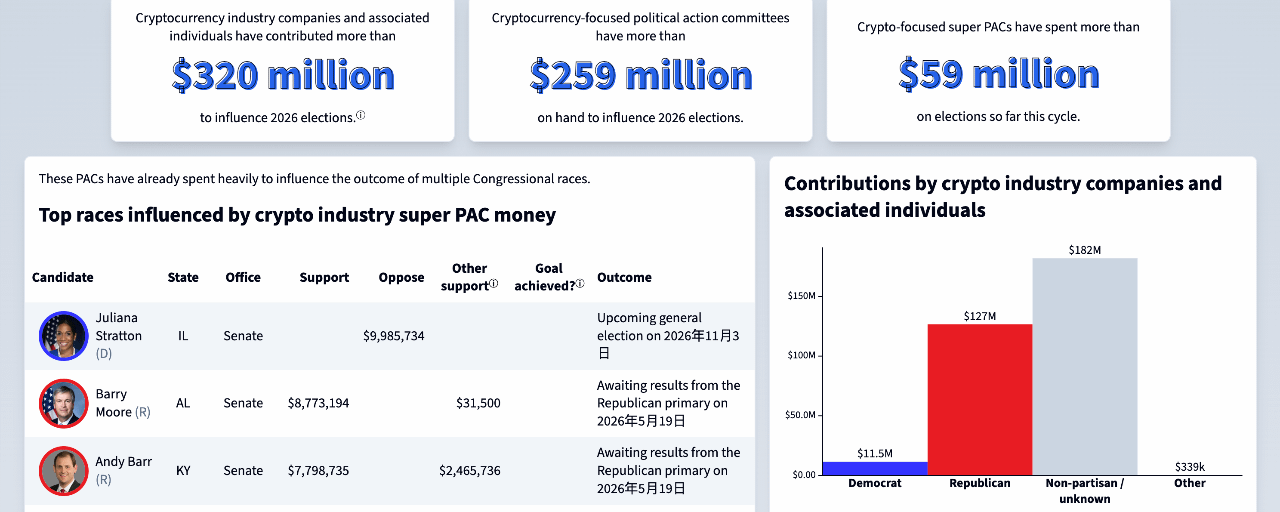
The digital asset ecosystem has evolved from a niche retail trading phenomenon into an institutionalized asset class demanding regulatory certainty. For years, the crypto market has operated under a patchwork of enforcement actions led by the Securities and Exchange Commission (SEC) and the Commodity Futures Trading Commission (CFTC). The upcoming midterm elections represent a vital inflection point for crypto market structure legislation.
Bipartisan legislative efforts, including the FIT21 bill and various stablecoin regulatory frameworks, aim to establish clear statutory definitions separating commodities from securities. The electoral success of pro-innovation candidates—regardless of party affiliation—could expedite the passage of comprehensive market structure bills. Institutional capital is currently waiting on the sidelines for this exact regulatory clarity.
An unobstructed path to institutional custody, spot ETF expansions, and tokenized real-world assets (RWAs) will unlock unprecedented market liquidity. Conversely, a prolonged stalemate or the retention of hostile regulatory leadership could perpetuate compliance friction, driving blockchain development and venture capital funding offshore to more accommodating jurisdictions in Europe, the Middle East, and Asia.
Artificial Intelligence: Infrastructure Scalability, Antitrust Scrutiny, and National Security
Artificial intelligence sits at the absolute vanguard of global economic growth, serving as the primary growth engine for mega-cap technology equities. While AI innovation is driven by private enterprise, government policy exerts profound influence over its trajectory through three distinct vectors: export controls, antitrust enforcement, and federal infrastructure investment.
The restriction of advanced semiconductor exports to geopolitical competitors has fundamentally altered supply chains for companies like NVIDIA and AMD. Midterm shifts in congressional oversight will dictate the aggressiveness of these trade policies, impacting international revenue streams. Simultaneously, antitrust regulators are closely scrutinizing big tech's dominance in cloud compute architecture, data aggregation, and foundational model acquisition.
Furthermore, national security imperatives are accelerating public-private partnerships in AI. Federal initiatives aimed at building domestic semiconductor manufacturing plants (via legislation like the CHIPS Act) require continuous congressional funding and oversight. Equities tied to data center real estate investment trusts (REITs), electrical grid infrastructure, and specialized hardware stands to benefit enormously from sustained bipartisan support for AI industrial policy.
Verified Data & Metrics Breakdown: Sector Exposure Matrix
| Sector | Primary Catalyst | Key Regulatory Risk | Market Impact Direction | Valuation Multiples Sensitivity |
|---|---|---|---|---|
| Defense | NDAA & Appropriations Bills | Budget sequestration / procurement delays | Stable to Bullish | Moderate |
| Healthcare | Drug Pricing Reform / ACA Subsidies | Price caps & reimbursement cuts | Volatile / Defensive | High |
| Crypto & Digital Assets | Market Structure Legislation (FIT21) | SEC enforcement & compliance burdens | High Beta / Binary | Extreme |
| Artificial Intelligence | CHIPS Act funding & Export Controls | Antitrust scrutiny & trade restrictions | Bullish Secular Growth | Very High |
Industry & Market Implications: Winners, Losers, and Macroeconomic Ripple Effects
As institutional portfolios undergo pre-election rebalancing, clear delineation is emerging between secular winners and policy-vulnerable losers. Corporations possessing robust enterprise ROI metrics, diversified international revenue streams, and agile supply chains are well-positioned to weather legislative turbulence.
In the defense domain, prime contractors with deep integration into autonomous systems and cyber defense will outperform traditional hardware manufacturers. Within healthcare, diversified medical device makers and select biotechnology innovators focusing on unmet clinical needs offer superior insulation compared to single-product pharmaceutical firms exposed to direct government price negotiations.
For the technology sector, the bifurcation is stark. Mega-cap enterprises leading the generative AI revolution will continue to command premium valuations, provided antitrust headwinds do not result in forced corporate breakups. Meanwhile, digital asset treasuries and blockchain infrastructure providers anticipate a massive influx of institutional capital should post-midterm legislative frameworks deliver long-sought regulatory clarity.
Frequently Asked Questions (People Also Ask)
How do midterm elections historically impact overall stock market performance?
Historically, equity markets experience heightened volatility leading up to midterm elections due to policy uncertainty. However, once the election results are finalized and the political landscape becomes clear, stocks have historically rebounded strongly. According to historical market data spanning several decades, the 12-month period following a midterm election has consistently yielded positive average returns, largely because legislative gridlock often reassures investors that sweeping, disruptive tax or regulatory overhauls are unlikely to pass.
Which healthcare stocks are most vulnerable to midterm legislative shifts?
Pharmaceutical and biotechnology companies heavily reliant on Medicare drug sales face the highest vulnerability. Legislation targeting drug price negotiation, out-of-pocket spending caps, and patent exclusivity rules directly impacts projected cash flows. Managed care organizations (health insurers) also face exposure depending on shifts in federal subsidies for Affordable Care Act plans and Medicaid enrollment policies.
Will the midterm elections change the regulatory outlook for cryptocurrency?
Yes, the midterms carry profound implications for digital assets. A shift in congressional committee leadership can accelerate or stall bipartisan market structure bills designed to delineate the jurisdictions of the SEC and CFTC. Clear statutory definitions will reduce regulatory compliance friction, potentially unlocking billions of dollars in sidelined institutional market liquidity.
How does artificial intelligence stock performance tie into federal election outcomes?
AI equity valuations are directly linked to federal policies governing semiconductor export controls, antitrust enforcement, and public-private infrastructure funding. Bipartisan support for domestic manufacturing via initiatives like the CHIPS Act benefits hardware and infrastructure providers, while shifting antitrust scrutiny impacts the growth trajectories of mega-cap platform companies.
Future Outlook: What Comes Next and Key Milestones to Watch
As the election cycle reaches its climax, institutional risk management desks are mapping out critical catalysts for the quarters ahead. The immediate post-election period will be defined by committee assignments in both the House and Senate, which will signal legislative priorities for defense spending, healthcare reform, and digital asset oversight.
Investors must maintain granular visibility over regulatory rulemakings, federal budget negotiations, and macroeconomic indicators including inflation prints and Federal Reserve interest rate trajectories. In an environment defined by rapid technological disruption and political polarization, maintaining disciplined risk mitigation strategies, focusing on enterprise ROI, and selectively allocating capital into secular growth pillars will remain the definitive blueprint for generating alpha.