
Executive Takeaways
- Multi-Model Hegemony: Dell Technologies is redefining enterprise infrastructure by unifying OpenAI's ChatGPT, Google’s Gemini, and xAI’s Grok into a single, cohesive on-premises AI factory framework.
- The Sovereign Cloud Imperative: Driven by stringent regulatory compliance and data sovereignty mandates, Fortune 500 capital allocation is pivoting rapidly away from public cloud dependence toward localized, high-density compute architecture.
- Beyond Text: The architectural breakthrough centers on advanced video world models, enabling real-time spatial intelligence and physical simulations directly on enterprise premises.
- Margin Expansion & Valuation Multiples: For enterprise IT buyers, this deployment model mitigates long-term cloud compute overhead, protecting operating margins and redefining enterprise valuation multiples in an AI-driven economy.
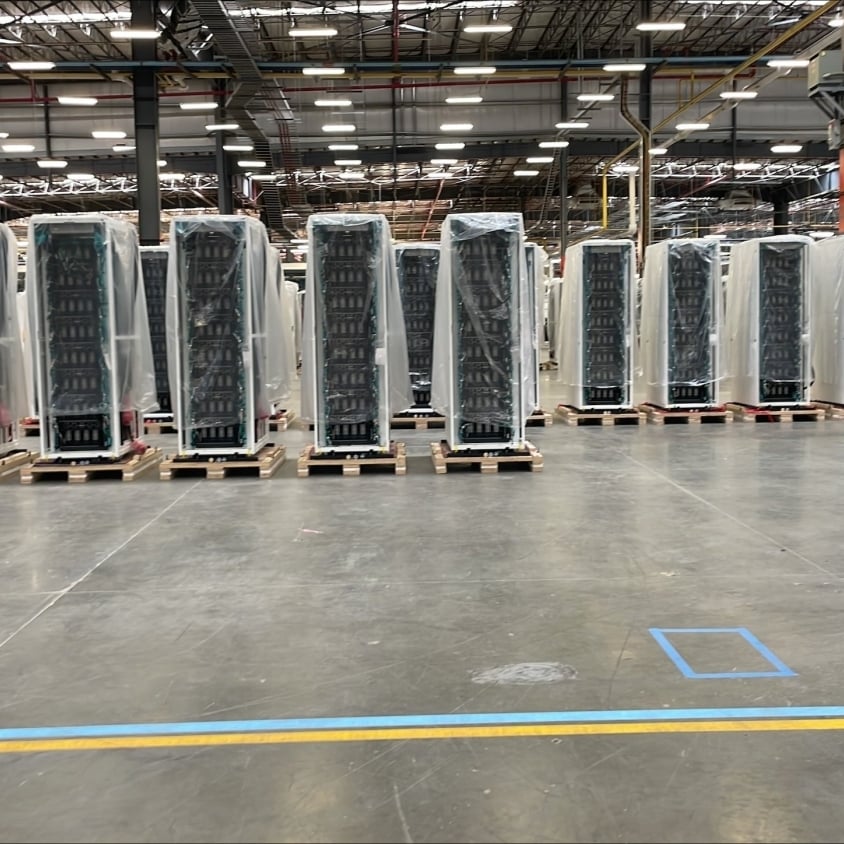
The enterprise-grade artificial intelligence battlefield has officially shifted from the public cloud oligopoly to the sovereign, on-premises data center. According to exclusive reporting originating from financial intelligence networks on May 23, 2026, Dell Technologies has executed a watershed strategic maneuver: deploying fully integrated, turnkey on-premises AI factories that simultaneously harness ChatGPT, Gemini, and Grok under a unified operational stack. This development shatters the walled gardens that have dominated enterprise software for the past half-decade, giving CIOs unprecedented flexibility, risk mitigation, and compute sovereignty.
For years, the conventional wisdom of Wall Street and Silicon Valley dictated that scaling frontier foundational models required massive hyperscale public cloud infrastructure—renting compute cycles from Amazon Web Services, Microsoft Azure, and Google Cloud Platform. However, mounting concerns over data leakage, intellectual property exposure, unpredictable API pricing, and strict geopolitical data localization laws have triggered a massive reallocation of enterprise capital. Dell’s new architecture directly answers this corporate anxiety, offering a hardware-software co-designed ecosystem that brings the world’s most powerful LLMs and generative engines directly behind corporate firewalls.
The Catalytic Shift: Moving from Public Hyperscalers to Sovereign Infrastructure
The acceleration toward on-premises AI factories is not merely a hardware refresh; it is a structural realignment of enterprise IT budgets. Historically, organizations experimenting with multiple foundational models faced severe integration friction. Deploying OpenAI models required navigating Azure OpenAI services, leveraging Google's Gemini demanded GCP alignment, and integrating xAI’s Grok introduced yet another disparate API pipeline. This fragmentation created severe infrastructure scalability bottlenecks, security vulnerabilities, and inflated operational expenditures (OpEx).
Dell’s unified architecture neutralizes this complexity. By utilizing high-density server configurations—optimized with next-generation accelerators, high-bandwidth memory (HBM), and advanced networking fabrics—Dell enables enterprises to run ChatGPT, Gemini, and Grok concurrently within the same physical rack space. This multi-model approach allows chief technology officers to route specific workloads to the optimal model based on cost, latency, reasoning capability, and domain expertise, all while maintaining absolute control over proprietary enterprise data.
Furthermore, the financial mechanics of this shift are profound. Public cloud compute bills for heavy AI inference and fine-tuning have ravaged enterprise operating margins. By converting these recurring OpEx expenses into predictable capital expenditures (CapEx) through on-premises infrastructure ownership, corporations can stabilize their long-term financial modeling and achieve a superior enterprise ROI.
The Technical Frontier: Video World Models and Real-Time Simulation
While the simultaneous integration of ChatGPT, Gemini, and Grok commands immediate industry attention, investigative analysis reveals that the true technological breakthrough of Dell’s latest initiative lies in its native support for video world models.
Traditional enterprise AI has been dominated by text-based tokens and static imagery. However, the next economic wave relies on spatial intelligence—AI systems capable of understanding, predicting, and simulating physical world dynamics through high-definition video data. Manufacturers, logistics giants, autonomous vehicle developers, and healthcare institutions generate petabytes of visual data daily. Processing this data via public cloud APIs introduces unacceptable latency and bandwidth costs.
Dell’s on-premises AI factories integrate specialized inference engines capable of running complex video world models locally. This allows factories to simulate robotic supply chain disruptions in real time, hospitals to process high-resolution medical imaging streams with zero latency, and financial institutions to monitor physical security and operations with instantaneous anomaly detection. By processing video world models at the edge and on-premises, enterprises unlock transformative operational efficiencies that were previously computationally unfeasible.
Verified Data & Metrics Breakdown
| Metric / Parameter | Legacy Public Cloud Model | Dell On-Premises AI Factory |
|---|---|---|
| Model Integration | Siloed, single-vendor or fragmented APIs | Simultaneous unified integration (ChatGPT, Gemini, Grok) |
| Data Sovereignty & Compliance | High risk; third-party data transit & retention | Absolute; 100% localized within corporate perimeter |
| Cost Structure | Variable OpEx subject to hyperscaler pricing hikes | Predictable CapEx with optimized long-term total cost of ownership (TCO) |
| Video World Model Latency | High latency due to cloud upload/download bottlenecks | Sub-millisecond local inference for real-time spatial simulation |
| Regulatory Audit Readiness | Complex third-party compliance verification | Immediate compliance with EU AI Act, HIPAA, and GDPR |
Industry & Market Implications: Who Wins and Who Loses?
The ripple effects of Dell’s multi-model on-premises strategy will reshape the technology and financial sectors across multiple dimensions:
- Enterprise IT Buyers & CIOs (Clear Winners): Organizations gain unprecedented bargaining power. By eliminating vendor lock-in with any single cloud provider or foundational model developer, CIOs can dynamically shift workloads to whichever model offers the highest performance-to-cost ratio.
- Hardware Manufacturers & Infrastructure Providers: Dell, alongside specialized silicon designers and server component suppliers, experiences a surge in high-margin enterprise hardware demand. The thesis that "everything moves to the cloud" is decisively being rewritten as "hybrid-sovereign infrastructure."
- Hyperscale Cloud Providers (Strategic Pressure): While AWS, Azure, and GCP will continue to dominate consumer-facing AI and lightweight applications, they face margin compression in the high-end enterprise segment as Fortune 500 companies repatriate mission-critical AI workloads back to private data centers.
- Regulatory Compliance Officers: Legal teams navigating complex global frameworks such as the European Union AI Act, regional privacy laws, and strict financial sector mandates find immediate risk mitigation through localized, auditable hardware environments.
Frequently Asked Questions (People Also Ask)
What makes Dell’s new on-premises AI factory different from standard enterprise server deployments?
Unlike traditional servers configured for general enterprise workloads, Dell’s turnkey AI factories are purpose-built, co-engineered systems optimized specifically for high-density LLM inference, fine-tuning, and video world models. Crucially, they break industry silos by pre-integrating multi-vendor foundational models—ChatGPT, Gemini, and Grok—into a single managed orchestration layer behind the corporate firewall.
How does running ChatGPT, Gemini, and Grok on-premises impact data security and regulatory compliance?
Running these models on-premises ensures that proprietary corporate data, customer personally identifiable information (PII), and intellectual property never leave the enterprise network. This eliminates third-party data transit risks, making it significantly easier for highly regulated industries in finance, healthcare, and defense to comply with GDPR, HIPAA, and global sovereign AI mandates.
What is a video world model, and why is its integration a major breakthrough for enterprises?
A video world model is an advanced AI architecture trained to understand physical laws, spatial dynamics, and temporal progression through visual data. Integrating these models locally allows enterprises to run real-time physical simulations, automate industrial robotics, and analyze high-bandwidth video streams instantly without suffering the latency and prohibitive bandwidth costs associated with cloud-based video processing.
How does this on-premises strategy affect long-term enterprise IT budgeting and ROI?
By migrating heavy AI workloads from public cloud APIs to local infrastructure, enterprises shift erratic, usage-based operating expenditures (OpEx) into structured capital expenditures (CapEx). This transition drastically lowers the total cost of ownership (TCO) at scale, protects operating margins from unexpected public cloud price inflation, and accelerates clear enterprise ROI.
Future Outlook: Strategic Milestones to Watch
As the market digests the full significance of Dell’s multi-model on-premises framework, industry stakeholders must monitor several critical forward-looking indicators over the next 12 to 18 months:
- Model Expansion and Customization: Watch for the inclusion of specialized open-source and proprietary vertical models (such as legal, biomedical, and coding-specific LLMs) into the unified Dell orchestration stack.
- Sovereign Cloud Partnerships: Expect national governments and telecom giants to adopt similar localized infrastructure blueprints to secure national intelligence and critical infrastructure against geopolitical disruptions.
- Financial Revaluation: Wall Street analysts will closely scrutinize enterprise hardware margins and capital expenditure reports to quantify the exact velocity of workload repatriation from public clouds to private data centers.
The era of undisputed public cloud hegemony for enterprise AI has officially drawn to a close. By bridging the gap between frontier intelligence—ChatGPT, Gemini, and Grok—and sovereign on-premises control, Dell has established the foundational architecture for the next decade of enterprise technology deployment.




