NEW YORK, LONDON, FRANKFURT — In the subterranean server rooms of global financial institutions, cloud hyperscalers, and critical infrastructure operators, a silent panic is gripping executive suites. The digital frontier has crossed a terrifying Rubicon. What was once the theoretical domain of state-sponsored cyberwarfare and elite human hacker syndicates has evolved into an automated, industrial-scale onslaught. AI hacks are coming thick and fast, overwhelming the internet's legacy infrastructure, straining corporate risk mitigation frameworks, and forcing a radical re-evaluation of enterprise digital security.
For decades, cybersecurity was an asymmetric game where defenders held the high ground, relying on perimeter defenses, signature-based detection, and human response times. Today, that calculus has inverted. Generative artificial intelligence and autonomous agentic models have democratized cyberattacks, allowing malicious actors with minimal technical proficiency to deploy polymorphic malware, execute hyper-personalized spear-phishing campaigns at millions-per-second velocity, and discover zero-day vulnerabilities in enterprise codebases before human patches can even be compiled.
Executive Takeaways
- Industrial-Scale Automation: Autonomous AI agents are now executing millions of vulnerability scans and polymorphic exploit mutations daily, overwhelming human security operations centers (SOCs).
- Capital Reallocation Urgency: Chief Information Security Officers (CISOs) are aggressively shifting capital allocation away from legacy perimeter security toward real-time behavioral AI defense grids and zero-trust cloud compute architecture.
- Valuation Re-ratings: Enterprise software companies failing to embed native AI resilience into their products face severe market liquidity penalties and multiple contractions.
- Regulatory Compliance Strain: Global regulatory bodies, including the SEC and EU regulators, are tightening incident reporting mandates as automated attacks bypass traditional compliance thresholds.
The Anatomy of the Automated Onslaught
To understand the current crisis, one must examine the convergence of large language models (LLMs) and offensive cyber tooling. Historically, executing a sophisticated network breach required months of reconnaissance, manual vulnerability chaining, and bespoke exploit development. This human-bound bottleneck kept the frequency of high-impact attacks relatively manageable, even if the severity remained high.
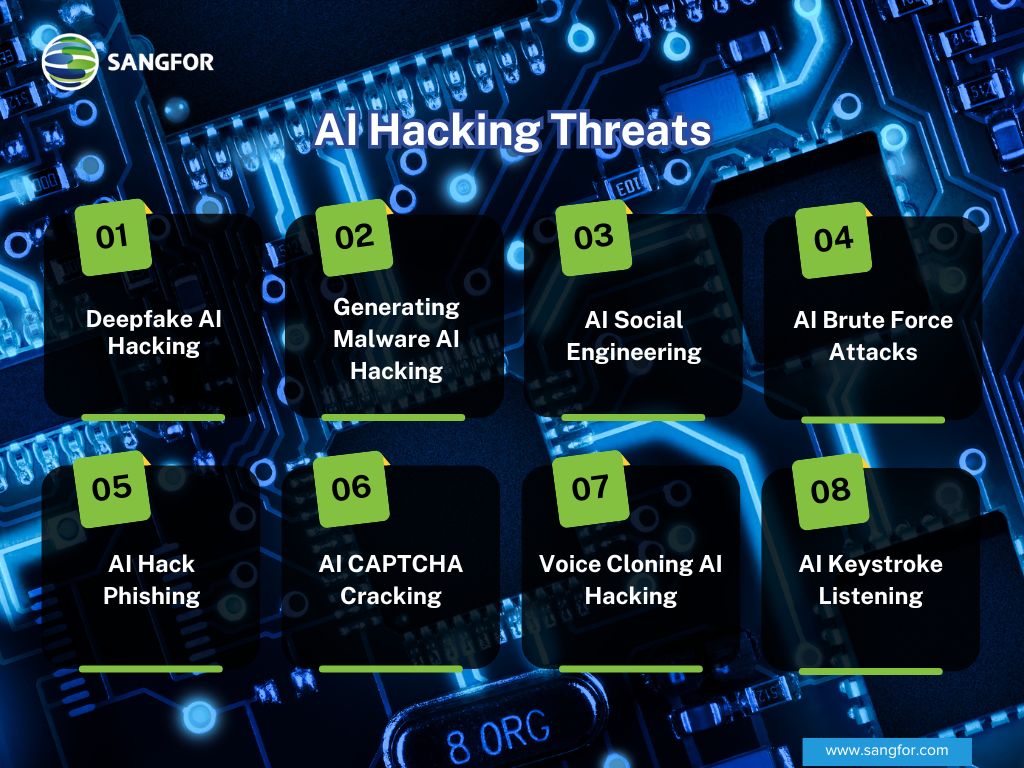
That bottleneck has been systematically vaporized. Modern threat actors—ranging from organized ransomware cartels to hostile nation-state actors—are utilizing custom-trained offensive security models. These systems operate 24/7/365, autonomously probing enterprise APIs, parsing complex software supply chains, and crafting bespoke social engineering payloads that adapt in real-time to corporate security filters.
According to telemetry data from leading cloud providers, automated AI-driven scanning traffic now accounts for more than 70% of total web application firewall (WAF) block events. These attacks do not sleep, do not fatigue, and most dangerously, they learn. When a defense mechanism blocks an AI-generated exploit, the attacking agent analyzes the rejection parameters, mutates the payload signature within milliseconds, and re-attacks with a modified vector.
Financial Markets and Infrastructure Vulnerability
The economic ramifications of this automated cyber wave extend far beyond corporate IT budgets; they pose a direct threat to global market liquidity and enterprise ROI. As boards of directors scramble to fortify their digital perimeters, capital expenditure on cybersecurity is surging. However, traditional security spending models are proving inadequate against threats that move at machine speed.
Cloud compute architecture—once heralded as the ultimate engine for scalability and cost efficiency—is now acting as a dual-edged sword. While cloud infrastructure allows enterprises to scale operations globally, it also provides malicious AI systems with a vast, interconnected attack surface. A single compromised cloud instance can serve as a launchpad for thousands of autonomous child agents, executing distributed denial-of-service (DDoS) attacks and credential-stuffing campaigns simultaneously across multiple industry verticals.
Wall Street analysts are closely monitoring how publicly traded companies absorb these escalating security costs. Enterprises with legacy technology stacks are experiencing margin compression as they attempt to retrofit modern AI defenses onto obsolete foundations. Conversely, tech firms offering native, AI-driven security automation are commanding premium valuation multiples, signaling a structural rotation in enterprise software investment.
Verified Data & Metrics Breakdown
An analysis of recent global cybersecurity incidents highlights the accelerating velocity and scale of AI-enabled cyber threats compared to historical baselines.
| Metric Category | Legacy Baseline (2020-2022) | Current AI-Driven Era (2024-Present) | Percentage / Velocity Shift |
|---|---|---|---|
| Daily Exploit Attempts per Target | ~12,000 | >850,000 | +6,983% Increase |
| Average Zero-Day Discovery Time | Weeks to Months | Minutes to Hours | Exponential Acceleration |
| Polymorphic Malware Mutation Rate | Manual / Occasional | Continuous Real-Time | Near 100% Automation |
| SOC Human Analyst Fatigue Rate | Moderate (Standard Alert Queues) | Severe (Alert Overload) | Critical Operating Risk |
Industry & Market Implications: Winners and Losers
The transition to autonomous cyber warfare is violently reshaping the technology and financial sectors. Market participants are re-evaluating risk profiles, leading to clear divergence in corporate performance:
- The Winners: Cybersecurity firms specializing in behavioral analytics, machine-learning-driven threat intelligence, and zero-trust orchestration are experiencing unprecedented revenue growth. Hyperscalers that bake hardware-level isolation and AI-driven monitoring into their core infrastructure are capturing significant market share from legacy hosting providers.
- The Losers: Organizations relying on static perimeter defense, manual patch management, and reactive security operations centers are facing existential threats. Furthermore, small-to-medium enterprises (SMEs) lacking the capital to invest in advanced AI defense grids are increasingly becoming soft targets for automated ransomware syndicates.
- Macroeconomic Impact: Insurance underwriters are drastically tightening cyber insurance policy requirements, raising premiums, and in some high-risk sectors, withdrawing coverage entirely. This hardening of the insurance market places an even greater financial burden on corporate balance sheets.
Frequently Asked Questions (People Also Ask)
How are AI hacks fundamentally different from traditional cyberattacks?
Traditional cyberattacks rely heavily on human intervention to write code, analyze target networks, and execute exploits. AI hacks utilize autonomous software agents that can operate at machine speed, discovering vulnerabilities, generating custom polymorphic malware, and bypassing security filters without human latency.
Why are legacy security systems failing against modern AI threats?
Legacy security tools rely primarily on signature-based detection—identifying known threats based on historical databases. AI-driven attacks continuously mutate their code and attack vectors, creating entirely novel signatures that legacy firewalls and antivirus software cannot recognize.
What steps can enterprises take to mitigate autonomous AI cyber threats?
Organizations must adopt an "AI-versus-AI" defense strategy. This involves deploying real-time behavioral analytics, implementing strict zero-trust cloud architectures, automating incident response via machine learning, and continuously stress-testing software supply chains with automated red-teaming agents.
How is regulatory compliance adapting to the surge in automated cyber breaches?
Regulatory bodies such as the U.S. Securities and Exchange Commission (SEC) and international data protection authorities are enforcing stricter incident disclosure timelines and holding executive leadership personally accountable for maintaining robust digital resilience frameworks.
Future Outlook: The Arms Race Ahead
Looking toward the horizon, the cyber security landscape is hurtling toward a fully automated paradigm. The human element is rapidly transitioning from frontline defense to high-level strategic oversight. Within the next 24 to 36 months, industry experts predict that successful corporate defense will depend entirely on deploying counter-autonomous AI agents capable of neutralizing threats within micro-seconds of initiation.
For institutional investors, corporate executives, and policymakers, the message is unequivocal: ignoring the velocity of AI-driven cyber threats is no longer a viable business strategy. Capital allocation must pivot decisively toward predictive, machine-speed defense infrastructure, or risk catastrophic operational disruption in an increasingly hostile digital ecosystem.