AI's 2026 Paradigm Shift: OpenAI and Google Launch Self-Reasoning Autonomous Systems
WALL STREET — The artificial intelligence landscape underwent a tectonic shift today as industry titans OpenAI and Google simultaneously unveiled their next-generation autonomous AI models for 2026. Marking a definitive departure from traditional chat interfaces, the new architectures introduce advanced self-reasoning capabilities and sophisticated multi-agent systems designed to execute complex, multi-day enterprise workflows with virtually zero human intervention.
The announcements, coming within hours of each other, underscore an intensifying Silicon Valley arms race. As corporate adoption shifts from experimental pilot programs to mission-critical infrastructure, both tech giants are positioning their latest software not merely as digital assistants, but as autonomous digital workforces capable of independent strategic planning and execution.
The Dawn of Self-Reasoning and Multi-Agent Ecosystems
For the past three years, generative AI has been defined by prompt-and-response paradigms. Users feed an LLM a prompt, and it generates text, code, or images based on pattern recognition. The newly unveiled 2026 models dismantle this limitation by embedding continuous self-correction and recursive logic loops directly into the core architecture.
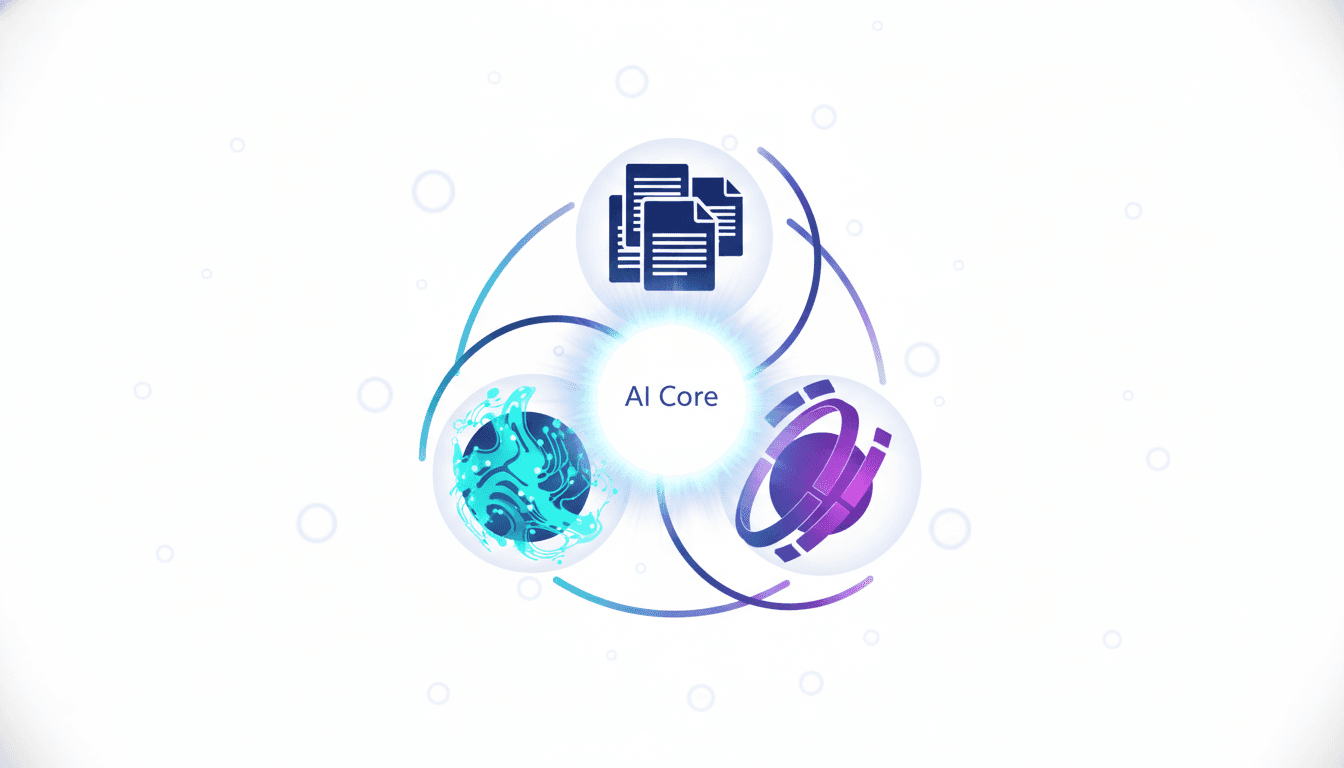
According to technical briefs released by both companies, these systems can break down abstract executive directives into thousands of granular sub-tasks, assign those tasks to specialized internal "agents," debate alternative solutions, test code or financial models in sandbox environments, and execute the final strategy across corporate software stacks.
Key Breakthrough Features Driving the 2026 Transition:
- Autonomous Horizon Planning: Models can maintain project momentum over weeks, proactively identifying roadblocks and altering strategies without human prompts.
- Recursive Self-Correction: Systems mathematically verify their own outputs against regulatory standards and mathematical proofs before presenting final deliverables.
- Native Multi-Agent Orchestration: Seamless collaboration between specialized instances—such as legal, financial, and engineering agents—operating concurrently.
- Enterprise Sandboxing: Secure, isolated execution environments allowing AI agents to interact directly with legacy ERP, CRM, and cloud infrastructure.
Industry Reactions and Market Implications

Wall Street analysts reacted swiftly to the news, projecting a massive acceleration in enterprise software spending alongside a fundamental restructuring of white-collar labor markets. Venture capital firms are already pivoting investment strategies toward enterprise orchestration layers capable of managing fleets of autonomous agents.
"We are no longer talking about software that helps you write an email or debug a single block of code," said Dr. Elena Rostova, Senior Technology Strategist at Global Horizon Capital. "We are witnessing the commercial birth of digital labor. Enterprises will soon measure workforce capacity not just in headcount, but in active agent fleets."
Corporate leaders have struck a balance between optimism and caution. During a hastily arranged briefing, enterprise executives highlighted productivity gains projected to reach 40% across administrative and analytical sectors by late 2026, while labor unions and policymakers immediately raised fresh concerns regarding displaced knowledge workers and operational transparency.
Comparative Overview: The 2026 Frontier Models
| Metric / Feature | OpenAI Next-Gen Architecture | Google Autonomous System |
|---|---|---|
| Core Focus | Complex enterprise reasoning & multi-day project execution | Ecosystem integration & real-time multi-agent collaboration |
| Reasoning Engine | Recursive Tree-of-Thought with automated validation | Dynamic Graph-Based Agent Orchestration |
| Primary Target Market | Fortune 500 finance, legal, and strategic planning | Global supply chain, cloud infrastructure, and enterprise ops |
| Commercial Availability | Rolling out to enterprise tier immediately | Beta access starting Q2 2026 |
The Road Ahead: Regulation and Trust
As these autonomous systems begin interfacing directly with financial accounts, supply chains, and legal databases, regulatory scrutiny is intensifying on both sides of the Atlantic. lawmakers in Washington and Brussels are drafting emergency guidelines regarding liability when autonomous agents make high-stakes commercial errors.
Both OpenAI and Google emphasized their commitment to safety, pointing to embedded "circuit breakers" and transparent audit logs designed to let human supervisors retrace an agent's decision-making steps. However, as the boundaries between human oversight and machine autonomy continue to blur, the true test of these 2026 models will not just be their raw intelligence, but the trust they command in the global marketplace.
Frequently Asked Questions
What makes the 2026 AI models different from previous versions?
Unlike traditional chatbots that rely on single-turn prompts and human direction, the 2026 models feature self-reasoning and multi-agent capabilities. They can independently plan, execute, test, and correct complex, multi-step workflows over extended periods without human intervention.
How will these autonomous systems impact enterprise labor?
Industry experts project significant productivity gains in administrative, legal, and analytical sectors. While routine tasks will be heavily automated, workers will increasingly transition into supervisory and strategic roles, managing fleets of specialized AI agents rather than performing manual execution.