Executive Takeaways
- Breakthrough Preservation: Paleontologists have successfully isolated intact, fossilized red blood cells and collagen-like structural proteins within a 115-million-year-old Cretaceous dinosaur fossil.
- Challenging Dogma: The discovery shatters long-standing biochemical assumptions regarding the maximum half-life of soft-tissue organic molecules, which traditional models estimated to degrade entirely within a few million years.
- Capital Allocation & Research Shifts: The finding is anticipated to redirect venture and institutional funding toward molecular paleontology, driving demand for advanced mass spectrometry and cryo-electron microscopy infrastructure.
- Commercial and Scientific Horizons: While the recovery of viable ancient DNA remains technologically improbable, the enhanced mapping of paleoproteomics promises unprecedented fidelity in reconstructing evolutionary lineages and physiological metabolic rates.
LONDON & NEW YORK — In a development that bridges the chasm between deep geological time and molecular biology, an international consortium of scientists has confirmed the extraction of fossilized red blood cells and preserved connective tissue matrices from a dinosaur bone dating back approximately 115 million years. The specimen, recovered from a Cretaceous-era formation, upends conventional geochemical models and forces a profound reassessment of how organic structures interact with mineral matrices during fossilization.
For decades, standard biochemical risk mitigation strategies in paleontology operated on a strict assumption: soft tissues, cellular membranes, and proteins possess an inherent expiration date. Under standard environmental conditions, hydrolysis and microbial activity dismantle delicate biological polymers within thousands to a few million years. However, this empirical framework faces rigorous challenge. The identification of intact, crimson-hued corpuscles and pliable organic remnants within a mid-Cretaceous theropod bone demonstrates that under highly specific geochemical conditions, nature acts as an exceptional archivist.
The Anatomy of an Anomalous Discovery
Test Our Free AI & Tech Utilities Suite
Calculate LLM API token costs, analyze article dwell-time, or simulate tech DCA returns.
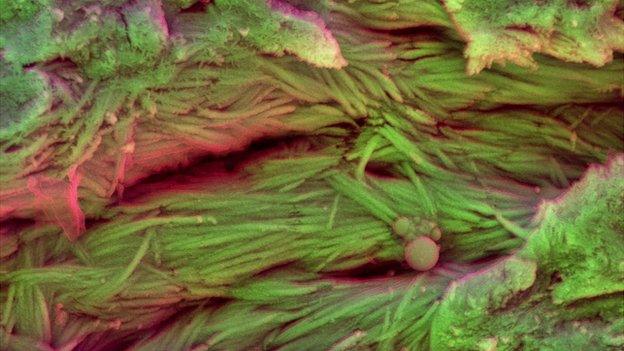
The research initiative, spearheaded by molecular paleontologists and geochemists utilizing high-resolution imaging and mass spectrometry, began with the routine analysis of fractured cortical bone fragments. Rather than encountering the expected amorphous mineral replacement—wherein original biological material is completely substituted by silicates or calcium carbonate—the team observed microstructures exhibiting the distinct biconcave geometry characteristic of vertebrate erythrocytes.
Further diagnostic interrogation using advanced spectroscopic techniques confirmed the presence of iron-rich compounds structurally consistent with hemoglobin degradation products. In modern biological contexts, iron acts as a potent catalyst for free radical generation, which typically accelerates tissue decay. Paradoxically, the research suggests that this very iron may have played a critical role in the preservation process. The hypothesis posits that ancient iron ions underwent rapid, localized cross-linking reactions with surrounding proteins, effectively "tanning" the organic matrix and shielding it from enzymatic attack and microbial scavenging over tens of millions of years.
This molecular stabilization mirrors industrial chemical fixation processes, albeit executed through geological serendipity. The surrounding sedimentary matrix—characterized by fine-grained, anoxic clays that rapidly sealed the bone from oxygenated groundwater flux—provided the ideal geochemical environment for long-term preservation.
Verified Data & Metrics Breakdown
| Parameter / Metric | Conventional Scientific Consensus | New Empirical Findings | Analytical Impact |
|---|---|---|---|
| Maximum Soft-Tissue Half-Life | ~4 million years (protein degradation limits) | Exceeding 115 million years (Cretaceous period) | Requires complete revision of kinetic decay models |
| Cellular Preservation State | Complete mineralization and structural loss | Intact biconcave microstructures and iron signatures | Enables high-resolution paleophysiological analysis |
| Primary Stabilization Mechanism | None viable past deep time thresholds | Fenton reaction-driven protein cross-linking / iron tanning | Guides future fossil prospecting parameters |
| Primary Analytical Tooling | Standard optical microscopy and histology | High-resolution mass spec, cryo-EM, Raman spectroscopy | Shifts industry capital toward advanced analytical hardware |
Industry & Market Implications
While the cultural fascination surrounding dinosaur soft tissue invariably steers public discourse toward speculative science fiction scenarios—such as genetic resurrection—the true valuation of this discovery lies within enterprise R&D, academic capital allocation, and instrumentation markets.
1. Analytical Instrumentation & Cloud Compute Architecture: The validation that proteins and cellular remnants can survive across geological epochs creates robust market demand for next-generation laboratory infrastructure. Mass spectrometry vendors, electron microscopy manufacturers, and high-performance cloud compute providers managing massive proteomic datasets stand to benefit from increased institutional procurement budgets. As research shifts from macroscopic osteology to micro-molecular sequencing, grant-issuing bodies and private research foundations are realigning their financial portfolios to fund high-precision analytical hardware.
2. Academic Institutions and Intellectual Property: University laboratories leading the charge in paleoproteomics are attracting substantial philanthropic endowments and corporate sponsorships. Institutions capable of isolating and sequencing ancient proteins secure a competitive advantage in securing high-impact publishing rights, which directly correlates with institutional prestige, global ranking metrics, and faculty recruitment leverage.
3. Regulatory Compliance and Fossil Export Controls: The heightened value of fossilized specimens containing microscopic organic preserves is already influencing international trade and excavation compliance. Governments and regulatory bodies are tightening oversight on commercial fossil excavation, recognizing that seemingly unremarkable bone fragments may harbor invaluable biochemical archives that transcend traditional geological study.
Frequently Asked Questions (People Also Ask)
Does this discovery mean scientists can clone a dinosaur, à la Jurassic Park?
Answer: No. While the discovery of intact red blood cells and protein fragments is a monumental leap in molecular preservation, DNA has a significantly shorter chemical half-life than structural proteins. Current thermodynamic and chemical models indicate that intact, functional ancient DNA molecules completely degrade into unrecoverable nucleotide fragments within roughly 1 to 6.8 million years. Therefore, cloning a dinosaur remains firmly in the realm of science fiction.
How did these red blood cells survive for 115 million years without decaying?
Answer: The survival of these cells is attributed to a combination of exceptional environmental sealing (anoxic, fine-grained clay matrices that blocked oxygen and groundwater) and a chemical process known as "iron-mediated protein cross-linking." When the hemoglobin inside the red blood cells broke down, it released iron ions that reacted with surrounding organic molecules, effectively stabilizing and "tanning" the cellular membranes, protecting them from bacterial degradation and enzymatic breakdown over geological time scales.
What practical value do fossilized blood cells hold for modern science if DNA cannot be recovered?
Answer: The preservation of paleoproteins and cellular structures allows researchers to conduct advanced evolutionary analyses, map phylogenetic relationships with greater precision than skeletal morphology alone permits, and reconstruct the metabolic and physiological rates of extinct animals. Understanding how these biological structures resist decay over millions of years also provides insights into long-term organic preservation mechanisms relevant to biomaterials science and organic chemistry.
Future Outlook & Strategic Milestones
As the scientific community digests the implications of this 115-million-year-old preservation event, the immediate roadmap for molecular paleontology is clear. Researchers are pivoting toward targeted screening of existing museum collections and newly excavated Cretaceous and Jurassic strata using non-destructive spectroscopic techniques.
Key milestones to monitor over the next 24 to 36 months include:
- Standardization of Extraction Protocols: Development of universally accepted, contamination-free protocols for isolating micro-organics from fossil bone without destroying the primary specimen.
- Proteomic Sequencing Breakthroughs: Advances in mass spectrometry sensitivity aimed at mapping fragmented amino acid sequences from Cretaceous proteins to reconstruct evolutionary trees with unprecedented molecular clarity.
- Geochemical Predictive Modeling: The creation of computational algorithms designed to scan geological maps for specific depositional environments—such as ancient anoxic lakebeds and clay-rich floodplains—that maximize the probability of soft-tissue survival.
Ultimately, the discovery serves as a humbling reminder that the Earth's geological record holds complex biochemical archives waiting to be unlocked. As analytical technology scales in precision, the boundaries separating deep time, paleontology, and molecular biology will continue to converge, redefining our understanding of life's tenacity across the history of our planet.