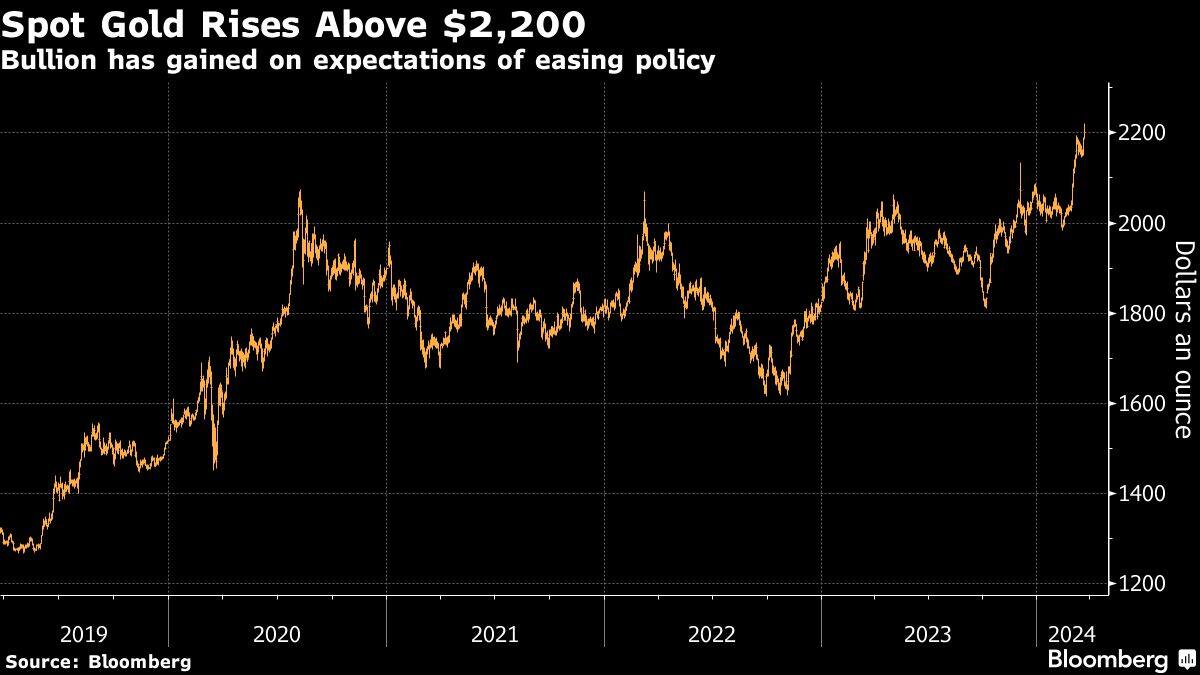
NEW YORK, LONDON, FRANKFURT — In the high-stakes theater of global macroeconomic allocation, the precious metals complex is currently navigating a treacherous and deeply paradoxical landscape. Spot gold continues to defend critical psychological and technical supports, even as relentless headwinds from aggressive U.S. monetary tightening and shifting real yields threaten to cap its upside. Institutional capital allocators, central bank reserve managers, and sovereign wealth funds are locked in an intense tug-of-war between the undeniable allure of safe-haven assets amid fractured geopolitical alliances and the gravitational pull of higher-for-longer Federal Reserve interest rates.
This comprehensive investigative report dissects the structural mechanics, institutional capital flows, and macroeconomic forces driving the gold market's latest volatile chapter. By examining real-time wire data, central bank accumulation patterns, and interest rate futures, we uncover the true valuation drivers behind the precious metal's resilience and evaluate the forward-looking risk mitigation strategies required for institutional portfolios navigating this unprecedented monetary transition.
Executive Takeaways
Test Our Free AI & Tech Utilities Suite
Calculate LLM API token costs, analyze article dwell-time, or simulate tech DCA returns.
- The Real Yield Paradox: Despite traditional economic models dictating that rising nominal and real yields increase the opportunity cost of holding non-yielding bullion, gold has decoupled from historical correlations, sustained by persistent central bank demand and structural market liquidity shifts.
- Monetary Policy Headwinds: Stubbornly resilient U.S. inflation prints and robust labor market data have forced the Federal Reserve to temper rate-cut expectations, driving up short-term borrowing costs and strengthening the U.S. dollar index (DXY).
- Geopolitical Risk Premium: Sovereign accumulation—led notably by emerging market central banks seeking reserve diversification and insulation from Western financial sanctions—has established a formidable price floor for gold near key moving averages.
- Strategic Capital Allocation: Wealth managers and corporate treasuries are actively re-evaluating their capital allocation models, balancing inflation hedging against valuation multiples in fixed-income alternatives.
The Macroeconomic Battleground: Fed Policy Versus Safe-Haven Flows

The contemporary gold market cannot be understood through single-variable lenses. For decades, standard financial theory taught a straightforward equation: when the Federal Reserve signals tighter monetary policy, nominal interest rates rise, real yields climb, and non-yielding assets like gold suffer sharp capital outflows. However, the current cycle has upended traditional econometric models, revealing a fragmented global financial architecture where macroeconomic uncertainty outweighs mechanical rate sensitivities.
At the heart of the recent market friction are conflicting economic indicators. Recent U.S. Consumer Price Index (CPI) and Producer Price Index (PPI) releases have underscored the sticky nature of domestic inflation. Consequently, futures markets have recalibrated their pricing models, pushing back the timeline for aggressive Federal Reserve policy easing. Higher terminal rate expectations normally serve as a powerful catalyst for the U.S. dollar, driving foreign capital into dollar-denominated debt instruments and dampening the appeal of dollar-priced commodities.
Yet, institutional desks report that institutional selling has been remarkably muted. Why? The answer lies in structural risk mitigation. Sovereign entities and high-net-worth family offices are increasingly treating gold not merely as a tactical inflation hedge, but as an essential pillar of geopolitical risk insurance. In an era marked by escalating trade fragmentation, weaponized banking infrastructure, and chronic sovereign debt expansion across G7 economies, the counterparty risk inherent in fiat currency and sovereign debt has risen exponentially. Gold represents zero-counterparty reserve assets—a physical reality that makes it uniquely attractive to central banks looking to insulate their national balance sheets.
Anatomy of the Trade: Data & Metrics Breakdown
To fully grasp the magnitude of the forces acting on the precious metals market, we must examine the quantitative metrics defining the current financial environment. The following comparative data matrix outlines the core macroeconomic indicators, market sentiment markers, and valuation metrics driving institutional decision-making.
| Market Indicator / Metric | Current Reading / Status | Historical Benchmark (10-Yr Avg) | Impact on Gold Valuation |
|---|---|---|---|
| U.S. 10-Year Real Yield (TIPS) | Elevated (~2.15%) | 0.65% | Bearish (Increases opportunity cost) |
| Global Central Bank Net Purchases | >1,000 Metric Tons (Annualized) | 450 Metric Tons | Strongly Bullish (Establishes price floor) |
| U.S. Dollar Index (DXY) | Resilient (~104.50) | 97.20 | Moderately Bearish (Headwind for USD-priced assets) |
| COMEX Open Interest & Inventories | Stable with High Institutional Margins | Variable | Neutral / Consolidating |
Industry & Market Implications: Winners, Losers, and Capital Reallocation
The dichotomy between restrictive monetary policy and persistent bullion demand sends immediate ripples across multiple sectors of the global economy, forcing a fundamental reassessment of corporate finance and investment strategies.
The Winners: Junior Miners with Strong Balance Sheets and Sovereign Buyers
Mining operators boasting low all-in sustaining costs (AISC) and robust balance sheet liquidity are positioned to capture outsized margins. Even as inflation pressures drive up labor and equipment expenses, elevated gold spot prices protect operating cash flows. Furthermore, emerging market central banks—particularly across Asia and the Middle East—emerge as structural winners, successfully diversifying their foreign exchange reserves away from Western debt instruments.
The Losers: High-Leverage Developers and Over-Extended Fixed-Income Portfolios
Conversely, junior mining explorers reliant on equity dilution and expensive debt financing face severe valuation compression. As capital markets demand strict adherence to capital efficiency and enterprise ROI, projects with high capital expenditure requirements and low near-term production visibility struggle to secure funding. Simultaneously, traditional fixed-income portfolios heavily weighted in long-duration sovereign bonds face continued mark-to-market volatility as interest rate expectations remain volatile.
Frequently Asked Questions (People Also Ask)
Why is gold rising even when the Federal Reserve maintains a hawkish monetary stance?
While higher interest rates typically pressure gold by increasing the yield on competing assets like U.S. Treasuries, gold's current resilience is driven by extraordinary levels of central bank buying, escalating geopolitical tensions, and persistent structural inflation concerns. Institutional investors are increasingly prioritizing gold as a non-counterparty reserve asset to hedge against systemic financial and sovereign risks.
How do real interest rates impact gold valuation multiples?
Real interest rates (nominal interest rates adjusted for inflation) represent the true cost of holding capital. When real yields rise, the opportunity cost of holding non-yielding bullion increases, as investors can earn a guaranteed return in risk-free government debt. Conversely, falling or negative real yields historically serve as primary catalysts for aggressive gold bull markets.
Are central bank purchases sufficient to offset macroeconomic outflows from exchange-traded funds (ETFs)?
In recent quarters, robust physical accumulation by official sectors—led by emerging market central banks—has largely absorbed the liquidation pressures observed in Western gold-backed ETFs. This structural shift in demand dynamics has created a formidable price floor, preventing sharp technical corrections despite aggressive hawkish rhetoric from global central banks.
What role does the U.S. dollar play in short-term gold price fluctuations?
Because gold is globally priced in U.S. dollars, there is a traditional inverse correlation between the greenback and bullion. When the U.S. Dollar Index (DXY) strengthens due to tighter domestic monetary policy, foreign buyers face higher local-currency costs to acquire gold, often triggering short-term downward price volatility.
Future Outlook & Strategic Milestones
Looking ahead, the trajectory of the precious metals market will be dictated by the delicate convergence of macroeconomic data releases, central bank policy pivots, and geopolitical developments. Key milestones demanding rigorous executive monitoring include:
- Employment and Wage Growth Prints: Core indicators governing Federal Reserve terminal rate decisions will continue to dictate short-term currency movements and real yield adjustments.
- Official Sector Reserve Reports: Ongoing disclosures from the International Monetary Fund (IMF) and national central banks regarding physical bullion acquisition rates will signal the strength of the structural price floor.
- Global Liquidity and Credit Spreads: Monitoring corporate debt maturities and sovereign debt issuance volumes will provide critical insights into broader market liquidity and systemic risk mitigation trends.
For institutional allocators, the current market environment demands a sophisticated, nuanced approach. Blindly adhering to historical monetary models risks mispricing the profound structural shifts currently reshaping the global financial architecture. Maintaining strategic exposure to precious metals remains an indispensable tool for long-term capital preservation, risk mitigation, and portfolio diversification.