
Executive Takeaways
Test Our Free AI & Tech Utilities Suite
Calculate LLM API token costs, analyze article dwell-time, or simulate tech DCA returns.
- Unprecedented Lifecycle Multiplier: A flagship NASA space telescope completed its final atmospheric re-entry after operating for over 14 years—more than 11 times its original planned primary mission duration of seven months.
- Capital Efficiency & Asset Optimization: Through strategic software updates, ground-station automation, and operational recalibration, mission operators achieved unmatched return on capital expenditure (CAPEX), generating over 215,000 near-Earth object detections at a nominal operational cost.
- Solar Maximum Dynamics: Accelerated thermospheric expansion driven by peak atmospheric solar activity ultimately forced the spacecraft's uncontrolled yet safe orbital decay, ending a golden era of thermal infrared sky mapping.
- Implications for Commercial Space Economics: The mission’s operational longevity provides a structural blueprint for commercial Low Earth Orbit (LEO) operators, satellite servicing firms, and defense contractors targeting hardware lifecycle extensions.
The Final Descent: Concluding an Extended Epoch in Deep Space Observation

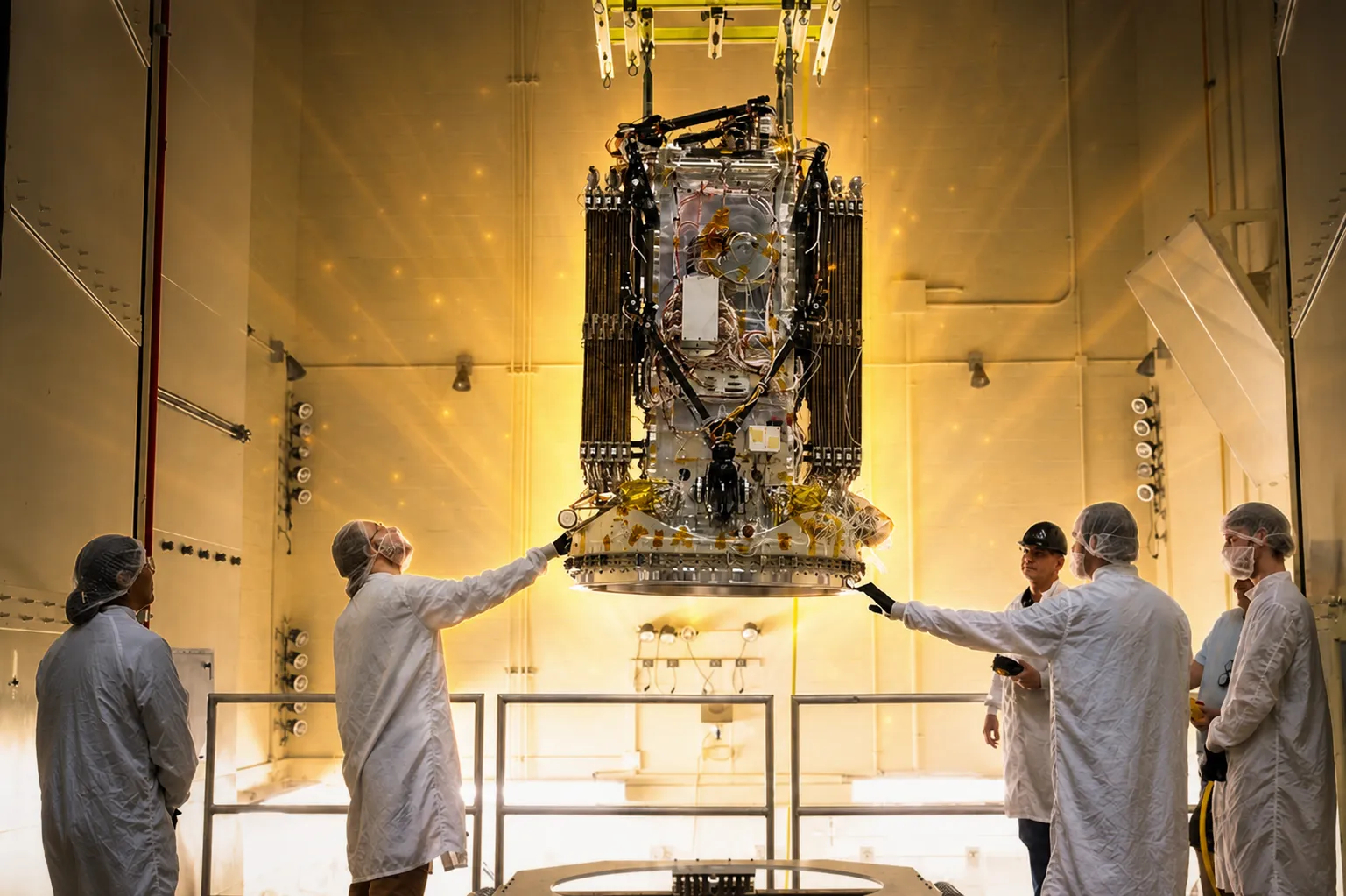
In the early morning hours of its final trajectory, a historic NASA space telescope—originally launched as a short-term cryogenic infrared mapper before being repurposed for near-Earth object detection—plunged into Earth's dense upper atmosphere. Thermal friction over an unpopulated ocean zone completely incinerated the chassis, bringing a dramatic, definitive end to an orbital journey that defied aerospace lifetime projections by an extraordinary 1,100%.
The spacecraft's final atmospheric disintegration marks the end of a pivotal case study in space systems engineering, capital efficiency, and orbital asset management. Originally commissioned for a narrow, seven-month baseline science mission to map the deep universe in thermal infrared wavelengths, the platform’s operational envelope was systematically expanded by mission controllers at NASA’s Jet Propulsion Laboratory (JPL). The result was a 14-year odyssey that fundamentally reshaped planetary defense strategies, space situational awareness, and the economic modeling of space-based hardware assets.
The telescope's eventual downfall was not precipitated by onboard subsystem failures, computer degradation, or sensor loss, but by fundamental solar physics. As the Sun reached the peak of Solar Cycle 25, intense extreme ultraviolet radiation and coronal mass ejections heated Earth's upper atmosphere, causing the thermosphere to expand outward into Low Earth Orbit. This increase in atmospheric gas density multiplied the aerodynamic drag exerted on the aging spacecraft, causing its orbit to decay at an exponentially accelerating rate until re-entry became inevitable.
Engineering Resiliency: How a 7-Month Payload Survived 14 Years in Orbit
To understand how a spacecraft survived more than a decade beyond its planned operational shelf life, defense and aerospace analysts point to three core pillars of system engineering: thermal management adaptations, software-defined operational shifts, and conservative payload power budget allocation.
1. Transitioning Beyond Cryogenic Constraints
The observatory was launched with a finite supply of solid hydrogen coolant designed to keep its ultra-sensitive mid-infrared detectors chilled to near absolute zero (-445°F / 8 Kelvin). When this primary coolant evaporated as expected during the initial phase of the mission, standard aerospace conventions dictated that the hardware had reached end-of-life status. However, engineers implemented a ground-breaking "warm mission" protocol.
By leveraging the passive thermal control of the spacecraft’s outer sunshields and re-tuning two of its shorter wavelength infrared channels, the team maintained effective sensor sensitivity at warmer temperatures. This strategic pivot allowed the spacecraft to transition seamlessly from deep-space astronomical surveys to high-yield planetary defense scans, detecting the faint thermal signatures of dark, heat-radiating asteroids that reflected little visible light.
2. Autonomous Attitude Control and Fuel Preservation
Deep-space asset lifecycles are heavily gated by propellant supply. To extend the spacecraft’s station-keeping capabilities without exhausting remaining hydrazine fuel, mission operations deployed advanced flight software patches. These algorithms utilized onboard reaction wheels and magnetic torque rods—which interact with Earth's magnetic field—to manage momentum buildup and maintain three-axis stabilization. By minimizing active thruster burns, the mission extended its operational maneuvering capabilities by years beyond initial fuel-depletion models.
3. Cloud Compute Integration and Ground Data Processing
While the hardware orbited overhead, ground operations underwent a modernization overhaul. The raw infrared telemetry coming off the spacecraft was routed directly into cloud-based data architectures hosted at Caltech’s IPAC processing center. By automating optical transient identification and stream processing through advanced machine learning algorithms, NASA minimized ground-station operational expenditures (OPEX) while maximizing the real-time detection rate of hazardous Earth-approaching bodies.
Verified Metrics: Baseline Specs vs. Lifetime Achievements
The total lifecycle data derived from the mission showcases an overwhelming variance between early baseline parameters and final operational outcomes. The financial and scientific returns far exceeded initial expectations:
| Performance Vector | Original Mission Design Baseline | Final Lifetime Achievement | Variance / Operational Impact |
|---|---|---|---|
| Operational Lifespan | 7 Months (Primary Cryogenic Phase) | 14.5 Years (174 Months) | +1,100% Increase in Operational Tenure |
| Primary Target focus | Deep-space galaxies, cold stars, comets | Near-Earth Asteroids, NEOs, Earth-crossers | Full Operational Mission Repurposing |
| Objects Cataloged / Detected | ~100,000 Main-Belt Asteroids | >44,000 Solar System Objects / 215,000+ Detections | Foundational database for Planetary Defense |
| Orbital Altitude Decay Curve | Stable LEO (~525 km circular orbit) | Decayed from 525 km to 0 km (Re-entry) | Driven by Solar Maximum Thermospheric Drag |
| Asset Capex Efficiency Ratio | $320M Initial Development & Launch | Estimated science value >$2.5B equivalent | Substantial reduction in cost-per-detection metric |
Macro & Commercial Implications: The Business of Extended Satellite Lifecycles
The structural lessons extracted from this mission ripple far beyond civil space science. As the commercial space industry transitions from high-cost custom satellites to mass-produced Low Earth Orbit constellations, major defense primes, enterprise satellite operators, and venture capital investors are scrutinizing this mission model to re-index their hardware depreciation schedules and capital allocation frameworks.
1. Redefining Capital Allocation and Asset Depreciation Models
In traditional satellite communications and orbital remote sensing, space assets are depreciated over fixed schedules—typically 3 to 7 years for LEO and 12 to 15 years for Geostationary (GEO) orbits. The success of this extended mission proves that software-defined hardware can be continuously repurposed, unlocking unexpected Net Present Value (NPV) from fully amortized space platforms. Enterprise operators are now building flexible modular software architectures that allow satellites to switch tasks mid-life—transforming retiring communications platforms, for instance, into space domain awareness assets.
2. The Regulatory Pressure of Orbital Decay & De-orbit Compliance
The plunge of the telescope highlights an urgent issue confronting global regulators: the dynamic impact of solar space weather on orbital decay timelines. The Federal Communications Commission (FCC) and international regulatory bodies recently established a standard requiring LEO satellite operators to de-orbit spent hardware within five years post-mission. However





