By The Investigative Desk | Global Technology & Financial Markets Bureau
Published August 10, 2026
Executive Takeaways
Test Our Free AI & Tech Utilities Suite
Calculate LLM API token costs, analyze article dwell-time, or simulate tech DCA returns.
- The Strategic Pivot: On August 10, 2026, OpenAI officially restructured and scaled its premier frontier-AI cybersecurity initiative, Daybreak, responding to an aggressively shrinking defense window against autonomous state-sponsored and criminal cyber syndicates.
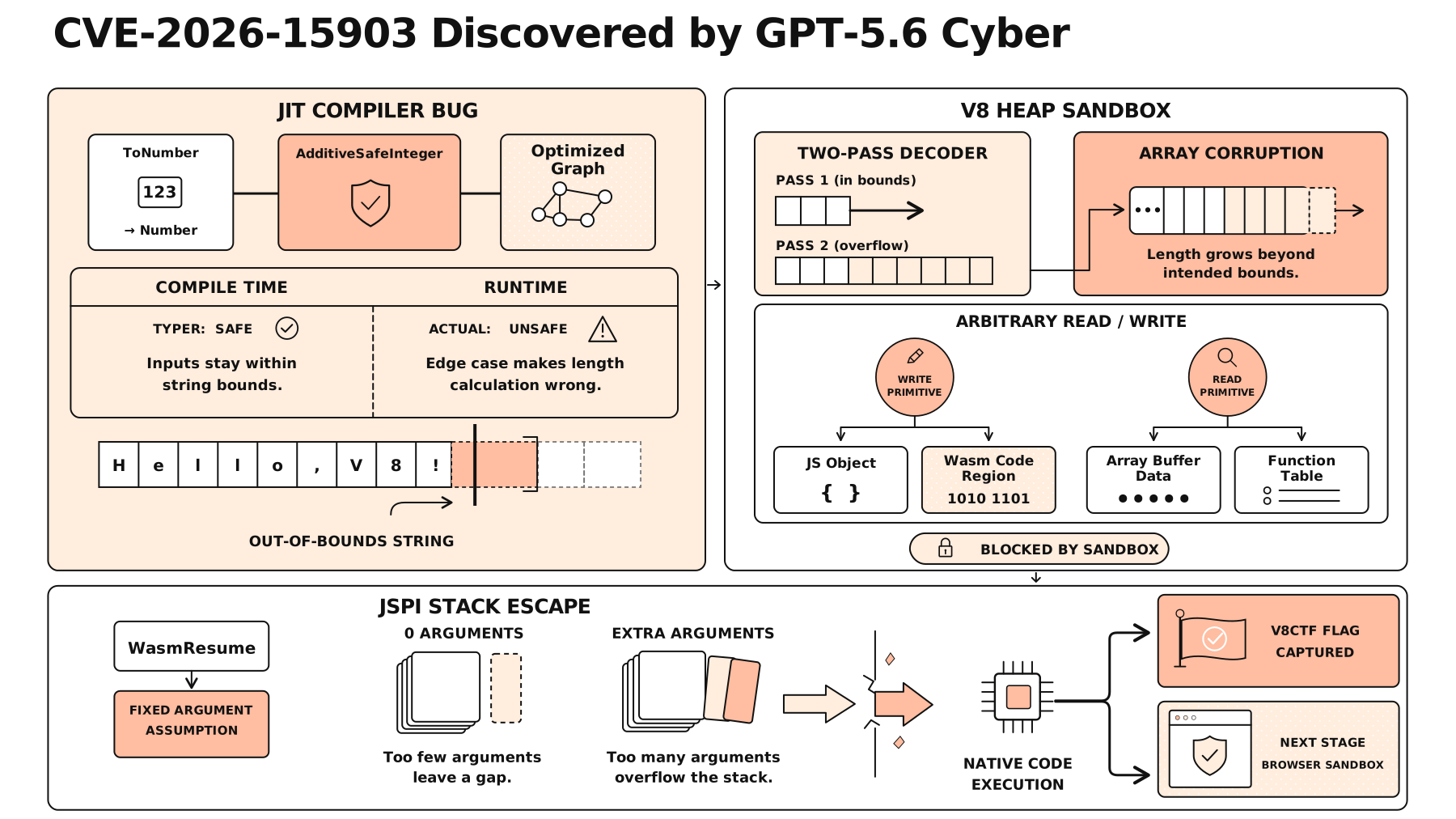
- The Core Weaponry: The centerpiece of the expansion is the debut of GPT-5.6-Cyber, a specialized, highly aligned iteration of OpenAI’s flagship model designed specifically for preemptive threat hunting, automated vulnerability remediation, and real-time network defense architecture.
- Market & Economic Impact: The move triggers an immediate re-evaluation of enterprise risk mitigation budgets, capital allocation strategies for cybersecurity infrastructure, and valuation multiples across legacy security software-as-a-service (SaaS) providers.
- The Governance Tightrope: As OpenAI unlocks advanced offensive-defensive dual-use capabilities for enterprise and defense partners, regulatory compliance and cloud compute architecture governance face unprecedented stress tests.
Comprehensive Narrative: The Compression of the Cyber Defense Horizon
In the high-stakes theater of global digital warfare, the calculus of time has fundamentally shifted. For decades, Chief Information Security Officers (CISOs) operated under an asymmetric disadvantage: defenders had to be right 100% of the time, while threat actors required only a single unpatched vulnerability to breach a corporate perimeter. By August 2026, that already-fragile dynamic devolved into a hyper-accelerated race against algorithmic time. Artificial intelligence, weaponized by both adversarial nation-states and sophisticated ransomware cartels, reduced the mean time to exploit (MTTE) from weeks to mere seconds.
It was against this volatile backdrop that OpenAI dropped a seismic announcement on August 10, 2026: the expansion of Daybreak, its foundational frontier-AI-for-cybersecurity initiative, alongside the commercial rollout of GPT-5.6-Cyber. According to primary disclosures from OpenAI, the initiative is designed to fundamentally level the playing field, shifting enterprise security postures from reactive incident response to predictive, autonomous cyber defense.
Initially conceived as a controlled research sandbox for auditing critical infrastructure vulnerabilities, Daybreak has now evolved into a sprawling enterprise deployment framework. The expansion addresses a critical market failure: while enterprise IT spending on cybersecurity has soared past $200 billion annually, the talent shortage of elite security analysts has widened, leaving cloud compute architecture and legacy security information and event management (SIEM) tools overwhelmed by polymorphic malware and generative social engineering.
Enter GPT-5.6-Cyber. Unlike general-purpose large language models, this new iteration has been deeply fine-tuned on petabytes of verified threat intelligence, proprietary source code repositories, network telemetry, and adversarial simulation data. It operates with a vastly expanded context window, enabling it to ingest entire corporate network topologies, analyze historical log files, and identify zero-day vulnerabilities before malicious actors can weaponize them. However, this democratization of hyper-advanced cyber capabilities raises profound questions regarding risk mitigation, dual-use proliferation, and regulatory compliance.
Verified Data & Metrics Breakdown
| Metric / Specification | Legacy Security Paradigm (Pre-2025) | OpenAI Daybreak & GPT-5.6-Cyber Standard (Aug 2026) |
|---|---|---|
| Mean Time to Detect (MTTD) | Hours to Days (Average 204 days for complex breaches) | Real-Time (< 45 seconds via automated telemetry ingestion) |
| Vulnerability Remediation Cycle | Weeks (Patch management backlog) | Automated Patch Generation & Staging (< 10 minutes) |
| Context Window & Data Ingestion | Limited to fragmented log files and isolated alerts | Enterprise-wide multi-terabyte code and network topology mapping |
| Primary Target Audience | Human Security Analysts (SOC Tier 1-3) | Autonomous Defense Agents + Human-in-the-Loop Oversight |
| Deployment Architecture | On-premise SIEM / Hybrid Cloud silos | Secure, Air-Gapped Cloud Compute Infrastructure |
Industry & Market Implications: Winners, Losers, and Capital Allocation
The restructuring of Daybreak and the commercialization of GPT-5.6-Cyber send immediate shockwaves through the global financial markets, forcing institutional investors and corporate boards to re-examine their technology portfolios.
The Winners: Autonomous Security Pioneers and Enterprise Resiliency
Cloud service providers and next-generation cybersecurity firms that successfully integrate GPT-5.6-Cyber into their core offerings stand to capture outsized market share. Enterprises are prioritizing vendor consolidation; platforms that can demonstrate immediate enterprise ROI through automated threat neutralization will command premium pricing power. Furthermore, insurers are taking notice: firms utilizing verified Daybreak defense frameworks may soon qualify for preferential cyber insurance underwriting terms and reduced risk premiums.
The Losers: Legacy SIEM and Manual Managed Security Service Providers (MSSPs)
Traditional managed security service providers that rely on human-heavy, rule-based tier-1 monitoring face an existential threat. When an AI agent can analyze telemetry, identify anomalous behavior, and write a functional patch in the time it takes a human analyst to open a ticket, the billable-hour consulting model collapses. Valuation multiples for legacy compliance-checking and basic signature-based antivirus vendors are expected to contract sharply.
Macroeconomic and Geopolitical Ramifications
From a macroeconomic perspective, shrinking the cyber defense window directly impacts market liquidity and systemic financial stability. By insulating critical financial infrastructure, energy grids, and healthcare networks from crippling ransomware attacks, Daybreak aims to prevent billions of dollars in economic downtime. Simultaneously, however, geopolitical tensions surrounding the export controls of advanced cyber-AI models will undoubtedly escalate, as intelligence agencies scrutinize how dual-use frontier models are distributed globally.
Frequently Asked Questions (People Also Ask)
What is OpenAI's Daybreak initiative?
Daybreak is OpenAI’s strategic initiative designed to harness frontier artificial intelligence for cyber defense. Originally launched as a controlled research and auditing program, its August 2026 expansion transforms it into a comprehensive enterprise framework aimed at helping organizations secure critical infrastructure against increasingly sophisticated, AI-driven cyberattacks.
How does GPT-5.6-Cyber differ from standard language models?
GPT-5.6-Cyber is a specialized, domain-specific iteration of OpenAI's flagship model architecture. Unlike general-purpose models, it is fine-tuned specifically on complex code repositories, threat intelligence feeds, network protocol telemetry, and simulated adversarial tactics. It is engineered to perform real-time vulnerability hunting, automated code auditing, and autonomous threat remediation.
Does GPT-5.6-Cyber pose offensive security risks?
Any advanced capability in cybersecurity is inherently dual-use. While GPT-5.6-Cyber is explicitly aligned and deployed for defensive operations—such as patching vulnerabilities and hardening networks—security researchers note that the underlying technical sophistication can theoretically lower the barrier for malicious actors. To mitigate this, OpenAI restricts access through stringent enterprise verification protocols and secure cloud compute boundaries.
How can enterprises gain access to the expanded Daybreak initiative?
Access to Daybreak and GPT-5.6-Cyber is managed through structured enterprise partnerships, tightly coupled with major cloud infrastructure providers and verified defense contractors. Organizations must pass rigorous compliance, security posture, and governance evaluations before integrating the capabilities into their production environments.
Future Outlook: Milestones to Watch
As the cyber defense window continues to contract toward zero, the success of OpenAI’s Daybreak initiative will be measured not by theoretical benchmarks, but by real-world resilience. Over the next 12 to 18 months, industry analysts will closely monitor three critical inflection points:
- Regulatory Interventions: Watch for legislative updates from global regulatory bodies regarding the oversight of autonomous AI agents operating within critical infrastructure networks.
- Adversarial Adaptation: Observe how state-sponsored APT (Advanced Persistent Threat) groups counter-evolve their attack vectors in response to the widespread adoption of GPT-5.6-Cyber across Fortune 500 enterprises.
- Ecosystem Integration: Track the pace at which major enterprise software titans—such as Microsoft, Amazon Web Services, and Google Cloud—embed Daybreak protocols into their native operating environments, signaling a permanent structural shift in how digital security is funded, managed, and executed.