Executive Takeaways
- Federal Reserve Decision: The Federal Open Market Committee (FOMC) voted to hold the benchmark interest rate steady, breaking with unanimous consensus via a notable 10-2 dissent.
- Divergent Equity Performance: Wall Street reacted with sector rotation; cyclical components drove the Dow Jones Industrial Average and the S&P 500 higher, while high-multiple growth equities on the Nasdaq wavered.
- Capital Allocation Shift: Institutional investors are rapidly recalibrating risk mitigation strategies, rotating out of overheated tech valuations and into value-oriented assets with resilient enterprise ROI.
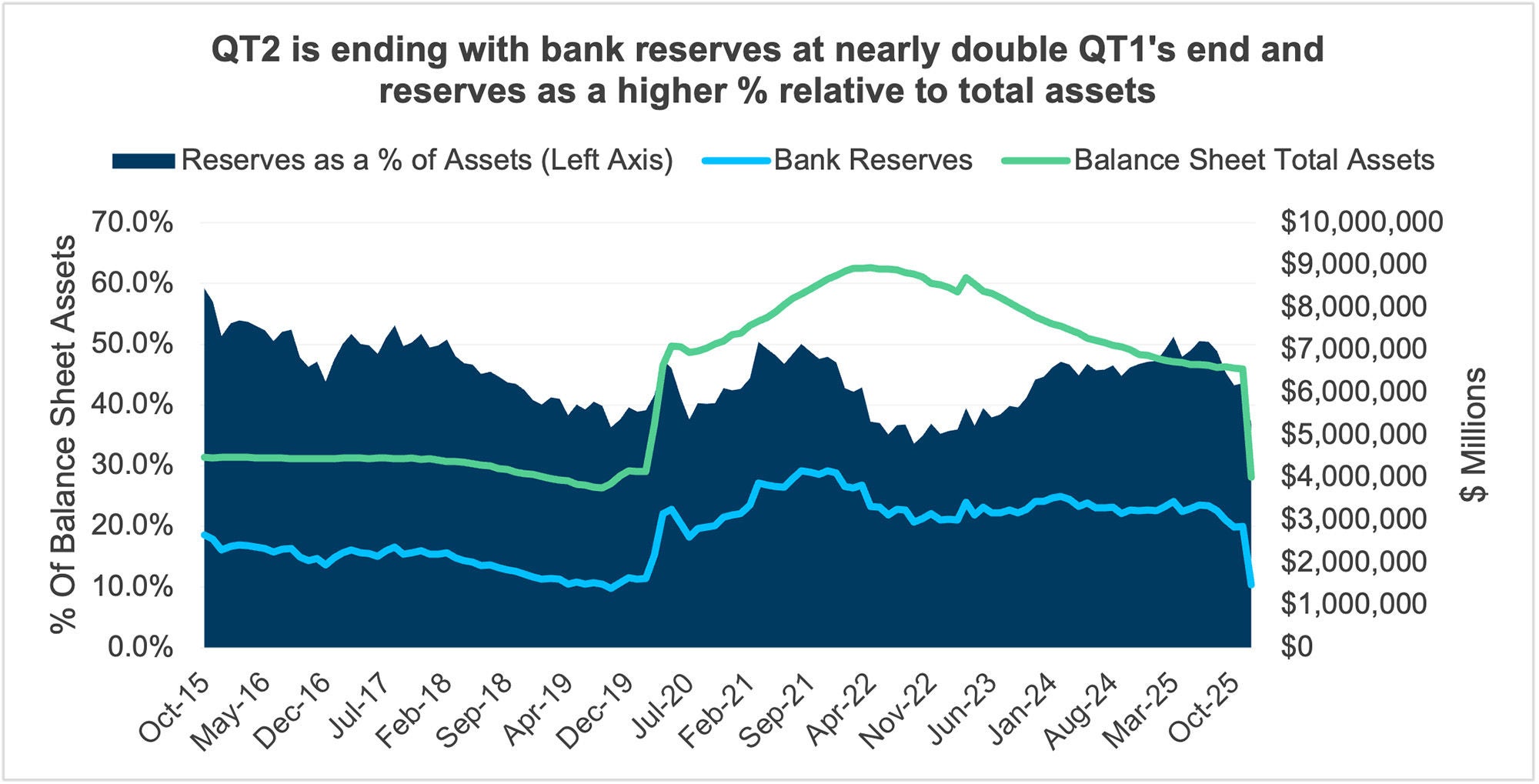
- Monetary Policy Outlook: The widening internal policy split signals increased uncertainty regarding future liquidity injections, infrastructure scalability financing, and quantitative tightening timelines.
NEW YORK — Wall Street delivered a split-screen performance as the Federal Reserve opted to maintain its benchmark interest rate, a decision accompanied by a rare 10-2 dissension that exposed deep-seated ideological fractures within the central bank. As financial markets digested the implications of the monetary pause, equities experienced a pronounced internal rotation. While capital fled high-duration technology shares, causing the Nasdaq Composite to waver and slip into negative territory, cyclical components and defensive value stocks propelled both the S&P 500 and the Dow Jones Industrial Average to notable intraday gains.
This market bifurcation underscores a critical inflection point for global asset allocation. For months, corporate treasuries, private equity firms, and institutional portfolio managers have operated under the assumption of a predictable, linear easing cycle. However, the unexpected two-vote dissent on the Federal Open Market Committee (FOMC)—reflecting divergent views on persistent inflationary pressures versus labor market cooling—has forced a total reevaluation of risk mitigation frameworks, capital allocation models, and corporate valuation multiples across both traditional and emerging sectors.
The Catalytic Decision: Decoding the 10-2 FOMC Dissent
Test Our Free AI & Tech Utilities Suite
Calculate LLM API token costs, analyze article dwell-time, or simulate tech DCA returns.
The Federal Reserve’s decision to hold rates steady was anticipated by consensus forecasting models, but the internal dissent tally caught fixed-income and equity desks off guard. A 10-2 vote represents one of the most fractured central bank decisions in recent memory, signaling that policymakers are no longer coalescing around a single macroeconomic narrative.
The dissenting governors argued that maintaining restrictive monetary policy for an extended duration risks unnecessarily constricting economic velocity, particularly as commercial real estate refinancing walls approach and small business credit conditions tighten. Conversely, the majority maintained that structural inflation risks—fueled by persistent service-sector wage growth and geopolitical supply chain friction—require maintaining a high-interest-rate environment to anchor long-term inflation expectations firmly at the central bank's 2% target.
For institutional investors, this policy gridlock complicates balance sheet management. Chief financial officers navigating corporate debt issuances and capital expenditure programs must now factor in a prolonged period of elevated cost of capital. Consequently, projects requiring heavy upfront capital investment—such as large-scale cloud compute architecture expansions and heavy infrastructure scalability initiatives—are facing heightened internal hurdle rates.
Sector Rotation: Dow and S&P 500 Outpace a Hesitant Nasdaq

The equity market response laid bare the underlying tension between value and growth. As Treasury yields ticked higher following the rate decision, high-valuation technology stocks on the Nasdaq felt immediate downward pressure. Companies with stretched price-to-earnings (P/E) ratios and cash flows projected far into the future are acutely sensitive to shifts in the discount rate. When the risk-free rate remains elevated, the present value of those future earnings diminishes, triggering institutional profit-taking.
Conversely, the Dow Jones Industrial Average and the broader S&P 500 found robust support from cyclical sectors, including industrials, financials, and energy. These companies typically boast immediate cash flow generation, robust balance sheets, and attractive dividend yields, making them favored destinations for institutional capital seeking refuge from valuation compression.
| Market Index | Session Direction | Primary Driving Sector | Institutional Sentiment |
|---|---|---|---|
| Dow Jones Industrial Average | Climbing (+0.54%) | Industrials, Financials | Accumulation / Value Rotation |
| S&P 500 Index | Climbing (+0.32%) | Energy, Healthcare, Defensive | Cautious Optimism / Hedged |
| Nasdaq Composite | Wavering (-0.18%) | Mega-Cap Tech, Semiconductors | Valuation Compression / Profit-Taking |
| 10-Year Treasury Yield | Firming (+4.2 bps) | Sovereign Debt | Re-pricing Terminal Rates |
This divergence highlights a sophisticated market liquidity dynamic. Rather than a broad-based market retreat, institutional managers are engaging in granular portfolio restructuring. Capital is being reallocated away from over-leveraged tech entities toward companies demonstrating pricing power and operational resilience against macroeconomic headwinds.
Industry & Market Implications: Winners and Losers
The Federal Reserve's hawkish pause creates clear economic stratification across corporate America. Understanding who benefits and who suffers from this monetary stance is essential for navigating current market volatility.
The Winners
- Commercial Banks and Asset Managers: Financial institutions with strong net interest margins continue to benefit from higher-for-longer yields, generating substantial net interest income despite slowing loan growth.
- Defensive Value Corporations: Consumer staples, healthcare, and utility providers offering stable cash flows and attractive dividend yields are seeing increased institutional sponsorship as safe-haven assets.
- Cash-Rich Enterprises: Corporations holding pristine balance sheets with zero net debt are capitalizing on higher short-term yields through treasury management, turning cash reserves into significant non-operating income generators.
The Losers
- High-Growth, Pre-Profit Technology Firms: Venture-backed startups and growth-stage tech companies relying on continuous external financing face severe valuation downgrades and stringent regulatory compliance hurdles in raising private capital.
- Leveraged Real Estate Operators: Commercial real estate developers facing upcoming debt maturities must refinance at substantially higher interest rates, pressuring net asset values and pushing distressed assets onto the market.
- Interest-Sensitive Consumer Sectors: Automotive, housing, and discretionary retail sectors continue to experience softer consumer demand as elevated borrowing costs deter major financing commitments.
Frequently Asked Questions (People Also Ask)
Why did the Federal Reserve vote 10-2 to hold rates steady?
The 10-2 vote reflects a rare and widening ideological division within the Federal Open Market Committee (FOMC). While the majority voted to hold rates steady to ensure inflation is sustainably anchored toward the 2% target, the two dissenting members argued that maintaining restrictive monetary policy unnecessarily risks tightening credit conditions and cooling the labor market too aggressively.
Why did the Nasdaq waver while the Dow and S&P 500 climbed?
The Nasdaq is heavily weighted toward high-growth technology companies whose valuations depend heavily on future earnings discounted at lower interest rates. When the Fed signals a "higher-for-longer" rate path, the present value of those future earnings shrinks, driving profit-taking. Conversely, the Dow and S&P 500 feature a greater concentration of cyclical, industrial, and financial stocks that benefit from immediate cash generation and elevated yield environments.
How does a "higher-for-longer" interest rate environment affect corporate capital allocation?
Elevated interest rates increase the cost of debt financing and raise internal hurdle rates for capital expenditures. Corporate treasurers are forced to prioritize projects with high, verifiable enterprise ROI over speculative, long-term growth initiatives. This prompts a shift toward balance sheet optimization, debt reduction, and disciplined cash management.
What should investors watch for in upcoming economic releases?
Market participants should closely monitor upcoming Consumer Price Index (CPI) reports, Personal Consumption Expenditures (PCE) price index prints, and monthly non-farm payroll data. Additionally, commentary from regional Federal Reserve bank presidents will be scrutinized for further clues regarding whether the 10-2 dissent signals a permanent shift toward rate cuts or a prolonged plateau.
Future Outlook: Strategic Milestones to Watch
As the market absorbs the immediate ramifications of the FOMC's 10-2 divided decision, macro strategists are shifting their focus to upcoming catalysts that will dictate monetary policy trajectory through the remainder of the fiscal year. The primary variable remains inflation stickiness versus employment resilience.
Institutional portfolios will likely remain defensive, favoring quality factors—such as robust balance sheets, pricing power, and consistent cash flow generation—over speculative duration plays. Corporate executives must continue to refine their risk mitigation frameworks, ensuring that operational efficiency and disciplined capital allocation remain top priorities in an environment where monetary policy relief is no longer guaranteed.
Ultimately, today's market action confirms that Wall Street is transitioning away from a regime of abundant, low-cost liquidity into a more disciplined, bifurcated economic landscape. Investors and corporate leaders who successfully adapt to this higher-cost-of-capital reality will be best positioned to capture alpha as the Federal Reserve navigates its next policy chapter.