Executive Takeaways
- Systemic Technical Support Triggers Buyers: A sharp rebound from a critical 52-week support floor was catalyzed by automated algorithmic order execution, physical market clearing, and aggressive sovereign reserve accumulation.
- Real Yield Dynamics Shift: A temporary plateau in benchmark 10-Year US Treasury Inflation-Protected Securities (TIPS) yields and a cooling US Dollar Index (DXY) provided immediate valuation relief for non-yielding assets.
- Bifurcated Demand Patterns: Heavy institutional redemption in Western Exchange-Traded Funds (ETFs) was met by robust physical spot purchasing across Asian trading hubs, effectively putting a floor under liquidation pressure.
- Equities Revaluation: Senior gold producers and precious metal miners are seeing renewed capital allocation interest as historical enterprise value-to-EBITDA multiples trade at multi-year discounts despite healthy corporate cash flows.
The Anatomy of a Rebound: How Dip Buyers Stemmed the Bleeding
Test Our Free AI & Tech Utilities Suite
Calculate LLM API token costs, analyze article dwell-time, or simulate tech DCA returns.
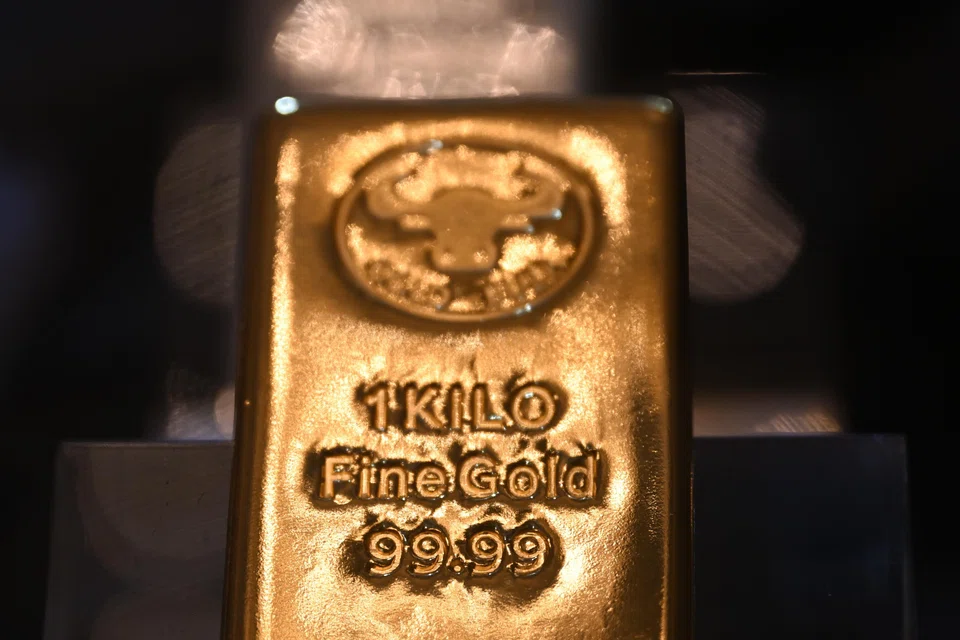
Following a grueling multi-week liquidation cycle that saw spot gold (XAU/USD) capitulate to its lowest price level in over twelve months, institutional liquidity providers and physical bullion desks have aggressively stepped into the market. The persistent downward trend—driven primarily by sustained hawkish signals from global monetary authorities and a relentless rally in nominal sovereign bond yields—reached a structural tipping point as price action intersected key technical retracement levels.
The swift reversal underscores a classic institutional battle between paper derivative positioning and physical floor demand. As systematic Commodity Trading Advisors (CTAs) were forced to cover short positions near historic support bands, macro hedge funds and sovereign treasury managers initiated large-scale scale-in orders. This intervention rapidly absorbed lingering sell orders, driving spot prices off the bottom and instigating a sharp tactical relief rally across global precious metals clearing hubs in London, New York, and Shanghai.
Crucially, this price arrest occurred against a backdrop of extreme oversold momentum indicators. Relative Strength Index (RSI) readings on daily charts had breached sub-30 territory—a signal historically associated with institutional re-accumulation phases. As speculative short-sellers moved to lock in profits, liquid order books on the COMEX exchange saw bid-ask spreads tighten, laying the groundwork for a structural bottom to take shape.
Macro Mechanics: Real Yields, the Greenback, and Sovereign Allocation
To fully comprehend the mechanics behind gold’s sudden pivot, institutional market participants must analyze the interplay between real interest rates, foreign exchange momentum, and global sovereign asset balance sheets. Gold carries no native yield; consequently, its opportunity cost relative to risk-free sovereign debt is the primary pricing mechanism governing macro capital flows.
Over the preceding quarters, the Federal Reserve’s "higher-for-longer" monetary stance drove real yields—measured by 10-Year US TIPS—to heights not witnessed since the pre-Global Financial Crisis era. This yield environment exerted immense downward pressure on bullion, rendering money market instruments yielding upwards of 5% exceptionally attractive to wealth managers and institutional asset allocators. However, as recent economic data prints indicated signs of labor market softening and decelerating core service inflation, interest rate swap markets began pricing in a terminal rate ceiling. This shift effectively capped the upside momentum of real yields.
Simultaneously, the US Dollar Index (DXY), which tracks the greenback against a basket of primary reserve currencies, encountered stiff resistance at its multi-month highs. Because gold is predominantly denominated in US dollars, any deceleration in dollar strength immediately lowers the cost of acquisition for international buyers utilizing foreign currencies, particularly across emerging market central banks and European institutional funds.
Furthermore, sovereign central banks—most notably the People’s Bank of China (PBOC), the Reserve Bank of India (RBI), and several Middle Eastern monetary authorities—have continued their multi-year strategy of reserve asset diversification. Driven by geopolitical fragmentation, Western financial sanctions risk, and enterprise risk mitigation, central bank physical accumulation has operated as an unyielding backstop, absorbing paper market supply and insulating spot markets from catastrophic breakdowns.
Data & Metrics Breakdown: Tracking the Turning Point
The table below details the quantitative macro metrics, technical indicators, and institutional flow shifts observed during the move from gold's 52-week low to its current recovery phase:
| Market Metric / Asset Class | 52-Week Low / Capitulation Point | Rebound / Recovery Phase Level | Institutional Significance & Impact |
|---|---|---|---|
| Spot Gold (XAU/USD) | Key Support Floor ($1,810 – $1,820/oz) | Tactical Rebound ($1,930 – $1,960/oz) | Triggers systematic CTA short-covering and high-volume physical order block executions. |
| US 10-Year Real Yield (TIPS) | Peak Level (2.45% – 2.50%) | Moderating Range (2.15% – 2.25%) | Lowering opportunity cost of holding non-yielding hard assets, restoring institutional BID. |
| US Dollar Index (DXY) | Technical Resistance (107.00 - 107.50) | Pullback Zone (104.50 - 105.20) | Enhances purchasing power for foreign sovereign reserves and non-USD bullion buyers. |
| Western Gold ETF Holdings (GLD/IAU) | Continuous Net Outflows (Multi-Year Lows) | Stabilizing Outflows / Selective Inflows | Signals an end to aggressive institutional tax-loss selling and portfolio liquidation. |
| Shanghai Gold Exchange (SGE) Premium | Elevated ($40 – $60/oz over spot) | Persistent High Premium ($25 – $40/oz) | Reflects strong physical demand and capital preservation trends within domestic Asian markets. |
Industry & Market Implications: Corporate, Financial, and Strategic Impact
The stabilization of spot gold prices reverberates through several key sectors within the global financial ecosystem, influencing capital allocation strategies, enterprise valuations, and corporate balance sheets.
1. Senior Mining Equities and Enterprise Valuations
Precious metal producers (such as Barrick Gold, Newmont, and Agnico Eagle Mines) suffered severe equity derating during the metal's multi-week decline. Higher operating costs—driven by energy inflation, labor shortages, and capital equipment costs—compressed margins, causing corporate valuation multiples (EV/EBITDA and Price-to-Free-Cash-Flow) to plunge to historic discounts. The price floor in spot gold provides these capital-intensive enterprises with stabilized cash-flow visibility. Mining executives can maintain capital expenditure discipline, execute share buyback programs, and sustain dividend yields without threatening solvency or credit ratings.
2. Wealth Management & Multi-Asset Portfolio Allocation
For chief investment officers and private wealth desks, the successful defense of gold’s key price levels reinforces the asset’s utility as an uncorrelated tail-risk hedge. In an environment characterized by elevated commercial real estate risks, fiscal deficit expansion in major economies, and persistent structural inflation, wealth managers are recalibrating traditional 60/40 balanced portfolios to include target allocations (3% to 7%) of physical gold or physically backed gold instruments to manage volatility.
3. Bullion Clearing Banks and Liquidity Providers
Tier-1 London Bullion Market Association (LBMA) clearing banks navigated elevated market volatility and potential liquidity squeezes during the sell-off. As physical premiums in Asian markets surged relative to London spot prices, market makers capitalized on profitable cross-market arbitrage opportunities. The price floor reduces margin-call pressures across futures clearing houses, stabilizing collateral requirements for institutional trading desks.
Frequently Asked Questions (People Also Ask)
What triggered the sudden rebound in gold prices from their one-year low?
The rebound was catalyzed by a combination of key technical factor convergence and macroeconomic shifts. As spot gold hit a strong technical support zone, automated algorithmic trading strategies initiated buy orders to cover short positions. Simultaneously, a slight pull-back in US Treasury real yields and the US Dollar Index reduced holding costs, while Asian physical spot buyers and central banks absorbed selling pressure, driving a rapid price recovery.
How do rising real yields and the US Dollar impact gold market valuations?
Gold is a non-yielding asset, meaning it pays no explicit coupon or dividend. When real yields (nominal interest rates minus inflation expectations) rise, investors can earn attractive risk-free returns on sovereign bonds, raising the opportunity cost of holding gold. Similarly, a stronger US Dollar makes gold more expensive for holders of foreign currencies. Conversely, when real yields and the dollar moderate, gold becomes significantly more attractive as an alternative asset store of value.
Is it advantageous for institutional investors to allocate to physical bullion vs. gold mining equities during a price dip?
Allocating between physical bullion and gold mining equities depends on risk tolerance and mandate objectives. Physical bullion offers direct, unleveraged exposure to spot prices without corporate operational or credit risk, serving primarily as a wealth preservation tool. Gold mining equities provide operational leverage—where small increases in spot gold can result in substantial free cash flow expansion—but carry operational risks, cost-inflation exposures, and broader equity market beta.
What role are central banks playing in supporting global spot gold prices?
Central banks have become structural, price-insensitive physical buyers in the gold market. Facing geopolitical fragmentation, high global debt loads, and a strategic imperative to diversify foreign exchange reserves away from single-currency concentration, sovereign central banks bought record quantities of physical bullion over recent quarters. This persistent accumulation establishes a physical market floor, counteracting speculative paper liquidations in Western futures markets.
Future Outlook: Structural Drivers and Critical Milestones
As the immediate panic of the one-year low subsides, the trajectory of gold will be dictated by upcoming macroeconomic milestones and systemic risk factors. Investors and corporate treasury managers should focus on several critical variables over the coming quarters:
- Monetary Policy Pivot Timing: The exact cadence and messaging of interest rate decisions from the Federal Reserve, European Central Bank (ECB), and Bank of England will remain the primary short-term driver. Any confirmed signal of an upcoming rate-cutting cycle will likely compress real yields further, sparking sustainable upward momentum for bullion.
- Sovereign Debt Issuance and Deficit Monetization: Escalating national debt loads across major developed economies require massive treasury bond issuance. Should supply outstrip market absorption capacity, central banks may eventually be forced to intervene or tolerate higher structural inflation, an environment that historically favors hard asset capital preservation.
- Physical Demand from Emerging Markets: Monitoring physical premiums on the Shanghai Gold Exchange and import volumes into India during key cultural and seasonal purchasing periods will reveal whether physical buying power can maintain its absorbing force against derivative market selling.
- Geopolitical Risk and Reserve Architecture: Ongoing geopolitical frictions continue to incentivize non-Western nations to settle trade in domestic currencies or hard reserves. Continued steady reserve allocation into physical bullion will serve as a long-term structural tailwind for global gold valuations.
In summary, while macro headwinds derived from elevated global interest rates have not completely dissipated, the tactical arrest of gold’s multi-week decline demonstrates the resilience of institutional bid support. Driven by central bank reserve policies, technical short-covering, and physical demand floors, gold has reaffirmed its strategic role within enterprise risk mitigation and multi-asset portfolio architecture.