EXECUTIVE TAKEAWAYS
- Coordinated OT Sabotage: Sophisticated threat actors exploited zero-day vulnerabilities in cloud-connected Industrial Control Systems (ICS) and legacy Building Management Systems (BMS), instantly reversing environmental controls across major European supermarket chains.
- Massive Economic Loss: Temperatures in commercial deep-freeze units surged from -22°C to +55°C (131°F), destroying an estimated €380 million in perishable inventory and forcing hundreds of retail locations across seven EU nations to close indefinitely.
- Systemic Supply Chain Contagion: Cascading compressor failures, toxic refrigerant venting, and physical equipment burnout have triggered structural delays in cold-chain logistics, exposing structural vulnerabilities in modern retail IoT architecture.
- Capital Allocation & Insurance Impact: Enterprise insurers are bracing for unprecedented Business Interruption (BI) claims, while operational technology (OT) security vendors see valuation surges as corporate boards scramble for NIS2 compliance and immediate infrastructure retrofits.
Anatomy of a Cold-Chain Meltdown: How Hackers Infiltrated Europe’s Food Supply Infrastructure
Test Our Free AI & Tech Utilities Suite
Calculate LLM API token costs, analyze article dwell-time, or simulate tech DCA returns.
In what security analysts are calling the most disruptive physical cyberattack on civilian commercial infrastructure since the 2015 Ukrainian power grid compromise, an unidentified, highly sophisticated cyber-threat entity has executed a synchronized attack targeting the environmental control systems of major European supermarket chains. Over a 48-hour window, corporate operators across France, Germany, Italy, Spain, the Netherlands, Belgium, and Poland reported catastrophic thermal shifts within their cold-storage networks. Commercial walk-in freezers and display cases—engineered to operate at a strict -22°C (-7.6°F)—were remotely commanded to invert operational cycles, heating storage bays to over 55°C (131°F).
The operational havoc was immediate and total. Millions of tons of frozen food spoiled within hours, triggering localized evacuations as compressor units overloaded, leading to electrical fires and hazardous chemical leaks of R-404A and ammonia refrigerants. As regional logistics hubs and distribution centers locked down, enterprise executives and cybersecurity incident response teams struggled to isolate infected networks, revealing a critical blind spot in the convergence of corporate IT and operational technology (OT).
The Thermal Inversion: From -22°C Deep-Freeze to 55°C Thermal Overdrive
The attack began late Tuesday evening, timed meticulously to coincide with minimal overnight facility staffing. Automated telemetry systems at major retail conglomerates—including regional subsidiaries of Carrefour, Lidl, Ahold Delhaize, and Mercadona—began generating millions of erratic sensor alerts. Attackers did not merely shut the refrigeration off; they reconfigured digital setpoints, forcing Variable Frequency Drives (VFDs) and electrical defrost heaters into continuous max-power override cycles.
By forcing the electric defrost coils and thermal recycling systems into overdrive while overriding emergency high-limit cutoff switches, the adversaries effectively turned high-capacity sub-zero freezers into commercial industrial ovens. Within three hours, internal bay temperatures breached 55°C. Packaging melted, food products liquefied, and structural seals failed under intense pressure, resulting in physical destruction of thermal enclosure assets that will take months to replace.
The Attack Vector: Legacy Protocol Exploitation and Cloud-Edge BMS Hijacking
Investigative sources close to the European Union Agency for Cybersecurity (ENISA) and preliminary forensic reports from top-tier incident response firms indicate that the vectors of compromise were centralized Building Management Systems (BMS) managed via third-party cloud-edge gateways. The threat actors appear to have compromised enterprise multi-tenant management portals used by third-party HVAC and refrigeration maintenance contractors.
Once initial access was secured via compromised API tokens and stolen administrative credentials, the attackers moved laterally through flat, poorly segmented enterprise networks into industrial subnets. They leveraged zero-day exploits in unencrypted industrial communication protocols—specifically legacy implementations of BACnet/IP (Building Automation and Control networks) and Modbus TCP. By crafting malicious field-bus commands, the attackers flashed compromised firmware directly onto Programmable Logic Controllers (PLCs) and Supervisory Control and Data Acquisition (SCADA) units, effectively severing physical hardware from local operator overrides.
Technical Alert Note:
The attackers specifically modified safety register values within the PLCs, disabling hardwired thermal cutoffs. This prevented local circuit breakers from tripping automatically as temperatures scaled beyond operational thresholds, causing widespread permanent hardware burnouts.
Geopolitical Motives and Ransom Demands: A New Era of Physical Asset Sabotage
While no state-sponsored group or cybercrime syndicate has formally claimed responsibility, the attack bears the hallmarks of an Advanced Persistent Threat (APT) with deep domain knowledge of industrial thermodynamics and embedded systems architecture. Financial intelligence units note that a cryptic message was broadcast across hijacked operator consoles demanding an unprecedented €120 million ransom paid in privacy-focused cryptocurrencies to provide the decryption keys for bricked controller firmware.
However, cybersecurity intelligence experts stress that the operational precision suggests geopolitical motives aimed at destabilizing European supply chain infrastructure, driving food inflation, and testing critical civilian infrastructure defenses under the cover of a financially motivated ransomware campaign.
Quantitative Impact & System Metric Breakdown
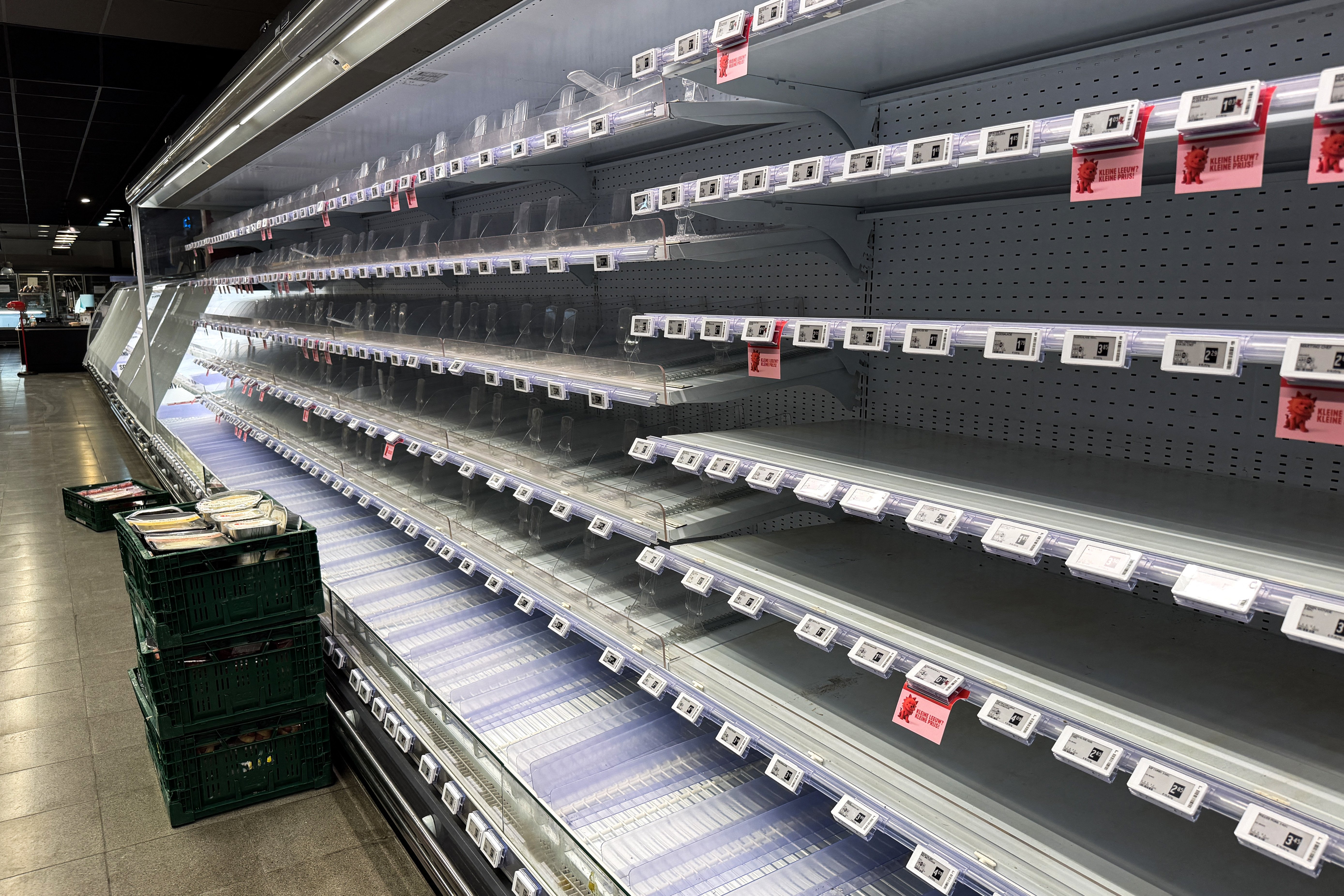
The following verified data table outlines the direct scale of the cyberattack across the affected regions, structural damage metrics, and financial implications derived from preliminary risk management assessments:
| Metric / Parameter | Impacted Operational Value | Baseline Operational Norm | Primary Vector / Exploit Protocol |
|---|---|---|---|
| Nations Impacted | 7 (FR, DE, IT, ES, NL, BE, PL) | EU Unified Single Market | Centralized SaaS-BMS Vendors |
| Freezer Storage Temperature | +55.4°C (+131.7°F) | -22.0°C (-7.6°F) | BACnet/IP Thermal Setpoint Override |
| Estimated Direct Food Inventory Loss | €380 Million + | Nominal Spoilage (<0.01%) | Physical Defrost Element Overdrive |
| Compressor & PLC Destruction Rate | 42% of Connected Fleet | 0% (Active Safety Interlocks) | PLC Safety Register Erasure |
| Logistics Supply Chain Recovery Time | 14 to 21 Business Days | Real-time / Just-in-Time Delivery | Cold-Chain Network Lockdown |
| Estimated Business Interruption (BI) Claims | €1.2 Billion + | Standard Operational Risk Budgets | Property & Cyber Combined Policies |
Financial, Insurance, and Enterprise Risk Implications
The fallout from this incident extends far beyond ruined food stock; it hits at the core of enterprise balance sheets, underwriting standards, and operational risk management strategies. Equities for major European retail conglomerates dipped between 3.2% and 6.8% in early trading following the news, as institutional investors priced in write-downs, inventory replacements, capital equipment expenditures, and potential legal liabilities.
Supply Chain Disruption and Inventory Write-Downs
Modern supermarket chains operate on ultra-lean, just-in-time inventory systems anchored by continuous cold chains. The destruction of regional distribution hubs has broken this linkage. Retailers face double-digit revenue losses over the current quarter due to empty shelves, lost consumer trust, and massive disposal costs associated with bio-hazardous, spoiled food inventory. Logistics bottlenecks are compounding as specialized refrigeration technicians remain in short supply across Western Europe.
Underwriting Shockwaves: The Reinsurance Industry Braces for BI Claims
The corporate insurance market is bracing for severe friction regarding policy payouts. Risk adjusters are grappling with complex coverage disputes: does thermal sabotage driven by a cyber payload fall under standard Property Damage and Business Interruption (PDBI) policies, or is it strictly governed by specialized Cyber-Risk Policies, which often feature lower liability caps and strict war/terrorism exclusion clauses?
Global reinsurers, including Munich Re and Swiss Re, are expected to re-evaluate underwriting criteria for enterprise accounts that leverage remote IoT management over critical physical infrastructure. Industry analysts predict a sharp upward revision in cyber-physical security premiums, alongside mandatory OT vulnerability audits before policy renewals are granted.
Cybersecurity Valuations and Operational Technology (OT) Capital Expenditures
Conversely, corporate spend on Industrial Control System (ICS) and OT cybersecurity is poised for an unprecedented surge. Traditional IT security stack tools—such as firewalls and endpoint detection—proved completely insufficient in detecting or blocking lower-level BACnet and Modbus protocol manipulation once internal trust zones were crossed.
Specialized enterprise OT security providers (such as Claroty, Dragos, and Palo Alto Networks) are seeing increased capital allocation interest. Institutional analysts project an acceleration in mandatory capital expenditures for zero-trust micro-segmentation, hardware root-of-trust retrofits, and air-gapped physical safety interlocks over the next 12 to 24 months.
Frequently Asked Questions (People Also Ask)
How were cyberattackers able to physically raise freezer temperatures to 55°C?
Attackers compromised central Building Management Systems (BMS) through stolen third-party maintenance credentials and zero-day vulnerabilities in industrial protocols. Once inside, they flashed malicious firmware to local Programmable Logic Controllers (PLCs), overriding software safety limits and forcing the heating coils—normally reserved for short, controlled defrost cycles—to run continuously at full electrical power.
Which European countries and supermarket chains were targeted in the cyberattack?
The attack systematically targeted commercial cold-storage facilities across seven nations: France, Germany, Italy, Spain, the Netherlands, Belgium, and Poland. Affected major retail and logistics conglomerates include locations operating under Carrefour, Lidl, Ahold Delhaize, and Mercadona supply chains.
Will cyber insurance policies cover the food spoilage and business interruption losses?
This remains a subject of intense legal dispute. Insurers are examining whether the damage triggers standard Property Damage and Business Interruption (PDBI) coverage or standalone Cyber Insurance policies. Disputes over liability caps, third-party vendor fault, and potential state-sponsored act exclusions are expected to delay claims processing for months.
What measures are being taken to prevent similar attack vectors on critical infrastructure?
Enterprise operators are rapidly accelerating compliance with the EU’s NIS2 Directive. Technical remediations include hardwiring mechanical thermal cutoffs independent of network PLCs, implementing strict network micro-segmentation between corporate IT and operational HVAC networks, and enforcing multi-factor authentication (MFA) along with zero-trust architecture across all third-party BMS remote management portals.
Strategic Outlook: Regulatory Enforcement and Infrastructure Retrofitting
As corporate incident response teams work alongside national cyber defense agencies to restore operational integrity, the broader commercial real estate and food logistics industries face an imperative shift in operational strategy. The convergence of physical asset management with cloud-connected IT infrastructure has created systemic vulnerability vectors that can no longer be remediated with software patches alone.
Regulatory authorities across the EU are expected to fast-track enforcement of strict operational technology guidelines under the NIS2 Framework, mandating direct financial and legal liabilities for corporate directors who fail to secure operational networks. In the immediate future, market leaders will be forced to decouple critical industrial control mechanisms from public and vendor-accessible networks, deploying physical, hardwired mechanical safety interlocks that cannot be overridden by digital bits and bytes.
For financial markets, the event serves as a stark reminder: the next systemic threat to enterprise enterprise valuation and corporate liquidity may not stem from stolen data or encrypted hard drives, but from the physical manipulation of the invisible industrial technology keeping modern supply chains alive.