Beyond Bengaluru: How HDB Techceleration 2026 Rewrote India’s Innovation Map
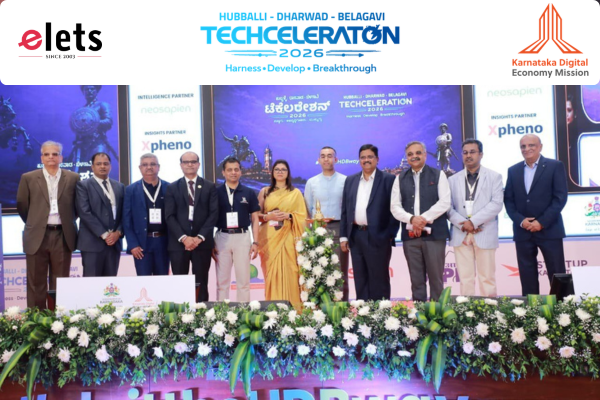
BENGALURU/HUBLI-DHARWAD — For decades, the narrative of Indian technological dominance has been relentlessly concentrated in a single geographic loop: Bengaluru’s Electronic City, Hyderabad’s HITEC City, and Gurugram’s corporate corridors. But a tectonic shift is quietly reshaping the nation’s economic geography. Last week, the HDB Techceleration 2026 summit descended upon the Hubli-Dharwad-Belagavi (HDB) region, drawing over 100 high-growth startups, 700+ delegates, and more than 25 institutional investors.
Most startlingly, nearly half—40% to 50%—of the participating ventures hailed from outside the northern Karnataka belt, signaling a profound decentralization of India's entrepreneurial capital. For veteran market watchers and venture capitalists, the message is unmistakable: Tier-2 and Tier-3 India are no longer just consumer markets waiting to be tapped; they are rapidly evolving into sophisticated, cost-efficient incubators for deep-tech, manufacturing, and enterprise software solutions.
The Numbers That Matter: HDB Techceleration 2026 at a Glance
The scale of the summit caught even seasoned regional policymakers by surprise. Designed as a convergence point for industry titans, government stakeholders, and academic powerhouses, the event served up a masterclass in regional economic mobilization. Here is how the key metrics stacked up:
| Metric | Figure | Strategic Significance |
|---|---|---|
| Total Delegates | 700+ | High-level engagement across industry, academia, and government. |
| Participating Startups | 100+ | Curated cohort spanning AI, hardware, agritech, and SaaS. |
| External Startup Representation | 40% – 50% | Proves HDB’s drawing power as a pan-India destination. |
| Institutional Investors | 25+ | Active venture capital and angel syndicates scouting deals. |
| Primary Wire Context | Elets eGov (18h ago) | Immediate validation of regional digital governance push. |
Why the HDB Region? Cost Arbitrage Meets Talent Density

To understand why founders are packing their bags and setting up operations in North Karnataka, one only has to look at the unsustainable burn rates plaguing metropolitan hubs. Bengaluru and Mumbai offer unmatched networking ecosystems, but they also come with skyrocketing real estate costs, aggressive talent poaching, and escalating operational overheads.
By contrast, the HDB triangle—anchored by Hubli, Dharwad, and Belagavi—offers a lethal combination of strategic advantages:
- Elite Academic Pipelines: Home to institutions like IIT Dharwad, KLE Technological University, and numerous premier engineering colleges, producing thousands of hyper-skilled graduates annually.
- Real Estate Efficiency: Commercial real estate and operational costs that run at a fraction of metro equivalents, dramatically extending startup runway lengths.
- Government Backing: Aggressive policy incentives from state authorities aimed at transforming North Karnataka into a dedicated corridor for industrial tech and digital innovation.
- Infrastructure Expansion: Improved connectivity, robust digital grids, and planned industrial clusters designed to support hardware manufacturing alongside software scalability.
"We are witnessing the democratization of India’s startup economy," noted a senior venture capitalist who attended the pitch sessions in HDB. "Founders no longer feel the compulsion to pay exorbitant rents in Koramangala just to build a world-class product. The talent is right here, and the cost structure allows for sustainable, capital-efficient growth."
Bridging the Capital-Founder Divide
Historically, the biggest bottleneck for regional entrepreneurship in India has been the "capital desert"—the geographic disconnect between provincial founders and metro-based venture capitalists. HDB Techceleration 2026 deliberately demolished this barrier.
Over two intensive days, the event facilitated structured networking, speed-pitching sessions, and closed-door roundtable discussions between the 25+ participating institutional investors and early-stage entrepreneurs. Crucially, the presence of founders from outside the HDB region proved that the ecosystem’s gravity is widening. Startups from Pune, Mumbai, and even Delhi NCR made the journey south, recognizing that North Karnataka’s manufacturing ecosystem provides an ideal testing ground for hardware-software integration.
Industry leaders at the summit emphasized that the future of "Make in India" will not be engineered in glass-fronted metro skyscrapers alone. It will be built in regional manufacturing hubs powered by local ingenuity and global capital.
What This Means for the Future of India’s Tech Economy
As the dust settles on HDB Techceleration 2026, the broader implications for the Indian economy are becoming impossible to ignore. For policy planners, the summit validates the "Beyond Bengaluru" thesis—proving that targeted infrastructure investments coupled with academic partnerships can successfully decentralize wealth creation.
For investors, the event has opened up a fresh deal-flow pipeline characterized by gritty, capital-efficient founders solving hyper-local problems that easily scale globally. As venture deployment pivots from pure growth-at-all-costs to unit-economic sustainability, regions like HDB are perfectly positioned to capture the next wave of venture capital.
Frequently Asked Questions
What was the primary objective of HDB Techceleration 2026?
The summit aimed to connect regional and national startups with institutional investors, industry leaders, and academic institutions, thereby cementing North Karnataka’s Hubli-Dharwad-Belagavi (HDB) region as a premier hub for technology, innovation, and enterprise growth.
Why is the high percentage of outside startups significant?
The fact that 40% to 50% of the participating startups came from outside the HDB region demonstrates a structural shift in India’s innovation map. It proves that Tier-2 and Tier-3 manufacturing and tech clusters are successfully attracting entrepreneurial talent away from traditional metro bottlenecks.