Executive Takeaways
- Critical Return-to-Flight: United Launch Alliance (ULA) is preparing its heavy-lift Vulcan rocket for a high-stakes return-to-flight mission scheduled for Friday the 13th, following months of rigorous post-flight anomaly investigations.
- National Security & Commercial Backlog: The mission carries immense pressure, serving as the gatekeeper for billions of dollars in national security payloads, Department of Defense (DoD) certifications, and commercial mega-constellation deployments.
- Centaur V Evolution: At the heart of the technical deep-dive is the upgraded Centaur V upper stage, whose structural integrity and thermal performance have been subjected to exhaustive engineering overhauls.
- Bruised Valuation & Market Dynamics: In an intensely competitive launch market dominated by SpaceX, ULA’s long-term capital allocation, enterprise viability, and corporate valuation rely on executing a flawless flight cadence.
CAPE CANAVERAL — In the high-stakes theater of commercial and national security space launch, perception and engineering are inextricably linked. For United Launch Alliance (ULA)—the 50-50 joint venture between aerospace giants Boeing and Lockheed Martin—the upcoming return-to-flight mission for its next-generation Vulcan rocket on Friday the 13th represents far more than a routine trip to orbit. It is a critical test of infrastructure scalability, risk mitigation, and executive execution in a market where capital liquidity and customer trust hang in the balance.
As industry executives, Wall Street aerospace analysts, and Pentagon procurement officials converge on Florida’s Space Coast, the pressure on ULA leadership is palpable. The Vulcan rocket, designed to replace the venerable Atlas V and Delta IV fleets, must prove its operational reliability. Any misstep during this critical window risks compounding launch delays, escalating insurance premiums, and disrupting vital national security architectures.
The Catalytic Event: Anatomy of the Vulcan Grounding
Test Our Free AI & Tech Utilities Suite
Calculate LLM API token costs, analyze article dwell-time, or simulate tech DCA returns.
The path to Friday the 13th has been neither smooth nor predictable. ULA’s grounding of the Vulcan platform followed a meticulous internal and independent review of anomalies detected during previous flight operations. While initial certification flights demonstrated the raw thrust and trajectory performance of the vehicle's Blue Origin-supplied BE-4 methane-fueled first-stage boosters, secondary systems and upper-stage telemetry flagged areas requiring immediate engineering intervention.
At the center of the investigation was the Centaur V upper stage—a high-energy, cryogenic powerhouse designed to deliver complex, multi-burn trajectories required by the U.S. Space Force. Engineers discovered localized structural vulnerabilities and thermal anomalies that, while managed during the flight, fell outside ULA’s ultra-conservative safety margins. For an enterprise handling payloads worth billions of dollars for the National Reconnaissance Office (NRO) and commercial broadband titans, zero-failure tolerance is not a marketing slogan; it is a regulatory and contractual imperative.
To secure mission clearance, ULA instituted a comprehensive engineering overhaul. This included reinforced structural components on the Centaur V, upgraded telemetry instrumentation to capture high-frequency vibration data, and refined software algorithms governing propellant management. These enhancements represent significant capital expenditures, but from a risk-mitigation standpoint, they are essential to protecting ULA’s market positioning and enterprise valuation.
Technical Specifications & Mission Parameters
| Vehicle Metric / Parameter | Vulcan Centaur Configuration | Strategic Implication |
|---|---|---|
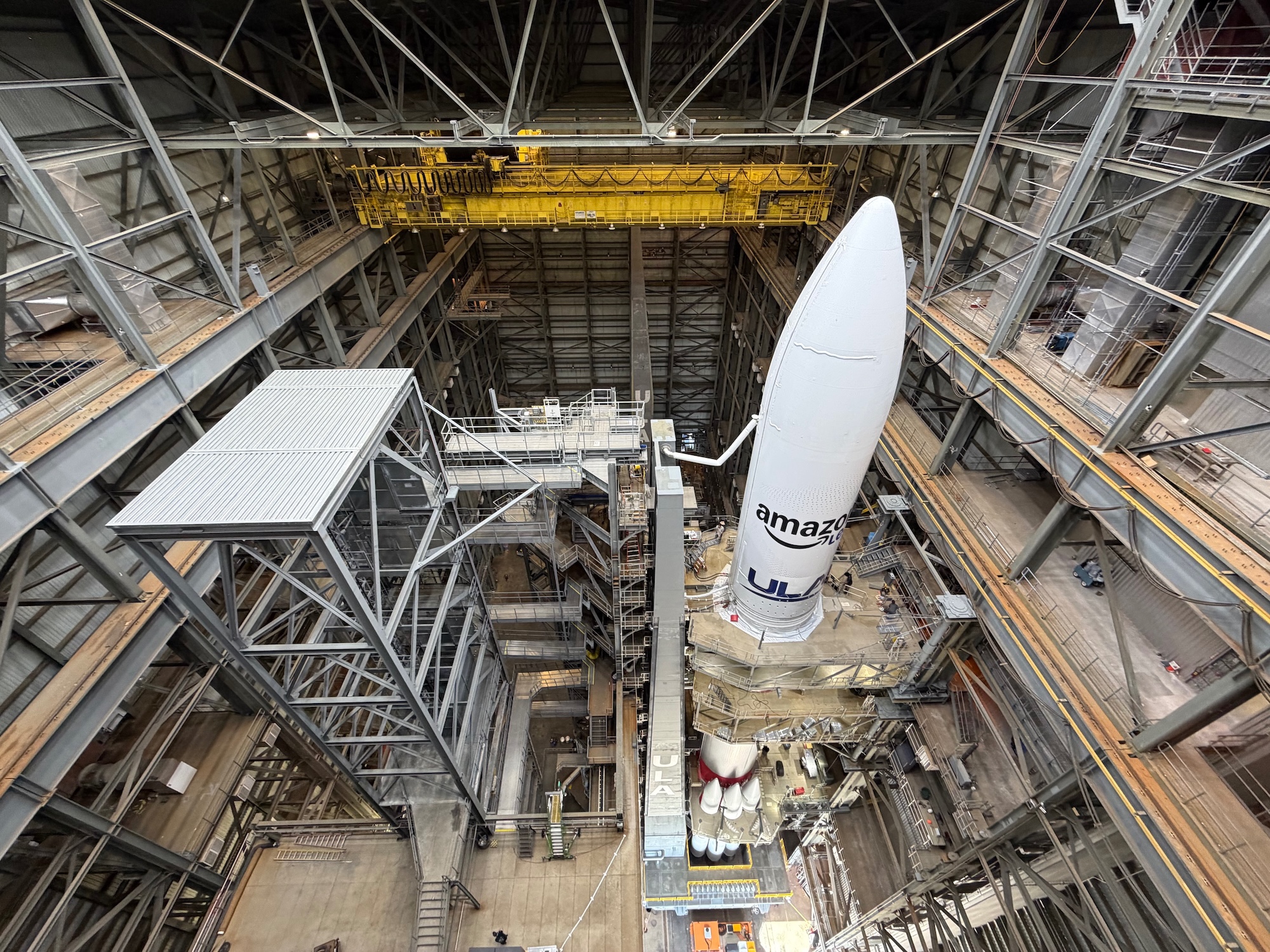
| First Stage Engines | 2x Blue Origin BE-4 (LNG/LOX) | Provides ~1.1 million pounds of thrust at liftoff; critical for heavy-lift market entry. |
| Upper Stage | Centaur V (Dual RL10C-1-1A) | High-efficiency cryogenic performance enabling direct-to-GEO and complex orbital insertions. |
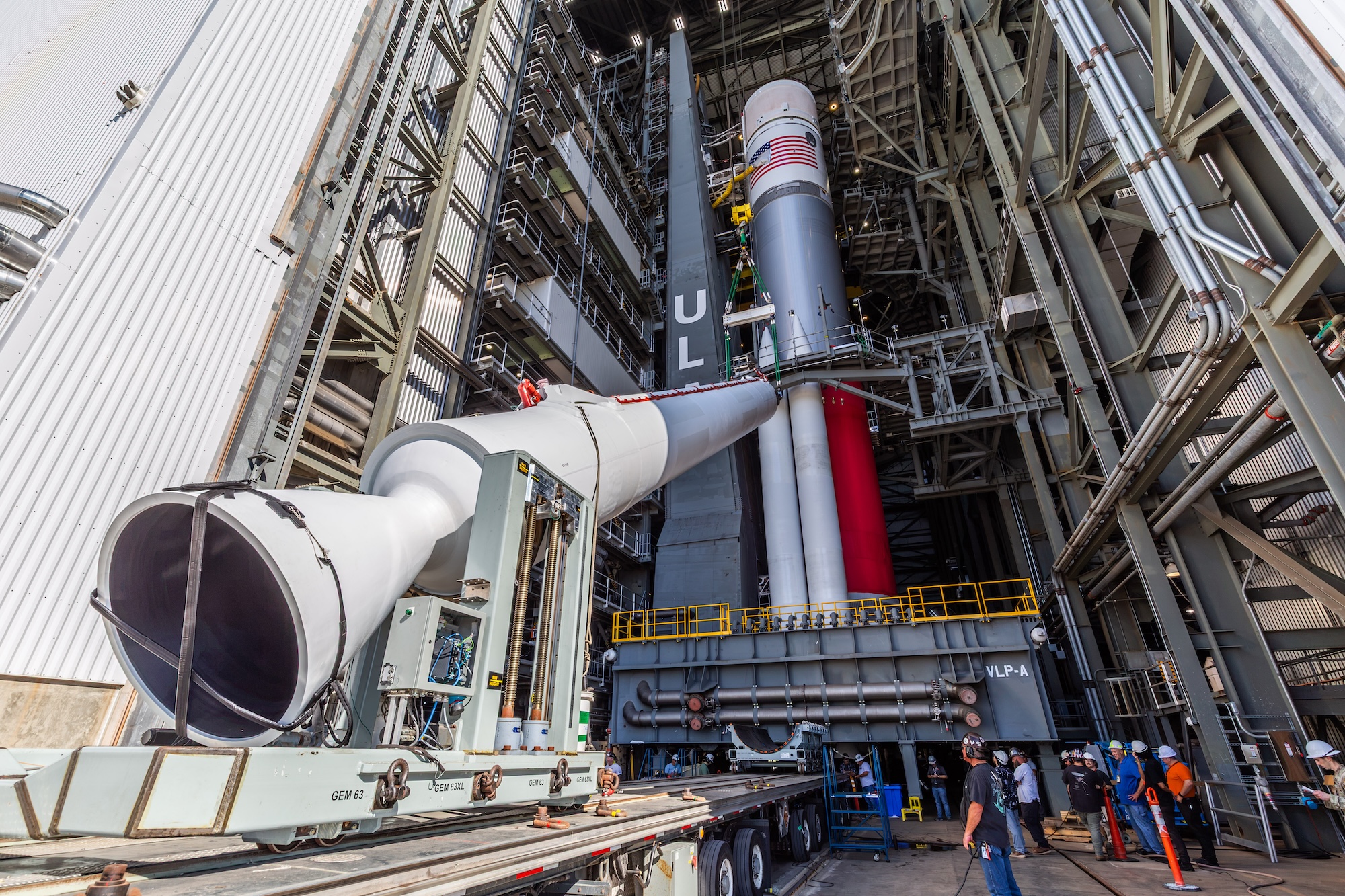
| Solid Rocket Boosters | Northrop Grumman GEM 63XL (0 to 6) | Modular scalability matching thrust profiles to specific customer payload mass requirements. |
| Target Market Segment | National Security, Commercial LEO/MEO/GEO | Directly competes for Phase 2 National Security Space Launch (NSSL) contracts. |
Industry & Market Implications: Navigating the Competitive Landscape
The aerospace manufacturing and launch sector is currently undergoing a profound structural evolution. With SpaceX capturing an unprecedented share of global launch volume through reusable Falcon 9 and Falcon Heavy architectures, legacy aerospace manufacturers face mounting pressure to optimize their cost structures, accelerate production cadences, and demonstrate superior reliability.
For ULA, the stakes of the Friday the 13th flight extend directly to its bottom line and long-term liquidity. The company is locked in a fierce battle with competitors like SpaceX and Blue Origin for lucrative defense and commercial contracts. A successful flight validates ULA’s engineering remediation program, satisfies stringent Space Force flight-readiness reviews, and unlocks the next phase of national security payload deliveries.
Conversely, any technical anomalies during the countdown or ascent would reverberate across financial markets and corporate boardrooms. Boeing and Lockheed Martin evaluate their joint venture through the lens of return on invested capital (ROIC) and risk exposure. Extended grounding periods would trigger penalty clauses, delay revenue recognition from major enterprise clients, and erode valuation multiples relative to agile, pure-play aerospace competitors.
Frequently Asked Questions (People Also Ask)
Why is ULA’s Vulcan return-to-flight scheduled for Friday the 13th considered significant?
While the date carries superstitious connotations in popular culture, in the aerospace sector, launch windows are dictated strictly by orbital mechanics, range availability, and technical readiness. The timing underscores ULA’s urgency to clear its manifest, satisfy Department of Defense certification milestones, and resume a steady cadence of heavy-lift missions.
What specific technical issue caused the previous delay for the Vulcan rocket?
The grounding was primarily driven by data reviews surrounding the Centaur V upper stage following earlier flight tests. Engineers identified structural and thermal margins that required reinforcement to meet the stringent reliability standards mandated for complex national security and deep-space missions.
How does the Vulcan rocket impact ULA’s competitive position against SpaceX?
Vulcan is ULA’s strategic successor to the Atlas V and Delta IV rockets. To maintain market share in the lucrative National Security Space Launch (NSSL) market and compete effectively against reusable commercial alternatives, ULA must prove that Vulcan can deliver high-cadence, cost-effective, and flawless heavy-lift performance.
What payloads are lined up for Vulcan following its return-to-flight?
Following this return-to-flight mission, ULA’s manifest features a heavy backlog of U.S. Space Force national security payloads, classified National Reconnaissance Office (NRO) missions, and commercial Kuiper internet constellation launches for Amazon.
Future Outlook: Milestones on the Horizon for ULA
As the countdown clock ticks toward liftoff at Cape Canaveral Space Force Station, aerospace analysts and institutional investors will be monitoring telemetry data with intense scrutiny. A clean lift-off, precise stage separation, and successful payload deployment will mark a watershed moment for ULA, restoring engineering credibility and stabilizing its operational roadmap through the decade.
However, executing a single successful flight is merely the preamble to ULA's broader operational challenge: scaling production and establishing a reliable, high-frequency launch cadence. Meeting the demands of the NSSL Phase 2 contract and fulfilling commercial mega-constellation commitments will require seamless supply chain coordination, robust quality assurance protocols, and disciplined capital allocation.
Ultimately, Friday the 13th will test whether ULA’s engineering rigor can overcome past setbacks and secure its place in the modern space economy. In an industry where margins are razor-thin and reputations are forged in minutes, the Vulcan rocket’s performance on the pad will dictate the trajectory of American heavy-lift launch for years to come.