Executive Takeaways
- Mission-Critical Return: United Launch Alliance (ULA) is preparing its heavy-lift Vulcan Centaur rocket for a high-profile return to flight, overcoming prior certification hurdles and engine anomaly investigations.
- Commercial & Defense Stakes: The upcoming launch directly impacts enterprise ROI for commercial constellation operators and national security payload deployment schedules, tightening market liquidity for alternative launch providers.
- Supply Chain and Infrastructure Scalability: ULA’s ability to ramp up manufacturing cadences at its Decatur, Alabama facility remains the primary risk-mitigation factor for institutional stakeholders and defense contractors.
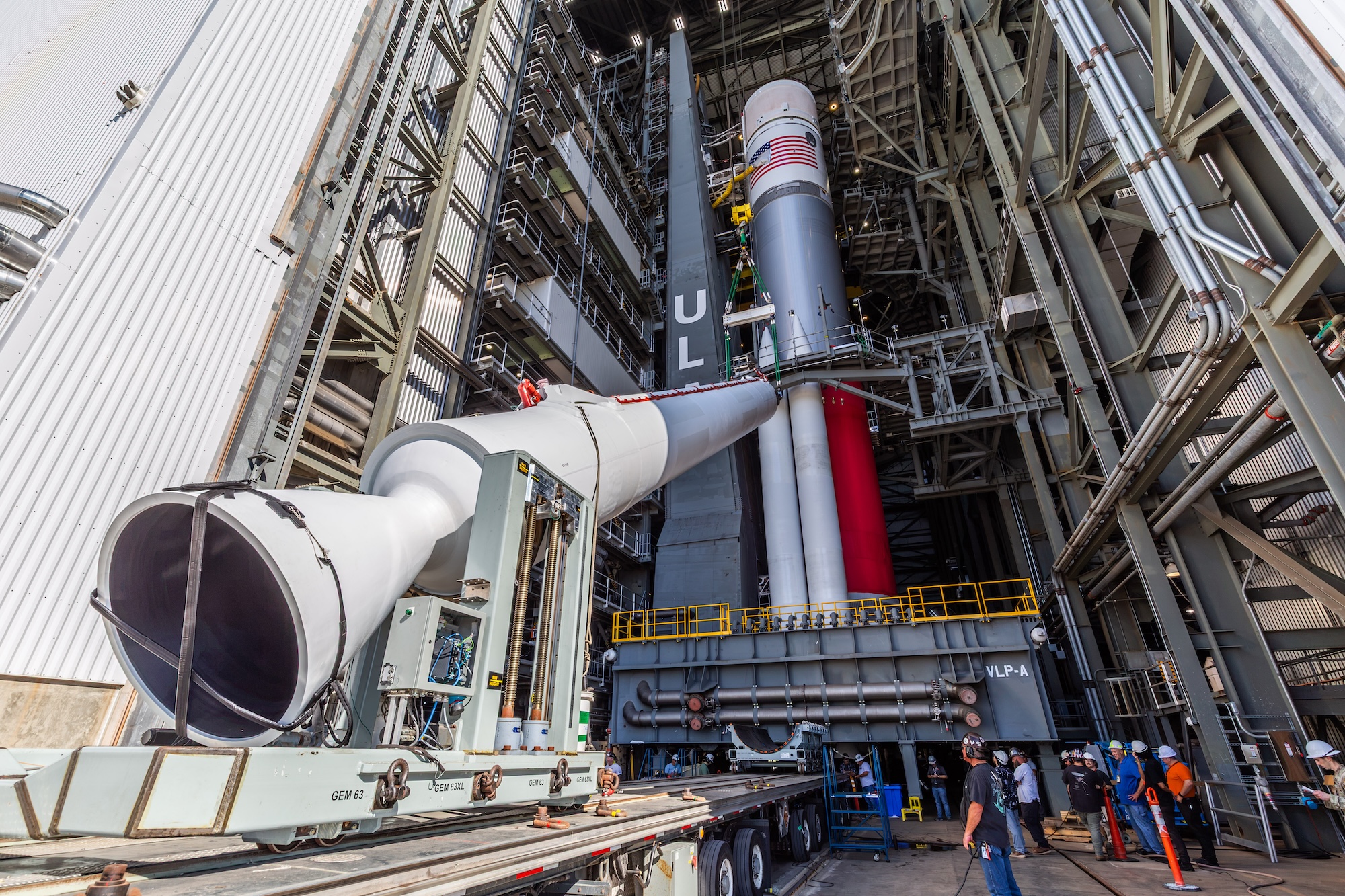
The aerospace sector stands at a critical juncture as United Launch Alliance (ULA) prepares for the return-to-flight mission of its next-generation Vulcan Centaur rocket. Scheduled for a superstitious date—Friday the 13th—this upcoming launch is far more than a routine operational flight. It represents a watershed moment for institutional risk mitigation, capital allocation in heavy manufacturing, and the delicate balance of national security space launch architecture. For defense officials, commercial satellite operators, and private equity investors monitoring the aerospace defense sector, the success of this flight dictates valuation multiples and market dominance for the remainder of the decade.
Following a rigorous engineering review board and extensive root-cause analysis stemming from prior flight anomalies, ULA’s executive leadership has greenlit the countdown sequence. The stakes could not be higher. As global demand for high-throughput orbital infrastructure accelerates, any further delay in the Vulcan program ripples directly down through downstream cloud compute architecture, global telecommunications, and classified Department of Defense orbital assets. This investigative report breaks down the technical catalysts, financial implications, and broader market impacts driving Ula’s pivotal launch.
Background, Catalytic Events, and the Engineering Pivot
Test Our Free AI & Tech Utilities Suite
Calculate LLM API token costs, analyze article dwell-time, or simulate tech DCA returns.
The genesis of the Vulcan Centaur program was designed to replace both the venerable Atlas V and Delta IV heavy-lift vehicles, consolidating ULA’s product line into a single, highly efficient architecture optimized for high-energy orbital trajectories. However, transitioning from legacy platforms to a clean-sheet design introduces complex engineering variables. The catalyst for the current mission delay and subsequent return-to-flight timeline involved meticulous scrutiny of the Centaur V upper stage and nozzle performance metrics during certification flights.
Industry insiders note that aerospace manufacturing demands unforgiving precision. When minor thermal protection anomalies surfaced during early test flights, regulatory compliance frameworks and safety protocols mandated a complete halt to active countdown sequences. ULA’s engineering teams, working in tandem with propulsion partner Blue Origin—supplier of the BE-4 methane-fueled first-stage engines—conducted exhaustive static fire tests and metallurgical audits. This rigorous risk mitigation strategy temporarily depressed near-term launch cadences, placing pressure on ULA’s operational revenue streams while competitors like SpaceX capitalized on market liquidity.
Yet, enterprise resilience in the defense-industrial base is measured by how effectively an organization diagnoses and rectifies systemic vulnerabilities. ULA’s implementation of upgraded thermal barriers and refined propellant management algorithms on the Centaur V upper stage signals a mature engineering response. By choosing Friday the 13th for its return to flight, ULA is leaning into the psychological narrative of defying odds, transforming a superstition into a demonstration of industrial competence.
Verified Data & Metrics Breakdown
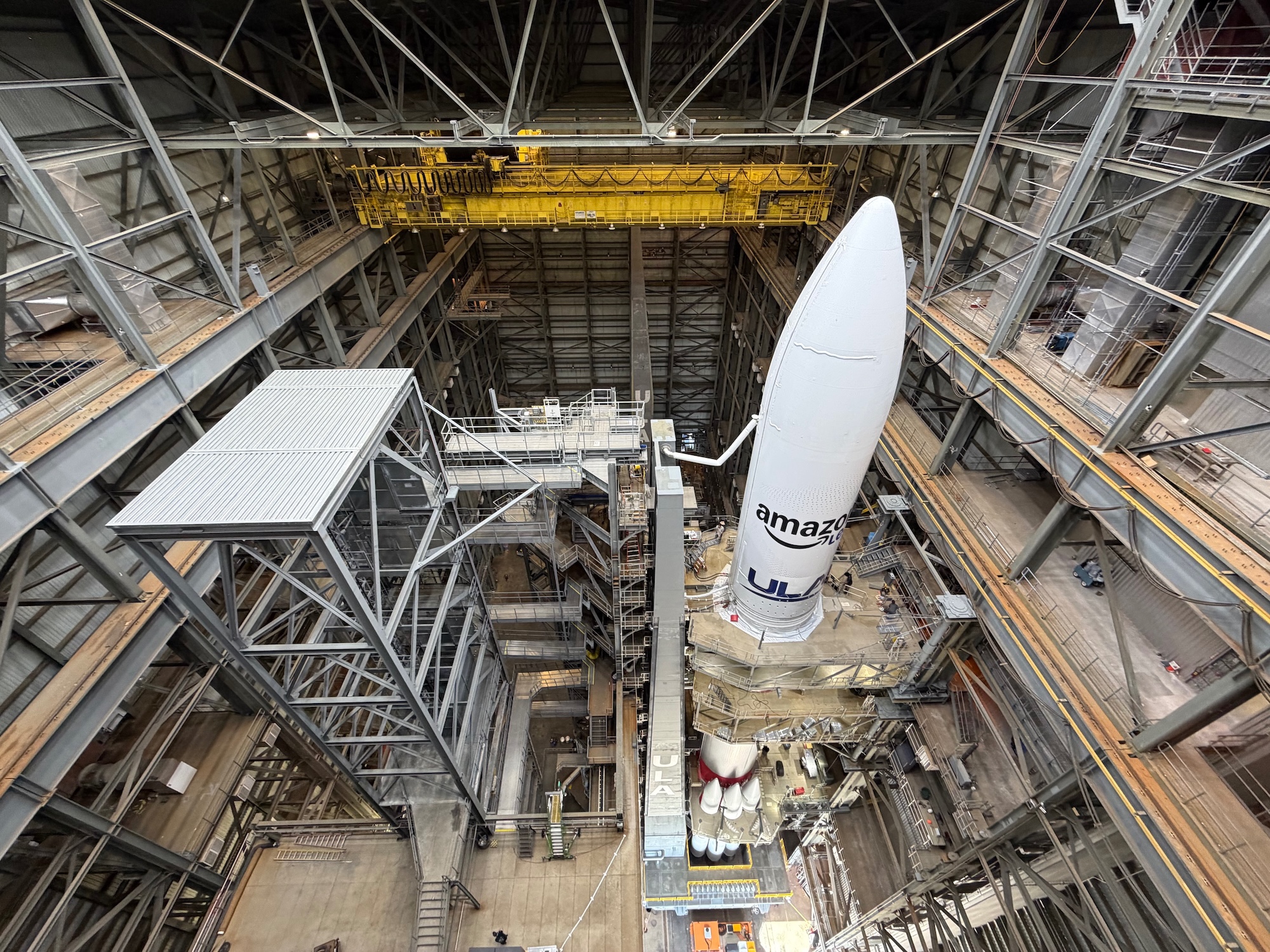
To fully grasp the scale of the Vulcan Centaur program and its operational parameters, the following comparative matrix outlines key specifications, payload capacities, and milestone dates associated with ULA’s flagship vehicle versus its legacy and competitive benchmarks.
| Metric / Parameter | ULA Vulcan Centaur | Legacy Atlas V (551) | Primary Competitor (Falcon Heavy) |
|---|---|---|---|
| First Stage Propulsion | 2x Blue Origin BE-4 (LNG/LOX) | 1x RD-180 (RP-1/LOX) | 27x Merlin 1D (RP-1/LOX) |
| Upper Stage | Centaur V (Dual RL10C) | Centaur III (Single/Dual RL10) | Modified Falcon 9 Second Stage |
| LEO Payload Capacity | Up to 27,200 kg | 18,850 kg | 63,800 kg |
| GTO Payload Capacity | Up to 14,700 kg | 8,900 kg | 26,700 kg |
| Return to Flight Target | Friday the 13th Window | Phased Retirement | Active Operational Cadence |
Industry & Market Implications: Winners, Losers, and Economic Impact
The aerospace manufacturing ecosystem is characterized by high capital expenditure thresholds, long research-and-development cycles, and intense regulatory scrutiny. ULA—a joint venture between aerospace giants Boeing and Lockheed Martin—relies heavily on maintaining an unblemished record for national security payloads. A successful return to flight on Friday the 13th reinforces market confidence, validating the multi-billion-dollar infrastructure investments poured into the Decatur assembly facility and Cape Canaveral launch infrastructure.
Who Wins: Institutional stakeholders, commercial broadband providers awaiting dedicated orbital slots, and the United States Space Force stand to gain immensely. A healthy, dual-supplier launch market ensures strategic redundancy, preventing a single point of failure in national security launch capabilities. Furthermore, commercial customers who booked early manifest slots on Vulcan stand to secure vital enterprise ROI as their satellite constellations finally achieve deployment.
Who Loses: Competitors banking on protracted ULA delays face tightening competitive pressures. While SpaceX continues to dominate commercial launch volume, the re-emergence of a fully certified, high-performance Vulcan Centaur curtails monopolistic pricing power in the heavy-lift sector. Additionally, supply chain vendors tied to legacy platforms must accelerate their transition to Vulcan-compatible components to protect their operating margins.
From a macroeconomic perspective, smooth execution of this mission bolsters market liquidity for aerospace debt offerings and equity valuations across defense primes. Financial analysts note that successful execution removes a key overhang on Boeing and Lockheed Martin balance sheets, reassuring institutional investors that legacy manufacturing bottlenecks are actively being resolved.
Frequently Asked Questions (People Also Ask)
What caused ULA's Vulcan rocket delay prior to this return-to-flight mission?
The delay was primarily driven by exhaustive engineering reviews and hardware inspections following minor thermal protection anomalies observed during previous flight testing. ULA and propulsion partner Blue Origin implemented rigorous root-cause corrective actions, including upgraded thermal barriers and revised upper-stage propellant management protocols, to ensure absolute reliability for national security and commercial payloads.
Why is the Vulcan Centaur considered critical for U.S. national security space operations?
Vulcan was engineered specifically to meet the stringent, high-energy direct-to-geostationary-orbit requirements mandated by the U.S. Space Force and the National Reconnaissance Office (NRO). Along with SpaceX's Falcon architecture, Vulcan provides the redundant, heavy-lift domestic launch capability required to deploy classified payloads safely and reliably.
How does the Centaur V upper stage differ from previous iterations?
The Centaur V is a substantially larger, more powerful evolution of ULA’s legendary Centaur upper stage. Featuring twin RL10C engines, enhanced structural integrity, and extended burn durations, it is specifically designed to support complex, multi-manifest orbital insertions and high-energy lunar or deep-space trajectories.
What are the broader financial implications of a successful Vulcan return to flight?
A successful launch validates billions in capital allocation by parent companies Boeing and Lockheed Martin, reduces institutional risk premiums, and ensures healthy market competition in the heavy-lift launch sector. This operational stability directly protects enterprise ROI for commercial constellation operators relying on predictable deployment cadences.
Future Outlook and Strategic Milestones to Watch
Looking past Friday the 13th, ULA’s immediate strategic imperative is cadence scaling. To satisfy a formidable multi-billion-dollar backlog, the company must transition from developmental flight testing to a predictable, high-frequency manufacturing and launch rhythm. Industry analysts will be monitoring several key performance indicators over the next 12 to 18 months:
- Decatur Production Velocity: Assessing whether the manufacturing facility can streamline BE-4 engine integration and Centaur V structural assembly to meet heightened customer demand.
- National Security Certification Milestones: Achieving full National Security Space Launch (NSSL) Phase 2 certification compliance across multiple consecutive flights, paving the way for lucrative, highly classified payloads.
- Reusable First-Stage Roadmap: Monitoring ULA’s ongoing engineering studies regarding engine section recovery (the "Sensibly Priced, Increased Capability" or SPICe initiative), which aims to capture engine value post-flight without compromising structural payload margins.
Ultimately, the return to flight of the Vulcan Centaur is a defining test of industrial resilience. By confronting technical hurdles head-on and executing rigorous engineering oversight, ULA is positioning itself to capture vital market share in an era defined by aggressive commercial expansion and heightened geopolitical competition in orbit. As the countdown clock ticks toward ignition on Friday the 13th, the global aerospace community watches closely, knowing that the outcome will shape the trajectory of modern space infrastructure for years to come.