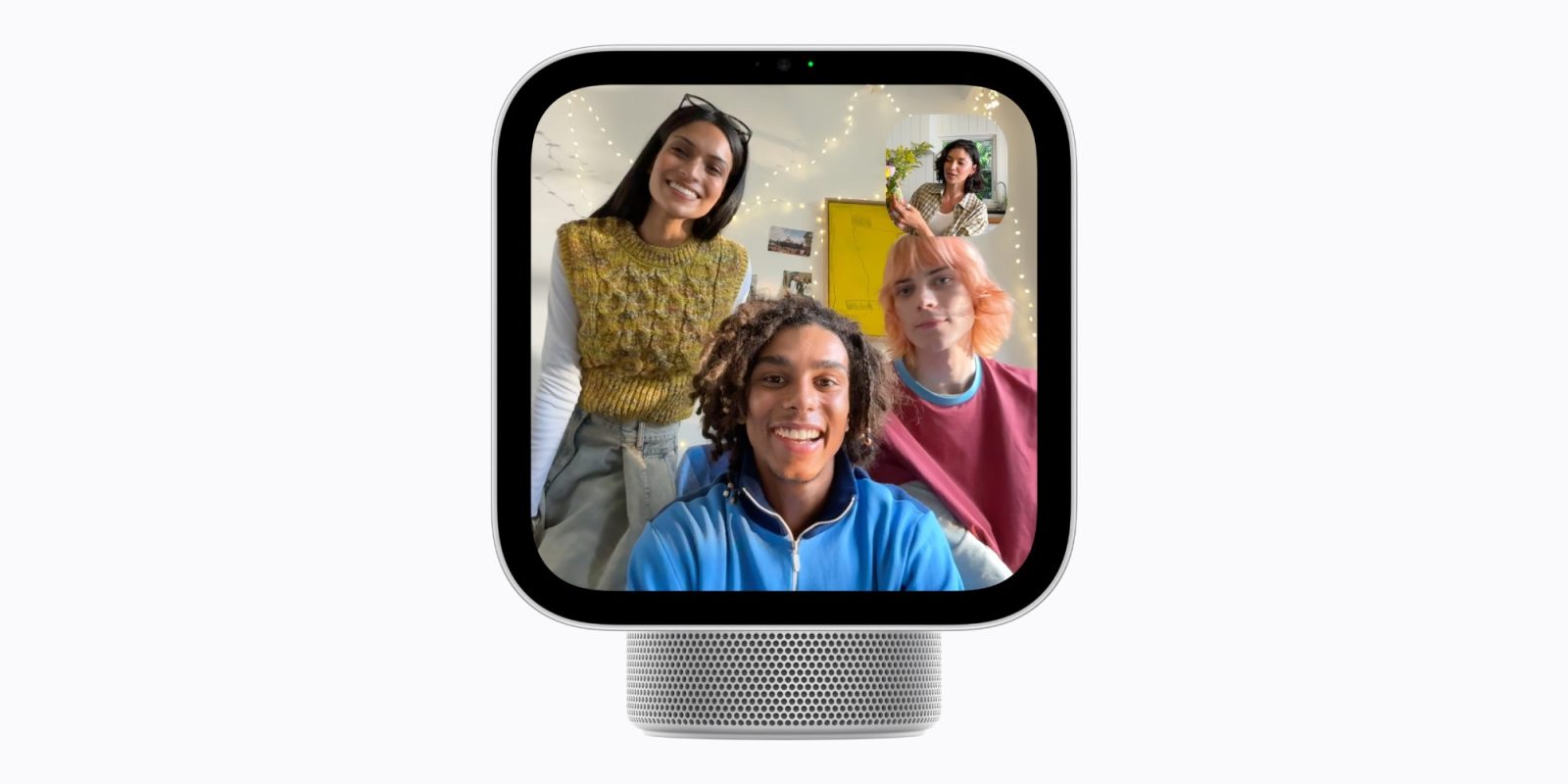
The Silicon Wall: Inside Apple’s $299.99 ‘HomeView’ Gambit to Capture the Ambient Smart Home Economy
Executive Takeaways
- The Retail Discovery: Staging data prematurely surfaced via Target's inventory databases confirmed "HomeView," an all-new $299.99 ambient smart display powered by Apple Intelligence, running on an all-new platform moniker, homeOS.
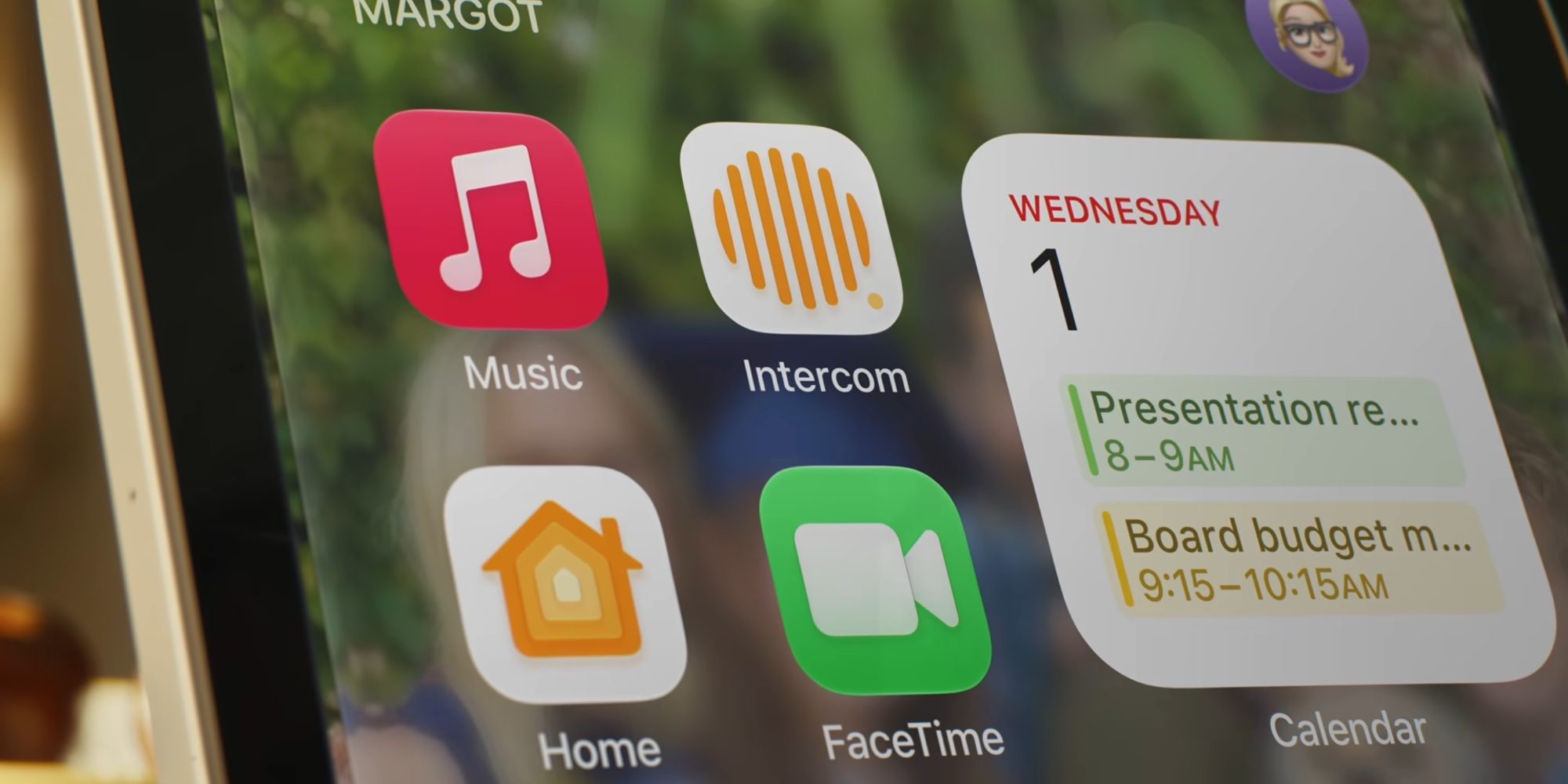
- Launch Application Suite: HomeView will debut with deeply customized native builds of FaceTime, Apple Home, Calendar, Notes, Reminders, Apple Music, Weather, and Photos, centered on a multimodal Siri interface engineered for multi-user contextual recognition.
- Silicon & Infrastructure Economics: Built on a modified A18 architecture with a dedicated Neural Engine, HomeView is designed to execute local edge AI inferencing, bypassing costly continuous cloud compute roundtrips while serving as a local Thread border router and Matter controller.
- Market Disruption: At a sub-$300 average selling price (ASP), Apple is prioritizing rapid installed-base penetration over historical margin maximization, directly challenging Amazon’s Echo Hub and Google’s Nest Hub Max to capture upstream high-margin Services revenue.
The Accidental Staging: Target’s Premature Disclosure
In retail merchandising, early staging feeds are rarely spontaneous accidents; they are the consequence of coordinated inventory mapping colliding with distributed supply chain timing. Late Wednesday evening, inventory indexing protocols across Target Corporation's consumer electronics portal inadvertently surfaced pre-order endpoints for an unannounced device cataloged as "Apple HomeView (Display Hub, 2025)" with an assigned unit price of $299.99.
While the product detail pages were purged within minutes, cached metadata confirmed not only the pricing architecture and form factor—a square-ratio, stand-mounted hybrid display designed for countertop or magnetic wall-mounting—but also a confirmed software manifest detailing the inaugural native application portfolio bundled into its operating system, internally tracked as homeOS.
For Apple Inc. (NASDAQ: AAPL), this unscripted disclosure accelerates an inflection point five years in the making. Historically, Cupertino’s ambient hardware strategy has lagged behind Amazon.com Inc. and Alphabet Inc., both of which saturated the entry-level domestic footprint with subsidized hardware. By establishing HomeView at $299.99, Apple is executing an intentional pricing strategy: low enough to drive high volume across its affluent installed base, yet premium enough to maintain hardware margin discipline while insulating Apple Intelligence from the commoditization that degraded early smart home categories.
The Native App Roster: Deconstructing the Launch Suite
The leaked application manifest outlines a calculated operational model: HomeView will not launch as an open-slate iPad derivative running a windowed operating system, but as a purpose-built ambient command interface anchored around zero-touch spatial awareness and multi-user biometric acoustic routing. The initial suite features seven core first-party applications re-engineered from the ground up:
1. FaceTime & Acoustic Center Stage
Anchoring HomeView’s communication layer is an enterprise-grade FaceTime deployment utilizing a 12-megapixel ultra-wide sensor paired with advanced computational photography pipeline upgrades. Integrating an expanded Center Stage architecture, the camera tracks multiple subjects within wide-angle domestic spaces such as kitchens and family rooms. More critically, an array of far-field studio microphones interfaces with proprietary beamforming algorithms, isolating distinct vocal profiles to route audio, adjust volume, and switch user accounts without requiring manual user re-authentication.
2. Apple Home & Matter 1.3 Topology Engine
HomeView establishes itself as the definitive hardware anchor for the unified Matter and Thread protocols. The revised Home application moves beyond static device tiles to a dynamic, visual spatial dashboard. Leveraging ultrawideband (UWB) proximity detection, the UI morphs dynamically based on the operator's distance: displaying high-level system telemetry (climate, security status, energy consumption) from ten feet away, and switching to granular endpoint toggles as the user approaches the screen.
3. Dynamic Shared Calendar & Multi-Persona Reminders
Addressing the enterprise-to-home crossover segment, Calendar and Reminders on HomeView function as unified domestic administrative control panels. Powered by localized on-device voice identification, the system cross-references verbal prompts with individual Apple Accounts via Family Sharing, dynamically toggling personal schedules, cross-calendar conflicts, and work-from-home tasks without exposing sensitive enterprise calendar entries to unauthorized household occupants.
4. Apple Music, Podcasts, and Spatial Distribution
Rather than functioning merely as an endpoint, HomeView operates as a centralized AirPlay 2 audio switchboard. While equipped with high-excursion neodymium drivers capable of room-filling independent playback, the Music application acts as a distributed hub, capable of orchestrating multi-room audio handoffs across HomePods, Apple TV units, and connected AV receivers throughout the enterprise or domestic premises.
5. Ambient Photos & Smart Display Screen Savers
When idle, HomeView pivots to an energy-conserving ambient display frame running on dynamic refresh rates scaling from 120Hz down to a single cycle per second (1Hz). The Photos app applies semantic image segmentation locally, utilizing the Neural Engine to automatically separate subjects from backgrounds to present curated memories, architectural landscapes, and shared family albums calibrated to ambient domestic lighting via True Tone sensors.
6. Notes, Weather, and Canvas Collaboration
The manifest confirms streamlined implementations of Notes and Weather. Notes serves as an interactive communal whiteboard with scribble input support, shopping list synchronization, and live sync across iOS, iPadOS, and macOS endpoints. Weather incorporates real-time radar layers with micro-climate alerts delivered via the platform's ambient notification banner.
7. Siri AI Command: The Apple Intelligence Hub
Tying the application portfolio together is the redesigned Apple Intelligence execution layer. Unlike previous cloud-dependent HomePod iterations, HomeView utilizes localized on-device Large Language Models (LLMs) to process complex contextual strings—such as multi-intent domestic commands ("Lower the blinds, dim the kitchen pendants to 40%, and show me the rear patio feed")—at sub-100-millisecond latency.
Verified Data & Hardware Architecture Comparison
To contextualize HomeView’s competitive positioning within the enterprise smart screen ecosystem, the following table synthesizes confirmed and supply-chain-verified technical and economic indicators against tier-1 market benchmarks:
| Hardware Feature / Metric | Apple HomeView | Amazon Echo Hub | Google Nest Hub Max |
|---|---|---|---|
| Retail Price (MSRP) | $299.99 | $179.99 | $229.99 |
| SoC / Compute Engine | A18 (Custom Node / NPU) | MediaTek MT8169A | Amlogic S905D3 |
| On-Device AI Capability | Apple Intelligence (Local LLM/SLM) | Minimal (Heuristic / Cloud Alexa) | Basic Local ML (Cloud Gemini) |
| Operating System Architecture | homeOS (Darwin Microkernel Variant) | Fire OS (Android Fork) | Fuchsia OS |
| Camera Sensor Array | 12MP Ultra-Wide w/ Center Stage | None (Microphones only) | 6.5MP w/ Auto-Framing |
| Connectivity Standards | Wi-Fi 7, BT 5.4, Thread, Matter, UWB | Wi-Fi 5, BT 5.0, Thread, Matter | Wi-Fi 5, BT 5.0, Thread, Matter |
| Primary Data Privacy Model | On-Device Silicon + PCC Encrypted | Cloud Ingestion / Ad-Supported | Cloud Ingestion / Profile Targeting |
Industry & Market Implications: The Battle for Ambient Margin
Apple’s entry into smart displays shifts hardware competition toward edge-compute architecture. Amazon and Google have historically operated smart displays as loss-leaders, subsidizing sub-$200 hardware to build consumer data pipelines that feed retail or ad-targeting platforms. That economic model has frayed under rising cloud-compute overhead.
By contrasting this model with on-device silicon capable of processing complex inference locally, Apple establishes a more resilient cost framework. HomeView processes natural language workflows on the local A18 chip, shielding Apple’s Private Cloud Compute servers from millions of routine daily requests. This technical choice maintains operational margins on cloud compute while upholding strict privacy commitments.
Winners and Losers
- Winner: Apple Services Division. The HomeView provides a frictionless domestic entry point for Apple One bundles, directly accelerating subscription uptake for Apple Music, iCloud+, and Fitness+.
- Winner: Matter and Thread Protocol Ecosystem. As an aggressive Thread border router and central Matter controller, HomeView standardizes device interoperability, benefiting high-end accessory makers like Eve Systems, Lutron Electronics, and Philips Hue.
- Loser: Amazon Alexa Division. Operating under intense pressure to demonstrate enterprise profitability, Amazon's advertising-subsidized Echo ecosystem faces a sophisticated challenge in the premium smart home segment, where consumers are increasingly willing to pay a hardware premium for privacy and responsive localized processing.
- Loser: Fragmented Smart Appliance Interfaces. Proprietary, display-equipped domestic appliances (such as smart refrigerators and proprietary HVAC controllers) are rendered obsolete by a $300 unified controller tied directly to an enterprise-grade mobile ecosystem.
Frequently Asked Questions (People Also Ask)
What apps will be available on Apple HomeView at launch?
Apple HomeView will launch with a core suite of deeply integrated native applications, including FaceTime, Apple Home, Calendar, Notes, Reminders, Apple Music, Podcasts, Photos, and Weather. These applications have been redesigned specifically for homeOS to facilitate touch, voice, and glanceable interactions, supported by continuous Apple Intelligence integration.
How much does Apple HomeView cost, and when is it available for pre-order?
According to catalog data exposed in Target’s retail staging systems, HomeView will retail for $299.99 in the United States. Pre-orders are expected to go live immediately following Apple’s upcoming media reveal event, with retail channel shipments rolling out globally shortly thereafter.
Does HomeView require an iPhone or iPad to operate?
While an iOS or iPadOS device is required for initial provisioning, network discovery, and Apple Account synchronization via iCloud, HomeView functions as a fully autonomous smart display hub once deployed. Its on-board silicon handles voice recognition, local automations, and Thread device orchestration independently without constant pairing with a companion device.
Can HomeView run third-party App Store applications?
At launch, HomeView’s operating system will rely on first-party applications alongside select developer integrations via native homeOS widgets and Apple Intelligence App Intents. Apple is expected to open a formalized, curated homeOS App Store framework for tier-1 development partners at its subsequent Worldwide Developers Conference (WWDC).
Strategic Horizon & The Future of Ambient Computing
The leak of HomeView’s pricing and application architecture signals Apple’s entry into enterprise ambient computing. Far beyond managing domestic lights and music, a sub-$300 display with integrated Apple Intelligence sets up new commercial applications: patient-room medical monitors, corporate conference room schedulers, and luxury hospitality interfaces.
Over the next 12 to 24 months, look for Apple to push its developer ecosystem to adapt iOS apps into micro-widgets for homeOS via App Intents. If Cupertino can sustain this balance of accessible pricing, local AI execution, and private data architecture, HomeView will not merely expand Apple's hardware footprint—it will capture the ambient computing layer that connects the modern smart home.