Modi Convenes Full Council of Ministers for High-Stakes Audit: Mega Capex Push, 100-Day Targets, and Viksit Bharat Roadmap on the Table
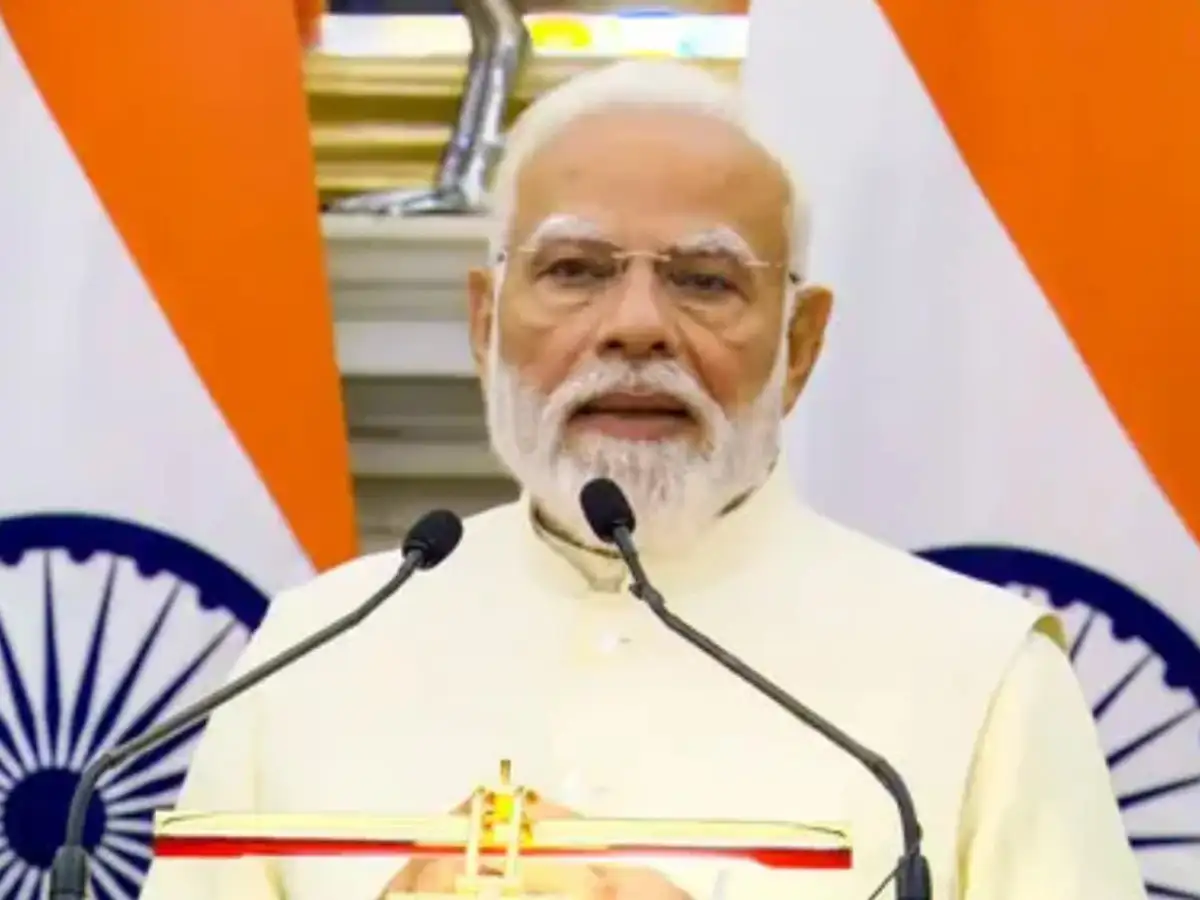
NEW DELHI — Prime Minister Narendra Modi will chair a full meeting of the Union Council of Ministers on Thursday, convening his entire ministerial bench and top bureaucratic brass for an intensive performance audit and strategic roadmap session. The high-level conclave, scheduled to take place at the Sushma Swaraj Bhawan, comes at a pivotal juncture as the government sharpens its execution machinery to accelerate capital expenditure, remove inter-ministerial bottlenecks, and cement the foundational pillars of the ‘Viksit Bharat 2047’ agenda.
According to senior government officials briefed on the agenda, Thursday’s marathon session will center on detailed presentations by key economic, infrastructure, and social sector ministries. Rather than routine administrative overviews, the presentations are structured as granular delivery scorecards. Portfolio heads will report on the real-time status of critical flagship initiatives, capital deployment efficiency, and regulatory reforms executed over recent quarters.
Inside the Agenda: High-Velocity Execution and Capex Deployment
At the core of the discussions will be the government’s public investment trajectory. With infrastructure spending serving as the primary multiplier for private sector capacity expansion and job creation, ministries overseeing transport, energy, and urban logistics will face intense scrutiny on project lifecycles.
“The Prime Minister’s directive has consistently emphasized execution over announcement,” a senior policy official familiar with the preparations told The Economic Times. “Thursday’s agenda is designed to evaluate tangible deliverables: Have capital outlays translated into finished physical assets? Where are regulatory friction points slowing project execution? The review will directly align departmental action plans with broad macroeconomic priorities.”
Key economic ministries, including Finance, Commerce & Industry, and Railways, are slated to present operational blueprints that focus on three strategic axes:
- Capex Efficiency: Ensuring that frontline ministries maintain front-loaded capital allocations without backend slippages, reinforcing sovereign investment targets.
- Logistics and Manufacturing Competitiveness: Tracking the progress of the National Logistics Policy, the PM GatiShakti National Master Plan, and the performance metrics of Production Linked Incentive (PLI) schemes across critical sunrise sectors.
- Regulatory Rationalization: Reducing the compliance burden for domestic enterprises, deepening ease of doing business reforms, and accelerating digital clearances across central and state touchpoints.
Infrastructure and Energy Transition to Take Center Stage

The infrastructure cluster—anchored by Road Transport and Highways, Railways, Ports, Shipping & Waterways, and Power—will deliver some of the most comprehensive briefings. Ministers will present audited updates on high-density freight corridors, expressway completions, port turnaround benchmarks, and renewable capacity additions.
Special emphasis will be placed on the power and green energy portfolio. With base-load power demand touching record peaks amid robust industrial activity, the Council of Ministers will examine the integration of green hydrogen pilot projects, battery energy storage systems (BESS), and power-grid modernization to avert supply crunches while sustaining decarbonization targets.
Executive Summary: Key Ministerial Portfolios Under Review
| Ministry / Sector | Primary Presentation Focus | Strategic Key Deliverables |
|---|---|---|
| Finance & Corporate Affairs | Capex execution, fiscal glide path tracking, tax compliance digitization | Optimizing public expenditure, capital market deepening, inflation monitoring |
| Railways, Roads & Ports | Multimodal logistics connectivity via PM GatiShakti | Reducing freight costs, completing mega transit corridors, port modernization |
| Commerce & Industry | Export resilience, foreign direct investment (FDI) inflows, PLI uptake | Supply chain de-risking, bilateral trade pacts, industrial corridor expansion |
| Power & Renewable Energy | Grid stability, peak-load management, clean energy ramp-up | Solar/wind capacity commissioning, pumped hydro storage framework |
| Electronics & IT | Semiconductor fab fabrication timelines, AI mission rollout | Domestic chip manufacturing, Digital Public Infrastructure (DPI) expansion |
Dismantling Inter-Ministerial Silos
Beyond sector-specific presentations, Prime Minister Modi is widely expected to utilize the session to reinforce institutional coherence. A central critique addressed in previous council reviews has been the emergence of operational silos between complementary departments—such as environment clearances delaying rail freight lines, or mining allocations lagging power station expansion.
Thursday's interface serves as an administrative clearinghouse. By gathering cabinet ministers, ministers of state (independent charge), and junior ministers in a single forum, the prime minister aims to compress decision-making timelines. Junior ministers are also slated to receive targeted mandates to oversee ground-level implementation and regional feedback loops in their assigned geographies.
“Coordinated governance is non-negotiable when targeting sustained 7%-plus economic expansion,” noted a veteran administrative analyst based in New Delhi. “Council of Ministers meetings under Modi operate less like ceremonial briefings and more like corporate board reviews. Deliverables are measured against predetermined KPIs, and delays require unambiguous justification.”
The Long-Term Horizon: Operationalizing 'Viksit Bharat'
The broader strategic backdrop of Thursday’s convention remains the formalization of the Viksit Bharat 2047 vision document. Each ministry was previously directed to draft a comprehensive charter outlining short-, medium-, and long-term targets designed to propel India into the ranks of high-income economies by its centenary of independence.
The council will examine whether individual ministerial roadmaps incorporate cutting-edge technological modernization, climate-resilient planning, and fiscal sustainability. Digital governance initiatives—leveraging artificial intelligence for public delivery, predictive agricultural analytics, and automated welfare targeting—will feature prominently in the presentations.
With an intensive parliamentary and policy schedule ahead, the outcomes of Thursday's review will provide a definitive view of the central government’s administrative priorities, executive focus areas, and legislative focus points for the fiscal year.
Frequently Asked Questions (FAQ)
What is the primary purpose of Thursday’s Council of Ministers meeting?
The meeting is a comprehensive governance review chaired by Prime Minister Narendra Modi. It focuses on evaluating the performance of key ministries, reviewing the deployment and efficiency of capital expenditures, clearing inter-ministerial execution bottlenecks, and refining sector-specific roadmaps under the long-term Viksit Bharat 2047 initiative.
Which ministries are expected to deliver major presentations?
Major presentations will be delivered by frontline infrastructure and economic portfolios, including the Ministries of Finance, Commerce & Industry, Railways, Road Transport & Highways, Power & New and Renewable Energy, and Electronics & Information Technology. Topics will range from manufacturing incentives and capex realization to semiconductor ecosystem progress and power-grid resilience.