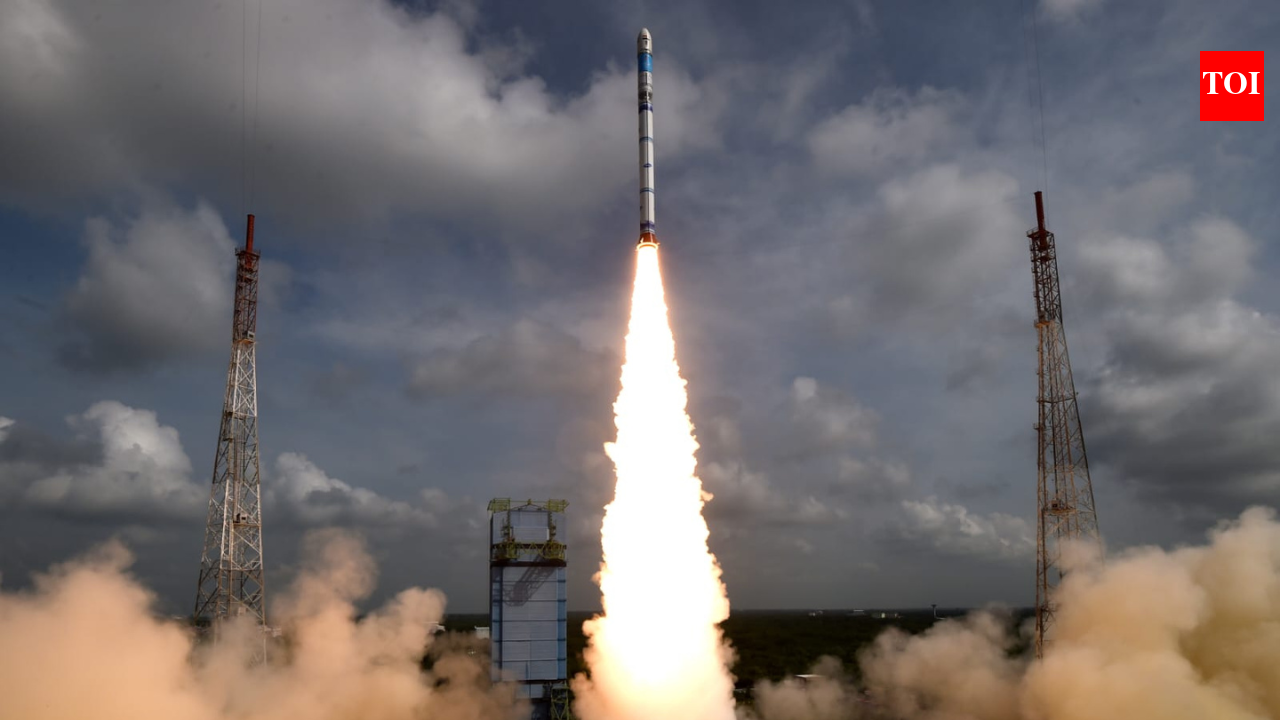
India’s Cosmic Pivot: From Thumba’s Launchpad to a Multi-Billion Dollar Space Empire
NEW DELHI & WASHINGTON — More than six decades after a humble fishing village in Kerala witnessed the assembly of India’s first sounding rocket under a coconut tree, the Indian Space Research Organisation (ISRO) is quietly orchestrating its most audacious metamorphosis yet. The narrative of the Indian space programme has long been defined by frugality, triumph against economic adversity, and unmatched reliability. Today, however, that narrative is shifting gears from incremental achievement to high-stakes commercial dominance and deep-space ambition.
As global aerospace titans and emerging economies jockey for position in a multi-trillion-dollar celestial marketplace, India’s space establishment is preparing for its biggest leap yet. From next-generation heavy-lift launch vehicles and human spaceflight to deep-space exploration and a booming private-sector ecosystem, the country is transitioning from an underdog disruptor to a central pillar of the twenty-first-century space economy.
The Architecture of Ambition: What’s Driving the Next Leap
The urgency behind India’s cosmic acceleration is both economic and geopolitical. The global space economy, valued at roughly $600 billion today, is projected to surpass $1 trillion by 2030. Recognizing that traditional government-funded models have structural limits, New Delhi has systematically dismantled state monopolies, opening the floodgates for venture capital, private rocketry, and international joint ventures.
Central to this transformation is the maturation of indigenous technologies designed to cut costs while exponentially increasing payload capacities. ISRO’s upcoming roadmap is not merely about launching satellites; it is about rewriting the economics of access to low Earth orbit (LEO) and beyond.
- Commercialization at Scale: The operationalization of IN-SPACe (Indian National Space Promotion and Authorization Centre) has unlocked dozens of private space-tech startups, drawing heavy institutional investment.
- Human Spaceflight (Gaganyaan): India is rapidly advancing toward its maiden crewed orbital mission, positioning itself among the elite group of nations capable of crewed space transport.
- Next-Gen Launchers: Development of heavy-lift architectures designed to rival international heavyweights for global commercial satellite deployments.
- Global Diplomacy: Strengthening alliances with Western space agencies, highlighted by recent diplomatic milestones such as the US administration honoring the Artemis II crew, reinforcing India’s role as a trusted partner in lunar exploration.
Historical Context: The Thumba Legacy and the Evolution of Frugal Innovation

To understand the magnitude of India’s current trajectory, one must look back to November 21, 1963. At the Thumba Equatorial Rocket Launch Station (TERLS) near Thiruvananthapuram, a small Nike-Apache sounding rocket was lifted into the sky. With no roads, no dedicated launch pads, and bicycles serving as transport for rocket parts, visionary scientists like Vikram Sarabhai and APJ Abdul Kalam laid the bedrock of an empire built on necessity and brilliant resourcefulness.
For decades, this "frugal engineering" ethos became India's trademark. While NASA and Soviet engineers operated with astronomical budgets, ISRO mastered the art of maximizing efficiency—culminating in historic milestones like the Mars Orbiter Mission (Mangalyaan), executed at a fraction of Hollywood movie budgets, and the flawless landing of Chandrayaan-3 on the lunar south pole.
Yet, the modern aerospace landscape demands more than thrift; it demands scale, speed, and continuous innovation. The leap from Thumba to tomorrow represents a deliberate pivot from playing catch-up to setting industry benchmarks.
Key Metrics: India's Space Sector at an Inflection Point
| Parameter | Historical Status (Past Decades) | Current & Future Outlook (2024–2030) |
|---|---|---|
| Global Market Share | ~2% of global space economy | Targeting 10% by 2030 ($40B+ valuation) |
| Private Sector Participation | Restricted to component manufacturing | Over 200 active startups building rockets and satellites |
| Launch Vehicle Capability | PSLV and GSLV focus | Next-gen heavy-lift and reusable launch vehicle prototypes |
| Human Spaceflight | None (Uncrewed robotics focus) | Gaganyaan missions and blueprint for an Indian Space Station by 2035 |
Global Partnerships and the Geopolitical Chessboard
India’s space ambitions do not exist in a vacuum. As international cooperation shifts away from traditional blocs, New Delhi has emerged as a linchpin for democratic space exploration. The signing of the Artemis Accords marked a turning point, aligning India’s lunar ambitions directly with NASA and international partners.
Simultaneously, the geopolitical backdrop has gained high-profile visibility. Recent international accolades—such as the United States honoring the Artemis II crew and acknowledging global partner contributions—underscore the growing interdependence of spacefaring nations. India’s low-cost, high-reliability profile makes it an indispensable partner for satellite constellations, deep-space tracking, and commercial payload deployment.
Furthermore, as nations grapple with orbital congestion and the militarization of space, India’s stated policy of maintaining space as a domain for peaceful, sustainable commerce has earned it considerable diplomatic capital across the Global South.
Challenges on the Horizon
Despite the immense optimism, industry veterans caution that significant hurdles remain. Scaling up manufacturing capacity to meet surging global demand requires heavy capital expenditure. Additionally, retaining top-tier engineering talent in the face of aggressive poaching by Silicon Valley and well-funded global private space firms is an ongoing challenge.
Regulatory frameworks, while vastly improved through IN-SPACe, must continue to evolve to provide legal certainty for private liability, orbital insurance, and spectrum allocation. If India can navigate these bureaucratic and structural bottlenecks, its economic payoff could mirror the explosive growth of its IT sector in the late 1990s.
Frequently Asked Questions
1. What is the main objective of India's upcoming space roadmap?
The primary goal is to transition India from a state-run agency into a commercial powerhouse capable of capturing 10% of the global space economy by 2030, while simultaneously executing human spaceflight missions (Gaganyaan) and building an indigenous space station by 2035.
2. How is the private sector contributing to India's modern space programme?
Through reforms spearheaded by IN-SPACe, private Indian startups are now designing, building, and launching their own rockets and satellites. Companies like Skyroot Aerospace and Agnikul Cosmos are successfully testing private launch vehicles, injecting unprecedented agility and commercial vigor into the market.