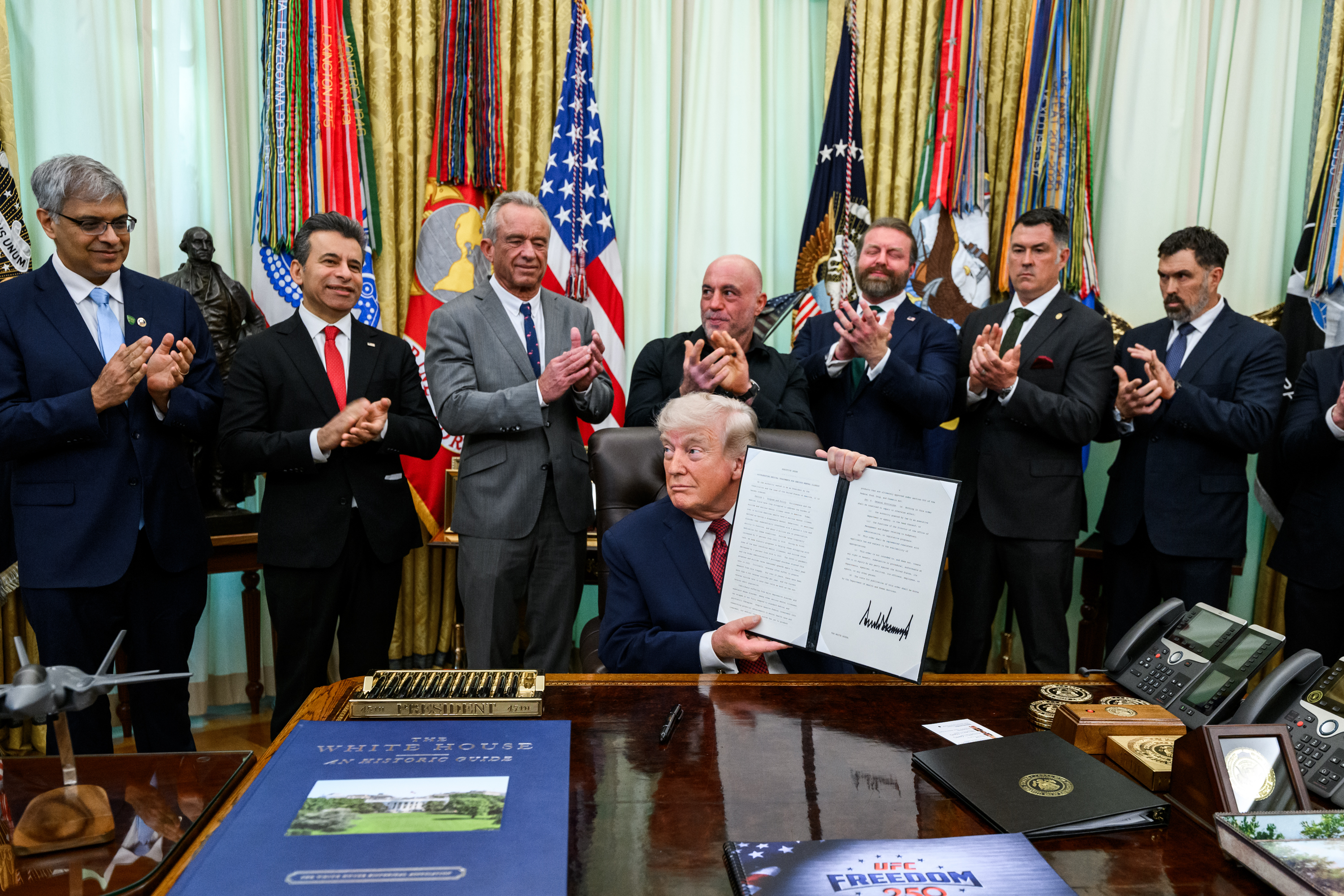
Trump’s Historic Executive Order Fast-Tracks Breakthrough Mental Health Treatments: Inside the Multi-Billion Dollar Shift for Veterans and Biotech
WASHINGTON, D.C. — In what is being hailed as the most significant policy pivot in federal healthcare in over a generation, President Donald J. Trump signed a landmark Executive Order on Monday, April 20, 2026, aimed at radically accelerating the development, approval, and deployment of breakthrough mental health therapies. The directive specifically targets the mental health crisis gripping America’s military veterans, signaling a massive regulatory shift that could reshape the U.S. pharmaceutical landscape, unlock billions in biotech investments, and offer a lifeline to millions suffering from treatment-resistant Post-Traumatic Stress Disorder (PTSD), severe depression, and Traumatic Brain Injury (TBI).
Announced directly from the White House, the executive order instructs the Department of Veterans Affairs (VA), the Department of Health and Human Services (HHS), and the Food and Drug Administration (FDA) to dismantle bureaucratic bottlenecks and prioritize next-generation clinical trials. By leveraging fast-track regulatory pathways, the administration aims to move highly promising, once-restricted therapies—ranging from novel neurotechnologies to psychedelic-assisted psychotherapies—out of clinical purgatory and directly to the frontlines of patient care.
The Core Mandates: What the Landmark Order Delivers
For decades, traditional psychiatric medicine has relied on decades-old drug classes, such as Selective Serotonin Reuptake Inhibitors (SSRIs), which clinical studies show fail up to 50% of patients with chronic PTSD. This new executive order establishes a aggressive, multi-agency framework designed to usher in a new era of "precision neuropsychiatry."
- The "Right to Try" Expansion: Building on previous legislation, the order expands the "Right to Try" framework, allowing terminally ill and severely treatment-resistant veterans immediate access to experimental mental health therapies currently in Phase II and Phase III clinical trials.
- The FDA Breakthrough Accelerator: The FDA is directed to establish a dedicated, fast-track approval corridor specifically for mental health therapeutics that demonstrate a superior efficacy profile to existing standards of care.
- Direct VA Funding Realignment: The Department of Veterans Affairs will immediately reallocate $1.2 billion from its existing research budget to fund public-private partnerships focused on advanced neurostimulation, personalized medicine, and psychedelic-assisted therapy models.
- Inter-Agency Task Force on Veteran Suicide: A newly minted task force, led by the Secretary of Veterans Affairs and top neuroscientists, must deliver a comprehensive deployment blueprint to the Oval Office within 90 days.
"A Debt of Honor": Inside the White House Briefing

Speaking from the East Room of the White House, surrounded by decorated veterans, medical researchers, and bipartisan lawmakers, President Trump framed the directive as both a moral imperative and an economic necessity.
"For too long, our nation’s heroes have fought wars abroad, only to return home to fight an even more devastating war within their own minds," President Trump declared. "The old ways of doing things—shoveling pills down the throats of our veterans that don't work—are over. Today, we are unleashing American ingenuity. We are cutting through decades of FDA red tape to deliver the most advanced, breakthrough treatments on Earth directly to our veterans. We will not lose another veteran to the tragedy of suicide."
The economic toll of the veteran mental health crisis is staggering. According to data from the Watson Institute for International and Public Affairs, the societal cost of veteran PTSD and suicide exceeds $150 billion annually in healthcare expenses, lost productivity, and disability payments. Proponents of the executive order argue that accelerating high-efficacy cures will drastically reduce these long-term fiscal burdens on the American taxpayer.
The Regulatory Action Plan
To understand how this policy translates into immediate action, the White House released a structured timeline detailing agency responsibilities and target deadlines:
| Lead Federal Agency | Mandated Directive | Implementation Deadline | Projected Economic & Clinical Impact |
|---|---|---|---|
| Food & Drug Administration (FDA) | Establish "Priority Review" pathways for novel neuro-therapeutics, including MDMA and Psilocybin-assisted therapies. | 60 Days | Shortens drug approval timelines by an estimated 12 to 18 months, catalyzing biotech VC funding. |
| Department of Veterans Affairs (VA) | Launch 15 new state-of-the-art clinical trial centers specializing in neurostimulation and breakthrough medicine. | 120 Days | Provides direct, cutting-edge treatment access to over 50,000 high-risk veterans in the first year. |
| Health & Human Services (HHS) | Draft national insurance reimbursement frameworks for newly approved advanced psychiatric treatments. | 90 Days | Ensures commercial insurance and Medicare/Medicaid coverage, lowering out-of-pocket costs for civilians. |
Wall Street Reacts: A Gold Rush in Neuro-Biotech
The market implications of the executive order were felt instantly across Wall Street. Biotech and pharmaceutical firms specializing in central nervous system (CNS) disorders, psychedelic-derived medicines, and neurotech hardware saw their valuations surge. Analysts at major financial institutions predict that federal backing of these advanced modalities will de-risk the sector, prompting a wave of institutional capital to flow into mental health research and development.
"This is the 'Space Race' moment for the human brain," said Marcus Vance, Senior Biotech Analyst at a leading New York investment bank. "By guaranteeing a streamlined regulatory path and federal reimbursement pipelines, the White House has effectively catalyzed a multi-billion-dollar market. We expect venture capital inflows into CNS startups to double over the next 24 months."
However, the order is not without its critics. Some traditional medical advocates have raised concerns over the speed of the proposed rollouts, warning that bypassing standard, prolonged regulatory reviews could compromise patient safety. The administration countered these concerns, emphasizing that the order maintains rigorous clinical oversight while simply eliminating unnecessary administrative delays and paperwork.
Looking Ahead: A Paradigm Shift in Healthcare
As the 90-day implementation clock begins, all eyes will be on the FDA and the VA to see how quickly bureaucratic structures adapt to the President's mandate. For the families of veterans who have spent years watching loved ones suffer through ineffective treatments, the executive order represents a historic turning point.
By framing mental health not merely as a chronic condition to be managed, but as a critical wound to be actively healed through cutting-edge science, this landmark order may well establish a brand-new global standard for psychiatric care.
Frequently Asked Questions (FAQ)
1. Which specific therapies are expected to be fast-tracked under this Executive Order?
While the executive order does not explicitly name brand-name drugs, it directs federal agencies to prioritize "breakthrough-designated therapies" for treatment-resistant conditions. This highly benefits advanced modalities currently in Phase II and III clinical trials, including MDMA-assisted therapy for PTSD, psilocybin-based compounds for treatment-resistant depression, rapid-acting ketamine protocols, and non-invasive deep-brain magnetic stimulation (TMS) devices.
2. Does this order apply only to military veterans, or will civilian patients benefit as well?
While the primary deployment and direct funding mechanisms are routed through the Department of Veterans Affairs (VA) to benefit veterans first, the regulatory reforms mandated for the FDA and HHS will have a massive trickle-down effect. By streamlining the national approval process and establishing insurance reimbursement guidelines, these breakthrough treatments are expected to reach the broader civilian commercial market years faster than previously projected.