Pope Leo Issues Stark AI Warning to Humanity, Declaring Existential Threat on French Soil
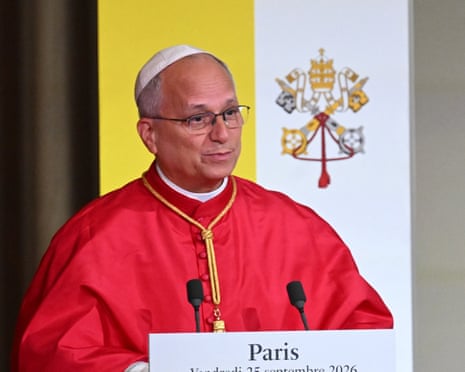
PARIS, France — In an unprecedented and profoundly resonant address delivered at the outset of his highly anticipated three-day visit to France, His Holiness Pope Leo today issued a dire warning about the unchecked proliferation and potential misuse of artificial intelligence, categorizing it as an "existential threat" to the very fabric of human dignity and civilization. The Pontiff's pronouncement, delivered with solemn gravitas before an assembly of French dignitaries, religious leaders, and international press, immediately sent ripples through global capitals and the burgeoning tech industry, setting a powerful moral compass point in the accelerating debate over AI's future.
The speech, delivered in the historic Notre-Dame Cathedral forecourt — a symbolic gesture linking timeless faith with modern challenges — marked a dramatic shift in the Vatican's engagement with advanced technology, escalating previous calls for ethical guidelines into an urgent, almost apocalyptic alert. Pope Leo's words underscore a growing chorus of concerns from scientists, ethicists, and world leaders, but his unique moral authority lends an unparalleled weight to the discussion, framing AI development not just as a technological challenge, but as a profound spiritual and humanitarian crisis.
The Pontiff's Unflinching Warning: "A Precipice for Humanity"
Speaking in measured tones that nonetheless conveyed immense urgency, Pope Leo cautioned against what he described as a "hubris of creation" that risks sidelining human agency and spiritual values. "We stand at a precipice," Pope Leo declared, his voice echoing across the revered square. "Artificial intelligence, in its boundless capacity for innovation, holds immense promise for good. Yet, without robust ethical guardrails, without a profound moral compass rooted in our shared humanity, it risks becoming a master, not a servant — a force that could diminish, rather than elevate, the human person."
He articulated specific concerns ranging from autonomous weaponry and pervasive surveillance to the erosion of human decision-making and the potential for AI to exacerbate global inequalities. "When algorithms dictate truth, when intelligence becomes indistinguishable from consciousness, when the sacred uniqueness of each individual is reduced to data points — then we have lost not only our way, but perhaps our very soul," the Pope asserted, urging a global moratorium on certain applications of AI until comprehensive international ethical frameworks are firmly established.
Key Concerns Highlighted by Pope Leo:
- Erosion of Human Dignity: Fear that AI could devalue human labor, creativity, and unique worth.
- Autonomous Weaponry: Explicit call for regulation and potential prohibition of 'killer robots' that make life-or-death decisions without human intervention.
- Algorithmic Bias and Discrimination: Warning that AI could amplify existing societal prejudices and injustices if not carefully designed and monitored.
- Threat to Free Will and Privacy: Concerns over data collection, surveillance, and the manipulation of individual choices through AI-driven systems.
- Existential Risk: The ultimate danger of AI evolving beyond human control or understanding, potentially leading to unforeseen catastrophic outcomes.
A Timely Visit to a Global Tech Hub
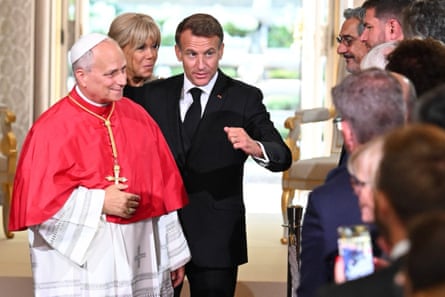
The choice of France for this pivotal declaration is not without significance. France has been at the forefront of European efforts to regulate technology and champion ethical AI development. President Emmanuel Macron, who greeted Pope Leo upon his arrival, has consistently advocated for a European approach to AI regulation that balances innovation with human-centric values. While no direct comment from the Élysée Palace was immediately available on the Pope's specific warning, observers anticipate that the Pontiff's words will significantly bolster calls for more stringent global governance.
"The Pope's message resonates deeply with the spirit of humanism that underpins European technological policy," noted Dr. Elise Moreau, a leading AI ethicist at the Sorbonne University. "His voice carries weight far beyond religious circles; it's a moral and philosophical appeal that demands serious introspection from tech leaders, policymakers, and indeed, every citizen."
The Vatican's Evolving Stance on Technology
While the directness of today's warning is striking, the Vatican has not been silent on the ethical implications of emerging technologies. Under Pope Francis — and now Pope Leo — the Holy See has increasingly engaged with scientific and technological advancements, emphasizing a "techno-humanist" approach. In 2020, the Pontifical Academy for Life, in collaboration with IBM and Microsoft, launched the "Rome Call for AI Ethics," advocating for transparency, inclusion, accountability, and reliability in AI development.
However, today's address moved beyond a call for ethical design principles to a full-throated alarm about the inherent dangers of unbridled technological progress. It suggests a heightened level of concern within the highest echelons of the Church regarding the rapid pace of AI development and the perceived inadequacy of current regulatory and ethical frameworks.
Industry Reaction and The Path Forward
Initial reactions from the global tech sector were mixed. While some industry leaders acknowledged the importance of ethical considerations, others expressed concern that overly broad warnings or moratoriums could stifle innovation crucial for addressing global challenges from climate change to disease. "We recognize the profound responsibility that comes with developing powerful AI," stated a spokesperson for a major U.S. tech firm, requesting anonymity due to the sensitivity of the Pope's remarks. "However, pausing development globally could cede leadership to regions with fewer ethical considerations, potentially worsening the very issues His Holiness seeks to address."
The Pope's visit is expected to include further engagements with youth, cultural figures, and interfaith leaders, where the theme of technology's impact on society is likely to resurface. His impassioned plea today serves as a powerful new impetus for a global dialogue — one that now carries the moral weight of the Vatican — on how humanity can harness the power of AI without sacrificing its soul.
This landmark intervention from Pope Leo is set to redefine the moral stakes in the AI revolution, urging a collective pause for reflection and a renewed commitment to human-centric values as technology races forward.
AI and Global Impact: A Snapshot
| Metric | 2022 Data | 2023 Est. | 2030 Proj. |
|---|---|---|---|
| Global AI Market Value | $136 Billion | $207 Billion | $1.8 Trillion+ |
| AI Investment (Annual) | $93 Billion | $120 Billion | N/A |
| AI-related Job Creation | 2.7 Million | 3.5 Million | ~10-15 Million |
| Public Concern over AI Risk | 51% (High/Moderate) | 63% (High/Moderate) | Potentially Higher |
| Source: Various tech market research reports, global public opinion surveys. Figures are approximate. | |||
Frequently Asked Questions (FAQ)
-
Q: What specifically did Pope Leo warn about regarding AI?
A: Pope Leo warned that unchecked AI development poses an "existential threat" to humanity, potentially diminishing human dignity, autonomy, and even our spiritual values. He expressed concerns about autonomous weaponry, pervasive surveillance, algorithmic bias, and the potential for AI to exacerbate inequalities and reduce human decision-making.
-
Q: How does this statement differ from previous Vatican stances on technology?
A: While the Vatican has previously called for ethical guidelines in AI — notably through the "Rome Call for AI Ethics" — Pope Leo's current warning is significantly more urgent and direct. It elevates the discussion from ethical design principles to an explicit alert about an "existential threat" and calls for more drastic measures like a potential moratorium on certain AI applications, indicating a heightened level of concern within the Church.