The Mediterranean Trojan Horse: How Russia’s ‘Ghost Fleet’ Could Launch Drone Strikes Into Europe’s Underbelly
BRUSSELS / ATHENS — Western security agencies are tracking a menacing evolution in maritime hybrid warfare: the potential conversion of Russia’s sprawling commercial “ghost fleet” into clandestine launch platforms for long-range attack drones. Naval intelligence reports circulating across NATO capitals warn that aging tankers and disguised bulk carriers, long utilized to bypass G7 oil price caps in the Mediterranean, possess the deck space, modular infrastructure, and geographic positioning to strike deep into Southern and Central Europe with little to no tactical warning.
While European defense doctrines have historically prioritized guarding against ballistic and cruise missile attacks launched from Russian sovereign territory, Kaliningrad, or the Black Sea, the presence of hundreds of untraceable, foreign-flagged merchant vessels idling off European coastlines represents an acute asymmetric blind spot. Military strategists warn that the weaponization of these commercial vessels fundamentally erases the geographical buffer Europe once took for granted.
The Grey-Zone Arsenal: Containerized Drone Platforms
The core of the threat rests on the commercial modularity of modern loitering munitions. Over the past two years, Russian defense contractors, heavily informed by Iranian operational design, have mastered containerized launch systems. These setups allow automated pneumatic or rocket-assisted launch rails to be concealed within standard 20-foot or 40-foot commercial shipping containers (ISO containers), indistinguishable from legitimate deck cargo.
According to maritime defense analysts, a retrofitted shadow tanker cruising through international transit lanes in the Aegean, the Ionian, or the Strait of Sicily could comfortably house batteries of long-range one-way attack (OWA) unmanned aerial vehicles (UAVs) without altering its outward profile or operational radar signature.
Key Strategic Takeaways for Defense and Markets
- Asymmetric Proximity: Launching from international waters outside territorial limits cuts drone transit times down to minutes, rendering regional early-warning radar arrays and civilian air-traffic control monitoring systems largely ineffective.
- Critical Infrastructure Exposure: High-value strategic assets along the Mediterranean littoral—including LNG terminals in Greece and Italy, transatlantic undersea communication cables, naval installations at Souda Bay and Sigonella, and offshore energy rigs—fall squarely within low-cost strike envelopes.
- Plausible Deniability: Ships operating under opaque flags of convenience (such as Gabon, Panama, or the Cook Islands) with shell-company ownership structures offer Moscow deniability in sabotage or grey-zone harassment scenarios.
- Maritime Shipping Fallout: Any militarization or subsequent interdiction regime in the Mediterranean threatens to trigger immediate spikes in maritime war-risk insurance premiums, snarling global supply chains navigating the Suez-Gibraltar corridor.
The Primary Drones in the Maritime Crosshairs
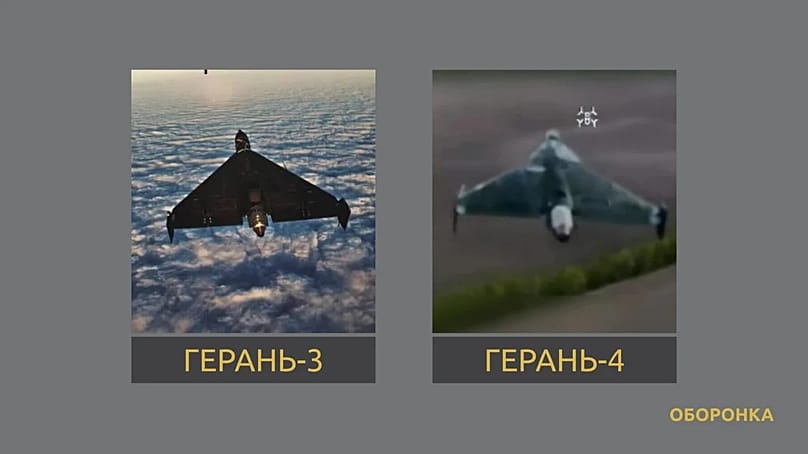
Military planners are examining several platforms that could be adapted for maritime deployment from modified civilian decks:
| Drone Platform | Estimated Range | Payload Capacity | Primary Vulnerability / Target Profile |
|---|---|---|---|
| Geran-2 (Shahed-136 Variant) | 1,500 – 2,500 km | 40 – 50 kg high-explosive | Fixed infrastructure: Power grids, coastal refineries, port terminals |
| ZALA Lancet (Extended Range) | 70 – 100 km | 3 – 5 kg shaped-charge | Targeted precision strikes: Coastal radar installations, anchored warships |
| Modular Decoy / EW Drones | 300 – 600 km | Electronic jammer / chaff | Blinding European maritime domain awareness and sensor corridors |
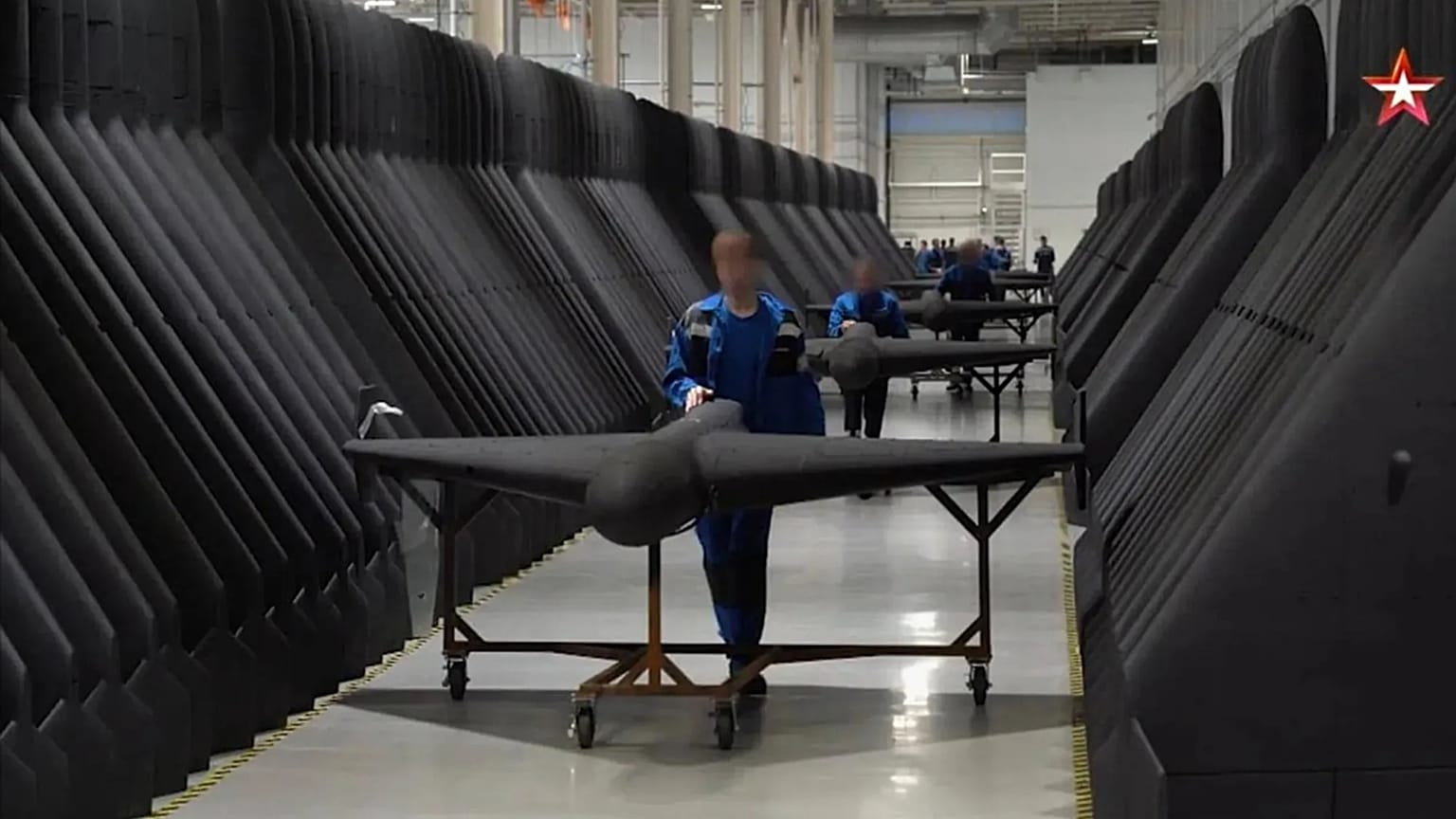
The Geran-2, manufactured domestically in Russia's Alabuga Special Economic Zone, is viewed as the primary strategic threat. Fired via pre-programmed inertial guidance coupled with satellite navigation, it requires minimal deck footprint and zero post-launch command infrastructure. A single civilian bulker could theoretically launch a synchronized swarm of dozens of Geran-2 drones, overwhelming local surface-to-air missile (SAM) batteries through sheer saturation.
The Mediterranean Bottleneck: Exploiting UNCLOS Weaknesses
The legal framework governing international waters further ties Western navies' hands. Under the United Nations Convention on the Law of the Sea (UNCLOS), commercial vessels enjoy freedom of navigation in exclusive economic zones (EEZs) and international corridors. Unless a vessel is suspected of piracy, slave trade, or unauthorized broadcasting, boarding actions by foreign naval vessels carry profound diplomatic, economic, and legal risks.
Russian ghost ships routinely exploit these protections. Vessels intentionally disable or spoof their Automatic Identification Systems (AIS), conduct mid-sea ship-to-ship (STS) transfers off the coasts of Greece, Malta, and Spain, and operate with complex layers of paper ownership tracing back to zero-liability shell firms in Dubai, Hong Kong, or the Seychelles. If a launch were executed from an obscure, poorly flagged tanker before the ship fled into neutral waters or scuttled its launcher, attribution would remain legally fraught for days—far too late to alter the strategic damage.
NATO’s Response: Extending the Perimeter Southward
NATO’s Allied Maritime Command (MARCOM) has initiated quiet countermeasures, expanding surveillance flights via maritime patrol aircraft like the P-8A Poseidon and high-altitude surveillance drones operating out of Southern European bases. Concurrently, intelligence agencies are intensifying efforts to build comprehensive digital profiles of every ghost-fleet hull traversing European waters, matching satellite optical feeds against AIS irregularities.
However, intercepting small, low-flying composite drones over the water remains extraordinarily cost-inefficient. Firing multi-million-dollar interceptors like the Aster 30 or SM-2 against $20,000 loitering munitions launched from a commercial deck creates the exact economic exhaustion Moscow aims to inflict upon Western alliance members.
Frequently Asked Questions
Can ordinary commercial merchant ships physically launch military-grade strike drones?
Yes. Many modern one-way attack drones require nothing more than a short metal rail or a compressed-air canister mounted inside a standard ISO shipping container. Russian defense developers have marketed containerized strike systems, such as the Club-K missile launcher, for over a decade. Adapting these container systems for loitering munitions like the Geran-2 requires minimal deck alteration, enabling virtually any flat-deck cargo vessel or tanker to serve as a launchpad without specialized military modifications.
Why would Russia risk launching attacks from ghost ships in the Mediterranean?
The tactical advantage lies in psychological disruption and grey-zone ambiguity. By threatening Europe from the south and west rather than just the contested eastern border, Moscow stretches NATO's air defense envelopes thin. Furthermore, in an escalating crisis, deniable maritime strikes allow pressure on critical European infrastructure without automatically triggering an unambiguous Article 5 collective defense response, keeping European decision-makers divided on legal and military attribution.