Executive Takeaways:
- Capital Efficiency Shock: DeepSeek-V3 achieved frontier-class performance at a fraction of Western training costs, triggering a profound reassessment of enterprise ROI and infrastructure scalability across Wall Street.
- Architectural Breakthrough: By mastering Multi-head Latent Attention (MLA) and DeepSeekMoE (Mixture-of-Experts) routing, the model bypasses traditional memory bottlenecks that plague standard cloud compute architecture.
- Market Revaluation: The emergence of hyper-optimized, low-inference-cost models forces hyperscalers and venture capitalists to re-evaluate valuation multiples and long-term capital allocation strategies.
For the better part of four years, the generative artificial intelligence boom operated on an unyielding, linear theorem: supremacy belonged to whoever possessed the deepest pockets, the densest clusters of advanced graphics processing units (GPUs), and the most profligate capital expenditure budgets. Wall Street rewarded hyper-scalers who burned billions on massive data centers, treating raw compute as the sole moat protecting high-tech monopolies. Then came DeepSeek-V3.
By fundamentally dismantling established design conventions, DeepSeek’s latest iteration has sent shockwaves through boardrooms from Menlo Park to London. Unlike traditional proprietary LLMs engineered primarily as closed cloud services with plug-and-play APIs—a commoditized fit for common enterprise use cases—DeepSeek-V3 represents a paradigm shift in infrastructural efficiency. It forces a rigorous recalculation of risk mitigation, operational expenditure, and the very foundation of modern cloud economics.
The Anatomy of Disruption: Moving Beyond Brute-Force Compute
Test Our Free AI & Tech Utilities Suite
Calculate LLM API token costs, analyze article dwell-time, or simulate tech DCA returns.
To understand why DeepSeek-V3 has captured the undivided attention of chief technology officers and quantitative strategists alike, one must examine the structural limitations of legacy large language models. Historically, scaling an LLM meant increasing parameter counts and, consequently, ballooning the KV (Key-Value) cache memory required during inference. This created a severe bottleneck: as models grew, the hardware requirements to serve them efficiently scaled exponentially, driving up token costs and constraining enterprise ROI.
DeepSeek-V3 attacks this bottleneck at the silicon and algorithmic level. Rather than relying on brute-force scaling, the model utilizes a sophisticated hybrid architecture combining Multi-head Latent Attention (MLA) and an advanced Mixture-of-Experts (MoE) routing mechanism. MLA compresses the KV cache into a lower-dimensional latent space, drastically reducing memory bandwidth demands during generation. Meanwhile, DeepSeekMoE activates only a tiny fraction of its total parameters per token—routing queries through specialized expert networks with surgical precision.
The result is a model that punches significantly above its weight class, matching or exceeding the benchmark performance of Western counterparts while demanding a fraction of the operational overhead. For corporate treasurers and IT leaders navigating tight budgets, this breakthrough changes the calculus of technology adoption. It shifts the conversation from whether a business can afford cutting-edge intelligence to how quickly they can integrate hyper-efficient models into their legacy stacks.
Comparative Analysis: DeepSeek-V3 vs. Legacy Frontier Models
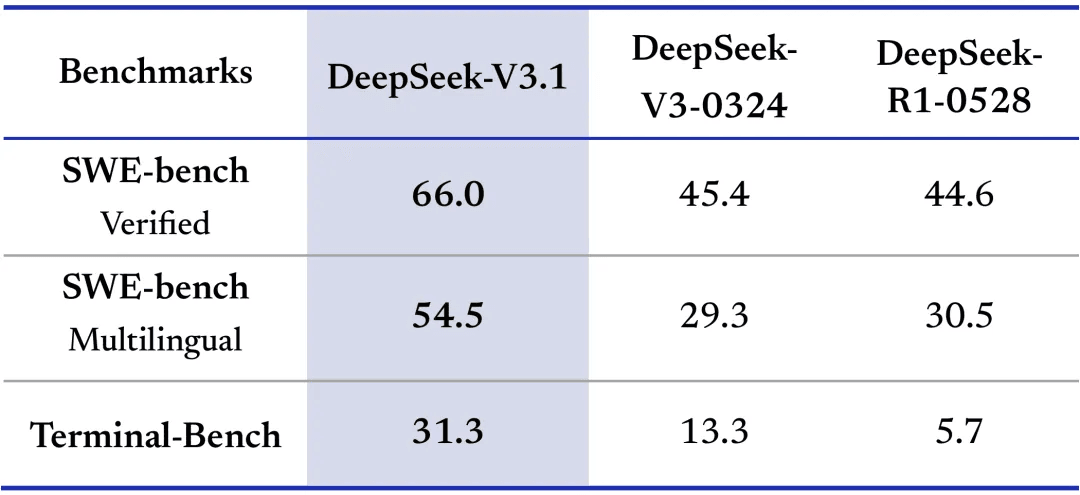
The divergence between DeepSeek-V3 and conventional LLM offerings extends far beyond raw algorithmic tweaks; it fundamentally alters the unit economics of AI deployment. The market has long accepted high inference costs as the cost of doing business. DeepSeek challenges that baseline.
| Metric / Feature | DeepSeek-V3 | Traditional US Frontier LLMs |
|---|---|---|
| Primary Architecture | Fine-grained MoE + Multi-head Latent Attention (MLA) | Dense Transformers or Standard Sparse MoE |
| Training & Compute Paradigm | Extreme optimization, algorithmic efficiency | Brute-force scale, massive GPU cluster hours |
| Inference Cost Efficiency | Significantly reduced KV cache footprint | High memory bandwidth consumption |
| Deployment Flexibility | Optimized for diverse and constrained environments | Typically tied to proprietary hyperscaler clouds |
Industry & Market Implications: Winners, Losers, and Capital Reallocation
The arrival of DeepSeek-V3 has triggered immediate reverberations across global financial markets. For venture capitalists and institutional equity analysts, the core question is no longer who can spend the most on silicon, but who can engineer the smartest software. This shift introduces both risk and opportunity across the technology ecosystem.
The Winners: Enterprise software buyers and mid-tier cloud providers stand to gain immensely. Organizations that previously found frontier-grade intelligence cost-prohibitive can now integrate advanced capabilities without eroding their operating margins. Furthermore, specialized infrastructure providers that optimize model serving stand to capture market share from traditional cloud monopolies.
The Pressured: Hardware manufacturers and hyperscale cloud giants face a complex strategic juncture. If leaner algorithms reduce the total volume of advanced GPUs required to achieve state-of-the-art results, the hyper-growth trajectory of hardware demand could face a structural plateau. Consequently, investors are scrutinizing valuation multiples for semiconductor firms and cloud infrastructure providers, pricing in a future where efficiency—not raw consumption—drives customer adoption.
Frequently Asked Questions (People Also Ask)
What makes DeepSeek-V3 architecturally different from standard LLMs?
DeepSeek-V3 departs from traditional dense transformer models by utilizing a fine-grained Mixture-of-Experts (MoE) routing system combined with Multi-head Latent Attention (MLA). This combination minimizes the memory footprint of the KV cache and activates only essential parameters for each token, drastically reducing compute overhead and inference latency compared to legacy cloud-native APIs.
How does DeepSeek-V3 impact enterprise IT budgets and ROI?
By delivering high-tier performance at a fraction of the inference and operational cost, DeepSeek-V3 dramatically accelerates enterprise ROI. Organizations can deploy sophisticated AI solutions for customer service, data analysis, and software development without incurring the exorbitant API fees historically charged by major Western proprietary model providers.
Does the efficiency of DeepSeek-V3 compromise regulatory compliance and data security?
Like any advanced language model, deployment security depends heavily on the hosting environment. Because models like DeepSeek-V3 offer greater deployment flexibility, enterprises can run them within private VPCs or sovereign cloud infrastructures, enabling stricter adherence to regional data privacy laws and regulatory compliance frameworks than standard plug-and-play public cloud APIs allow.
Future Outlook: The Next Frontier in AI Economics
The emergence of DeepSeek-V3 marks the end of the industry's uncritical "bigger is better" era and ushers in a mature age of algorithmic sophistication. As regulatory scrutiny tightens, corporate IT budgets normalize, and energy constraints at data centers become acute, efficiency will remain the primary competitive differentiator.
Over the next twelve to twenty-four months, industry observers should monitor three critical milestones: first, the speed at which Western AI labs adapt their own architectures to match or exceed these efficiency gains; second, the evolution of regulatory frameworks governing cross-border model deployment; and third, the downstream impact on enterprise software margins as AI integration shifts from a speculative cost center to an optimized operational utility. In this new landscape, the companies that thrive will not be those that simply burn the most capital, but those that extract the highest intelligence per watt and per dollar.