

The Silicon Backlash: How Democrats Weaponized Data Center Anger to Flip Red States
Test Our Free AI & Tech Utilities Suite
Calculate LLM API token costs, analyze article dwell-time, or simulate tech DCA returns.
A convergence of surging power bills, grid strain, and rapid artificial intelligence infrastructure expansion has created an unexpected political wedge. Strategic operatives are turning once-safe conservative strongholds into battlegrounds by tapping into deep-seated voter resentment over Big Tech's physical footprint.
Executive Takeaways
- The New Electoral Fault Line: Rapid deployment of hyperscale data centers for generative AI has triggered unprecedented local opposition in exurban and rural red states.
- Economic Friction: While state-level economic development boards champion these projects for capital allocation and tax revenue, local constituents face surging utility rates and water scarcity concerns.
- The Democratic Playbook: Progressive strategists and local Democratic chapters have successfully marshaled populist anger, reframing the debate from a zoning dispute into a referendum on corporate accountability and grid reliability.
- Market Liquidity & Valuation Risks: Institutional investors face growing regulatory compliance hurdles and potential capital deployment delays as municipal zoning boards push back against enterprise infrastructure scalability.
The Infrastructure Gold Rush Meets Local Populism
Over the past twenty-four months, the unprecedented surge in generative artificial intelligence has fundamentally altered the commercial real estate and energy landscapes. Hyperscale cloud operators and specialized enterprise compute providers have rushed to secure land, water rights, and power purchase agreements across the American interior. Drawn by favorable tax incentives, low cost-of-living indices, and historically business-friendly regulatory regimes, these firms targeted suburban and rural districts in traditionally conservative states such as Georgia, North Carolina, Arizona, and Texas.
However, the macroeconomic models underpinning these site selections failed to account for a potent political variable: localized populist backlash. As multi-billion-dollar server farms broke ground adjacent to residential neighborhoods and agricultural land, residents began experiencing immediate externalities. Municipal water tables dipped, localized noise pollution from cooling towers disrupted rural quiet, and—most critically—residential utility bills spiked.
For decades, the political calculus in these red-leaning districts assumed that pro-business policies universally translated to electoral support. State legislators and governors eagerly traded tax abatements for job creation metrics. But as investigative data indicates, modern data centers require massive capital expenditure yet yield surprisingly few permanent, high-paying local jobs once construction phases conclude. This disconnect provided an unexpected opening for Democratic organizers, who recognized that anger over industrial encroachment transcended traditional partisan boundaries.
Anatomy of a Flip: How Local Zoning Battles Went Statewide
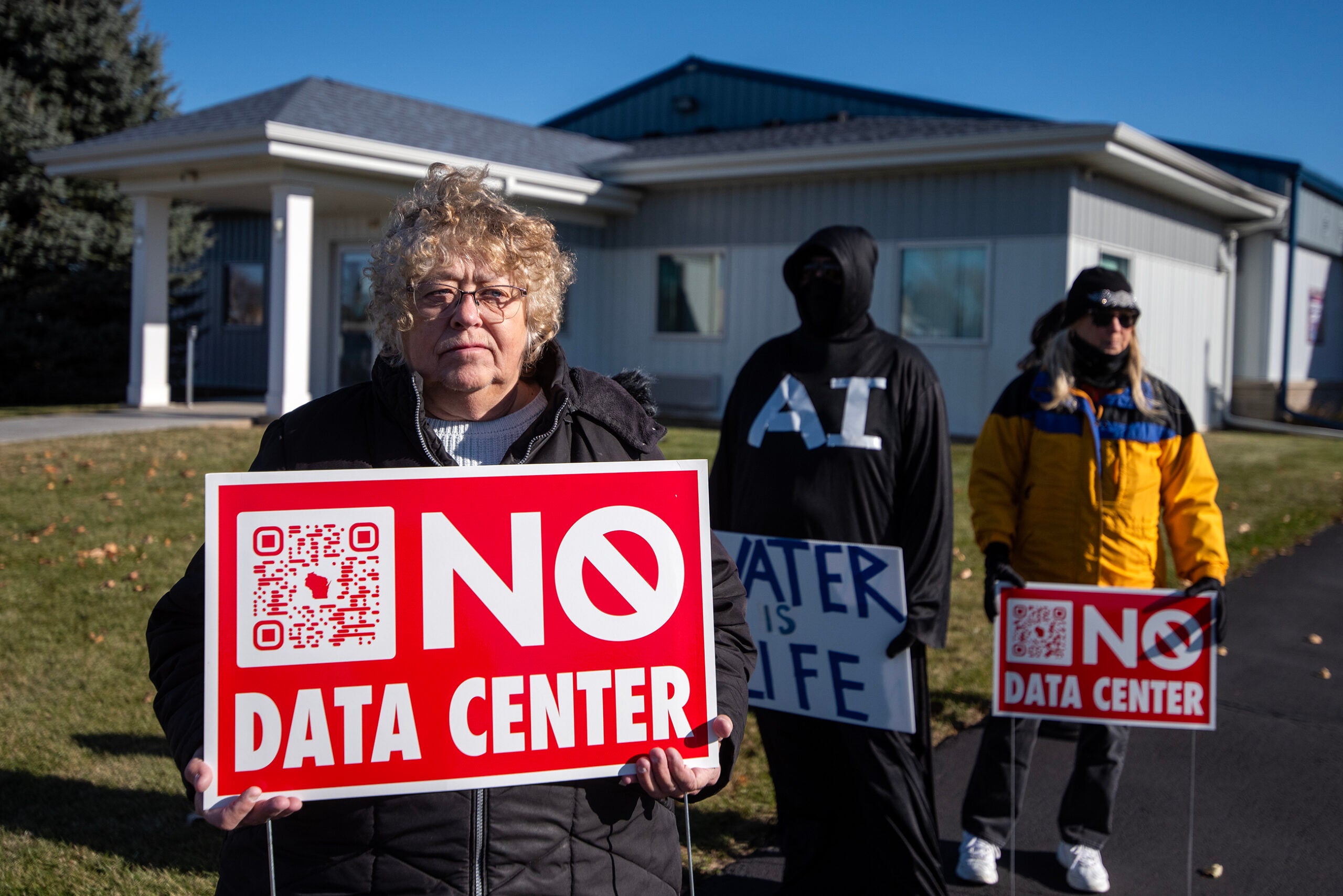
The transition from localized zoning disputes to statewide political realignments followed a methodical campaign playbook. Democratic political action committees, environmental justice coalitions, and disgruntled local conservatives formed ad-hoc alliances. By reframing the issue not as a clash over economic progress, but as a defense of working-class households against unaccountable corporate monopolies, opposition groups effectively neutralized the traditional Republican platform of deregulation.
In suburban Atlanta, for instance, local candidates who adopted a skeptical stance toward expedited data center approvals captured legislative seats previously held by multi-term conservatives. Campaign messaging bypassed standard national talking points, focusing instead on tangible grievances: why should fixed-income retirees and working families subsidize the grid upgrades necessary to power server racks for trillion-dollar tech conglomerates?
This dynamic forced incumbent Republicans into an uncomfortable corner. To protect their traditional donor base of real estate developers and corporate utility partners, they were forced to vote down moratoriums on data center construction. Democratic challengers capitalized on these votes, weaponizing public records requests to expose cozy relationships between state-level economic development boards and corporate site selectors.
Verified Data & Metrics Breakdown
The following comparative metrics illustrate the structural imbalances between corporate data center investments and local community returns, fueling the recent political shifts across key red-state battlegrounds:
| Metric / Indicator | Hyperscale Data Center Profile | Local Community Impact | Political & Market Fallout |
|---|---|---|---|
| Average Capital Expenditure | $750M – $2.5B per facility | Minimal direct municipal investment | High local tax abatements draw scrutiny |
| Permanent Job Creation | 30 – 70 operational jobs | Low ROI relative to land footprint | Bolsters "job hollow" populist narratives |
| Grid Load & Utility Impact | 100MW to 1GW+ continuous draw | Residential rate hikes of 8% to 22% | Primary driver of voter mobilization |
| Regulatory Compliance Delay | Extended by 12 to 36 months | Stricter local zoning ordinances enacted | Threatens institutional valuation multiples |
Industry & Market Implications: Winners, Losers, and Capital Allocation
The weaponization of anti-data center sentiment carries profound ramifications for institutional investors, enterprise tech valuations, and regional utility providers. As municipal resistance hardens, the traditional risk-return profile of digital infrastructure real estate is undergoing a rapid reassessment.
Who Wins: Local political insurgents, populist Democratic candidates in exurban districts, and alternative energy developers who can offer behind-the-meter generation solutions. Additionally, boutique legal and lobbying firms specializing in municipal zoning disputes are experiencing unprecedented deal flow.
Who Loses: Hyperscale cloud operators (such as Amazon Web Services, Microsoft Azure, and Google Cloud), traditional real estate investment trusts (REITs) heavily exposed to rural land banking, and pro-business Republican incumbents caught flat-footed by the shift in voter priorities. For enterprise tech firms, delayed infrastructure scalability directly impedes enterprise ROI and cloud compute architecture expansion.
From a market liquidity perspective, institutional capital allocators are beginning to price in regulatory friction as a permanent operational risk. Valuation multiples for specialized data center developers may face downward pressure if permitting timelines double across key growth corridors in the American South and Midwest.
Frequently Asked Questions (People Also Ask)
Why are data centers causing utility bill spikes in red states?
Hyperscale data centers require continuous, massive electrical loads—often equivalent to small cities. Upgrading transmission lines, substations, and generation capacity to support these facilities typically incurs capital costs that utilities pass down through rate-base adjustments, directly increasing residential and small-business electricity tariffs.
How have Democrats capitalized on local opposition to corporate tech infrastructure?
Democratic strategists have bypassed partisan labels by aligning with rural and suburban residents opposing industrial sprawl. By framing data centers as embodiments of corporate welfare and environmental strain, they have successfully recruited disaffected conservative voters into broad anti-development coalitions that translate directly into ballot box gains.
What impact does this political shift have on enterprise tech valuation multiples?
Increased regulatory compliance hurdles, zoning moratoriums, and extended permitting timelines introduce friction into infrastructure scalability. As capital deployment slows down, institutional investors face compressed return horizons, impacting valuation multiples across the broader digital infrastructure sector.
Are state legislatures beginning to roll back tax incentives for data centers?
Yes. Several state legislatures that previously offered aggressive sales and property tax exemptions are now considering restrictive bills that mandate minimum job creation thresholds, water usage disclosures, and direct contributions to local grid modernization before granting tax relief.
Future Outlook: Key Milestones to Watch
As the intersection of artificial intelligence infrastructure and electoral politics solidifies, industry observers and market analysts are monitoring several critical milestones over the next 12 to 18 months:
- State Legislative Sessions: Watch for incoming legislation in Georgia, North Carolina, and Texas aimed at stripping or modifying tax exemptions for data centers that fail to demonstrate net-positive local economic value.
- Utility Regulatory Commission Rulings: Public service commission hearings regarding rate-basing grid upgrades for hyperscalers will serve as early indicators of whether consumer backlash can successfully alter utility pricing structures.
- Midterm and Off-Year Election Results: Local municipal and county commissioner races in exurban tech corridors will test whether anti-data center platforms can permanently reshape the political demographic map in red states.
- Corporate Adaptation Strategies: Monitor how hyperscalers adjust their capital allocation models—specifically regarding investments in behind-the-meter nuclear, geothermal, and advanced solar generation to bypass public grid congestion entirely.
Ultimately, the friction between the digital economy's physical demands and local electorate preservation has created a volatile new dynamic in American politics. What began as a localized nuisance has matured into a sophisticated political wedge, proving that even in deeply conservative strongholds, the cost of powering the future can decisively alter the balance of power.




