Test Our Free AI & Tech Utilities Suite
Calculate LLM API token costs, analyze article dwell-time, or simulate tech DCA returns.
MUMBAI, LONDON, NEW YORK – As India’s financial landscape gears up for 2026, the Reserve Bank of India’s (RBI) anticipated repo rate policy is poised to redefine the operational blueprints and strategic capital allocation of the nation’s banking sector. Simultaneously, a tectonic shift in enterprise technology, highlighted by a frontier AI provider’s strategic move to make its advanced models broadly available on Google Cloud, is ushering in a new era of digital transformation. This confluence of stringent monetary policy and rapid technological advancement demands an unprecedented level of risk mitigation, infrastructure scalability, and a laser focus on enterprise ROI from financial institutions. The question is no longer if change is coming, but how banks will navigate this dual imperative to sustain market liquidity and safeguard valuation multiples.
Executive Takeaways
- Sustained Monetary Vigilance: The RBI’s 2026 repo rate policy is expected to maintain a restrictive stance, prioritizing inflation control and financial stability, leading to elevated borrowing costs for banks and their customers.
- Net Interest Margin (NIM) Compression Pressure: Banks will face intensified pressure on their Net Interest Margins as deposit rates remain competitive and loan growth potentially decelerates, forcing a re-evaluation of asset-liability management (ALM) strategies.
- AI as a Strategic Imperative: The accelerating adoption of advanced AI models, particularly via scalable cloud compute architecture like Google Cloud, is becoming critical for banks to enhance operational efficiency, optimize risk mitigation, and drive new revenue streams amidst tighter monetary conditions.
- Digital Divide Widens: Institutions failing to strategically invest in AI-driven digital transformation and robust cloud infrastructure will face significant competitive disadvantages, impacting their long-term enterprise ROI and regulatory compliance capabilities.
Comprehensive Narrative: The Unfolding Dual Challenge
The year 2026 is shaping up to be a watershed moment for India's banking sector. On one front, the Reserve Bank of India (RBI) is expected to continue its diligent oversight of the nation's monetary policy, primarily through adjustments to the repo rate – the benchmark at which commercial banks borrow funds from the central bank. After a period marked by global supply chain disruptions and inflationary pressures, the RBI's mandate has firmly pivoted towards price stability, often at the expense of accommodative growth policies. For 2026, analysts widely anticipate a continuation of a 'higher for longer' interest rate environment, or at best, a plateauing before any significant easing, compelling banks to operate under tighter market liquidity conditions.
Historically, the repo rate has served as a powerful lever for the RBI to manage credit growth, inflation, and financial stability. A higher repo rate directly translates to increased borrowing costs for banks, which in turn pass these costs onto consumers and businesses through elevated lending rates for home loans, corporate credit, and personal finance. This monetary transmission mechanism impacts everything from consumer spending patterns to corporate investment decisions, ultimately influencing the nation's GDP trajectory. The central bank's stance is often a delicate balancing act, aiming to cool inflationary pressures without stifling economic momentum. In 2026, this balance will be further complicated by global economic volatility and geopolitical uncertainties, reinforcing the RBI's cautious approach.
Simultaneously, the banking sector is grappling with a profound technological metamorphosis. The recent strategic decision by a leading frontier AI provider to make its sophisticated models available on Google Cloud marks a pivotal moment. This move democratizes access to advanced artificial intelligence capabilities, enabling even traditional banks to deploy highly scalable, high-performance AI solutions without massive upfront infrastructure investments. The new phase of the AI race is no longer just about developing groundbreaking models; it's about making them accessible, adaptable, and deployable at scale within enterprise environments. For banks, this translates into an urgent need to re-evaluate their cloud compute architecture and integrate AI across their value chain, from automated customer service and personalized financial advice to sophisticated fraud detection and real-time risk mitigation analytics.
The implications for regulatory compliance are equally profound. As AI models become integral to decision-making, regulators will demand greater transparency, explainability, and ethical oversight. Banks leveraging cloud-based AI must ensure their systems adhere to evolving data privacy laws, anti-money laundering (AML), and know-your-customer (KYC) regulations, transforming regulatory compliance from a manual burden into an AI-augmented vigilance system. Those that master this intricate dance between monetary policy strictures and technological advancements will unlock superior enterprise ROI and bolster their valuation multiples in a competitive market.
Verified Data / Metrics Breakdown: Projected Banking Scenario (2026)
The following table illustrates a hypothetical, yet plausible, scenario for key banking metrics by 2026, assuming a sustained restrictive RBI repo rate policy and varying levels of AI adoption.
| Metric | Baseline (2024 Est.) | Projected 2026 (Low AI Adoption) | Projected 2026 (High AI/Cloud Adoption) | Impact Notes |
|---|---|---|---|---|
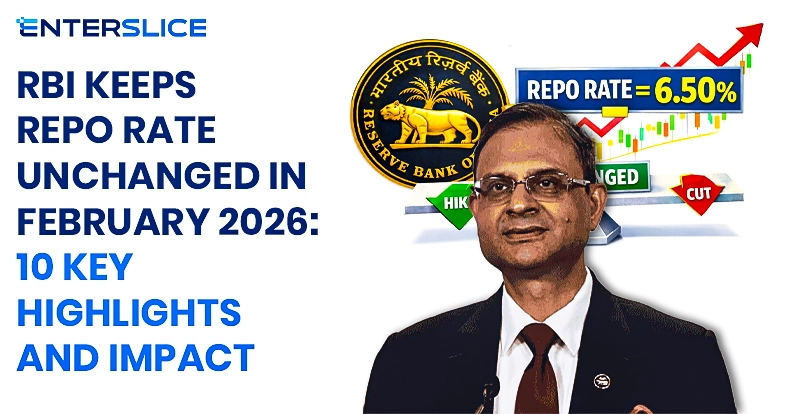
| Repo Rate (Year-End) | 6.50% | 6.25% - 6.75% | 6.25% - 6.75% | RBI maintains vigilance; potential for minor adjustments but no significant easing. |
| Net Interest Margin (NIM) | 3.25% | 2.80% - 3.00% | 3.10% - 3.40% | Pressure from higher deposit rates; AI-driven efficiency helps optimize costs. |
| Credit Growth (YoY) | 15.0% | 10.0% - 12.0% | 12.0% - 14.0% | Higher rates cool demand; AI-enhanced underwriting supports targeted growth. |
| Operating Expenditure Growth | 9.0% | 8.0% - 10.0% | 5.0% - 7.0% | AI automation significantly reduces processing costs and manual errors. |
| Non-Performing Assets (NPA) Ratio | 3.5% | 3.8% - 4.2% | 3.0% - 3.5% | AI for predictive analytics and early warning systems improves risk mitigation. |
| Customer Acquisition Cost (CAC) | High | Remains High | Reduced by 15-20% | AI-powered personalization and targeted marketing on cloud platforms. |
Industry & Market Implications: Who Wins, Who Loses
The anticipated RBI policy in 2026, characterized by disciplined monetary management, will inevitably create winners and losers within the banking sector. Banks with robust asset-liability management (ALM) frameworks, diversified funding sources, and a strong capital base will be better positioned to absorb the impact of potentially higher funding costs and slower credit growth. These institutions, often the larger public and private sector banks, have the scale to manage interest rate risks and maintain healthy Net Interest Margins through efficient deposit mobilization and strategic loan portfolio management. Their ability to attract sticky, low-cost deposits will be a critical differentiator.
However, the real differentiator will be the strategic adoption of AI and cloud technologies. Banks that proactively invest in infrastructure scalability through partnerships with providers like Google Cloud and integrate frontier AI models across their operations will gain a significant competitive edge. This includes leveraging AI for:
- Optimized Lending: AI-driven credit scoring and behavioral analytics will allow for more granular risk assessment, enabling targeted lending to underserved segments while maintaining asset quality.
- Hyper-Personalized Customer Experience: AI models will enable banks to offer bespoke financial products, proactive customer service, and real-time advice, fostering stronger customer loyalty and reducing customer churn.
- Enhanced Operational Efficiency: Automation of back-office processes, intelligent document processing, and predictive maintenance of IT systems will drive down operational costs, bolstering enterprise ROI.
- Superior Risk Mitigation & Regulatory Compliance: AI can identify fraudulent activities with greater accuracy, monitor market risks in real-time, and ensure continuous adherence to evolving regulatory compliance frameworks, thereby safeguarding financial stability.
Conversely, smaller banks, cooperative banks, and those with legacy IT infrastructure will face immense pressure. Their inability to match the efficiency gains and risk mitigation capabilities of digitally advanced competitors will lead to eroding Net Interest Margins, higher operating costs, and potentially increased Non-Performing Assets (NPAs). Their valuation multiples could suffer as investors favor institutions demonstrating strong digital acumen and robust future-proofing strategies. The divide between digitally forward and digitally stagnant institutions will widen, potentially leading to consolidation in the sector as smaller players struggle to compete.
People Also Ask (FAQ)
How will the RBI's 2026 repo rate policy directly impact individual home loan EMIs and corporate borrowing costs?
The RBI's repo rate serves as the foundational benchmark for interest rates across the economy. If the RBI maintains or modestly raises the repo rate in 2026, banks will face higher borrowing costs from the central bank. These increased costs are typically passed on to borrowers. For individuals, this means home loan Equated Monthly Installments (EMIs) for floating-rate loans will likely remain elevated or see marginal increases, impacting household budgets. Similarly, corporate borrowing costs for working capital and long-term projects will remain high, potentially dampening investment activity and prompting businesses to meticulously evaluate enterprise ROI for new ventures. Companies reliant on external funding will prioritize debt reduction and efficient capital allocation to mitigate interest rate exposure.
What are the key challenges Indian banks will face due to future RBI rate changes and the push for AI adoption?
Indian banks face a dual challenge. On the monetary front, persistent high-interest rates will compress Net Interest Margins as competition for deposits keeps funding costs up, while loan growth might slow. Asset quality could also deteriorate in rate-sensitive sectors. Operationally, banks must navigate the complexity of integrating advanced AI models into legacy systems, requiring significant investment in cloud compute architecture, talent acquisition, and data governance. The pressure to achieve substantial enterprise ROI from these AI investments while simultaneously maintaining regulatory compliance in an evolving technological landscape presents a formidable hurdle. Balancing short-term profitability with long-term digital transformation is a critical strategic imperative.
How does the shift to cloud-based AI, like Google Cloud's offerings, influence banking profitability under new RBI policies?
The adoption of cloud-based AI significantly influences banking profitability by driving operational efficiencies and enabling new revenue streams. By migrating to scalable cloud compute architecture, banks can drastically reduce their IT infrastructure costs, eliminate capital expenditure on on-premise hardware, and leverage AI to automate manual processes (e.g., fraud detection, loan processing, customer service). This directly impacts the cost-to-income ratio, improving Net Interest Margins even in a tight interest rate environment. Furthermore, AI on the cloud facilitates rapid deployment of personalized financial products, advanced analytics for risk mitigation, and enhanced customer engagement, all contributing to superior enterprise ROI and strengthening a bank's competitive posture.
What is the long-term outlook for India's banking sector given RBI's stringent stance and accelerated tech shifts?
The long-term outlook for India's banking sector is one of accelerated transformation, marked by increased consolidation and a significant competitive divide. Banks that successfully embrace cloud-based AI for operational excellence, data-driven risk mitigation, and hyper-personalized customer experiences will thrive, securing robust valuation multiples and sustainable growth. They will lead in driving efficiencies, expanding reach, and adapting to dynamic market conditions. Conversely, institutions resistant to this technological shift, or those with insufficient capital allocation for digital transformation, will struggle with outdated infrastructure, high operating costs, and declining market liquidity. The RBI's stringent monetary policy will act as a further catalyst, penalizing inefficiency and rewarding agility, thereby accelerating the evolution towards a more tech-integrated and resilient financial ecosystem.
Future Outlook: Navigating the New Frontier
Looking beyond 2026, the convergence of prudent monetary policy and disruptive technological advancements will fundamentally reshape India's banking sector. The RBI's commitment to financial stability and inflation targeting will necessitate continuous adaptation from banks, demanding greater efficiency and more sophisticated asset-liability management. The imperative to optimize capital allocation will intensify, pushing institutions to critically evaluate every investment for its potential enterprise ROI.
The AI revolution, fueled by accessible models on powerful platforms like Google Cloud, is not merely an optional upgrade but a foundational shift. Banks will increasingly integrate AI into core functions, transforming their risk mitigation strategies from reactive to predictive. The demand for robust cloud compute architecture that can handle massive data volumes and complex AI algorithms securely will only grow. Success will hinge on a bank's ability to not only deploy these technologies but also to foster a culture of data-driven decision-making and continuous innovation.
Key milestones to watch include further consolidation in the banking sector, driven by the widening gap between tech-savvy and legacy institutions. We anticipate intensified competition for top-tier tech talent and strategic partnerships between banks and leading AI/cloud providers. Furthermore, expect the RBI and other financial regulators to issue more nuanced guidelines on AI governance, data privacy, and algorithmic transparency, pushing banks to ensure their AI initiatives meet evolving regulatory compliance standards. The future belongs to financially disciplined, digitally agile institutions capable of harnessing the power of AI to navigate the complexities of a dynamic economic and technological landscape.