The 2026 Rate Collision: Why Wall Street Is Racing to Re-Price Stocks Amid Trump’s Fiscal Push and Fed Uncertainty
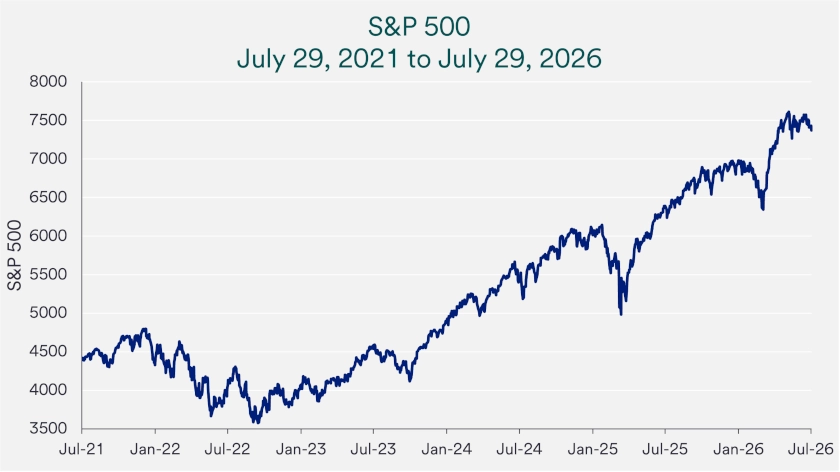
NEW YORK — Wall Street is facing a high-stakes game of monetary chicken. As the global financial community navigates the macroeconomic realities of 2026, a powerful collision between the Trump administration’s pro-growth, high-tariff fiscal policies and the Federal Reserve’s restrictive monetary stance is forcing a dramatic re-evaluation of equity valuations.
According to recent landmark briefs from U.S. Bank and a stark market warning from Bank of America, the traditional playbooks for interest rate cycles are being discarded. Investors who spent the last two years banking on a smooth, downward glide path for interest rates are now confronting a far more volatile "higher-for-longer" reality. The result is a highly fragmented stock market where winners and losers are being decided not just by quarterly earnings, but by their sensitivity to the cost of capital.
The Trump Policy Paradox: Growth vs. Inflationary Friction
To understand the stock market's trajectory in 2026, one must look at the structural shift in Washington. The Trump administration’s economic agenda—characterized by sweeping deregulation, corporate tax extensions, and aggressive import tariffs—has acted as a double-edged sword for equities.
On one hand, corporate optimism remains robust. Deregulation in the energy and financial sectors has unleashed capital expenditure, and the promise of sustained low corporate tax rates has kept earnings estimates high. On the other hand, universal tariffs have introduced a persistent inflationary impulse into the economy.
As highlighted in U.S. Bank’s detailed market analysis, this fiscal expansion directly complicates the Federal Reserve’s mandate. If the administration’s policies stoke inflation, the Fed cannot aggressively cut interest rates without risking a wage-price spiral. For equity markets, this means the discount rate used to value future cash flows remains stubbornly high, compressing price-to-earnings (P/E) multiples across high-growth sectors.
Bank of America Issues a Warning: The Threat of Valuation Compression
The euphoria of the early-2026 market rally has met a wall of skepticism from institutional giants. In a widely circulated research note, Bank of America issued a stern warning to equity investors: complacency regarding interest rates is the market's single greatest risk.
Bank of America analysts pointed out that the equity risk premium—the extra return investors expect for choosing stocks over risk-free government bonds—has shrunk to historically thin margins. With the 10-year Treasury yield hovering at elevated levels due to inflation concerns, the incentive to hold expensive equities is diminishing.
If interest rates remain elevated or tick upward to combat tariff-driven inflation, highly leveraged companies and growth stocks trading at lofty valuations face a significant risk of sudden de-rating. The warning emphasizes that while corporate earnings have held up, the multiple expansion that drove the previous bull run is likely over.
How Changing Rates Impact Key Sectors in 2026
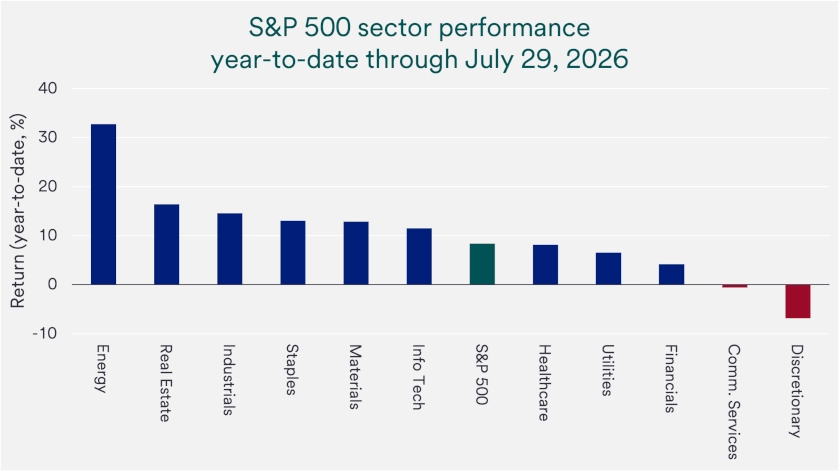
The impact of interest rates is never uniform across the stock market. In 2026, the divergence between rate-sensitive sectors and cash-rich compounds has reached extreme levels.
1. Technology and Growth: Under the Valuation Microscope
In a low-rate environment, investors are willing to pay a premium for growth companies projected to earn massive profits a decade from now. But in 2026, with capital costing significantly more, those future cash flows are worth less today. High-flying technology firms, particularly those outside the immediate Artificial Intelligence infrastructure boom, are experiencing valuation compression as investors demand current profitability over distant promises.
2. Financials: The Net Interest Margin Paradox
Traditional banking institutions, such as those analyzed by U.S. Bank, find themselves in a sweet spot. Elevated interest rates allow commercial banks to charge more for loans, expanding their Net Interest Margins (NIM). However, this benefit is capped by credit risk; if rates remain too high for too long, default rates on commercial real estate and consumer loans could rise, offsetting the gains from higher interest income.
3. Real Estate and Utilities: The High-Yield Struggle
Traditionally defensive, dividend-paying sectors like Real Estate Investment Trusts (REITs) and Utilities continue to face structural headwinds in 2026. Because these sectors rely heavily on debt to fund capital-intensive projects, higher rates drive up their borrowing costs. Furthermore, their dividend yields face stiff competition from risk-free short-term Treasury bills yielding over 4%.
The 2026 Rate Playbook: Projected Sector Impact
To assist institutional and retail investors in navigating this transition, the table below outlines how different interest rate scenarios are projected to impact key market segments through the remainder of 2026.
| Rate Scenario (2026) | Primary Market Driver | Favored Sectors | Vulnerable Sectors |
|---|---|---|---|
| Hawkish Hold / Rates Rise | Tariff-driven inflation and resilient consumer spending force the Fed's hand. | Financials, Energy, Large-cap Cash Cows | REITs, Small-cap (Russell 2000), Unprofitable Tech |
| Gradual Rate Cuts | Inflation moderates; Fed executes a engineered soft landing. | Growth/Tech, Consumer Discretionary, Homebuilders | Commodities, Defensive Utilities |
| Stagflationary Pause | Growth slows but inflation remains sticky due to supply chain friction. | Healthcare, Consumer Staples, Precious Metals | Cyclicals, Industrials, High-Beta Tech |
Executive Action Plan for Investors
As the Federal Reserve navigates this economic tightrope, portfolio managers are adjusting their strategies. The consensus from senior investment strategists at U.S. Bank suggests a three-pronged approach for 2026:
- Focus on Quality and Free Cash Flow: Prioritize companies with strong balance sheets that do not need to access the debt markets at high prevailing rates.
- Incorporate Fixed Income Opportunistically: Lock in historically high yields in short-to-medium-term bonds to hedge against equity market volatility.
- Prepare for Volatility: Expect sharp, policy-driven swings in the market as the Trump administration introduces new tariff structures and trade policies throughout the year.
The Outlook: A Market Driven by Reality, Not Hope
The overarching theme for the stock market in 2026 is a return to fundamental gravity. The era of cheap money is firmly in the rearview mirror. Whether the market can sustain its upward trajectory depends entirely on whether corporate earnings growth can outpace the drag of higher interest rates. As U.S. Bank and Bank of America have signaled, the margin for policy error is razor-thin, and flexibility will be the defining trait of successful investors in this new macroeconomic era.
Frequently Asked Questions (FAQ)
How do rising interest rates directly cause stock prices to fall?
Rising interest rates impact stocks in three major ways. First, they increase the cost of borrowing for companies, which directly reduces net profit margins. Second, they increase the discount rate used by analysts to value future earnings, which disproportionately lowers the present value of high-growth tech stocks. Finally, higher interest rates make fixed-income assets (like bonds) more attractive, prompting investors to shift capital away from riskier equities.
Why are Trump’s tariff policies causing interest rates to stay higher for longer in 2026?
Tariffs act as a tax on imported goods. When corporations face higher costs to import materials or finished products, they typically pass those costs onto consumers in the form of higher prices, sparking inflation. Because the Federal Reserve's primary mandate is to keep inflation stable at around 2%, the threat of tariff-induced inflation forces the Fed to keep benchmark interest rates elevated to prevent the economy from overheating.