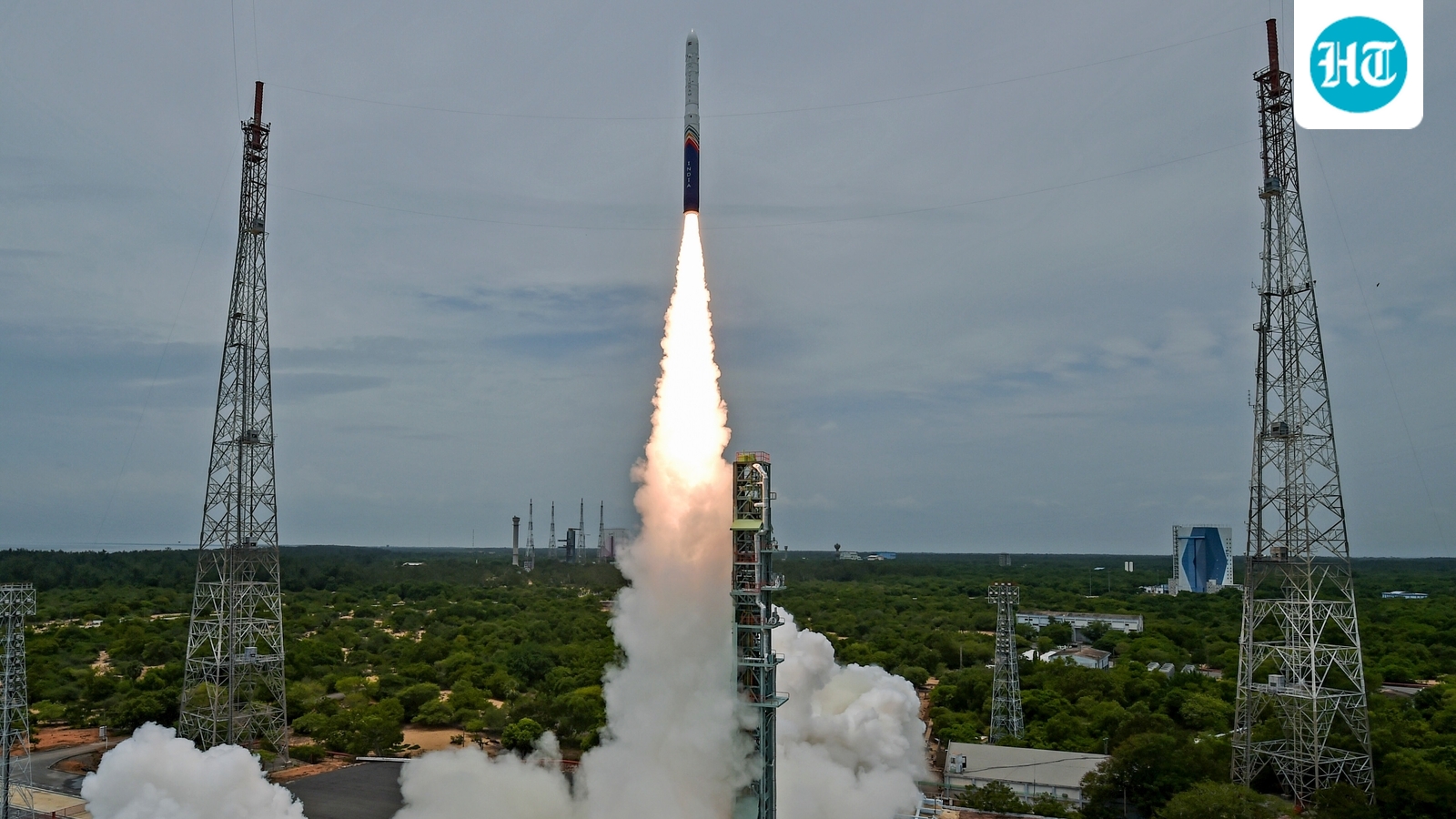
The New Space Race: Inside India’s Bold Bid to Privatize Orbit, Build Its Own Space Station, and Rival SpaceX
NEW DELHI — The Indian space program, once globally celebrated for its frugal engineering and state-monopolized scientific triumphs, is undergoing its most radical transformation since the founding of the Indian National Committee for Space Research (INCOSPAR) in 1962. Driven by a sweeping regulatory overhaul, a surge in venture capital, and ambitious geopolitical objectives, New Delhi is systematically dismantling state monopolies to unleash a highly competitive, private-sector-led space economy.
This tectonic shift, highlighted in a landmark analysis published in The Economic Times, reveals that India is no longer content with being a low-cost launch provider for foreign satellites. Instead, the nation is positioning itself as a dominant, end-to-end global aerospace hub. With eyes set on its own modular space station—the Bharatiya Antariksh Station (BAS)—and a projected 10% share of the global space economy by 2030, India is transitioning from a quiet scientific pioneer into a commercial space superpower.
“We are witnessing the democratization of the upper atmosphere,” says a senior policy advisor at the Indian Space Research Organisation (ISRO). “The state will act as the catalyst, but the private sector will provide the scale, the speed, and the capital.”
The Commercial Pivot: Privatizing the Final Frontier
For decades, India's space endeavors were managed entirely under the paternalistic wing of ISRO. While this centralized model birthed legendary workhorses like the Polar Satellite Launch Vehicle (PSLV) and pioneered complex deep-space missions like Chandrayaan and Mangalyaan, it left little room for domestic commercial enterprise.
That era is officially over. Following the establishment of IN-SPACe (Indian National Space Promotion and Authorization Center) and NewSpace India Limited (NSIL), the private sector has been handed the keys to the kingdom. Private consortia are now manufacturing PSLV rockets, building Geostationary Communication Satellites, and developing proprietary launch vehicles.
The government's liberalized Foreign Direct Investment (FDI) policy has been the primary accelerant, allowing up to 100% automatic FDI in satellite manufacturing and up to 49% in launch vehicles. This regulatory greenlight has unlocked millions of dollars in venture capital, transforming Bengaluru and Hyderabad into thriving space-tech corridors teeming with agile startups like Skyroot Aerospace, Agnikul Cosmos, and Pixxel.
Key Pillars of India's Space Transformation
- The Commercialization of Launch Services: Transitioning the operational manufacturing of legacy launch systems (PSLV and LVM3) to private consortia, allowing ISRO to focus exclusively on cutting-edge R&D and deep-space exploration.
- Sovereign Orbital Infrastructure: The development of the Bharatiya Antariksh Station (BAS), a multi-module orbital outpost designed to establish a permanent Indian presence in Low Earth Orbit (LEO) by 2035.
- Massive FDI Liberalization: Attracting global venture capital by permitting seamless foreign investment across satellite operations, launch systems, and ground segment infrastructure.
- Next-Gen Constellations: Shifting focus from heavy, expensive geostationary communication satellites to highly resilient, private-sector-built Low Earth Orbit (LEO) satellite constellations for high-speed global broadband.
The Crown Jewels: Gaganyaan and the Bharatiya Antariksh Station
While commercial satellite launch services keep the ledger in the black, India’s strategic ambitions lie in human spaceflight. The flagship Gaganyaan mission, designed to send Indian astronauts (Gaganyatris) into orbit, serves as the critical technological stepping stone toward India’s ultimate orbital crown jewel: the Bharatiya Antariksh Station (BAS).
Designed to be assembled in phases, the BAS will serve as a microgravity laboratory, an orbital manufacturing base, and a staging ground for future crewed lunar missions. ISRO plans to launch the first module, BAS-1, into low Earth orbit by 2028, with the entire station becoming fully operational by 2035. Unlike the aging International Space Station (ISS), which is slated for decommission in the early 2030s, the BAS represents a fresh, modern platform for international scientific collaboration, positioning India as a direct geopolitical counterweight to China’s Tiangong space station.
Evaluating the Numbers: The Flight Path to 2030
The financial scale of India's space ambitions demonstrates a highly calculated trajectory designed to maximize economic returns on scientific capital. The table below outlines key metrics defining this transition:
| Metric / Pillar | Historical Baseline (Pre-2020) | Current Status (2026) | Target Projection (2030-2035) |
|---|---|---|---|
| Global Market Share | ~2% | ~3.5% | 10% ($44 Billion Valuation) |
| Space Startups | Fewer than 10 | Over 200 active startups | Over 500 integrated enterprises |
| Foreign Direct Investment | Highly restricted / Case-by-case | Up to 100% (Automatic Route) | Multi-billion dollar annual inflows |
| Human Spaceflight | No active domestic capability | Gaganyaan crew capsules in testing | Fully operational BAS Station (2035) |
Geopolitical and Economic High Stakes
The acceleration of India's space program is not happening in a vacuum. It is a highly calculated response to the changing dynamics of global geopolitics. As the United States and China lock horns in a race to claim strategic orbital slots and lunar resources, India is presenting itself as a reliable, cost-effective, and highly capable alternative partner for both Western democracies and the Global South.
By leveraging its historic reputation for cost efficiency, India is actively undercutting Western launch providers. However, the true test of India's next leap will be its ability to scale manufacturing. Launching rockets is a prestigious feat, but building a sustainable commercial pipeline—where private Indian firms manufacture thousands of satellites, sensors, and ground terminals annually—is where the real economic victory lies.
As the Economic Times editorial notes, space is indeed "the final private sector frontier." For India, conquering this frontier is no longer just about scientific prestige; it is a critical driver of future macroeconomic growth, national security, and technological sovereignty.
Frequently Asked Questions (FAQ)
What is the difference between ISRO, IN-SPACe, and NSIL?
ISRO remains the premier state-funded scientific research and development agency, focusing on deep-space exploration and advanced technology. IN-SPACe acts as the autonomous, single-window regulator designed to promote, authorize, and facilitate private sector space activities. NSIL is the commercial arm of the Indian government, responsible for commercializing ISRO’s technologies and handling launch service agreements with international clients.
How does India's space sector liberalization benefit global investors?
The liberalization of FDI policies allows global venture capital firms and multinational aerospace corporations to own up to 100% of satellite manufacturing facilities and up to 49% of launch vehicle manufacturing operations in India without requiring prior government approval. This drastically reduces bureaucratic red tape, lowers manufacturing costs, and provides access to India's vast pool of highly skilled, cost-effective engineering talent.