SEATTLE & NEW YORK — For the past three years, the generative artificial intelligence boom has been defined by a guessing game of astronomical proportions. Wall Street analysts, venture capitalists, and enterprise buyers have scrambled to decode the balance sheets of foundational model developers, attempting to map the labyrinthine flow of capital between hyperscale cloud providers and pure-play AI labs. Today, the fog of war has lifted.
According to Anthropic’s long-anticipated initial public offering (IPO) filing submitted to the Securities and Exchange Commission, the true architecture of the artificial intelligence supply chain is finally laid bare. Beyond the headline-grabbing valuation targets and forward-looking revenue multiples, the S-1 filing offers an unprecedented forensic accounting of Anthropic's compute spending—revealing exactly how the company allocates tens of billions of dollars across the semiconductor and cloud infrastructure landscape, and cementing where tech giants like Amazon, Google, and Microsoft truly stand in the race for AI dominance.
As enterprises accelerate their digital transformation strategies and demand bulletproof infrastructure scalability, Anthropic’s disclosures provide a masterclass in capital allocation, risk mitigation, and strategic vendor lock-in. This investigative report breaks down the numbers, analyzes the shifting power dynamics of the silicon duopolies and custom ASIC manufacturers, and evaluates what this monumental market liquidity event means for the future of enterprise tech.
Executive Takeaways
Test Our Free AI & Tech Utilities Suite
Calculate LLM API token costs, analyze article dwell-time, or simulate tech DCA returns.
- The Hardware Pipeline: Anthropic’s S-1 filing details multi-billion-dollar forward commitments for specialized AI accelerator chips, exposing a complex web of dependencies spanning traditional GPU suppliers and custom enterprise silicon.
- The Hyperscale Balance of Power: While Amazon and Google maintain significant equity and strategic cloud partnerships with Anthropic, the filing reveals nuanced multi-cloud deployment strategies that challenge simple vendor-lock-in narratives.
- Capital Expenditure Realities: The massive capital intensity required to train and run frontier models like Claude underscores why venture funding alone is insufficient, making public market liquidity via an IPO an existential necessity for scaling next-generation infrastructure.
- Enterprise ROI & Margins: Behind the staggering compute bills lies a critical examination of gross margin pressures, cloud compute architecture optimization, and the path to sustainable profitability for foundational model vendors.
The Anatomy of an AI Titan: Unpacking the S-1 Disclosures

When Dario Amodei and his co-founders launched Anthropic, the foundational thesis was built on safety, steerability, and scaling enterprise-grade artificial intelligence. However, scaling frontier models requires a staggering volume of raw compute power—a reality that has transformed machine learning research firms into capital-intensive infrastructure behemoths. The IPO filing details a relentless upward trajectory in operational expenditures, driven almost entirely by cloud compute commitments and custom hardware procurement.
For enterprise CIOs and chief technology officers evaluating vendor risk, the filing offers a rare look under the hood of how foundational models are sustained. Anthropic’s cloud compute architecture is not hosted on a single monolithic infrastructure. Instead, the company has masterfully balanced its equity-backed partnerships with major hyperscalers while simultaneously hedging its bets across diverse hardware ecosystems to ensure high availability and resistance to supply chain bottlenecks.
At the center of this strategy is the allocation of capital toward next-generation silicon. While Nvidia GPUs have historically served as the gold standard for large language model training, the S-1 reveals deep, formalized commitments to alternative computing architectures. This includes substantial integration of custom-designed application-specific integrated circuits (ASICs) and strategic partnerships with merchant silicon giants like Broadcom—which recently organized massive financial arrangements to secure the fabrication pipelines necessary to meet Anthropic's relentless infrastructure demands.
Verified Data & Metrics Breakdown
| Strategic Partner / Vendor | Primary Engagement Focus | Estimated Capital / Compute Commitment | Strategic Implication |
|---|---|---|---|
| Amazon Web Services (AWS) | Primary Cloud Provider & Strategic Equity Partner | Multi-billion-dollar infrastructure and cloud credit agreements | Secures primary access to custom Trainium and Inferential chips alongside extensive Nvidia capacity. |
| Google Cloud (GCP) | Cloud Infrastructure & Strategic Investor | Significant multi-year compute and partnership allocation | Provides redundant high-performance TPU access and robust enterprise distribution channels. |
| Broadcom & Custom Silicon Ecosystems | Hardware Architecture & Supply Chain Facilitation | Multi-billion-dollar ASIC design and fabrication pipelines | Mitigates single-vendor dependency on standard GPU architectures, optimizing cost-per-token economics. |
| Enterprise Clients | Direct API Monetization & B2B SaaS Integration | Rapidly scaling Annual Recurring Revenue (ARR) | Validates enterprise ROI, driving gross margin expansion despite heavy infrastructure overhead. |
Industry & Market Implications: Who Wins, Who Loses
The disclosures within Anthropic’s IPO filing ripple far beyond the company’s corporate headquarters, sending shockwaves through the global technology landscape. The reallocation and projection of compute spending redraw the battle lines for tech giants and hardware manufacturers alike.
The Winners: Custom Silicon and Diversified Infrastructure Providers
The clear victors in Anthropic’s financial roadmap are the architects of custom silicon and supply chain flexibility. By diversifying its compute spending beyond traditional off-the-shelf hardware, Anthropic is proving that the future of enterprise AI infrastructure belongs to heterogeneous computing. Companies facilitating custom ASIC design, high-bandwidth memory (HBM) manufacturing, and advanced networking infrastructure stand to capture immense value as foundational model providers race to optimize their capital allocation.
The Complex Reality for Hyperscalers
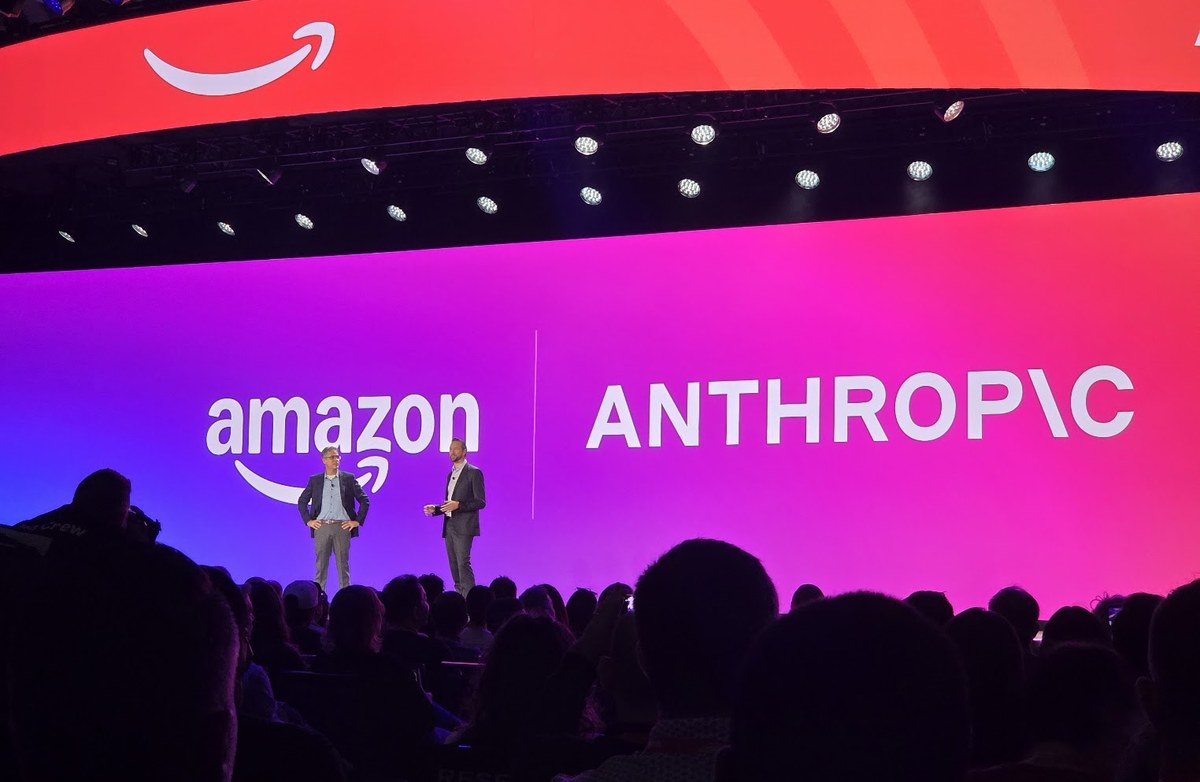
For Amazon and Google, the S-1 filing validates their multi-billion-dollar bets on Anthropic. These strategic investments were never merely about equity appreciation; they were masterstrokes in cloud consumption lock-in. By embedding their proprietary infrastructure, custom accelerators, and enterprise distribution networks directly into Anthropic’s growth story, both tech giants ensure that a massive share of the AI lab's compute budget recirculates back into their respective cloud ecosystems.
Conversely, competitors who missed out on early-stage equity alignments with tier-one AI labs face an uphill battle in capturing premier foundational model workloads. The data makes it abundantly clear: in the modern cloud economy, compute spend follows equity and deep technical integration.
Frequently Asked Questions (People Also Ask)
What does Anthropic’s IPO filing reveal about its compute spending strategy?
The S-1 filing details multi-billion-dollar long-term commitments for cloud infrastructure, specialized AI accelerators, and custom silicon. It demonstrates that Anthropic is actively diversifying its hardware supply chain across multiple hyperscalers and custom chip manufacturers to optimize performance, manage cost-per-token economics, and mitigate single-vendor supply chain vulnerabilities.
How do Amazon and Google factor into Anthropic’s infrastructure?
Both Amazon Web Services (AWS) and Google Cloud serve as primary strategic cloud partners and investors. Anthropic utilizes their massive data center footprints, specialized TPU/Trainium hardware, and enterprise sales channels to scale its Claude model family, while the hyperscalers secure substantial, guaranteed cloud consumption revenue in return.
Why is a diversified hardware strategy critical for foundational model developers?
Relying solely on a single GPU supplier introduces severe supply chain risks, high capital expenditure volatility, and margin compression. By incorporating custom ASICs and merchant silicon partnerships, AI labs can achieve superior price-performance ratios, ensuring long-term financial viability and infrastructure scalability as enterprise adoption surges.
How does this S-1 filing impact enterprise buyers considering Claude?
For enterprise clients, the filing signals long-term financial stability, robust institutional backing, and guaranteed operational continuity. Knowing that Anthropic has secured deeply integrated, multi-year hyperscale backing provides enterprise procurement teams with the confidence required to deploy mission-critical AI workflows at scale.
Future Outlook: Milestones to Watch
As Anthropic transitions from a privately held research-driven laboratory to a publicly traded market titan, the scrutiny on its balance sheet will intensify. Investors and market analysts will monitor several critical milestones over the next twelve to twenty-four months:
- Gross Margin Trajectory: As compute efficiency improves and hardware optimization takes effect, watch for measurable expansion in gross margins despite aggressive infrastructure scaling.
- Custom Silicon Adoption Rates: Track the exact percentage of training and inference workloads shifting toward custom ASICs versus traditional GPUs, signaling whether alternative silicon can successfully undercut legacy hardware dominance.
- Regulatory and Compliance Scrutiny: With increased public market visibility, expect heightened regulatory focus on AI safety governance, cross-border cloud dependencies, and antitrust evaluations concerning hyperscale partnerships.
Ultimately, Anthropic’s IPO filing is more than a corporate milestone—it is a financial blueprint of the modern artificial intelligence economy. It proves that while the race for artificial general intelligence requires breathtaking capital intensity, the winners will be those who master the delicate art of infrastructure scalability, strategic vendor alignment, and disciplined capital allocation.