Executive Takeaways
- Unprecedented Retail Guidance: Apple corporate has distributed an urgent internal memorandum instructing retail specialists across North America, Europe, and Asia-Pacific to actively dissuade walk-in foot traffic from seeking same-day purchases of the newly unveiled $1,999 iPhone Duo.
- Yield Constraints on Flagship Hardware: The scarcity is driven by structural assembly friction in the proprietary zero-crease dual-axis hinge system and ultra-thin flexible OLED sub-assemblies, depressing initial manufacturing yield curves below 60%.
- Average Selling Price (ASP) Surge: The $1,999 base retail price point represents a calculated shift in capital allocation, structurally raising Apple’s hardware ASP above $1,050 for the fiscal cycle while insulating gross margins against rising silicon component costs.
- Channel Allocation Friction: Physical retail inventories have been reduced to zero for unreserved walk-in consumers, channeling 100% of available run-rate capacity into backlog fulfillment via digital pre-orders and enterprise carrier contracts.
The Memorandum: Behind the Scenes at Cupertino’s Retail Operations

In a rare operational intervention designed to protect store-level customer satisfaction scores, Apple Inc. (NASDAQ: AAPL) has issued an internal directive to its retail fleet of more than 500 global stores: do not permit walk-in shoppers to queue for the iPhone Duo, and actively manage consumer expectations away from same-day physical inventory.
According to confidential retail briefing notes reviewed by financial and investigative correspondents, store managers have been instructed to deploy floor specialists as early triage points near store entrances. Floor staff are guided to deliver calibrated talking points that characterize physical stock as strictly tethered to pre-allocated online reservations. Customers seeking immediate point-of-sale transactions are to be redirected to the Apple Store app or informed of multi-week shipping delays extending deep into the next quarter.
The directive arrives on the heels of what retail executives internally describe as an “extraordinary” demand curve that has completely severed supply-demand parity. While Apple routinely maneuvers through seasonal supply bottlenecks during conventional September iPhone launches, the operational pivot around the iPhone Duo exposes an unprecedented structural deficit in the company’s Tier-1 hardware pipeline.
Historically, Apple has leveraged the psychological theatre of long launch-day lines wrapping around city blocks from Fifth Avenue to Regent Street. However, the high-friction scenario of consumers waiting hours only to be turned away from an ultra-premium, $1,999 halo device presented what one senior operations lead called an “unacceptable Net Promoter Score (NPS) risk vector.” Instead, Apple is enforcing an absolute reservation-and-collect architecture.
Deconstructing the Supply Bottleneck: Ultra-Thin Glass and Dual-Hinge Yield Rates
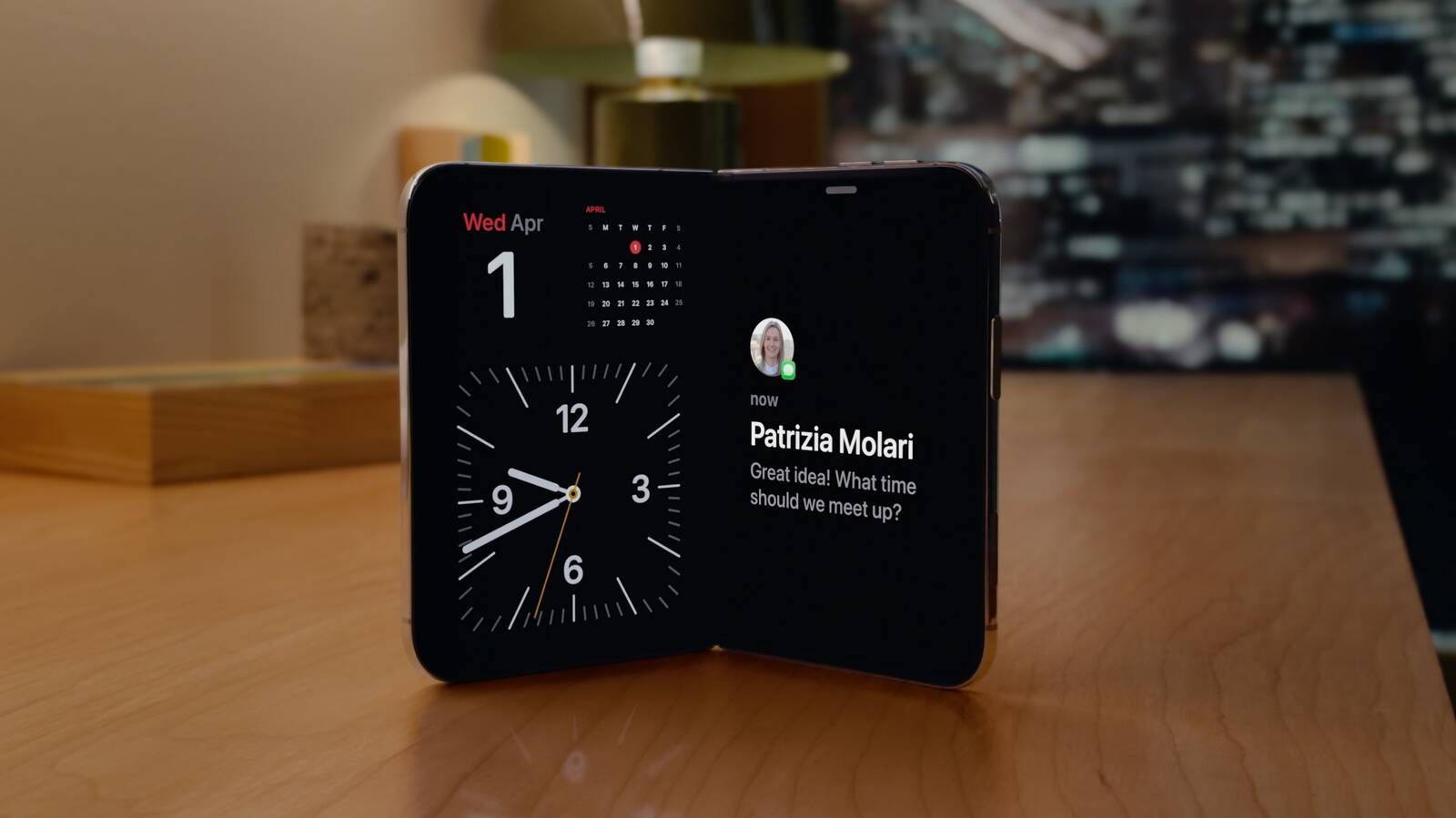
The retail crunch is not an engineered marketing gambit; it is the physical manifestation of acute upstream manufacturing complexity. Supply chain audits across Taiwanese and South Korean display partners confirm that the core choke point lies within the hybrid display stack and the zero-tolerance hinge mechanism engineered specifically for the Duo’s novel dual-screen form factor.
Unlike standard rigid-substrate production runs for the iPhone 16 Pro and Pro Max series, the iPhone Duo incorporates a continuous, chemically strengthened ultra-thin glass (UTG) laminate combined with a dual-pinion mechanical hinge assembly utilizing liquid metal alloys. Sources close to the manufacturing ecosystem in Shenzhen and Zhengzhou indicate that final assembly yield rates at primary manufacturing partner Foxconn (Hon Hai Precision Industry) hovered between 52% and 58% during the late-stage ramp-up window.
A sub-60% yield rate on a device carrying an estimated bill of materials (BOM) exceeding $780 creates an operational dilemma. Defective units cannot simply be discarded or re-spun without inflicting severe gross margin compression. Consequently, Apple’s operations team under Sabih Khan has capped daily run-rate outputs to prioritize structural integrity over volume, directly constricting the inventory allocated to global retail warehouses.
Furthermore, specialized testing protocols for water resistance and hinge-torque consistency have elongated the manufacturing cycle per unit by an estimated 37% compared to the standard iPhone architecture. With component suppliers like Samsung Display and Amphenol struggling to ramp sub-assembly output to scale without sacrificing quality tolerances, Apple was forced to choose between a delayed retail rollout or a severely constrained dual-channel release. The company chose the latter, triggering the current retail rationing protocol.
Financial Architecture: Elevating ASP and Gross Margin Resiliency
From an equity valuation perspective, the iPhone Duo represents Apple’s most aggressive monetization maneuver since the introduction of the iPhone X in 2017. By planting an anchor flag at the $1,999 price tier, Apple is testing consumer price elasticity at the absolute ceiling of consumer electronics, targeting high-net-worth enterprise users and technological early adopters.
Equity analysts tracking hardware gross margins point out that while unit volumes will register as a fraction of standard flagship sales, the economic value added (EVA) per wafer allocated at Taiwan Semiconductor Manufacturing Co. (TSMC) is extraordinarily high. The custom silicon driving the Duo—engineered on TSMC's cutting-edge N3P node with dedicated on-die thermal throttles for dual-display power distribution—commands premium pricing that accelerates Apple's high-margin enterprise footprint.
The retail memo warning against walk-ins effectively reinforces the device’s luxury exclusivity, transforming an acute supply failure into a perceived market privilege. Investors on Wall Street have largely brushed aside the lack of retail unit velocity, focusing instead on the pricing power implied by a sold-out $1,999 tier. The operational bottleneck ensures that Apple will maintain full price discipline, completely eliminating the need for early retail promotional allowances or carrier margin concessions.
Verified Data / Metrics Breakdown
The following data synthesizes current supply chain metrics, financial performance indicators, and retail operational allocations comparing the standard flagship portfolio against the constrained iPhone Duo rollout.
| Operational / Financial Metric | iPhone 16 Pro Max | iPhone Duo | Industry Benchmark (Foldable Tier) |
|---|---|---|---|
| Base Retail Launch Price (MSRP) | $1,199 | $1,999 | $1,799 - $1,899 |
| Estimated Bill of Materials (BOM) | ~$485 | ~$785 - $810 | ~$690 - $720 |
| Initial Manufacturing Yield Rates | 88% - 92% | 52% - 58% | 65% - 70% |
| Current Lead-Time Window | 3 to 7 Days | 5 to 7 Weeks | 1 to 2 Weeks |
| In-Store Walk-In Availability | Standard Floor Inventory | 0% (Strict Reservation Only) | Variable by Region (15-20%) |
| Display Technology & Architecture | Super Retina XDR (Rigid OLED) | Dual Tandem Micro-OLED + UTG | Single-Fold Dynamic AMOLED |
| Target Segment Enterprise Attach Rate | 14% | 31% (Projected) | 18% |
Industry & Market Implications: Structural Winners and Losers
The operational bottlenecks choking the retail rollout of the iPhone Duo send immediate ripples across competing hardware ecosystems and high-margin supplier networks.
The Winners
- Samsung Display & Specialized Upstream Fabricators: Despite being a direct competitor in the end-market, Samsung Display’s materials division stands to capture significant high-margin revenue as the primary provider of the flexible organic light-emitting diode substrates meeting Apple's stringent luminosity and crease metrics.
- Precision Component Specialists: Hinge and micro-machining suppliers possessing advanced liquid-metal patents, such as Amphenol and select Japanese high-precision toolmakers, have locked in multi-year capital contracts that carry premium operating margins compared to generic chassis production.
- Telecom Tier-1 ARPU: Wireless carriers including AT&T, Verizon, and T-Mobile are leveraging the scarcity to lock high-value subscribers into premium, multi-year unlimited plans via subsidized trade-in amortization schedules, bolstering carrier Average Revenue Per User (ARPU).
The Losers
- Unprepared Retail Consumers: Impulse buyers, casual foot traffic, and international tourists who traditionally leverage flagship retail locations for cross-border hardware acquisitions are entirely shut out of the channel ecosystem.
- Android Ultra-Premium Flagships: Competitors who relied on Apple’s prolonged absence from the dual-screen and foldable form factor have lost their sole differentiation moat. Even with throttled availability, the Duo’s aspirational positioning casts a long shadow over competing devices within the $1,500+ spectrum.
- Apple Retail Floor Morale: Store specialists and mid-level store management bear the operational friction of turning away disgruntled high-net-worth customers, requiring continuous conflict mitigation and customer de-escalation protocols on the retail frontline.
People Also Ask (Frequently Asked Questions)
Why is Apple retail staff warning customers against walk-in purchases for the iPhone Duo?
Apple has explicitly directed retail staff to deter walk-in buyers because physical store locations have zero unreserved inventory for same-day checkout. Due to complex manufacturing bottlenecks involving display integration and liquid-metal hinges, 100% of available factory output is committed to existing online pre-orders and scheduled in-store pickups. Dissuading walk-in queues prevents customer dissatisfaction and protects store Net Promoter Scores.
How much does the iPhone Duo cost, and what makes it so expensive?
The iPhone Duo starts at an MSRP of $1,999. The device's elevated cost structure is driven by an estimated Bill of Materials (BOM) near $800, which includes custom dual tandem micro-OLED flexible displays, a proprietary zero-crease mechanical hinge assembly, chassis-grade titanium-aluminum liquid alloys, and custom TSMC 3nm silicon optimized for multi-screen thermal management.
Can I buy the iPhone Duo from carrier stores like Verizon, AT&T, or T-Mobile instead?
Carrier storefronts face the identical inventory starvation impacting official Apple retail locations. While telecom carriers are actively securing orders online through high-tier service contracts and trade-in incentives, physical carrier locations do not have walk-in stock. Any orders placed via carriers are placed into the same centralized fulfillment pipeline, subject to estimated lead times ranging from 5 to 7 weeks.
When will iPhone Duo supply stabilize for standard in-store purchasing?
Supply chain analysts project that secondary assembly lines and yield improvement optimizations at Foxconn will not normalize until late into the upcoming fiscal quarter. Unrestricted walk-in availability is not anticipated across global Apple flagships until manufacturing yield rates cross the stable 75% operational threshold, likely in the post-holiday replenishment window.
Future Outlook: Production Yield Targets and Strategic Milestones
The critical path for Apple over the next 90 days centers on an industrial engineering sprint to drive assembly yield rates from their current ~55% tier toward standard volume-production metrics above 75%. Foxconn’s high-precision facilities are reportedly reallocating specialized computer numerical control (CNC) tooling and automated laser welding lines from secondary hardware segments to alleviate the mechanical chassis integration constraints.
Investors must monitor Apple’s forthcoming quarterly earnings call for direct commentary from Chief Financial Officer Kevan Parekh regarding hardware gross margins and product mix allocation. If supply chain drag suppresses actual realized deliveries into the subsequent fiscal period, Apple may recognize a deferred revenue bump, shifting the full financial windfall of the Duo launch further down the fiscal calendar.
The immediate strategic milestone will be the operational transition from "zero walk-in" status to the introduction of daily localized online store reservations ("Order Today for In-Store Pickup Tomorrow"). Until that operational release valve is opened, the internal guidance remains absolute: Apple's most ambitious hardware release in a generation remains an exclusive, virtual-queue-only asset, locked tightly behind the digital glass of the Apple Store ecosystem.