Executive Takeaways
- Contractual Capitulation: Updated reservation terms for the second-generation Tesla Roadster explicitly disclose that the automaker "cannot guarantee" when—or even if—the halo hypercar will ever be delivered to deposit holders.
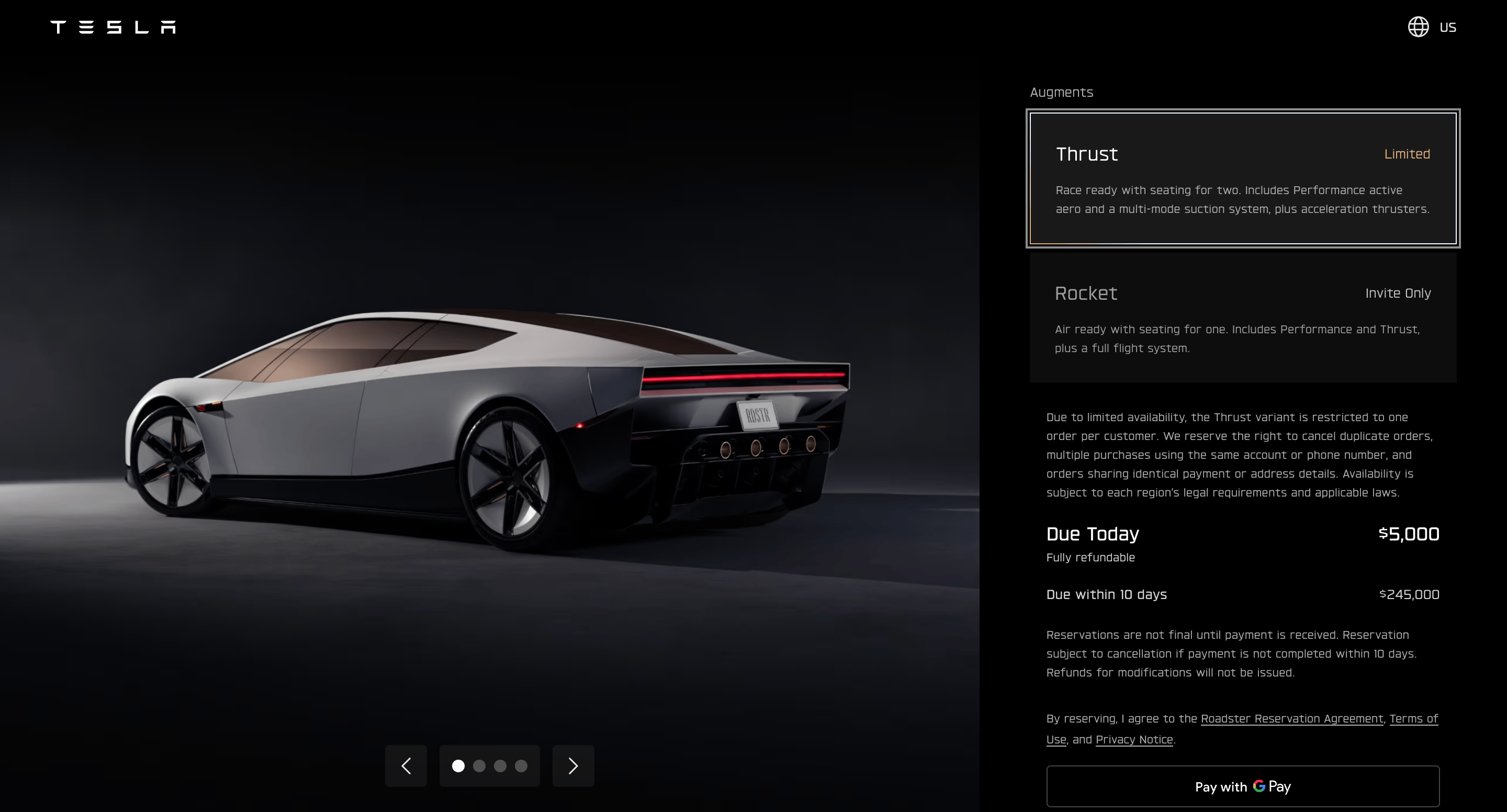
- Interest-Free Working Capital Float: Since its November 2017 unveiling, Tesla leveraged the Roadster program to harvest an estimated hundreds of millions in non-escrowed cash, including $50,000 standard deposits and $250,000 upfront wires for the limited "Founders Series."
- Engineering and Regulatory Headwinds: Insiders point to thermodynamic impossibilities surrounding promised "SpaceX thruster packages," structural pack weight limitations, and internal engineering resource diversion toward the Cybercab and Optimus robotics lines.
- Mounting Legal Vulnerabilities: Consumer protection litigators and regulatory compliance experts warn that shifting vehicle availability into a conditional "development phase" after seven years of capital retention invites scrutiny under FTC Section 5 unfair trade practice statutes.
The Fine-Print Bombshell: A Seven-Year Float Faces Reality
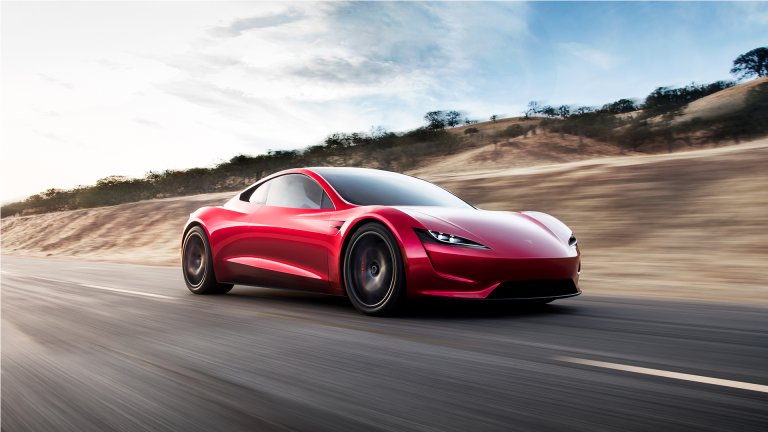
When Elon Musk stepped out of the bed of a prototype Tesla Semi at an airfield in Hawthorne, California, in November 2017, the cherry-red second-generation Roadster was presented as an immediate, knockout blow to internal combustion supercars. Boasting a sub-two-second 0-60 mph time, a 620-mile range via a 200-kWh pack, and an unverified top speed north of 250 mph, the vehicle carried an aggressive target delivery date: 2020.
Seven years, multiple production delays, and a global automotive pivot later, the legal reality of the program has caught up with the marketing showmanship. Scrutiny of Tesla’s updated customer reservation agreements reveals definitive language that distances the automaker from any enforceable promise to manufacture the vehicle. The updated terms state unequivocally that the company cannot guarantee the vehicle will ever enter serial production, nor can it guarantee that reservation holders will ultimately receive a production car.
For individuals who wired between $50,000 and $250,000 to Palo Alto and Austin over the past seven years, the contractual clause marks a striking shift from ambitious product guidance to corporate indemnification. What was pitched as a priority ticket to the highest-performing production vehicle on earth has legally recalibrated into a conditional, unsecured loan advanced to an enterprise that currently sits on more than $33 billion in balance sheet liquidity.
Forensic Examination: Inside the Reservation Agreement
Automotive retail contracts typically delineate build queues, deposit allocations, and estimated production windows. However, Tesla’s governing Roadster agreement places the entirety of program execution risk squarely on the prospective buyer.
Legal analysts specializing in enterprise commercial contracts and consumer protection laws note that the agreement emphasizes several critical covenants:
- Unsecured Enterprise Float: Deposits are explicitly not held in an escrow account or protected by external financial trusts. Funds are commingled with Tesla’s general operating accounts, functioning as interest-free working capital throughout the multi-year delay.
- Discretionary Cancellation: While customers are informed their reservation fee is refundable prior to vehicle configuration, Tesla retains unilateral discretion over when and how refund processing occurs, completely exempting itself from damages relating to opportunity cost or currency inflation.
- Specification Abandonment: The contract provides no statutory guarantee that the car—if manufactured—will retain the advertised performance metrics, structural dimensions, or price points unveiled during the 2017 presentation.
The insertion of explicit non-delivery language coincides with increasing regulatory scrutiny around consumer pre-orders. Corporate counsel at Tier-1 automotive competitors note that retaining hundreds of millions of dollars in customer deposits across a seven-year cycle without delivering an identifiable vehicle identification number (VIN) approaches the outer boundaries of state automotive franchise statutes and consumer trade compliance.
The Technical Cul-de-Sac: Physics, Packaging, and Plaid Cannibalization
Behind closed doors at Tesla’s engineering centers in Palo Alto and Fremont, the Roadster program has faced continuous engineering hurdles. Chief among them is the internal evolution of Tesla's own commercial lineup.
When the Roadster was conceived, the benchmark performance vehicle was the Model S P100D. In 2021, Tesla launched the Model S Plaid—a tri-motor, five-passenger sedan capable of a 1.99-second 0-60 sprint, utilizing carbon-sleeved rotors and high-efficiency thermal architecture. By achieving supercar performance inside a functional, mass-manufactured executive platform priced around $90,000, Tesla inadvertently cannibalized the economic proposition of a $200,000 to $250,000 sports coupe.
To justify the original halo price point, Musk increasingly escalated technical claims, famously promising an optional "SpaceX package" equipped with cold-gas thrusters capable of sub-one-second acceleration and momentary hovering. Automotive chassis engineers have characterized these claims as nearly impossible to reconcile with safety mandates.
Integrating high-pressure compressed air vessels (COPVs) into a consumer chassis presents immense regulatory compliance barriers under Federal Motor Vehicle Safety Standards (FMVSS). Pedestrian safety mandates in the European Union, passive crash testing, and the sheer weight penalty of incorporating cold-gas plumbing alongside a heavy high-voltage traction battery have made engineering realization a persistent nightmare.
Metrics Breakdown: 2017 Promises vs. Present-Day Reality
The performance metrics promised in 2017 positioned the Roadster as an undisputed apex predator. Today, the competitive landscape has shifted dramatically, with legacy marques and boutique electric vehicle makers fielding street-legal hypercars while Tesla’s halo vehicle remains absent from production lines.
| Metric / Attribute | Promised 2017 Roadster Specs | Current Market Benchmark (e.g., Rimac / Plaid) | Regulatory & Production Status |
|---|---|---|---|
| Base Price | $200,000 (Base) / $250,000 (Founders) | $90,000 (Model S Plaid) / $2.2M (Nevera) | Unconfirmed; vulnerable to margin recalibration |
| Upfront Capital Required | $50,000 to $250,000 upfront wire | Standard refundable retail deposits ($1k-$5k) | Held as un-escrowed corporate capital since 2017 |
| Acceleration (0-60 mph) | 1.9 sec (unassisted) / <1.0 sec (thruster) | 1.74 sec (Nevera) / 1.99 sec (Model S Plaid) | Cold-gas thrusters unapproved by global safety regulators |
| Battery Architecture | 200 kWh structural double-stack pack | 120 kWh with advanced liquid immersion cooling | Severe thermal & mass penalties; pack weight exceeds targets |
| Promised Delivery Date | Calendar Year 2020 | In commercial distribution | Indefinitely deferred; "cannot guarantee" delivery |
Capital Allocation & Valuation Multiples: The Strategic Pivot
From an enterprise finance perspective, the Roadster program is an artifact of an earlier Tesla era. In 2017, Tesla was burning cash aggressively amid the "production hell" of the Model 3 ramp. Raising an estimated $250 million across Founders Series reservations and standard deposits offered a non-dilutive, zero-interest lifeline that bolstered operating cash flows without triggering equity dilution or corporate debt issuance.
Today, Tesla’s market valuation multiples—hovering at price-to-earnings ratios unmatched by traditional automotive original equipment manufacturers (OEMs)—are driven by enterprise narratives around autonomous mobility, full self-driving (FSD) platforms, cloud compute architectures (Dojo), and Optimus humanoid robotics. An ultra-low-volume, capital-intensive, two-door halo sports car does not meaningfully expand Tesla's addressable market or serve its artificial intelligence enterprise goals.
Corporate capital allocation has systematically favored the gigafactory expansions, localized supply chain integration for 4680 cell manufacturing, and dedicated assembly architecture for the Cybercab. Devoting stamping presses, battery pack lines, and dedicated software validation engineers to an exotic vehicle delivering fractional margin volume represents an inefficient risk-reward calculation for Tesla's executive leadership.
Legal Exposure and Regulatory Compliance
While the terms of service provide Tesla with broad contractual armor, the sheer lapse of time introduces non-trivial legal exposure under both state and federal jurisdictions.
Under Section 5 of the Federal Trade Commission (FTC) Act, unfair or deceptive acts or practices are illegal. Prolonged solicitation of funds for commercial goods without a viable path to delivery or clear timelines can trigger FTC investigative inquiries. State-level equivalents—such as California’s Unfair Competition Law (Business & Professions Code § 17200) and the Consumers Legal Remedies Act—offer private rights of action for misrepresentation.
If litigators can establish that Tesla repeatedly used the Roadster's performance specs and projected delivery dates as promotional instruments to bolster brand value and market capitalization without dedicating the capital expenditure required to produce the vehicle, liability could bypass standard contract disclaimers. The updated language acknowledging that the company "cannot guarantee" delivery serves as a legal defense against class-action certifications, effectively alerting buyers that they assume production risk.
Frequently Asked Questions (People Also Ask)
Why did Tesla add a clause stating it cannot guarantee delivery of the Roadster?
The clause is a risk-mitigation measure aimed at limiting corporate liability. Seven years after taking deposits ranging from $50,000 to $250,000, Tesla has not established a commercial production timeline or finalized vehicle manufacturing tooling. Disclaiming delivery guarantees shields the company from breach-of-contract and specific performance lawsuits if the vehicle is canceled, delayed indefinitely, or fundamentally redesigned.
Can Tesla Roadster reservation holders get a full refund of their deposits?
Under the standard agreement terms, reservation holders are technically entitled to request a refund of their pre-order fee prior to vehicle configuration. However, buyers have noted that refunds forfeit their place in the production sequence and abandon years of potential purchasing power lost to inflation. The funds have been held as interest-free capital by Tesla, with no inflationary adjustments or interest accruals credited back to the customer upon withdrawal.
What are the primary technical hurdles preventing the Roadster’s production?
The primary obstacles involve vehicle mass, battery pack packaging, and regulatory validation. Squeezing a promised 200-kWh pack into a low-slung, aerodynamically optimal sports coupe presents severe thermal dissipation and curb-weight challenges. Additionally, theoretical features popularized by Elon Musk—such as cold-gas rocket thrusters for active maneuvering—face steep regulatory hurdles under global passenger vehicle safety standards (FMVSS, Euro NCAP) and pedestrian impact regulations.
Does Tesla's delayed Roadster timeline breach consumer protection statutes?
While consumer agreements grant wide latitude for development delays, long-term fund retention without concrete commercialization schedules tests the limits of federal and state trade laws. The FTC closely monitors pre-order schemes where companies convert early reservations into operational working capital without reasonable certainty of fulfillment. The explicit "no guarantee" clause aims to head off claims of false advertising by formally classifying the vehicle as an ongoing, non-guaranteed research and development initiative.
Future Outlook: Halo Car or Historical Footnote?
Tesla has signaled that a public unveiling of the "finalized" production Roadster could occur in late 2024 or early 2025, but the target for commercial delivery remains vague. The ultimate fate of the Roadster will serve as an indicator of Tesla's internal identity: whether it remains committed to bleeding-edge automotive design or transitions into an autonomous transportation, energy storage, and robotics enterprise.
If the vehicle reaches production, it will enter a market saturated with high-performance electric alternatives and traditional European hypercars that offer established bespoke manufacturing and customer service pipelines. If it is ultimately canceled, Tesla faces the prospect of returning tens of millions of dollars in customer deposits while managing the reputational fallout of failing to deliver its promised performance halo.
For reservation holders who have kept six figures tied up since 2017, the legal reality is clear. The vehicle is no longer a guaranteed production slot; it is a conditional line item subject to engineering feasibility, corporate priorities, and the discretionary decisions of executive leadership.