The $5 Trillion Unlock: How Tesla Is Poised for Global Dominance as Washington Rewrites Autonomous Vehicle Rules
WASHINGTON, D.C. — In what is shaping up to be the most consequential regulatory pivot in modern automotive history, the federal government is on the verge of dismantling the decades-old bureaucratic roadblocks that have capped the scale of autonomous vehicles (AVs). The proposed easing of federal safety standards is set to unleash a multi-trillion-dollar market, with one clear winner poised to capture the lion's share of the windfall: Elon Musk’s Tesla, Inc.
For years, autonomous vehicle developers have operated under highly restrictive federal limits, bound by safety rules designed for human drivers. However, according to deep-dive policy drafts originating from the National Highway Traffic Safety Administration (NHTSA) and congressional transport committees, a sweeping adjustment to these limitations is now imminent. By shifting the regulatory paradigm from rigid hardware requirements to real-world performance metrics, the policy rewrite will effectively enable mass production and commercialization of driverless fleets.
Industry analysts call this the "ultimate regulatory unlock." For Tesla, a company that has staked its entire long-term valuation on solving autonomy, the removal of these caps is the catalyst that transforms Full Self-Driving (FSD) from an expensive beta software into a high-margin, global cash machine.
Executive Summary: The AV Regulatory Pivot
- The Core Shift: Federal regulators are preparing to dramatically raise or eliminate the current 2,500-vehicle annual exemption limit for vehicles manufactured without traditional controls (steering wheels and pedals).
- Tesla’s Edge: Unlike competitors reliant on expensive LiDAR and HD-mapping, Tesla’s vision-only camera network is already integrated into millions of customer-owned vehicles, ready to transition to "Unsupervised FSD" at the flip of a regulatory switch.
- The Financial Stakes: Wall Street projections suggest a relaxed regulatory landscape could fast-track Tesla’s Robotaxi rollout, potentially adding over $1 trillion to its market capitalization by 2030 through high-margin software-as-a-service (SaaS) revenues.
- Industry Impact: While legacy automakers and legacy AV players like Waymo and Cruise stand to benefit, they face severe manufacturing bottlenecks that Tesla has already solved.
Breaking the 2,500-Vehicle Bottleneck

Under the existing Federal Motor Vehicle Safety Standards (FMVSS), automakers wishing to deploy vehicles without steering wheels, brake pedals, or side-view mirrors are forced to apply for special exemptions. By law, NHTSA has capped these exemptions at a mere 2,500 vehicles per manufacturer, per year. This microscopic quota made the commercial scaling of custom-built robotaxis legally impossible.
The upcoming adjustments, heavily championed by industry coalitions and bipartisan policy advocates, aim to raise this ceiling to at least 100,000 vehicles annually in the near term, with a clear pathway to complete exemption for systems demonstrating superior safety profiles compared to human drivers.
“The current framework is an analog relic in a digital age,” said a senior regulatory strategist familiar with the legislative drafts. “We are moving toward a framework that evaluates the safety of the artificial intelligence driver rather than focusing on whether there is a physical steering column. This enables scale, rapid iteration, and immediate profitability for companies that have ready-to-deploy hardware.”
Why Tesla Stands to Win Big
While the regulatory adjustment applies to all automakers, Tesla’s unique operational architecture positions it to exploit the new rules far more aggressively than its rivals. Competitors like Alphabet’s Waymo and General Motors’ Cruise operate "geofenced" fleets. These vehicles require expensive sensor suites—including LiDAR and radar—and must have their operating zones meticulously pre-mapped in high definition.
In contrast, Tesla’s approach is end-to-end neural network-based, relying solely on inexpensive optical cameras and onboard computational power. This "generalized" autonomy model means a Tesla vehicle can theoretically navigate any road in the world without prior mapping.
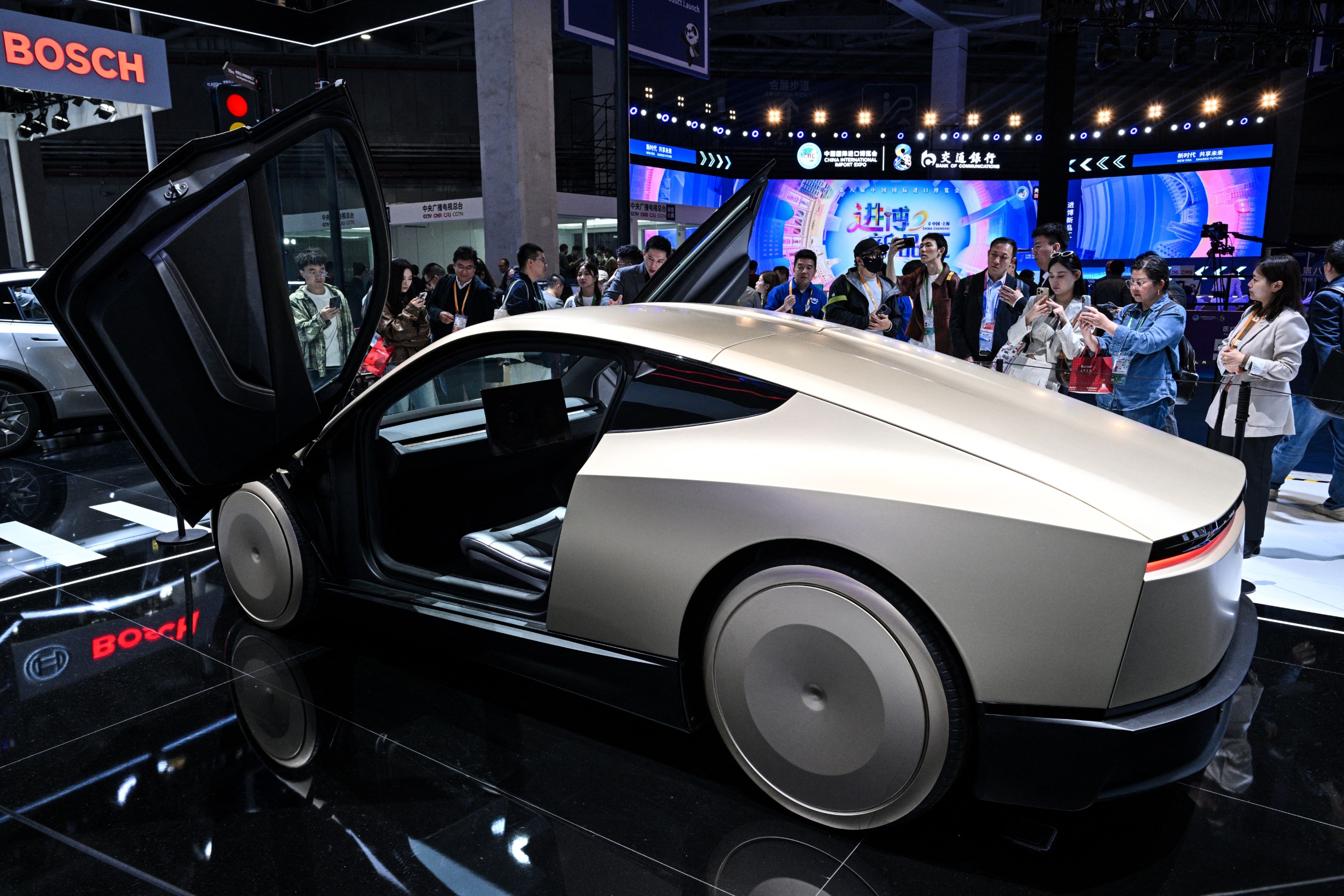
Furthermore, Tesla already possesses a massive manufacturing advantage. While competitors are hand-assembling robotaxis in small facilities, Tesla’s global Gigafactories are optimized to pump out millions of vehicles annually. The custom-built Tesla "Cybercab," designed specifically without a steering wheel or pedals, can move directly from the assembly line to public roads in massive volumes the moment the new NHTSA rules take effect.
Comparing the Contenders: The AV Scaling Race
The structural advantages of Tesla's vision-only system versus the traditional LiDAR-based geofenced approach become glaringly obvious when analyzing the scaling mechanics under the new regulatory framework:
| Metric / Feature | Tesla (Vision-Only / FSD) | Waymo / Cruise (LiDAR / Geofenced) |
|---|---|---|
| Hardware Cost per Vehicle | Low (Uses standard cameras & HW4 computer) | High (Requires expensive LiDAR, Radar, & Sensors) |
| Geographical Limitations | None (Operates anywhere roads exist) | High (Restricted to pre-mapped urban zones) |
| Fleet Scalability | Instantaneous (Millions of existing cars on road) | Slow (Must build/deploy dedicated custom fleets) |
| Primary Revenue Model | SaaS Subscriptions & Autonomous Ride-Hailing | Direct Ride-Hailing Fares Only |
Wall Street Reacts: The $5 Trillion Valuation Target
For institutional investors, the regulatory update is not just a policy shift; it is a fundamental revaluation event. Analysts at major investment banks have long argued that Tesla should be valued as an AI and robotics company rather than a traditional car manufacturer.
With autonomous limitations set to dissolve, financial models are being aggressively rewritten. "If Tesla can deploy its Unsupervised FSD across its global fleet of over 6 million vehicles, it creates an overnight recurring revenue stream that rivals the software margins of Microsoft or Apple," wrote a leading Wall Street automotive analyst. "We estimate the global robotaxi addressable market to be worth $5 trillion, and Tesla is the only player with the manufacturing scale to capture a dominant market share."
The profitability implications are staggering. Robotaxi operations are projected to yield margins upwards of 70%, vastly superior to the 15% to 18% margins typically associated with hardware automotive sales. This shift in unit economics is why Tesla's stock has historically reacted with extreme sensitivity to any federal policy movement regarding AVs.
The Road Ahead: Safety Hurdles and Implementation
Despite the immense optimism, the path to full commercialization is not entirely clear of obstacles. Safety advocates and skeptics continue to pressure NHTSA to maintain strict oversight. Investigations into Tesla’s Autopilot and FSD systems remain active, and any high-profile accident involving an autonomous vehicle could trigger temporary regulatory setbacks.
However, the macroeconomic pressure to remain globally competitive is driving Washington’s urgency. With European and Chinese regulators rapidly greenlighting autonomous testing and deployment, U.S. lawmakers are acutely aware that keeping the 2,500-vehicle cap in place risks ceding technological leadership to foreign competitors.
Ultimately, as the regulatory boundaries expand, Tesla’s aggressive bet on camera-based AI is about to face its ultimate trial. If the policy changes unfold as expected, the transition from driver-assist to true driverless dominance is no longer a question of "if," but "when."
Frequently Asked Questions (FAQ)
1. Why does the 2,500-vehicle limitation exist in the first place?
The Federal Motor Vehicle Safety Standards (FMVSS) were established decades ago and mandate physical human controls, such as steering wheels, brake pedals, and rearview mirrors. The 2,500-vehicle exemption cap was put in place as a temporary safety valve to allow manufacturers to test experimental designs on public roads without completely bypassing traditional safety laws. It was never intended to support mass-scale commercial production.
2. How does this regulatory change affect current Tesla owners?
For current owners of Tesla vehicles equipped with Full Self-Driving (Supervised) capability, a change in federal regulations is the first crucial step toward enabling "Unsupervised" FSD. Once the federal government removes the physical hardware restrictions and local state laws align, Tesla can roll out software updates that allow vehicles to operate completely driverless, enabling owners to potentially opt their private cars into Tesla's shared autonomous network.