SHENZHEN/BEIJING — In the high-stakes arena of next-generation energy storage, a seismic shift is underway that threatens to rewrite the valuation multiples and capital allocation strategies of legacy original equipment manufacturers (OEMs) worldwide. According to exclusive industry intelligence and verified technical disclosures, Chinese manufacturing titan BYD is accelerating its commercialization timeline, targeting industrial-scale solid-state battery production by 2027. This development is not merely an incremental technological upgrade; it is an existential industrial catalyst driven by a proprietary dual-electrolyte architecture, an unprecedented 400 Wh/kg gravimetric energy density, and a ruthless roadmap toward a $70/kWh bill of materials (BOM).
For institutional investors, hedge fund analysts, and automotive executives monitoring global market liquidity and long-term infrastructure scalability, BYD’s breakthrough represents a defining inflection point. As supply chain risk mitigation strategies pivot toward localized, high-margin chemistries, the fusion of extreme energy density, enhanced thermal safety, and radically lower unit economics is poised to render traditional liquid electrolyte lithium-ion manufacturing obsolete by the end of the decade.
Executive Takeaways
- Commercial Rollout by 2027: BYD is aggressively scaling its pilot manufacturing lines to transition from laboratory-scale prototypes to mass commercial production of solid-state batteries by 2027.
- Unprecedented Energy Density: The newly unveiled cell architecture achieves a staggering 400 Wh/kg, nearly doubling the gravimetric density of conventional commercial lithium iron phosphate (LFP) packs.
- The $70/kWh Economic Target: Through aggressive vertical integration, raw material localization, and innovative dual-electrolyte engineering, BYD is on track to compress cell-level production costs down to $70/kWh, crossing the critical commercial parity threshold.
- Macroeconomic Repercussions: Western automakers and rival tier-1 battery suppliers face severe valuation pressures as BYD widens its technological moat, forcing an urgent re-evaluation of global capital expenditure and R&D budgets.
The Technical Anatomy of BYD’s Dual-Electrolyte Innovation
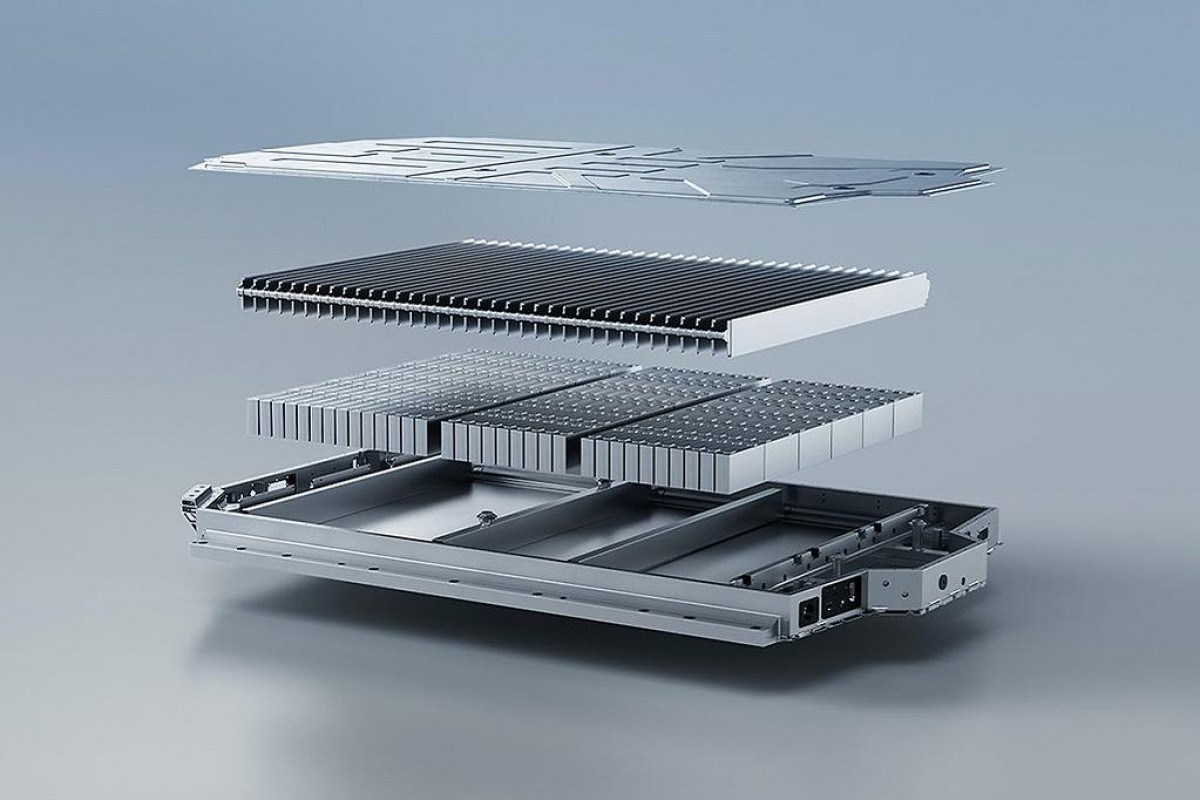
For over a decade, the Holy Grail of electrochemistry—the solid-state lithium-metal battery—has stumbled over a triad of stubborn engineering bottlenecks: interfacial impedance, dendrite propagation leading to catastrophic short circuits, and prohibitive manufacturing costs at scale. Traditional solid-state designs reliant purely on oxide or sulfide solid electrolytes have historically struggled with high interfacial resistance at room temperature, requiring extreme mechanical pressure and complex, low-yield fabrication processes.
BYD’s R&D apparatus, backed by billions in sustained capital expenditure, has bypassed these limitations through a pioneering dual-electrolyte architecture. By cleverly combining a highly stable solid-state ceramic framework with a carefully engineered, localized ionic liquid/gel sub-layer, BYD’s engineers have successfully mitigated interfacial degradation. This hybrid design ensures rapid lithium-ion mobility across the cathode-electrolyte interface while completely suppressing lithium dendrite growth, even under high-rate fast-charging protocols.
Furthermore, the elimination of volatile organic liquid solvents drastically enhances thermal safety profiles. In stress-test simulations mirroring severe thermal runaway scenarios, BYD’s solid-state cells demonstrate zero ignition or propagation, satisfying the most stringent global regulatory compliance frameworks without necessitating heavy, parasitic cooling infrastructure.
Decoding the 400 Wh/kg Metric and $70/kWh Cost Curve
Achieving a gravimetric energy density of 400 Wh/kg fundamentally alters vehicle design parameters. In practical terms, an electric vehicle platform utilizing BYD’s upcoming solid-state packs can shed hundreds of kilograms of dead weight while simultaneously expanding driving range past the 1,000-kilometer (620-mile) mark on a single charge. This efficiency directly addresses consumer range anxiety and reduces the total quantity of raw materials required per kilowatt-hour.
Equally disruptive is the projected cost reduction. While early-stage solid-state batteries in Western laboratories routinely face cost projections exceeding $250 to $300 per kWh, BYD is leveraging its unmatched vertical integration—from lithium mining and refining to proprietary semiconductor fabrication—to slash production expenses. By optimizing precursor synthesis and engineering roll-to-roll manufacturing techniques compatible with existing gigafactory infrastructure, BYD’s roadmap targets a benchmark cost of $70/kWh.
At $70/kWh, electric vehicles achieve permanent, unassisted cost parity with internal combustion engine (ICE) vehicles, unlocking mass-market adoption without government subsidies and protecting operating margins against volatile commodity price swings.
Verified Data & Specifications Breakdown
| Technical Parameter | Conventional LFP (Legacy) | Standard NMC 811 (Current) | BYD Solid-State (2027 Target) |
|---|---|---|---|
| Gravimetric Energy Density | 160 – 200 Wh/kg | 250 – 300 Wh/kg | 400 Wh/kg |
| Target Cell-Level Cost | $85 – $95 / kWh | $120 – $140 / kWh | $70 / kWh |
| Electrolyte Type | Organic Liquid (Flammable) | Organic Liquid (Flammable) | Proprietary Dual-Electrolyte (Solid/Gel Hybrid) |
| Commercialization Window | Fully Commercialized | Fully Commercialized | Pilot Scale Now, Mass Production 2027 |
| Thermal Stability Rating | Moderate (Requires active cooling) | Low-Moderate (Risk of thermal runaway) | Extreme (Inherently non-flammable) |
Industry & Market Implications: Winners, Losers, and Capital Allocation
The announcement of BYD’s 2027 production timeline sends shockwaves across global capital markets, forcing institutional asset managers to re-examine portfolio exposures across the automotive and energy sectors.
The Winners: Vertical Integrators and Advanced Materials Pioneers
Companies possessing complete supply chain control, proprietary intellectual property in solid-state chemistry, and massive manufacturing muscle will capture outsized market share. BYD stands as the primary beneficiary, weaponizing its technological lead to pressure competitors and capture high-margin premium vehicle segments. Concurrently, specialized equipment manufacturers supplying dry-room machinery, precision coating systems, and solid electrolyte precursors will experience a surge in enterprise revenue growth.
The Losers: Legacy OEMs and Commodity Liquid-Electrolyte Suppliers
Automakers slow to pivot away from traditional lithium-ion architectures face severe margin compression. Vehicles equipped with older, heavier, and more expensive battery packs will struggle to compete on price, performance, or safety against 2027-generation solid-state EVs. Furthermore, tier-1 and tier-2 suppliers heavily invested in conventional liquid electrolyte formulations, separators, and standard copper foil production face an existential threat to their enterprise ROI as demand rapidly shifts toward solid-state components.
Frequently Asked Questions (People Also Ask)
1. When will BYD officially begin mass production of its solid-state batteries?
BYD is scheduled to transition its advanced solid-state battery technology from pilot-scale validation lines to full-scale commercial mass production by 2027. Initial integration will focus on flagship high-performance vehicle platforms before scaling across broader commercial applications.
2. What makes BYD’s dual-electrolyte design different from other solid-state approaches?
Traditional solid-state designs rely strictly on brittle solid materials (such as pure sulfides or oxides) that create high interfacial resistance and are prone to dendrite short-circuits. BYD’s proprietary dual-electrolyte system integrates a stable solid ceramic matrix with a localized ionic liquid/gel sub-layer. This hybrid architecture drastically lowers interfacial resistance at room temperature, suppresses dendrite growth, and enhances overall manufacturing yield.
3. How does the $70/kWh cost target impact electric vehicle affordability?
Reaching a $70/kWh cell cost breaks the final economic barrier preventing widespread, un-subsidized price parity between electric vehicles and gasoline-powered cars. It allows automakers to offer vehicles with 1,000+ kilometer ranges while maintaining healthy profit margins, accelerating the global phase-out of internal combustion engines.
4. Are solid-state batteries completely safe from thermal runaway?
Yes, relative to conventional liquid-electrolyte lithium-ion cells. By eliminating volatile, flammable organic liquid solvents and replacing them with stable solid and hybrid dual-electrolyte components, BYD’s solid-state cells eliminate the primary fuel source for fires, demonstrating exceptional resilience under extreme thermal stress and nail-penetration testing.
Future Outlook: Strategic Milestones to Monitor Through 2027
As the industry marches toward the 2027 production horizon, analysts and institutional investors must monitor several critical leading indicators:
- Pilot Line Yield Rates: Tracking the manufacturing yield and defect density of BYD’s initial semi-automated solid-state pilot facilities in Shenzhen.
Supply Chain Security: Monitoring raw material acquisition agreements for specialized ceramic precursors and lithium-metal anodes to ensure insulation from geopolitical supply bottlenecks.- Competitive Counter-Moves: Evaluating how rival global battery conglomerates—such as CATL, LG Energy Solution, Samsung SDI, and Toyota—accelerate their own solid-state roadmaps in response to BYD's aggressive pricing and density benchmarks.
- Regulatory Certification: Observing initial government safety certifications and crash-test validations for early-production vehicles outfitted with the 400 Wh/kg dual-electrolyte packs.
Ultimately, BYD’s 2027 solid-state battery rollout is not merely an engineering milestone; it is a definitive market restructuring event. Organizations that successfully adapt their capital allocation and technology stacks will secure enduring market leadership, while those anchored to legacy chemistry risk swift displacement in the new energy economy.