Executive Takeaways
- Structural Re-evaluation: CVS Health is actively reviewing strategic alternatives, including a potential corporate breakup, to separate its retail pharmacy, insurance (Aetna), and pharmacy benefit management (Caremark) divisions.
- Subdued enterprise valuation multiples and persistent operational headwinds in the Medicare Advantage segment have catalyzed severe pressure from activist investors and institutional shareholders.
- A prospective split would radically reshape the U.S. healthcare landscape, altering enterprise ROI, capital allocation strategies, and regulatory compliance frameworks across the sector.
- Market liquidity and infrastructure scalability remain central concerns as leadership evaluates whether integrated healthcare conglomerates still deliver superior long-term shareholder value.
NEW YORK — In what could become one of the most consequential corporate restructurings in modern American business history, CVS Health is weighing a strategic overhaul that could dismantle its multi-layered healthcare conglomerate. According to people familiar with the matter, leadership and financial advisers are exploring options that range from operational triage to a formal corporate breakup, severing its insurance underwriting arm and pharmacy benefit manager from its sprawling physical storefronts.
For decades, Wall Street championed the "integrated healthcare" thesis—the belief that housing pharmacies, insurance providers, and pharmacy benefit managers (PBMs) under a single corporate umbrella would unlock unmatched operational synergies, streamline healthcare delivery, and optimize cost containment. However, persistent reimbursement pressures, rising medical loss ratios, and heavy regulatory scrutiny have exposed the structural friction inherent in this massive model. As institutional investors demand enhanced market liquidity and improved valuation multiples, CVS Health is being forced to question the fundamental viability of its conglomerate architecture.
The Catalytic Pressures: Margin Compression and Medicare Headwinds
Test Our Free AI & Tech Utilities Suite
Calculate LLM API token costs, analyze article dwell-time, or simulate tech DCA returns.
To understand the current crisis at CVS Health, one must examine the compounding financial stressors that have battered the company’s equity valuation over the past twenty-four months. The integration of Aetna, acquired in 2018 for approximately $69 billion, and healthcare services provider Oak Street Health in 2023, was designed to anchor a localized, value-based care delivery network. Instead, these acquisitions have introduced severe operational complexities.
Most notably, the Medicare Advantage business has faced unprecedented headwinds. Escalating utilization rates—driven by older adults catching up on elective procedures delayed during the pandemic—coupled with stringent star ratings from the Centers for Medicare & Medicaid Services (CMS), have compressed profit margins. When a major business unit experiences persistent margin compression, it reverberates across the entire corporate balance sheet, dragging down enterprise ROI and straining capital allocation strategies.
Concurrently, the pharmacy benefit management (PBM) division, Caremark, finds itself in the crosshairs of federal regulators. The Federal Trade Commission (FTC) has intensified scrutiny over PBM business practices, drug pricing transparency, and rebate aggregation. This regulatory onslaught has created an environment of heightened risk mitigation, forcing executives to divert valuable resources toward legal defense, compliance infrastructure, and political lobbying rather than innovation and core infrastructure scalability.
Anatomy of a Potential Split: Untangling the Triad
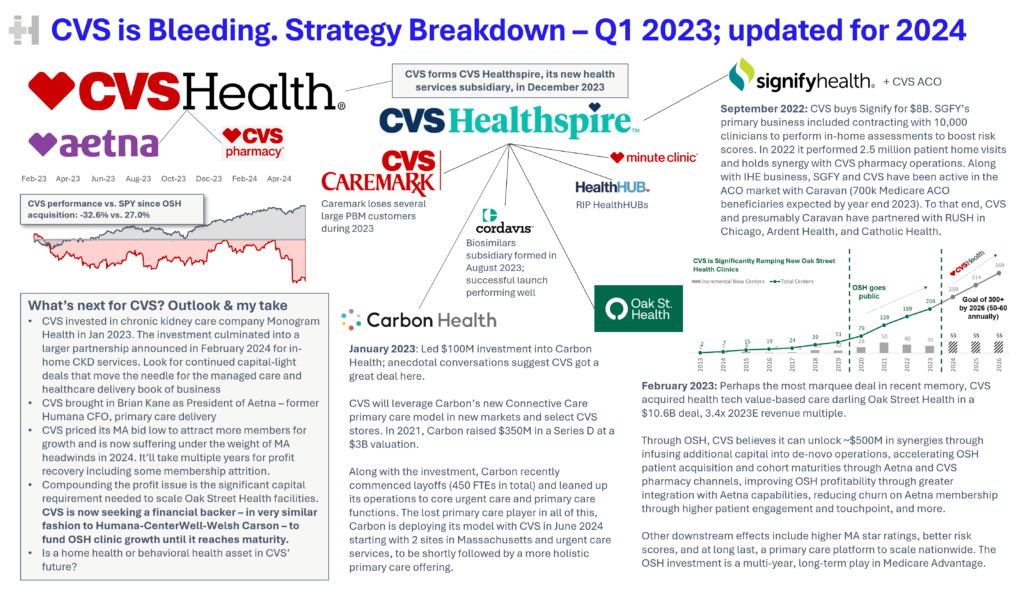
A breakup of CVS Health would require an extraordinarily intricate financial and operational decoupling. The conglomerate currently operates via three primary pillars, each commanding distinct market dynamics and regulatory environments:
- Retail Pharmacy: Comprising thousands of brick-and-mortar storefronts, MinuteClinics, and digital front-store operations, this division provides high-frequency consumer touchpoints but operates on razor-thin retail margins exacerbated by direct-and-indirect remuneration (DIR) fee reforms and declining generic reimbursement rates.
- Aetna (Health Care Benefits): As one of the nation's largest health insurers, Aetna generates substantial top-line revenue but remains highly vulnerable to medical cost trends, government rate adjustments, and statutory reserve requirements.
- CVS Caremark (Pharmacy Services): The PBM and specialty pharmacy unit handles drug formulary management for millions of members. While historically a lucrative cash-cow, it faces mounting legislative threats and margin erosion from alternative transparent-pricing competitors.
Splitting these entities would allow each business to operate with a dedicated capital structure, tailored executive leadership, and targeted investor appeal. Growth-oriented investors might favor the agile healthcare services and insurance segments, while income-seeking shareholders could gravitate toward a standalone retail footprint backed by robust cash-flow generation.
Comparative Metrics: CVS Health Business Segments
| Segment | Primary Function | Primary Regulatory Body | Key Financial Pressure |
|---|---|---|---|
| CVS Retail Pharmacy | Prescription fulfillment, OTC retail, clinical care | State Boards of Pharmacy, FDA | Labor costs, falling generic drug margins |
| Aetna | Health insurance underwriting, managed care | State Insurance Commissioners, CMS | Rising medical loss ratios, Medicare Advantage cuts |
| CVS Caremark | Pharmacy benefit management, specialty distribution | FTC, Department of Justice, ERISA guidelines | Antitrust scrutiny, pricing transparency mandates |
Industry and Market Implications: Who Wins, Who Loses?
Should CVS Health proceed with a structural unbundling, the shockwaves will alter strategic calculus across the healthcare, pharmaceutical, and financial sectors. Competitors such as UnitedHealth Group (with its Optum division) and Cigna (with Evernorth) will monitor the process closely, as their own integrated conglomerate models face identical macroeconomic pressures.
Winners: Institutional activist investors and long-term equity holders stand to benefit if a sum-of-the-parts valuation reveals hidden asset value. Furthermore, independent regional pharmacies and competing PBM startups could regain competitive footing if CVS's integrated juggernaut is decentralized.
Losers: Corporate debt holders could face credit rating volatility during the transition. A corporate split often involves complex debt redistribution, and rating agencies like Moody's and S&P would scrutinize how legacy liabilities—including ongoing opioid litigation and pension obligations—are apportioned among the newly formed entities.
Frequently Asked Questions (People Also Ask)
Why is CVS Health considering breaking up its conglomerate model?
CVS Health is reviewing its corporate structure primarily due to subdued valuation multiples, persistent margin compression in its Medicare Advantage insurance business, and intense regulatory scrutiny facing its pharmacy benefit management (Caremark) division. A breakup could unlock greater shareholder value by allowing each distinct business unit to operate independently.
What divisions would be separated in a potential CVS split?
While definitive plans have not been finalized, any structural separation would likely divide the company into distinct entities: its retail pharmacy storefronts, the Aetna health insurance business, and the CVS Caremark pharmacy benefit management division.
How would a CVS breakup impact consumers and patients?
In the short term, day-to-day pharmacy and insurance operations for consumers are expected to remain uninterrupted. Over the long term, a split could alter prescription drug formulary designs, affect localized care delivery options through MinuteClinics, and modify insurance network partnerships.
What role have activist investors played in these discussions?
Activist investment firms and institutional shareholders have exerted mounting pressure on CVS leadership following successive earnings misses and downward revisions to full-year financial guidance. This external pressure has forced the board to actively evaluate strategic alternatives to restore market confidence.
Future Outlook and Key Milestones to Watch
As CVS Health navigates this critical juncture, the coming quarters will dictate whether leadership pursues a definitive corporate spin-off, an outright sale of non-core assets, or a renewed operational turnaround strategy. Market analysts will be tracking several vital indicators:
- Upcoming Earnings Calls & Investor Days: Formal commentary from executive leadership regarding capital allocation adjustments and portfolio reviews.
- Regulatory and Antitrust Developments: Potential legislative shifts regarding PBM operations and healthcare consolidation that could force corporate restructuring regardless of internal preference.
- Credit Rating Agency Surveillance: Any movement by major rating agencies concerning debt outlooks and refinancing costs as strategic options are weighed.
Ultimately, the reported contemplation of a CVS Health breakup signals the potential twilight of the mega-conglomerate era in American healthcare. As investors increasingly prioritize specialized agility over bloated vertical integration, the outcome of CVS's strategic review will serve as a definitive litmus test for the future of modern healthcare commerce.