By Our Technology & Markets Desk | Published: 1 Hour Ago
NEW DELHI & BENGALURU — Reporting from the intersection of enterprise cloud economics and semiconductor logistics.
Executive Takeaways
Test Our Free AI & Tech Utilities Suite
Calculate LLM API token costs, analyze article dwell-time, or simulate tech DCA returns.
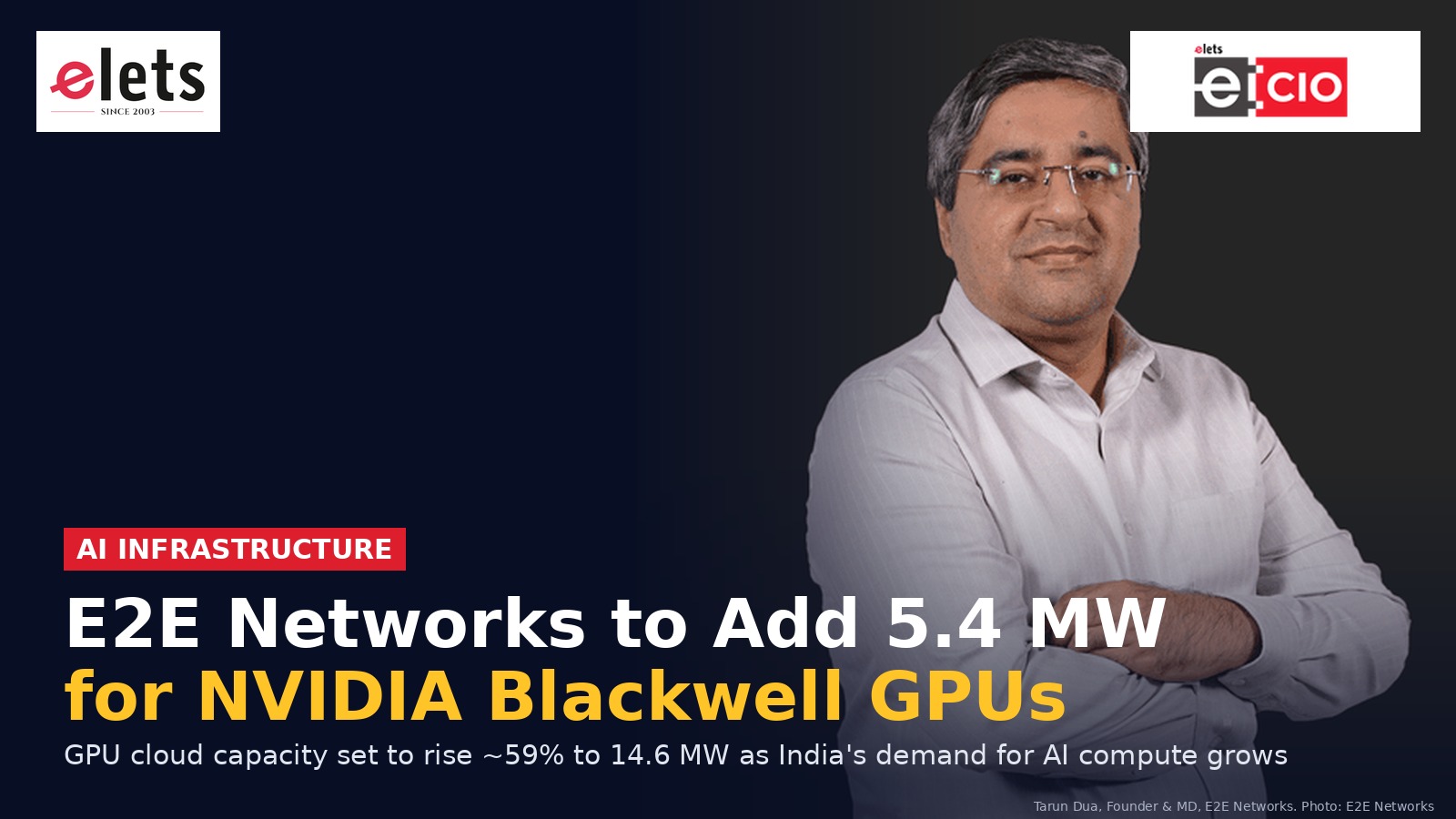
- Massive Capacity Scaling: E2E Networks is aggressively scaling its hyperscale compute architecture by integrating 5.4 megawatts (MW) of cutting-edge NVIDIA Blackwell GPU capacity.
- Portfolio Dominance: This strategic infrastructure injection elevates the firm's total active and pipeline AI compute footprint to an unprecedented 14.6 MW, cementing its position as a leading domestic GPU-as-a-Service (GPUaaS) provider.
- Enterprise ROI Acceleration: The deployment is engineered to slash large language model (LLM) training times and inference latency, directly optimizing infrastructure scalability for Indian enterprises, global capability centers (GCCs), and sovereign AI initiatives.
- Capital Allocation & Valuation: Backed by strategic capital deployment, the move addresses critical market liquidity for localized, low-latency AI cloud compute, driving robust valuation multiples across South Asia's emerging digital economy.
Comprehensive Narrative: The Catalyst Behind the Blackwell Deployment
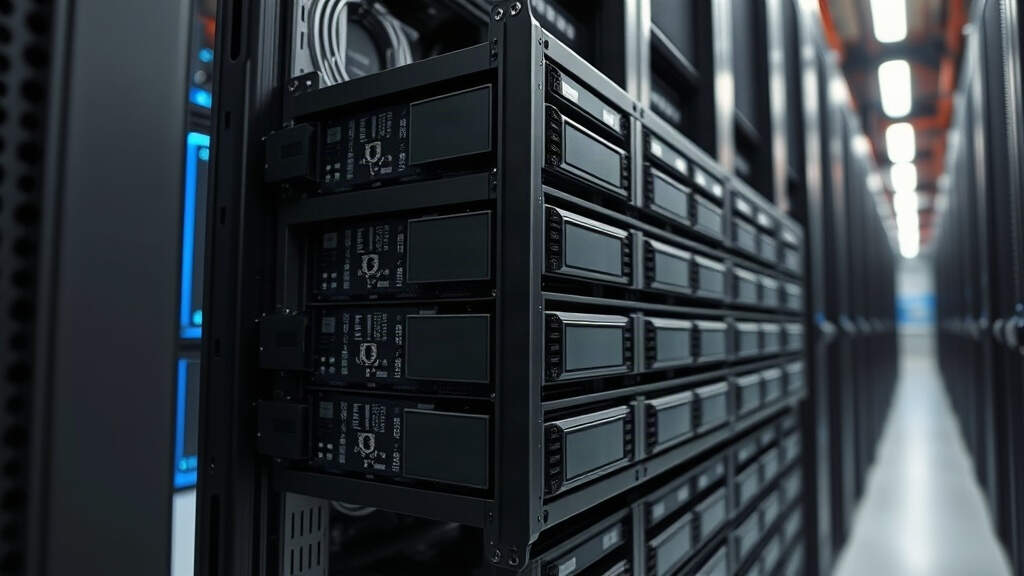
In a decisive move that underscores the fierce global scramble for next-generation accelerated computing hardware, New Delhi-headquartered E2E Networks has announced a monumental infrastructure expansion. According to primary disclosures from ET Datacenters, the publicly listed hyperscale cloud provider is moving swiftly to integrate 5.4 MW of NVIDIA Blackwell architecture into its existing data center facilities. This tactical escalation brings the company's cumulative specialized AI infrastructure capacity to 14.6 MW, marking a watershed moment for India’s sovereign cloud computing ecosystem.
The core catalyst driving this aggressive capital expenditure cycle is the exponential surge in enterprise demand for generative AI training and real-time inference workloads. Traditional CPU-driven cloud architectures and older-generation GPU clusters are increasingly hitting thermodynamic and computational bottlenecks when processing massive multimodal models. By securing allocations of NVIDIA’s Blackwell architecture—widely regarded as the gold standard for high-performance computing (HPC) and deep learning—E2E Networks is positioning itself to capture high-margin enterprise accounts seeking uncompromising performance and strict data residency compliance.
“We are witnessing a structural migration from legacy enterprise IT to accelerated, GPU-native cloud compute architectures,” notes a senior financial analyst tracking South Asian technology markets. “By embedding 5.4 MW of Blackwell capacity directly into its core infrastructure, E2E Networks is not merely buying hardware; they are engineering a high-barrier-to-entry moat that insulates them against commoditized cloud pricing.”
The technical deployment of NVIDIA Blackwell introduces distinct engineering challenges, particularly regarding high-density power delivery and liquid-cooling thermodynamics. Blackwell nodes draw unprecedented electrical loads per rack, forcing data center operators to rethink traditional air-cooling paradigms. E2E Networks’ engineering teams have been retrofitting and scaling their underlying data center facilities to ensure optimal power usage effectiveness (PUE) and thermal dissipation, thereby mitigating operational risk while maximizing continuous uptime for mission-critical enterprise workloads.
Furthermore, this expansion directly aligns with India's broader macroeconomic push toward self-reliance in critical technologies. With the government emphasizing sovereign AI capabilities—ensuring that sensitive national data remains within domestic borders while powering localized Indic-language models—local hyperscalers like E2E Networks are uniquely positioned to win lucrative contracts from both public sector undertakings (PSUs) and multinational conglomerates navigating complex regulatory compliance landscapes.
Verified Data & Metrics Breakdown
| Metric / Parameter | Pre-Expansion Baseline | Current Expansion Phase | Post-Expansion Cumulative Total |
|---|---|---|---|
| NVIDIA Blackwell Capacity | 0.0 MW (Legacy / Hopper Focus) | +5.4 MW (High-Density Nodes) | 5.4 MW Active/Deploying |
| Total AI Infrastructure Footprint | 9.2 MW | +5.4 MW | 14.6 MW |
| Primary Architecture Target | NVIDIA H100 / L40S | NVIDIA Blackwell (GB200/B200 Series) | Heterogeneous Accelerated Cloud |
| Primary Target Market | Mid-market Startups & GenAI Pilots | Enterprise LLM Training & Real-time Inference | Enterprise, GCCs, & Sovereign AI |
Industry & Market Implications
The ripple effects of E2E Networks’ infrastructure play extend far beyond corporate balance sheets, profoundly impacting the broader South Asian technology and financial ecosystem:
- Enterprise ROI & Cost Arbitrage: By offering native Blackwell compute locally, E2E Networks eliminates the prohibitive network egress fees and latency penalties associated with routing massive training jobs to US- or European-hosted hyperscalers. This delivers superior enterprise ROI for domestic AI startups and established financial institutions alike.
- Competitive Dynamics: The move intensifies competition within the regional cloud market, pitting specialized GPUaaS providers directly against legacy global hyperscalers (Hyperscale Cloud Service Providers). While global giants offer vast general-purpose ecosystems, E2E's laser-focused deployment of cutting-edge silicon provides a distinct performance edge for pure-play AI workloads.
- Capital Markets & Valuation Multiples: For public market investors, aggressive capacity expansion funded through disciplined capital allocation signals robust forward revenue visibility. Companies demonstrating secure access to scarce NVIDIA silicon frequently command premium valuation multiples, attracting institutional liquidity and long-term equity backing.
- Risk Mitigation & Supply Chain Resilience: Securing a direct allocation of 5.4 MW of Blackwell hardware speaks volumes about E2E Networks' supply chain partnerships. In an era marked by semiconductor scarcity and geopolitical trade friction, maintaining predictable hardware delivery schedules is the ultimate competitive differentiator.
Frequently Asked Questions (People Also Ask)
1. What is the significance of E2E Networks adding 5.4 MW of NVIDIA Blackwell capacity?
The addition of 5.4 MW of NVIDIA Blackwell GPUs represents a generational leap in E2E Networks’ compute capabilities. Blackwell architecture is specifically engineered to handle trillion-parameter LLM training and real-time enterprise inference at a fraction of the power consumption and time required by older chips. This expansion brings E2E’s total AI infrastructure to 14.6 MW, significantly boosting its ability to serve high-end enterprise and sovereign AI workloads.
2. How does this expansion impact enterprise customers in India and globally?
Enterprise customers gain immediate access to ultra-low latency, high-density accelerated cloud compute without the friction of overseas data transfers. This localized availability ensures strict regulatory compliance with data residency laws while drastically reducing operational expenditures associated with heavy AI model training and deployment.
3. What are the engineering and infrastructure requirements for deploying NVIDIA Blackwell?
NVIDIA Blackwell nodes feature unprecedented power density per rack, necessitating advanced data center engineering. E2E Networks must implement robust power distribution units (PDUs) and sophisticated liquid-cooling or high-efficiency air-cooling systems to maintain optimal thermal thresholds, ensuring uninterrupted uptime and preventing hardware throttling under heavy workloads.
4. How does this infrastructure rollout influence E2E Networks' market valuation and competitive standing?
By securing scarce, high-demand NVIDIA hardware and expanding its footprint to 14.6 MW, E2E Networks strengthens its market leadership as a specialized GPUaaS provider. This strategic positioning drives strong revenue visibility, enhances capital efficiency, and commands favorable valuation multiples among institutional investors looking for high-growth digital infrastructure plays in emerging markets.
Future Outlook & Key Milestones to Watch
As E2E Networks transitions from procurement to full operational deployment of its 5.4 MW NVIDIA Blackwell capacity, market watchers and institutional investors will closely monitor several critical operational milestones over the next 12 to 18 months:
- Commercial Rollout & Utilization Rates: Tracking how rapidly the newly commissioned Blackwell clusters achieve optimal capacity utilization will serve as a primary indicator of enterprise demand elasticity.
- Power & Cooling Efficiency Metrics: Continuous reporting on Power Usage Effectiveness (PUE) will validate the operational scalability and sustainability of the company's high-density data center retrofits.
- Ecosystem Partnerships: Strategic announcements regarding enterprise client acquisitions—particularly among large financial institutions, healthcare providers, and GCCs—will validate the revenue-generating potential of the new infrastructure.
- Further Capital Allocation: Indications of subsequent expansion phases beyond the 14.6 MW cumulative threshold will signal management’s long-term conviction in the secular growth of accelerated computing across South Asia.