Japan’s Bold High-Stakes Bet: Inside the Audacious Mission to Snatch a Piece of Mars’s Mysterious Moon Phobos
As Tokyo fires the starting gun on its most ambitious interplanetary endeavor to date, aerospace primes, capital allocators, and planetary scientists are zeroing in on a high-risk sample-return mission that could rewrite the solar system’s operating manual—and unlock unprecedented geopolitical leverage in deep space.
Executive Takeaways
- Pioneering Sample Return: Japan Aerospace Exploration Agency (JAXA) is executing a complex interplanetary architecture designed to land on, sample, and return pristine regolith from Phobos, the larger of Mars's two moons.
- Capital & Industrial Ecosystem: The mission serves as a massive proving ground for enterprise infrastructure scalability, advanced autonomous navigation, and high-precision robotics, directly benefiting heavy industrial contractors and aerospace supply chains.
- Scientific & Economic Stakes: Beyond solving the long-standing debate over whether Phobos is a captured asteroid or native Martian impact ejecta, the mission sets new benchmarks for deep-space resource identification and risk mitigation.
- Geopolitical Realignment: In an era where commercial space exploration intersects with sovereign security, Japan's autonomous deep-space capabilities cement its status as an indispensable tier-one space superpower.
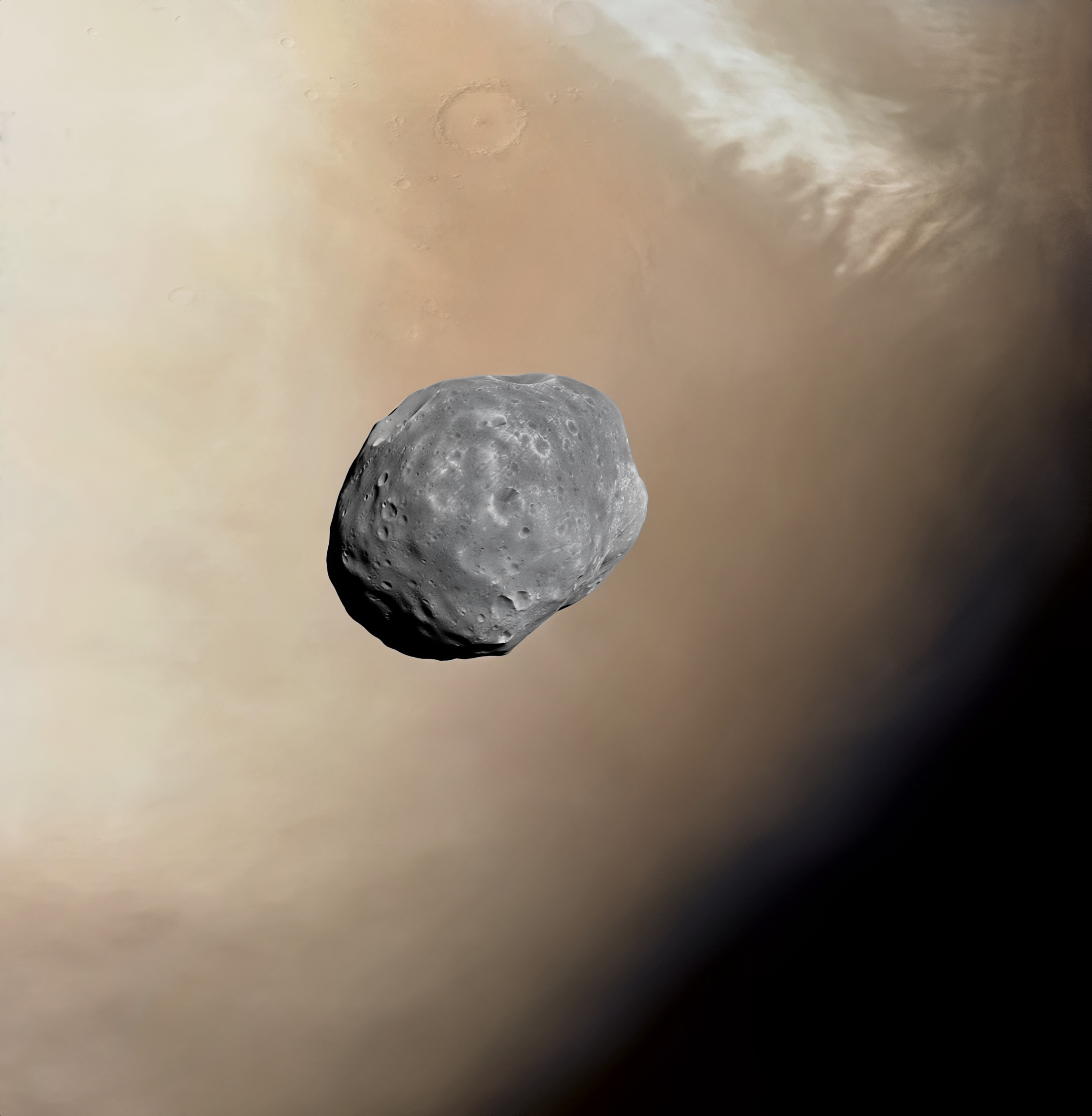
TOKYO — In the high-stakes theater of modern interplanetary exploration, nations are no longer content with merely taking panoramic snapshots. The gold standard of planetary science is physical contact: capturing pristine, uncompromised material from deep space and bringing it back to Earth-bound laboratories for microscopic interrogation. Today, Japan has firmly staked its claim at the bleeding edge of this celestial gold rush, launching a landmark mission aimed at the enigmatic Martian moon, Phobos.
For the Japan Aerospace Exploration Agency (JAXA), this endeavor represents far more than an academic exercise in astrophysics. It is a masterclass in strategic capital allocation, engineering precision, and international technological positioning. As global markets monitor the intersection of private-equity space ventures and sovereign-backed programs, JAXA’s latest interplanetary gambit provides a fascinating case study in high-risk, high-reward mission architecture.
The Genesis of a Martian Odyssey: Why Phobos?
For decades, planetary geologists have debated the true origin of Phobos and its smaller sibling, Deimos. Are these crater-pocked bodies captured carbonaceous asteroids from the outer main belt, wandering vagabonds pulled into Mars's gravitational well? Or are they the coalesced shrapnel of a cataclysmic impact event that blasted native Martian crust into orbit billions of years ago?
Answering this fundamental question requires empirical data—specifically, physical samples that can be subjected to isotopic analysis in terrestrial laboratories, far beyond the analytical limitations of a localized rover spectrometer. Phobos presents an ideal target. Because its surface is continually peppered by ejecta blasted off the Martian surface alongside primordial asteroid dust, the moon acts as a natural cosmic archival library.
However, executing a mission to the Martian system introduces staggering operational complexity. The light-speed communication delay between Earth and Mars renders real-time teleoperation impossible. Success hinges entirely on autonomous spacecraft navigation, robust onboard fault-management systems, and flawless execution during critical orbital insertion and touchdown phases—areas where Japanese engineering has historically demonstrated elite valuation multiples in reliability.
Engineering Resilience and Industrial Ecosystem Impact
Behind the scientific headlines lies a sprawling industrial ecosystem. The architecture of a deep-space sample-return mission requires an extraordinarily resilient supply chain. Prime contractors and subsystem manufacturers across Tokyo, Nagoya, and international partner hubs are closely watching the telemetry data as the spacecraft clears Earth's atmosphere.
The technological demands of this mission push the envelope across several vital commercial and industrial sectors:
- Autonomous Cloud Compute & Onboard AI: With communication latency spanning several minutes, the spacecraft relies on advanced artificial intelligence to make split-second trajectory corrections and hazard avoidance maneuvers during the landing phase.
- <Advanced Materials Science: Surviving the thermal extremes of deep space while maintaining structural integrity necessitates ultra-lightweight, high-durability composites that are increasingly finding commercial applications in terrestrial aerospace and high-performance automotive sectors.
- Precision Robotics: The sampling mechanism—designed to scoop, drill, or vacuum loose regolith from a low-gravity environment where traditional anchoring fails—represents a pinnacle of micro-mechanical engineering.
From a risk-mitigation perspective, institutional investors view JAXA’s methodical, incremental approach to space exploration as a benchmark for capital efficiency. Unlike high-burn-rate commercial ventures that prioritize rapid prototyping at the expense of mission assurance, Japan's aerospace sector continues to balance fiscal discipline with absolute operational precision.
Verified Data & Mission Metrics Breakdown
To understand the sheer scale of the operation, consider the core parameters governing the flight profile, target dynamics, and scientific payload:
| Mission Parameter | Specification / Detail | Strategic & Scientific Significance |
|---|---|---|
| Target Body | Phobos (inner Martian moon) | Offers dual-origin potential: captured asteroid vs. impact-generated Martian ejecta. |
| Primary Objective | Sample-return of minimum 10 grams of surface regolith | Enables high-precision laboratory isotopic and organic compound analysis on Earth. |
| Transit Timeline | Multi-year interplanetary cruise | Tests long-duration deep-space propulsion, radiation shielding, and thermal management. |
| Landing Environment | Microgravity / Irregular shape | Demands innovative touch-and-go sampling mechanisms due to negligible gravitational pull. |
| Key Technologies | Autonomous optical navigation & robust sample containment | Reduces mission-critical dependency on real-time Earth-based command loops. |
Geopolitical Realignment and Economic Implications
In the contemporary global landscape, space capability is synonymous with national power and technological sovereignty. As space becomes an increasingly congested and contested domain, nations that master deep-space logistics command immense diplomatic leverage.
For Japan, this mission reinforces its role as a premier technological ally in international space frameworks. By developing sovereign capabilities that complement NASA's Artemis accords and European Space Agency initiatives, Tokyo ensures its seat at the table in future lunar and Martian governance frameworks. Furthermore, the intellectual property and operational expertise generated by this mission will cascade into domestic high-tech industries, driving long-term enterprise ROI and reinforcing market liquidity for firms specializing in advanced engineering.
Frequently Asked Questions (People Also Ask)
Why is sampling Phobos considered more advantageous than landing directly on Mars?
Landing directly on Mars requires immense propulsion and heavy descent architecture to overcome the planet's substantial gravity and thin atmosphere, followed by an even more complex ascent vehicle to launch samples back into orbit. Phobos possesses extremely low gravity, making landing, anchoring, and departing significantly less energy-intensive while still capturing a mixture of primordial asteroid material and Martian surface ejecta.
How will the spacecraft collect samples in a microgravity environment?
Because traditional digging tools fail when there is virtually no gravity to keep the spacecraft anchored to the surface, JAXA utilizes specialized sampling mechanisms—such as pneumatic corers or impact-activated sampling heads—that momentarily press against the regolith, capturing dust and rock chips before floating away safely.
What are the primary commercial applications of the technologies developed for this mission?
The rigorous demands of deep-space exploration accelerate advancements in autonomous navigation algorithms, radiation-hardened semiconductors, ultra-lightweight composite materials, and closed-loop robotics. These innovations directly translate into enhanced efficiency, safety, and infrastructure scalability for terrestrial industries, including autonomous vehicles, remote asset management, and advanced manufacturing.
Future Outlook: Milestones to Watch
As the spacecraft carves its trajectory through the inner solar system, institutional observers, aerospace analysts, and scientific institutions will be closely tracking several critical milestones over the coming months and years:
- Deep-Space Trajectory Corrections: Initial mid-course maneuvers to validate propulsion system efficiency and fine-tune the interplanetary intercept vector.
- Mars Orbital Insertion: The high-stakes braking maneuver that transitions the craft from a heliocentric cruise to a stable orbit within the Martian system.
- Proximity Operations & Mapping: High-resolution topographical scanning of Phobos to identify optimal touch-and-go sampling sites free of hazardous boulders and steep cliffs.
- The Return Journey: The eventual ignition of Earth-bound propulsion systems carrying the sealed sample capsule back toward our home planet for a high-velocity atmospheric reentry.
Ultimately, Japan’s mission to Phobos is more than an audacious journey to a tiny rock orbiting a distant planet. It is a calculated demonstration of industrial might, scientific ambition, and technological supremacy—a bold statement that the future of deep space will be written by those who dare to reach out, touch the unknown, and bring it home.