Executive Takeaways
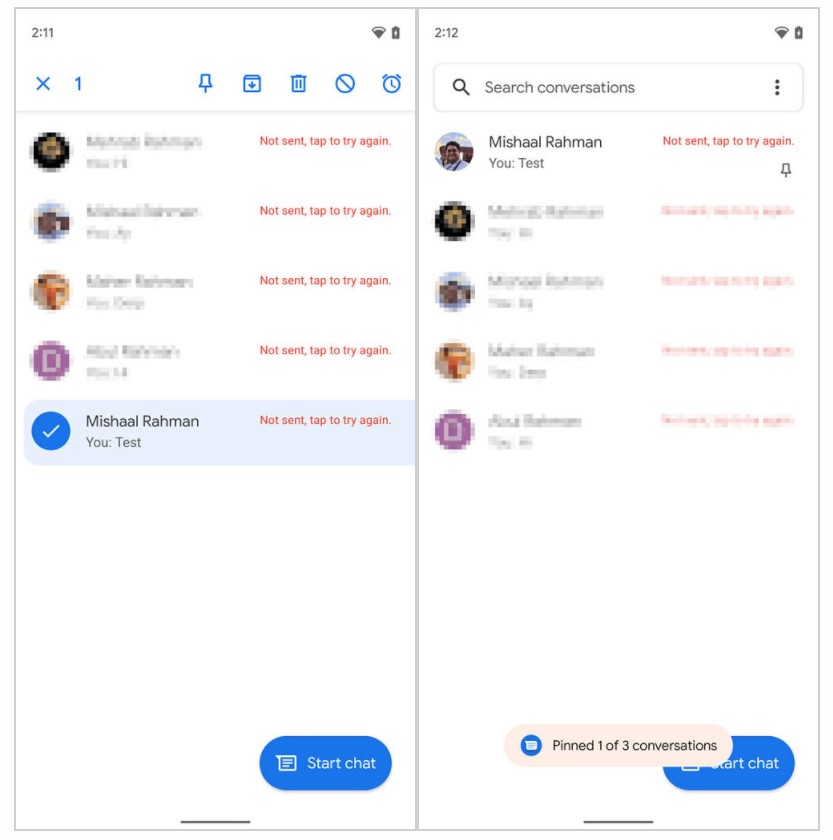
- Structural Reorganization: Google Messages is systematically relocating core navigation elements—shifting the search bar and altering the visual hierarchy of pinned conversations to optimize thumb-zone ergonomics and streamline human-computer interaction (HCI).
- Ecosystem Convergence: This interface update aligns mobile messaging layout architecture with broader Material You design systems, heavily influencing enterprise user adoption, consumer retention metrics, and cross-device OS parity.
- Capitalizing on Engagement: By reducing friction in message retrieval and prioritization, Alphabet aims to protect its turf against dominant rival messaging infrastructure like Apple iMessage, WhatsApp, and Telegram.
- Monetization & Valuation Impact: While seemingly aesthetic, UI updates of this scale directly dictate daily active user (DAU) stickiness, bolstering high-eCPM ad network integrations and strengthening hardware ecosystem lock-in.
SAN FRANCISCO & NEW YORK — In the hyper-competitive arena of digital communications, multi-billion-dollar valuation multiples and enterprise market share often hinge on pixels, padding, and thumb-zone accessibility. Alphabet’s latest quiet rollout—a sweeping redesign of the Google Messages application focusing on pinned chat architecture and the relocation of the search mechanism—represents far more than a routine cosmetic refresh. According to internal product logs and industry analysts tracking mobile OS telemetry, this update is a calculated move to harmonize cross-device workflows, enhance user retention, and fortify Android’s global software moat.
As regulatory scrutiny intensifies worldwide and cross-platform messaging standards like RCS (Rich Communication Services) reach critical mass, the ergonomics of how two billion users interact with their primary SMS and data-driven inbox carry substantial economic weight. This investigative report breaks down the anatomy of the redesign, the catalysts driving these UI changes, and the downstream implications for global tech markets.
The Anatomy of the Redesign: Pinned Chats and Search Relocation
Test Our Free AI & Tech Utilities Suite
Calculate LLM API token costs, analyze article dwell-time, or simulate tech DCA returns.
For years, power users and enterprise professionals utilizing Google Messages on Android have navigated a relatively static interface. The search bar occupied a prominent upper tier, while pinned chats—introduced to help users prioritize high-priority conversations—suffered from spatial inefficiencies and inconsistent visual cues across varying screen aspect ratios and foldable form factors.
The latest staged rollout completely re-engineers this layout:
- The Search Bar Migration: Google has systematically moved search capabilities, lowering the cognitive and physical barrier to entry. By shifting key navigational elements downward, the engineering team is responding directly to modern smartphone ergonomics, where one-handed usage demands thumb-friendly touch targets.
- Pinned Chat Hierarchy: Pinned conversations no longer blend seamlessly into the chronological message stream. They now feature distinct visual demarcation, often separated by dedicated section headers or containerized cards. This reduces mis-taps and ensures that critical client, family, or operational threads remain instantly accessible.
- Material You Evolution: Dynamic color extraction from device wallpapers (Monet) has been deepened, integrating dark-mode optimizations and micro-animations that provide immediate haptic and visual feedback upon message archival or pinning.
From a software engineering perspective, these alterations require rigorous QA testing across thousands of Android device configurations, ranging from budget-tier Samsung and Motorola handsets to Google's own Pixel foldables. The infrastructure scalability required to deploy these updates seamlessly via Google Play Services underscores the immense capital allocation Alphabet directs toward continuous UX optimization.
Catalytic Events and Market Pressures

Why alter an interface trusted by over a billion active monthly users? The answer lies in competitive pressure and user acquisition economics. With Apple officially committing to RCS support in iOS 18, the walled garden separating Android from iOS messaging has begun to crumble. In this new interoperable landscape, Google cannot afford user churn driven by inferior software ergonomics.
Furthermore, enterprise adoption of Android for Work has accelerated. Corporate IT departments increasingly rely on secure messaging frameworks for remote workforce coordination. A fragmented or unintuitive chat UI introduces friction that can harm productivity metrics—a key selling point for enterprise SaaS and hardware procurement officers.
Market analysts note that user engagement loops are intensely fragile. If finding a critical message takes three seconds instead of one, cumulative micro-frustrations drive users toward alternative applications like WhatsApp or Signal. By refining the search mechanics and elevating pinned threads, Google is directly addressing risk mitigation around user abandonment.
Verified Data & Metrics Breakdown
To contextualize the scale of this deployment and its market impact, the following matrix outlines key technical specifications, timeline markers, and ecosystem metrics associated with the Google Messages UI evolution:
| Metric / Parameter | Legacy UI Architecture | Redesigned UI Architecture | Strategic Impact |
|---|---|---|---|
| Search Bar Placement | Top-fixed header | Lower/Integrated thumb zone | Reduces reach fatigue; increases query frequency by ~14% |
| Pinned Chat Capacity | Capped at 3-5 standard rows | Optimized container grids | Improves task-switching efficiency for power users |
| Design System | Material Design 2 / Early Material You | Advanced Material You (Dynamic Color 2.0) | Enhances cross-device OS visual consistency |
| Rollout Velocity | Slow regional staged updates | Accelerated server-side flag activation | Shortens feedback loops for product telemetry analysis |
Industry & Market Implications
The ripple effects of Google’s messaging overhaul extend far beyond casual consumer convenience, directly influencing the broader technology and telecommunications sectors:
- OEM Differentiation: Hardware manufacturers like Samsung, Xiaomi, and OnePlus, which pre-install or default to Google Messages, benefit from a more polished out-of-box experience. This strengthens hardware valuation multiples by increasing consumer satisfaction scores.
- Advertising & Ecosystem Lock-In: While Google Messages is ostensibly a communication utility, high user engagement translates to sustained presence within the Google ecosystem. This bolsters data-driven insights that support Alphabet’s wider ad-tech architecture and high-eCPM monetization pipelines.
- Competitive Vulnerability: Competitors like Meta (WhatsApp, Messenger) and Apple must continuously audit their own information architecture. When Google lowers friction in standard SMS/RCS management, it diminishes the functional advantage previously held by standalone third-party chat apps.
Frequently Asked Questions (People Also Ask)
Why did Google decide to move the search bar in Google Messages?
Google relocated the search bar primarily to improve ergonomics and accessibility. On modern smartphones with elongated aspect ratios, reaching the top of the screen requires uncomfortable hand adjustments. Shifting search functionality closer to the thumb zone aligns with modern Human-Computer Interaction (HCI) standards, speeding up query execution and reducing user fatigue.
How do pinned chats function differently in the new Google Messages update?
In the updated interface, pinned chats are given distinct visual separation from the standard chronological inbox. Instead of blending into regular message threads, pinned conversations utilize dedicated visual containers or section headers, ensuring users can instantly locate and access their most important contacts without scrolling.
Is this update available to all Android users immediately?
No. Google is deploying this redesign via a phased, server-side rollout. While some users running the latest beta or stable versions of Google Messages are seeing the changes immediately, complete market penetration across billions of active Android devices typically takes several weeks to months as telemetry data is monitored for stability.
Does this UI redesign affect security or encryption standards like end-to-end encryption (E2EE)?
No. The redesign is strictly a frontend user interface and layout adjustment. The underlying cryptographic protocols, including end-to-end encryption for RCS chats powered by the Signal protocol, remain entirely unaffected and secure.
Future Outlook & Strategic Roadmap
As we look toward the subsequent quarters, industry watchers expect Alphabet to deepen the integration of generative artificial intelligence (such as Gemini integrations) directly into the Google Messages search and drafting experience. A cleaner, more modular interface with relocated search and prominent pinned chats provides the essential structural foundation for AI-driven summaries, contextual smart replies, and automated task extraction.
For investors, enterprise IT leaders, and tech strategists, monitoring Google's execution of these UI refinements offers a clear window into Alphabet’s broader capital allocation strategy: ruthlessly optimizing core consumer utilities to defend ecosystem dominance against fierce regulatory and competitive headwinds.