Executive Takeaways
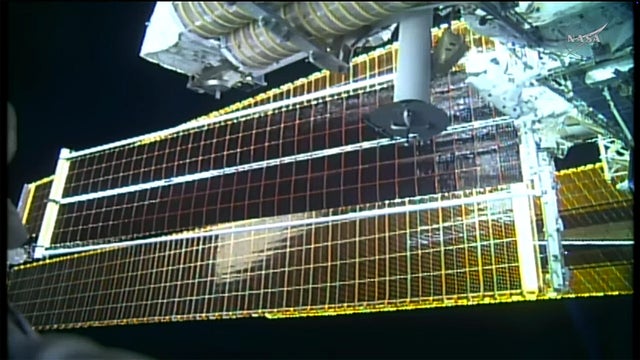
- Critical Infrastructure Refresh: NASA astronauts have commenced the ultimate phase of a complex, multi-year campaign to replace aging nickel-hydrogen batteries with advanced lithium-ion energy storage units on the International Space Station (ISS).
- Capital Allocation & Valuation Impacts: The sprawling enterprise involves prime aerospace contractors, complex supply chains, and significant federal budgeting to safeguard a $150 billion orbiting laboratory vital to commercial space ventures.
- Operational Risk Mitigation: Upgrading the photovoltaic power architecture directly addresses power degradation risks, ensuring uninterrupted scientific payload execution and supporting expanding commercial module integration.
- Future-Proofing Low Earth Orbit: This intricate engineering feat establishes a high-reliability template for upcoming commercial space stations, directly influencing infrastructure scalability and private-sector investment models.
HOUSTON / WASHINGTON — In the high-stakes theater of Low Earth Orbit (LEO), a meticulously orchestrated engineering ballet is underway. Two veteran spacewalkers have stepped outside the airlock of the International Space Station (ISS) to execute the final, critical phase of a multi-year power system modernization initiative. This high-profile operation represents far more than routine station maintenance; it is the culmination of a capital-intensive infrastructure overhaul designed to protect humanity’s premier orbital asset, secure multi-billion-dollar scientific investments, and pave the way for a self-sustaining commercial space economy.
For financial markets, aerospace strategists, and technology analysts tracking the commercialization of space, the stakes could not be higher. As the ISS edges closer to its eventual retirement later this decade, ensuring the structural integrity, power reliability, and operational safety of the station is paramount. The successful installation of these final power-channel electronics and advanced energy storage systems marks a defining milestone in risk mitigation and asset preservation for both government space programs and their corporate partners.
The Genesis of the Upgrade: Engineering Against Obsolescence
Test Our Free AI & Tech Utilities Suite
Calculate LLM API token costs, analyze article dwell-time, or simulate tech DCA returns.
When the backbone of the ISS power grid was originally designed in the late 1980s and 1990s, the technological landscape of energy storage looked fundamentally different. The station relied heavily on nickel-hydrogen ($NiH_2$) batteries, robust technologies for their era that nonetheless suffered from predictable degradation curves, significant mass penalties, and finite operational lifespans. As the station orbited Earth every 90 minutes, experiencing alternating periods of blinding solar exposure and freezing darkness, these batteries endured thousands of deep charge-discharge cycles annually.
By the mid-2010s, NASA and its international partners—including the Japan Aerospace Exploration Agency (JAXA), the European Space Agency (ESA), and Canadian Space Agency (CSA)—faced an impending infrastructure crisis. Without a comprehensive capital reallocation toward next-generation power architecture, the station risked rolling brownouts, reduced scientific payload capabilities, and compromised life support systems.
The solution was a sweeping, multi-phased power channel upgrade utilizing high-density lithium-ion ($Li-ion$) batteries and advanced adapter plates. Unlike their predecessors, these modern units offer superior energy density, drastically reduced degradation rates, and optimized thermal management. However, deploying them has required dozens of complex, high-risk extravehicular activities (EVAs), demanding absolute precision from astronauts operating in bulky spacesuits under extreme thermal fluctuations.
The Technical Execution: Navigating High-Risk Orbital Mechanics
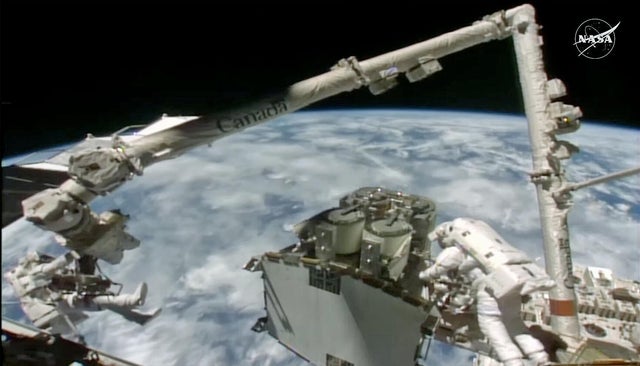
Executing structural renovations more than 250 miles above the Earth’s surface leaves zero margin for error. The final phase of this upgrade requires spacewalkers to meticulously disconnect legacy power distribution electronics, route heavy-duty cabling, and integrate state-of-the-art interface hardware onto the station's truss structure.
From an enterprise risk mitigation perspective, these operations are monitored by mission control teams in Houston, Huntsville, and international partner centers who model every movement to prevent thermal anomalies, power spikes, or equipment snags. The financial exposure of a single compromised power channel translates directly into millions of dollars in delayed scientific output and compromised commercial agreements.
Furthermore, this upgrade directly impacts the cloud compute architecture and data telemetry streams housed aboard the station. Modern scientific payloads—ranging from pharmaceutical crystallization experiments to Earth-observation hyperspectral imaging—demand stable, uninterrupted power supply channels to process and downlink high-bandwidth datasets to terrestrial enterprise clients.
Verified Data & Metrics Breakdown Table
To fully grasp the scale of the ISS power system modernization, consider the following comparative metrics detailing the transition from legacy hardware to the current advanced architecture:
| Metric / Parameter | Legacy System ($NiH_2$) | Modernized System ($Li-ion$) | Strategic Impact |
|---|---|---|---|
| Battery Lifespan | ~6.5 Years | 10+ Years (Designed for station life) | Reduced replacement frequency & launch costs |
| Units Required per Channel | 24 Batteries per Truss Pair | 12 Batteries + Adapter Plates | Mass reduction and simplified logistics |
| Power Output Capacity | Baseline 120kW Total Array | Optimized & Stabilized 120kW+ | Supports expanded commercial modules |
| Total Campaign Timeline | Initiated deployment at station assembly | Multi-year sequential EVAs (2017–2024+) | Methodical phasing to protect active operations |
Industry & Market Implications: Who Wins, Who Loses
The completion of this power system upgrade carries profound economic and strategic ramifications across the aerospace and defense sectors:
- The Winners — Prime Aerospace & Energy Storage Providers: Companies specializing in high-reliability aerospace manufacturing, specialized lithium-ion cell production, and orbital robotics capture immediate revenue streams and validate proprietary technologies in extreme environments. This operational track record enhances their valuation multiples when bidding on upcoming defense and commercial contracts.
- The Commercial LEO Ecosystem: Private space station developers—such as Axiom Space, Blue Origin (Orbital Reef), and Voyager Space (Starlab)—stand to benefit immensely. The engineering data, thermal management insights, and power distribution methodologies proven during this ISS upgrade serve as an open-source masterclass for private platforms currently securing venture capital and private equity backing.
- The Challengers & Legacy Suppliers: Manufacturers tethered exclusively to outdated chemical battery architectures face declining demand. The industry-wide pivot toward high-density, software-managed energy storage forces traditional supply chains to rapidly modernize or risk obsolescence in an increasingly competitive commercial space market.
Frequently Asked Questions (People Also Ask)
1. Why did the International Space Station need a complete power system upgrade?
The original nickel-hydrogen batteries suffered from natural degradation after decades of continuous cycling through extreme orbital temperature shifts. Upgrading to modern lithium-ion batteries ensures stable, long-term power delivery, reduces overall mass, and safeguards critical scientific experiments and life support infrastructure as the station approaches the end of its operational lifecycle.
2. How do astronauts perform these upgrades safely during spacewalks?
Spacewalkers (EVAs) operate under strict safety protocols, utilizing specialized tethering tools, insulated equipment, and real-time telemetry monitoring from ground control teams. Power channels are systematically isolated when handling high-voltage components to mitigate electrical hazards and protect both the crew and the station's grid.
3. What is the total financial and economic impact of the ISS power modernization project?
While government funding underpins NASA's portion of the program, the broader economic impact spans commercial supply chains, cargo resupply missions, and technological spin-offs. A reliable power grid protects a $150 billion national laboratory investment, enabling continued pharmaceutical research, advanced materials manufacturing, and commercial payload hosting.
4. How does this upgrade influence future commercial space stations?
The engineering data, battery performance metrics, and orbital installation techniques gained during this multi-year campaign provide invaluable blueprints for private companies designing next-generation commercial space stations intended to succeed the ISS in Low Earth Orbit.
Future Outlook: Milestones to Watch in Low Earth Orbit
As the final battery units and control electronics are bolted into place, attention within the aerospace community shifts toward the horizon. The successful conclusion of this power upgrade demonstrates that complex, multi-year infrastructure projects can be executed safely in the harsh, high-radiation environment of Low Earth Orbit.
Key milestones to monitor over the next 24 to 36 months include:
- Transition to Commercial LEO Destinations (CLDs): Validation of these power systems will directly inform NASA’s upcoming transition strategy, ensuring seamless handover of orbital market share from the government-backed ISS to privately owned and operated commercial outposts.
- Regulatory & Compliance Frameworks: As private entities assume greater operational control in LEO, regulatory bodies will closely examine these power distribution benchmarks to establish baseline safety certifications for commercial space habitats.
- Supply Chain Scalability: Increased demand for radiation-hardened, high-density energy storage units will drive strategic mergers, acquisitions, and capital allocation across tier-one aerospace suppliers, reinforcing the commercial viability of the space economy.
Ultimately, the completion of this power system upgrade is not merely a technical footnote in NASA mission logs; it is a vital operational bridge securing the present utility of the International Space Station while laying a rock-solid foundation for the burgeoning commercial space frontier.