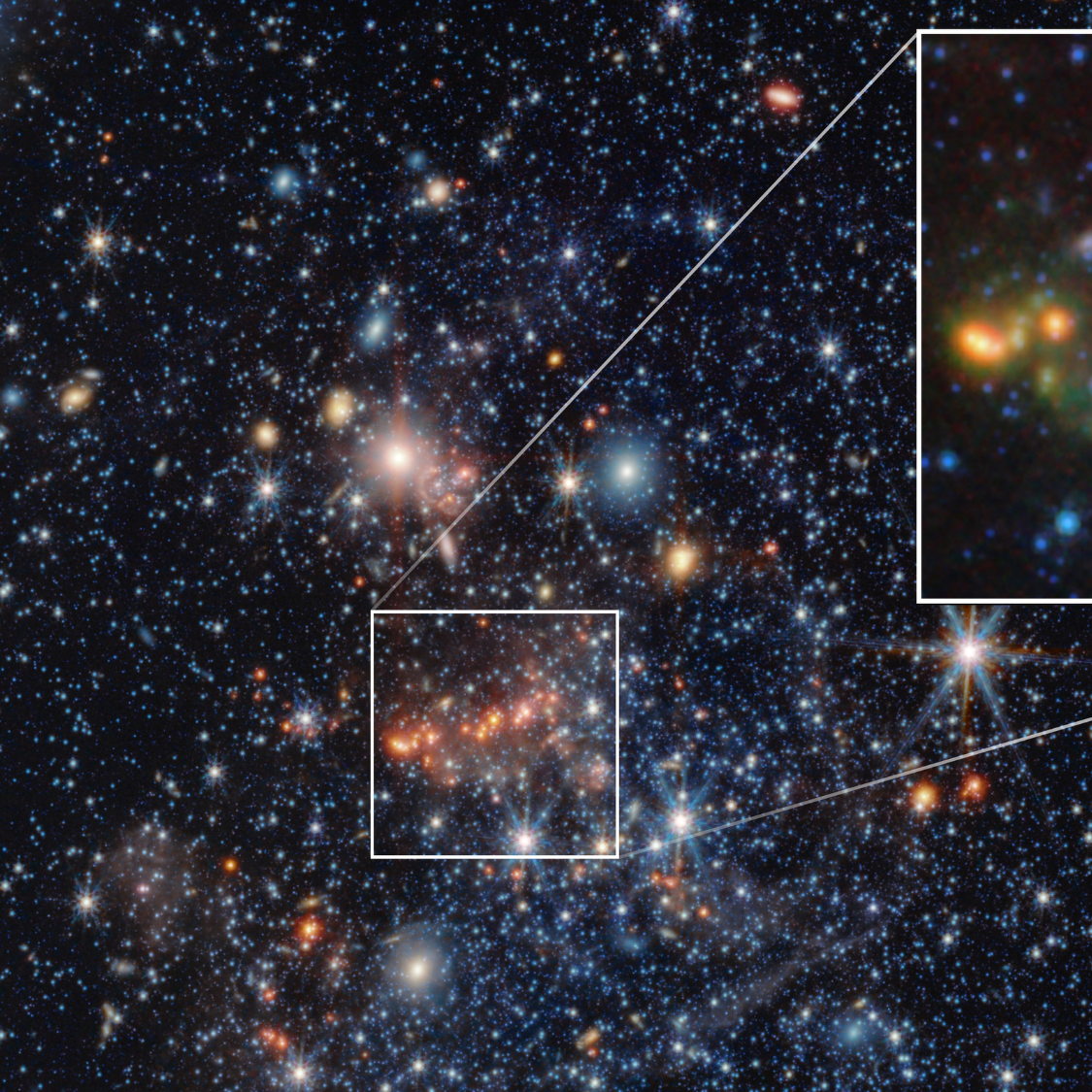
WASHINGTON — In a breakthrough that is forcing astrophysicists to rewrite cosmological textbooks, the James Webb Space Telescope (JWST) has unlocked the inner workings of ancient cosmic "factories" responsible for seeding the early universe with stardust. The discovery not only solves a decades-old astrophysical mystery regarding how the primordial cosmos transformed from a sterile expanse into a star-forming engine, but it also reveals that planet formation is an unprecedentedly intense cosmic race.
Operating from its vantage point one million miles from Earth, NASA’s flagship infrared observatory has peered deep into the dawn of time, capturing unprecedented data on young, sun-like stars and pristine galaxies. The findings illuminate how heavy elements—the essential building blocks of rocky planets, atmospheres, and life itself—were forged and distributed faster than standard cosmological models ever predicted.
Executive Briefing: What You Need to Know
- The Core Discovery: JWST has pinpointed the exact mechanisms of ancient cosmic "factories," showing how early stars rapidly produced and expelled massive quantities of stardust into the intergalactic medium.
- The Planet-Building Race: High-resolution observations of 72 young sun-like stars reveal that planetary formation is a high-speed race, happening much faster and more aggressively than previously understood.
- Galactic Overpopulation: Data confirms there are roughly 100 more relatively bright galaxies in the very early universe than pre-JWST models predicted, challenging baseline theories of cosmic evolution.
- Market & Scientific Implications: The findings reset timelines for stellar evolution, reshaping our understanding of galactic chemistry and the fundamental ingredients required for habitable worlds.
Unlocking the Ancient Stardust Factories
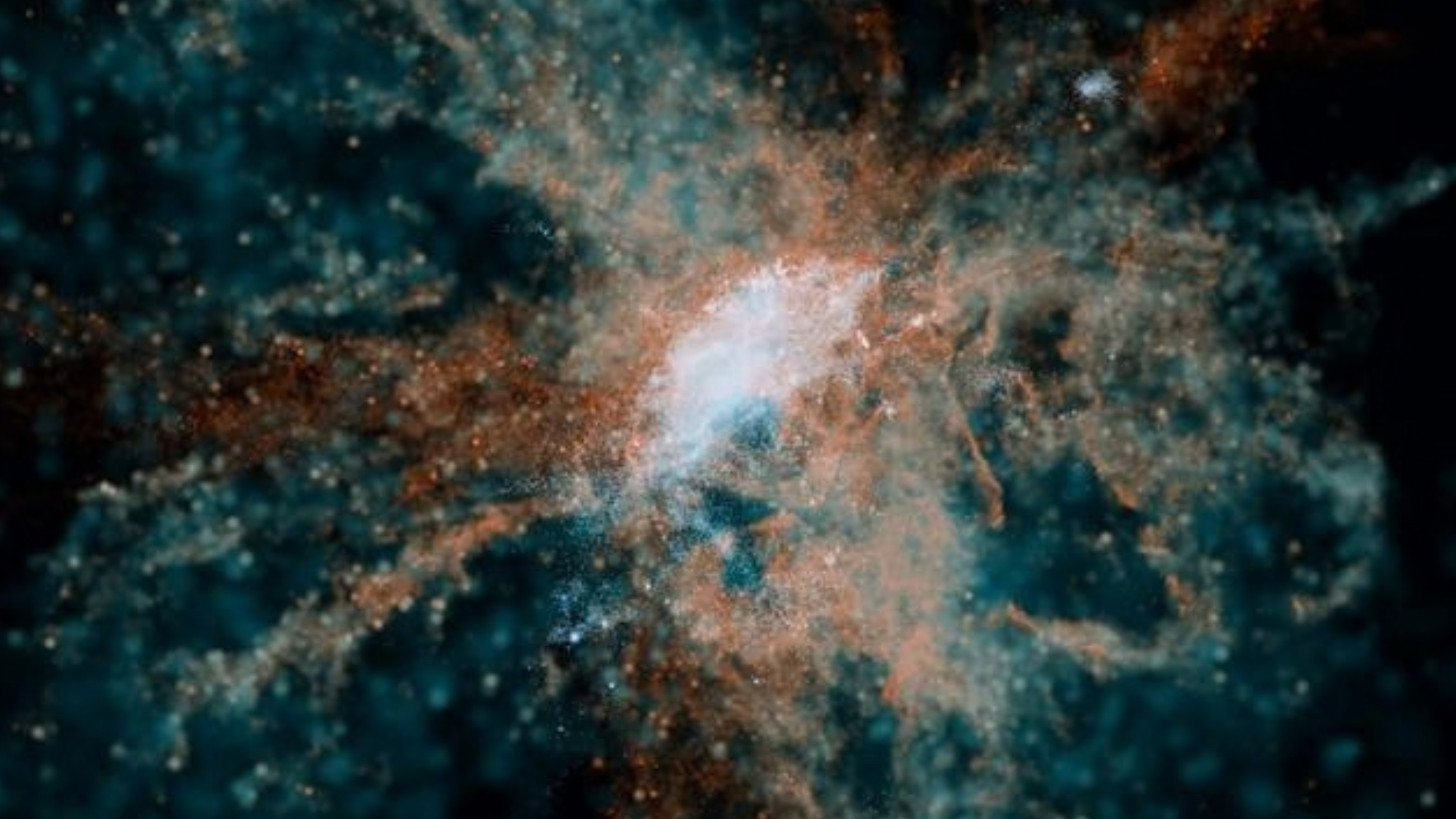
For decades, astronomers faced a frustrating paradox. Observations of the early universe—spanning just a few hundred million years after the Big Bang—revealed surprisingly high concentrations of cosmic dust. This fine-grained material, composed of carbon, silicon, iron, and magnesium, is critical because it cools interstellar gas clouds, allowing new stars and planets to condense. Yet, standard astrophysical theory dictated that early stars should have taken billions of years to evolve, die, and shed their heavy elements through supernovae.
Enter the James Webb Space Telescope. By leveraging its unprecedented infrared sensitivity, an international team of astronomers led by prominent researchers was able to slice through interstellar dust veils to observe 72 young sun-like stars in formative stages. The data reveals that these stellar nurseries operate with ruthless efficiency, acting as high-speed cosmic factories.
As these young stars evolve, their stellar winds and subsequent explosive deaths eject heavy elements into space at rates that defy previous computer simulations. This rapid-fire distribution explains how the early universe managed to dust itself long before conventional timelines permitted, paving the way for accelerated galaxy and planet maturation.
The Great Planetary Race
Beyond mapping galactic stardust, the JWST campaign targeted the circumstellar disks swirling around dozens of young, sun-like stars. What researchers found has turned planetary dynamics on its head: forming planets is a literal race against time and stellar physics.
"Using the James Webb Space Telescope, astronomers have studied 72 young sun-like stars to discover that forming planets is a real race," noting the intense gravitational and thermal pressures present in these early stellar systems. In these crowded stellar nurseries, protoplanetary disks must agglomerate dust grains into pebbles, planetesimals, and eventually full-fledged planets before stellar winds blow away the necessary raw materials.
This competitive timeline suggests that rocky worlds like Earth may be far more common—and formed much earlier in cosmic history—than planetary scientists previously dared to model.
Challenging the Standard Model of Cosmology
The implications of the JWST data extend far beyond individual star systems, striking at the heart of cosmological models. For years, standard galaxy formation theories dictated a slow, hierarchical assembly of matter over billions of years. JWST has systematically dismantled that assumption.
According to recent telemetry and deep-field analyses, "there are, very roughly, over 100 more relatively bright galaxies in the very early universe than were expected based on pre-JWST observations." These luminous, dust-rich galaxies suggest that the early cosmos was a hyper-active incubator, capable of bootstrapping star formation and heavy element production at an astonishing scale.
| Observational Metric | Pre-JWST Expectations | JWST Verified Findings |
|---|---|---|
| Early Bright Galaxies | Baseline low population based on slow hierarchical models. | ~100+ more relatively bright galaxies than anticipated. |
| Stardust Production Speed | Slow distribution over billions of years via aging stars. | Rapid-fire injection by hyper-efficient early stellar factories. |
| Planet Formation Timeline. | Gradual, multi-hundred-million-year accretion. | A high-speed, highly competitive cosmic race. |
Future Outlook: What's Next for JWST
As the James Webb Space Telescope continues its mission cycle, the scientific community is shifting from surprise to synthesis. Theorists are currently updating hydrodynamic simulations to account for the overabundance of early galaxies and the accelerated pace of stardust generation. Upcoming observation slates will target even deeper cosmic frontiers, aiming to capture the very first generation of stars—Population III stars—which ignited the universe's chemical engines.
For investors, technologists, and space enthusiasts alike, JWST’s ongoing revelations underscore the booming economic and scientific value of advanced deep-space observation infrastructure. As we map the factories that built our universe, we move one step closer to answering humanity's most enduring question: Are we alone?
Frequently Asked Questions
What is a cosmic stardust factory?
Cosmic stardust factories refer to young stars and their surrounding stellar environments where heavy elements like carbon, oxygen, and silicon are forged through nuclear fusion and subsequently dispersed into space via stellar winds and supernova explosions.
Why are the new JWST findings changing cosmological theories?
The findings show that the early universe contained significantly more bright galaxies and stardust than theoretical models permitted. Because these elements appeared much faster than expected, scientists must now redesign models of stellar evolution and planetary formation.
![[HMG Tech Talent Forum 2026 Series ②] Minwoo Park, President and Head of AVP Division at Hyundai Motor Group and CEO of 42dot; Hyundai Motor Group’s Roadmap for Commercializing AI Technology](https://www.hyundaimotorgroup.com/image/upload/asset_library/MDA00000000000079943/06e7fc79563c448eb27874eeea34f579.jpg)