The Accidental Empire: How Nvidia’s Unforeseen AI Bet Is Now Powering NASA’s Greatest Scientific Frontiers
SILICON VALLEY & WASHINGTON — In the high-stakes arena of global technology, the most profound revolutions are rarely planned; they are stumbled upon. Today, a powerful convergence between the world’s most valuable semiconductor powerhouse and humanity’s premier space agency is rewriting the rules of scientific discovery. NASA and Nvidia are deeply embedded in a collaborative effort to deploy advanced deep learning models across Earth and space sciences—a partnership that is radically accelerating how we understand climate change, solar storms, and the deep cosmos.
Yet, the most startling aspect of this computational alliance is its origin. According to industry insiders and historical retrospectives, Nvidia’s journey into deep learning—the very technology now driving NASA's supercomputing centers—began not by grand corporate design, but through an unforeseen, serendipitous convergence of academic curiosity and raw hardware capability.
The Serendipitous Genesis: From Video Games to Deep Space
For decades, Nvidia was known primarily as a hardware manufacturer dedicated to rendering realistic graphics for PC gamers. Its Graphics Processing Units (GPUs) were engineered to perform millions of mathematical calculations simultaneously to draw pixels on a screen. The company’s pivot into artificial intelligence was sparked when independent academic researchers realized these gaming chips were mathematically identical to what was needed to train deep neural networks.
This accidental transition changed the course of computing history. When researchers began hacking Nvidia’s GeForce cards to run early deep learning algorithms, Nvidia's leadership, led by CEO Jensen Huang, made a high-risk, multi-billion-dollar bet to pivot the entire company's architecture toward AI. This gamble, which initially baffled Wall Street analysts, laid the foundational infrastructure for the modern AI revolution. Today, that same "accidental" architecture is the computational bedrock upon which NASA is mapping the future of our planet and the universe.
How NASA is Leveraging Nvidia’s Deep Learning Stack
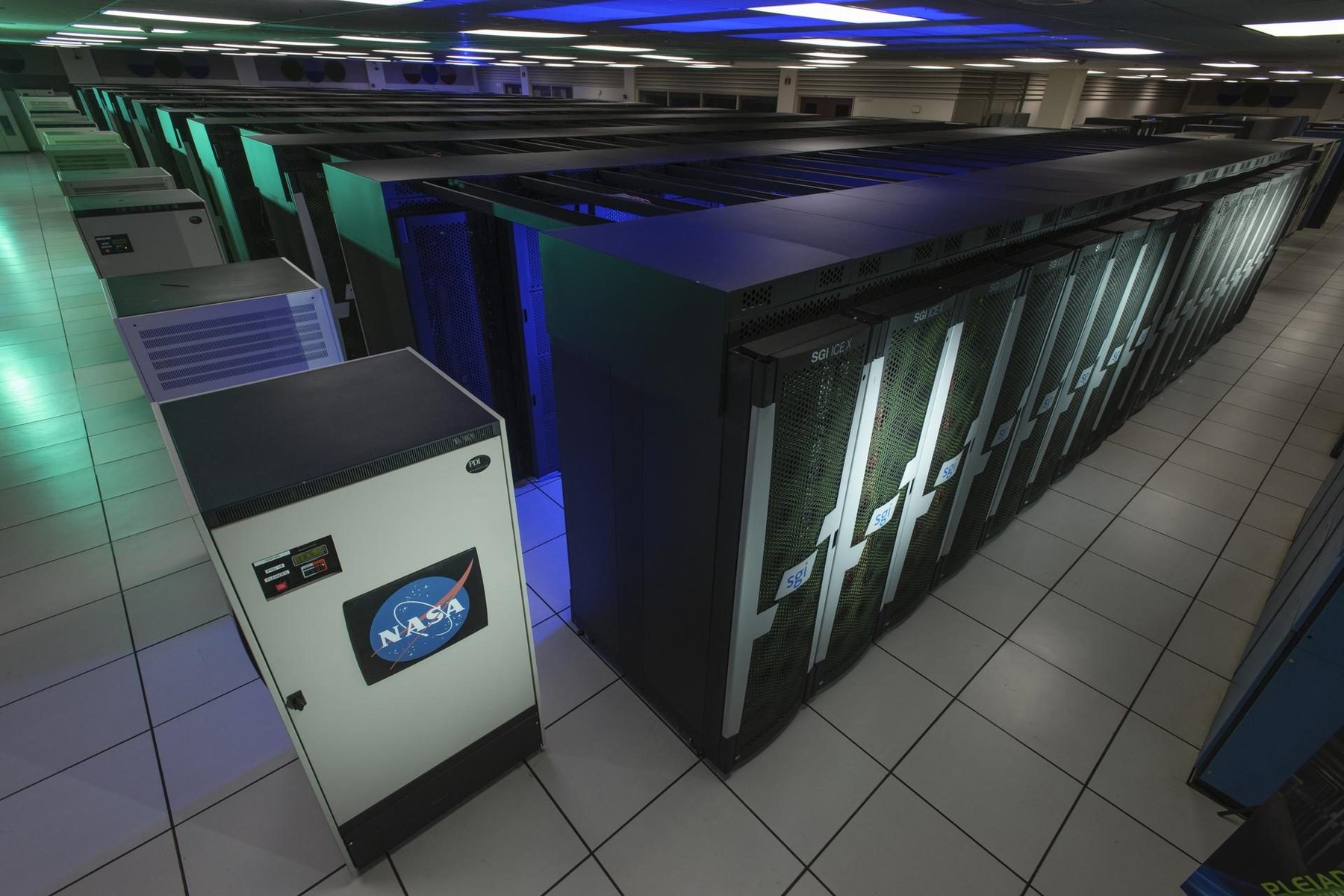
Traditional scientific discovery has relied heavily on physical simulation—complex, code-heavy models running on massive supercomputers that can take weeks or months to simulate a single weather event or galactic collision. By incorporating Nvidia’s deep learning frameworks, NASA is transitioning to "AI surrogate models" that can predict physical phenomena in a fraction of the time.
Key Pillars of the NASA-Nvidia Scientific Collaboration:
- Next-Generation Weather and Climate Modeling: Utilizing Nvidia’s AI platforms, NASA scientists are training neural networks on decades of satellite observation data. These models can predict extreme weather events with unprecedented accuracy, bypassing the grueling computational bottlenecks of traditional physics-based forecasting.
- Helio-Physics and Solar Storm Warning Systems: By analyzing real-time data from the Solar Dynamics Observatory, deep learning algorithms can predict solar flares and coronal mass ejections up to 30 minutes before they strike Earth, shielding critical telecommunication satellites and power grids.
- Exoplanet Detection and Cosmic Mapping: Sifting through the massive petabyte-scale data streams generated by the James Webb Space Telescope (JWST), AI models identify subtle dips in light curves, flagging potential habitable worlds that would take human researchers years to manually discover.
The Paradigm Shift: Traditional Supercomputing vs. AI Surrogates
The operational efficiencies realized by NASA’s shift to deep learning are not incremental; they are logarithmic. The table below illustrates the stark contrast in performance, compute cost, and training time between legacy scientific modeling and Nvidia-driven AI surrogate models.
| Simulation Metric | Traditional Legacy Models | Nvidia-Powered AI Surrogates | Calculated Performance Leap |
|---|---|---|---|
| Global Climate Prediction Time | 18 to 24 Hours | Under 1 Second | ~80,000x Speedup |
| Energy Consumption per Run | ~10,000 kWh | Less than 10 kWh | 99.9% Reduction |
| Data Assimilation Capacity | Gigabytes per Second | Terabytes per Second | 100x Data Throughput |
| Operational Deployment Cost | High (Requires Exascale Cluster) | Moderate (Edge-optimized AI) | Significant Capital Savings |
The Strategic Implications for Wall Street and Global Tech
For investors and technology analysts, this alliance represents a critical proof of concept. It demonstrates that the utility of advanced GPUs extends far beyond generative AI chatbots and image generators. By embedding its chips in the federal and scientific computing ecosystem, Nvidia is securing a highly defensible "moat" that competitors like AMD and Intel will find incredibly difficult to breach.
Furthermore, the software ecosystem built around Nvidia’s hardware—specifically CUDA and specialized scientific libraries like Nvidia Modulus—has become the industry standard for researchers. Once a scientific agency like NASA develops its core pipelines on a specific software architecture, the switching costs are prohibitively high, ensuring Nvidia's long-term dominance in high-performance computing (HPC).
Looking Ahead: The Autonomic Observatory
As deep learning algorithms become more sophisticated, the ultimate goal of the NASA-Nvidia collaboration is to develop fully autonomous scientific observatories. Future space probes sent to the icy moons of Jupiter or the dusty plains of Mars will not wait for instructions from Earth; they will run onboard Nvidia-powered edge AI chips, analyzing geological data in real time and making critical scientific decisions on the fly.
What began as an unforeseen computing anomaly in a Silicon Valley lab has officially evolved into the primary engine of human discovery, proving that sometimes, the best-laid plans are the ones we never intended to make.
Frequently Asked Questions (FAQ)
1. Why was Nvidia’s entry into deep learning considered "unforeseen"?
Nvidia’s chips were originally designed exclusively for rendering 3D graphics in video games. The company did not set out to build AI hardware. However, in the late 2000s and early 2010s, academic researchers discovered that the parallel computing architecture of GPUs was exceptionally well-suited for the complex matrix multiplication required by neural networks. Nvidia capitalized on this accidental discovery by aggressively re-engineering its entire product pipeline and software ecosystem for AI.
2. Does AI replace traditional physicists and researchers at NASA?
No. Deep learning models do not replace scientists; rather, they serve as powerful force multipliers. AI surrogate models excel at processing massive datasets and identifying complex patterns at lightning speed, allowing human physicists and astronomers to focus their expertise on interpreting those patterns, designing new missions, and formulating novel scientific theories.