Executive Takeaways
- Capital Allocation & Risk Mitigation: Nvidia’s calculated $3.5 billion capital deployment into MediaTek represents a masterclass in supply chain fortification and enterprise risk mitigation against hyperscaler custom ASIC initiatives.
- Bypassing the Hyperscaler Bottleneck: By pairing its undisputed CUDA software ecosystem with MediaTek’s world-class system-on-chip (SoC) design capabilities, Nvidia is engineering a direct-to-enterprise hardware pipeline that bypasses AWS, Microsoft Azure, and Google Cloud.
- Infrastructure Scalability Redefined: The partnership seeks to democratize high-performance AI inference, slashing total cost of ownership (TCO) for enterprise buyers seeking sovereign AI infrastructure without exorbitant cloud markups.
- Valuation Multiples & Market Liquidity: This strategic pivot directly addresses Wall Street’s growing concerns regarding long-term revenue concentration, ensuring sustainable high-margin growth independent of hyperscaler capex cycles.
For the past thirty-six months, Wall Street has fixated on a singular, high-stakes narrative: the relentless march of hyperscale cloud providers building their own custom application-specific integrated circuits (ASICs) to break their dependence on Nvidia’s dominant graphics processing units. From Amazon’s Trainium and Google’s Tensor Processing Units (TPUs) to Meta’s Training and Inference Accelerator (MTIA) and Microsoft’s Maia, Big Tech has poured hundreds of billions of dollars into proprietary silicon.
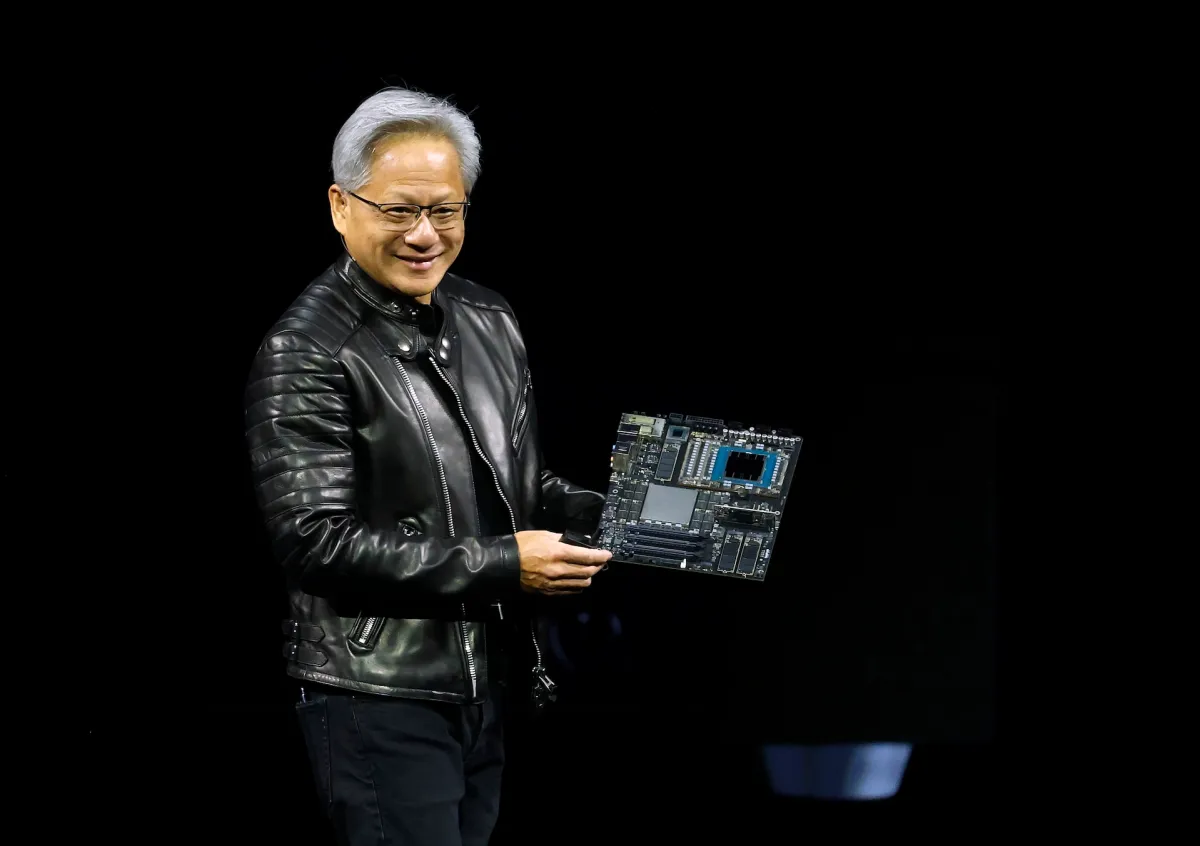
Now, Jensen Huang’s team is rewriting the rules of engagement. Nvidia’s strategic $3.5 billion bet on MediaTek is not merely an investment; it is a calculated, asymmetrical geopolitical and technological maneuver designed to neutralize Big Tech’s vertical integration strategy. By fusing the unmatched moat of the CUDA software ecosystem with MediaTek’s peerless low-power SoC architecture and global supply chain mastery, Nvidia is preparing to take the fight directly to the enterprise edge—leaving the cloud oligopoly scrambling to catch up.
The Genesis of the Play: Navigating Capital Allocation and Hyper-Scale Pressure
Test Our Free AI & Tech Utilities Suite
Calculate LLM API token costs, analyze article dwell-time, or simulate tech DCA returns.
To understand the profound market liquidity and valuation implications of the Nvidia-MediaTek convergence, one must examine the shifting dynamics of enterprise cloud compute architecture. Throughout 2024 and 2025, Nvidia enjoyed virtually unchecked pricing power, riding a historic wave of generative AI enthusiasm that propelled its market capitalization past the multi-trillion-dollar threshold. However, seasoned enterprise analysts and portfolio managers at leading global institutions recognized a lingering structural vulnerability: revenue concentration.
A staggering percentage of Nvidia’s enterprise-grade data center revenue derived from a handful of hyper-scale cloud providers—Alphabet, Microsoft, Meta, and Amazon. These entities functioned simultaneously as Nvidia’s largest customers and its most aggressive competitors. As these hyperscalers subsidized internal silicon development, the risk of margin compression and demand cannibalization loomed large over future valuation multiples.
Nvidia’s $3.5 billion capital allocation into MediaTek fundamentally alters this risk profile. MediaTek, a titan in fabless semiconductor design renowned for powering billions of mobile devices, consumer electronics, and smart edge appliances globally, brings something Nvidia desperately needed: ubiquitous consumer and enterprise reach outside the traditional hyperscale data center footprint.
By leveraging MediaTek’s advanced packaging expertise and deep manufacturing relationships with Taiwan Semiconductor Manufacturing Company (TSMC), Nvidia is positioning itself to capture the next frontier of artificial intelligence: decentralized, sovereign, and edge-native enterprise computing.
Deconstructing the Architecture: Hardware Synergy Meets Software Monopoly

The core thesis of Nvidia’s move centers on infrastructure scalability and total cost of ownership (TCO). While Nvidia’s Hopper and Blackwell architectures reign supreme in massive, power-hungry training clusters, the future of enterprise monetization lies in high-throughput, low-latency AI inference at the edge.
Enterprise buyers are increasingly balking at the staggering cloud compute architectures required to maintain continuous API calls to centralized hyperscale servers. Data privacy mandates, regulatory compliance frameworks, and corporate risk mitigation strategies demand localized, on-premises AI execution. This is where the Nvidia-MediaTek alliance shines.
By embedding Nvidia’s next-generation accelerated computing IP directly into MediaTek’s highly efficient SoC frameworks, the partnership creates a seamless bridge between heavy-duty training workloads and lightweight, power-efficient inference engines. Crucially, this hardware synergy preserves the absolute integrity of the CUDA software ecosystem.
Competitors attempting to challenge Nvidia with custom ASICs routinely stumble on a singular, insurmountable barrier: software maturity. While a hyperscaler can fabricate an efficient chip, replicating millions of lines of optimized CUDA libraries, developer documentation, and machine learning framework integrations is an economic and engineering nightmare. By marrying MediaTek hardware to the CUDA standard, Nvidia ensures that developers do not need to rewrite their codebases for custom architectures, cementing developer lock-in across every tier of the market.
Market Liquidity, Industry Impact, and the Competitive Landscape
The ripple effects of this strategic pivot are already reverberating across global financial markets and semiconductor supply chains. The move introduces a complex set of winners and losers:
- The Winners: Nvidia and MediaTek. Nvidia secures a diversified revenue stream independent of hyperscaler capex volatility, while MediaTek vaults into the premier tier of high-performance enterprise AI infrastructure providers, commanding higher margins and elevated valuation multiples.
- The Vulnerable: Custom ASIC Divisions. Internal semiconductor teams at major cloud providers face a sobering reality. Their multi-billion-dollar custom chips must now compete not just against Nvidia’s flagship GPUs, but against a ubiquitous, highly cost-optimized enterprise SoC ecosystem backed by CUDA.
- The Enterprise Buyer: Corporate technology leaders gain access to flexible, high-performance, cost-effective AI hardware that operates seamlessly across hybrid cloud and on-premises environments, drastically improving enterprise ROI on AI deployments.
From a market liquidity perspective, institutional investors have responded favorably to the diversification. Analysts note that while hyperscaler buildouts may experience cyclical pauses as cloud providers absorb existing capacity, decentralized edge AI adoption driven by the Nvidia-MediaTek pipeline represents an entirely fresh secular growth vector.
Verified Data & Strategic Metrics Breakdown
| Strategic Metric / Dimension | Pre-Alliance Ecosystem | Post-Alliance Nvidia-MediaTek Framework |
|---|---|---|
| Primary Revenue Concentration | Hyperscale Cloud Providers (AWS, Azure, Google) | Diversified: Hyperscalers + Enterprise Edge + Global OEMs |
| Primary Compute Focus | Centralized Training & Massive Data Center Inference | Hybrid: High-End Training + Ubiquitous Low-Power Edge Inference |
| Capital Expenditure Risk | High vulnerability to hyperscaler custom ASIC shifts | Mitigated via diversified consumer and enterprise channels |
| Software Moat Integration | Exclusive to Nvidia Data Center GPU lines | Extended natively to MediaTek SoC and edge architectures |
Frequently Asked Questions (People Also Ask)
Frequently Asked Questions
Why is Nvidia partnering with MediaTek instead of building custom edge silicon entirely in-house?
While Nvidia possesses world-class design capabilities, MediaTek holds decades of unmatched expertise in designing highly complex, low-power systems-on-chip (SoCs) and maintaining deep, cost-effective manufacturing relationships with foundries like TSMC. Partnering accelerates time-to-market and instantly taps into MediaTek’s massive global distribution network across consumer electronics, automotive, and enterprise edge devices.
How does this partnership impact Big Tech’s custom AI chip initiatives?
Hyperscalers like Google, Amazon, and Microsoft built custom ASICs primarily to escape Nvidia’s high pricing and secure internal compute capacity. Nvidia’s MediaTek alliance bypasses the cloud oligopoly entirely, offering enterprises high-performance, cost-efficient AI infrastructure directly at the edge, thereby blunting the market share threat posed by hyperscale custom silicon.
What are the implications for enterprise return on investment (ROI)?
By decentralizing AI inference and utilizing power-efficient MediaTek silicon integrated with CUDA, enterprises can deploy localized AI models without incurring exorbitant, recurring cloud compute fees. This dramatically slashes Total Cost of Ownership (TCO) and accelerates quantifiable enterprise ROI.
Does this alliance threaten the dominance of the CUDA software ecosystem?
Quite the opposite. The partnership extends the reach of CUDA deeper into edge and consumer devices, reinforcing its status as the absolute industry standard for AI software development and increasing developer lock-in.
Future Outlook: Milestones and Strategic Horizons
As the semiconductor landscape enters the second half of the decade, Nvidia’s $3.5 billion MediaTek bet will serve as a definitive case study in strategic corporate foresight. The success of this initiative will hinge on several critical milestones over the next 12 to 24 months:
- Enterprise SoC Rollout: The official commercial release and benchmark performance metrics of co-developed enterprise edge silicon featuring native CUDA support.
- Regulatory Scrutiny: Global antitrust and trade compliance evaluations, particularly concerning cross-border semiconductor partnerships involving US intellectual property and Taiwanese manufacturing ecosystems.
- Hyperscaler Response: How Amazon, Microsoft, and Google adjust their internal semiconductor roadmaps and pricing models in response to Nvidia’s direct-to-enterprise channel expansion.
Ultimately, Nvidia has demonstrated once again why it remains the undisputed apex predator of the artificial intelligence boom. By refusing to let Big Tech dictate the terms of infrastructure scalability, Jensen Huang has secured Nvidia’s dominance not just in the cloud data center, but across the entire spectrum of modern digital enterprise.