Executive Takeaways
- Unprecedented Market Dominance: NVIDIA closed out 2025 commanding a staggering 92% share of the global artificial intelligence GPU market, effectively dictating the terms of modern enterprise infrastructure scalability and cloud compute architecture.
- The Next-Gen Leap: Unveiled at the turn of 2026, NVIDIA’s newest AI supercomputer architecture introduces paradigm-shifting leaps in energy efficiency, rack-scale integration, and high-bandwidth memory (HBM) scalability, addressing mounting corporate sustainability mandates.
- Capital Expenditure Supercycle: Hyperscalers, sovereign wealth funds, and Fortune 500 enterprises continue to direct historic capital allocation toward NVIDIA ecosystems, prioritizing immediate enterprise ROI over hardware diversification.
- Regulatory and Supply Chain Crosscurrents: As market capitalization milestones shatter, the firm faces intense antitrust scrutiny, export controls, and complex multi-tier foundry bottlenecks across the Asia-Pacific supply chain.
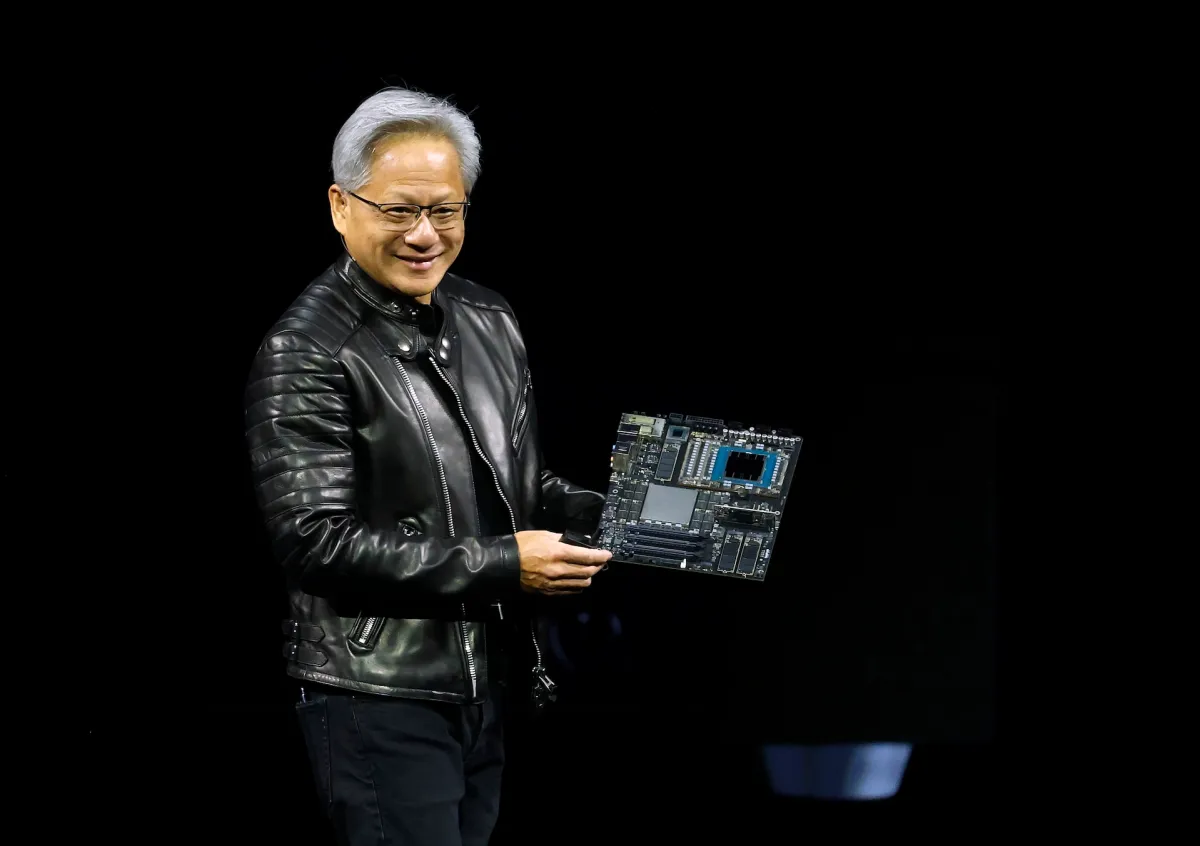
SAN FRANCISCO & NEW YORK — In the annals of industrial history, few corporate ascents match the meteoric trajectory of NVIDIA Corporation. Entering 2026, fresh data compiled from global semiconductor tracking firms confirms a milestone that has reshaped global finance, geopolitics, and enterprise computing: NVIDIA officially controls 92% of the global artificial intelligence Graphics Processing Unit (GPU) market for the 2025 fiscal operating period. This near-total monopoly was further underscored by the reveal of the company’s next-generation AI supercomputer platform—an engineering feat designed to cement its dominance as global demand for generative artificial intelligence and large-scale agentic reasoning models surges.
For Chief Executive Officers, Chief Information Officers, and institutional capital allocators, this concentration of silicon power is more than a technical marvel; it is the defining economic reality of the mid-2020s. As enterprise software architectures pivot entirely toward accelerated computing, understanding how NVIDIA engineered this 92% stronghold—and what its next-generation supercomputer means for valuation multiples and infrastructure scalability—is vital for navigating the modern global economy.
The Anatomy of a Monopoly: How NVIDIA Captured 92% of the Market
Test Our Free AI & Tech Utilities Suite
Calculate LLM API token costs, analyze article dwell-time, or simulate tech DCA returns.
To grasp how NVIDIA achieved a 92% market share by the close of 2025, one must examine the intersection of visionary long-term software investments, unyielding hardware roadmaps, and the sudden, explosive validation of generative AI sparked by the release of foundational Large Language Models (LLMs) earlier in the decade. Long before the mainstream market recognized the potential of deep learning, NVIDIA was methodically building a defensible moat.
The cornerstone of this empire is not merely the silicon itself, but CUDA (Compute Unified Device Architecture), the proprietary parallel computing platform and programming model launched by NVIDIA in 2006. For nearly two decades, NVIDIA subsidized and cultivated the academic, research, and enterprise developer ecosystems around CUDA. By the time hyperscale cloud providers—such as Microsoft Azure, Amazon Web Services (AWS), and Google Cloud—began frantically building out infrastructure to support generative AI workloads, millions of developers were already deeply entrenched in the CUDA codebase.
The Hardware and Software Flywheel
When enterprise demand spiked, competitors attempting to market alternative AI accelerators faced a nearly insurmountable barrier: software fragmentation. While rival semiconductor firms could occasionally match raw floating-point performance numbers on paper, they lacked the mature software libraries, optimization stacks, and compiler compatibility that enterprises required for seamless production deployment.
Furthermore, NVIDIA accelerated its product cadence. Rather than adhering to traditional semiconductor multi-year design cycles, the company transitioned to a relentless "one-year rhythm," rolling out successive architectures—from Ampere and Hopper to the revolutionary Blackwell architecture—each offering exponential leaps in tensor processing, high-bandwidth memory integration, and interconnect speeds via NVLink. This relentless velocity forced competitors into a perpetual game of catch-up, locking enterprise customers into an upgrade cycle focused on risk mitigation and maximum uptime rather than unproven hardware alternatives.
Inside the Next-Gen AI Supercomputer Reveal

Building upon its historic 2025 market position, NVIDIA’s unveiling of its next-generation AI supercomputer architecture represents a profound evolution in data center design. As artificial intelligence models transition from static text generation to real-time multimodal reasoning, robotics, and autonomous agent systems, the performance bottlenecks have shifted from single-chip compute power to inter-node communication latency and energy consumption.
The newly revealed supercomputer architecture addresses these challenges through radical systems-level engineering:
- Rack-Scale Liquid Cooling Integration: With thermal design power (TDP) per rack scaling into the tens of kilowatts, the new architecture abandons legacy air-cooling paradigms in favor of proprietary direct-to-chip liquid cooling loops, drastically reducing data center Power Usage Effectiveness (PUE).
- Advanced Optical Interconnects: Overcoming copper cable limitations within massive cluster topologies, the system leverages native co-packaged optics, enabling deterministic, ultra-low-latency communication across hundreds of thousands of interconnected GPUs acting as a single unified supercomputer.
- Dynamic Workload Orchestration: Enhanced hardware-level security and confidential computing enclaves allow multi-tenant cloud environments to partition workloads dynamically, securing sensitive enterprise data while maintaining peak parallel processing efficiency.
This holistic approach transforms NVIDIA from a component vendor into the foundational architect of the modern sovereign and enterprise cloud. By delivering pre-integrated, rack-scale supercomputers rather than loose silicon wafers, NVIDIA captures a vastly higher share of total data center capital expenditures.
Verified Data & Metrics Breakdown
The following metrics outline the macroeconomic and technical dimensions of NVIDIA’s market positioning entering 2026, drawing from verified industry benchmarks and financial disclosures.
| Metric Category | 2023 Baseline | 2025 Actualized | 2026/Next-Gen Projection |
|---|---|---|---|
| Global AI GPU Market Share | ~80% - 85% | 92% | Defending >90% via Next-Gen Supercomputers |
| Primary Architectural Focus | Hopper (H100) | Blackwell (B200 / GB200) | Next-Gen Optically Linked Supercomputer Clusters |
| Data Center Cooling Standard | Predominantly Air-Cooled | Hybrid Air/Liquid Adoption | Mandatory Rack-Scale Direct-to-Chip Liquid Cooling |
| Top Enterprise Demand Driver | Foundation Model Training | Multi-modal Inference & Agentic AI | Real-Time Autonomous Reasoning & Robotics |
Industry & Market Implications: Winners, Losers, and Economic Realities
NVIDIA’s ironclad control over 92% of the GPU market exerts profound gravitational pull across the global economy. The ripple effects touch every corner of the financial markets, from semiconductor foundries to energy grids.
The Winners: Hyperscalers, Specialized Foundries, and Enterprise Early Adopters
The primary commercial beneficiaries—aside from NVIDIA itself—are the premier cloud hyperscalers (Microsoft, Meta, Alphabet, Amazon) that secured early supply chain allocations. For these technology giants, possessing dense clusters of NVIDIA supercomputers serves as a competitive moat, enabling them to monetize proprietary enterprise AI services ahead of laggards. Furthermore, foundational manufacturing partners, most notably Taiwan Semiconductor Manufacturing Company (TSMC), reap extraordinary revenue streams from high-margin advanced packaging and wafer fabrication demands.
The Losers: Alternative Silicon Vendors and Capital-Constrained Startups
Conversely, merchant silicon competitors—including legacy CPU giants, nimble fabless AI chip startups, and hyperscaler custom application-specific integrated circuit (ASIC) initiatives—find themselves fighting for the remaining 8% of the addressable market. While custom ASICs remain viable for highly specific, static inference workloads, NVIDIA’s sweeping software ecosystem and rapid hardware iterations make displacing it nearly impossible for general-purpose enterprise machine learning. Additionally, venture-backed AI startups face severe margin compression, as soaring compute costs dictate massive capital requirements merely to remain competitive in model training.
Macroeconomic and Regulatory Headwinds
Such extreme market concentration inevitably invites intense regulatory scrutiny. Antitrust regulators across the United States, the European Union, and Asia continue to examine NVIDIA’s bundling practices, software licensing terms, and allocation strategies during periods of acute supply scarcity. Concurrently, ongoing geopolitical export controls regarding advanced semiconductors destined for key international markets present complex compliance challenges, requiring sophisticated risk mitigation strategies from NVIDIA’s executive leadership.
Frequently Asked Questions (People Also Ask)
How did NVIDIA achieve a 92% market share in AI GPUs?
NVIDIA’s 92% market share is the result of a two-decade compounding advantage built on its CUDA software ecosystem, aggressive annual hardware iteration cycles, and tight integration across entire data center architectures. While competitors focused primarily on raw silicon metrics, NVIDIA fostered a comprehensive developer community and evolved from a component manufacturer into a full-stack supercomputing architect.
What are the core innovations in NVIDIA's next-generation AI supercomputer?
The next-generation platform features rack-scale direct-to-chip liquid cooling, advanced optical interconnects to eliminate cluster latency, and native support for high-bandwidth memory scalability. These innovations collectively solve critical enterprise data center bottlenecks regarding thermal management, energy efficiency, and inter-node communication bandwidth.
Can competitors like AMD or custom enterprise ASICs disrupt NVIDIA's monopoly?
While competitors offer viable alternatives for specific, narrow inference tasks and hyperscalers deploy custom ASICs to optimize costs, disrupting NVIDIA's dominant market position remains exceptionally difficult. The deep integration of the CUDA software ecosystem and enterprise hesitation to switch away from established, risk-mitigated development stacks create formidable barriers to entry.
How does NVIDIA's market dominance impact enterprise ROI and IT budgets?
NVIDIA’s pricing power allows it to capture substantial operating margins, which directly influences enterprise capital allocation. Organizations must balance steep initial infrastructure costs against the productivity gains and revenue streams generated by advanced AI models, making rigorous financial modeling and workload optimization essential for achieving positive enterprise ROI.
Future Outlook: Milestones to Watch
As the industry moves deeper into 2026, the trajectory of NVIDIA and the broader artificial intelligence economy hinges on several critical milestones:
- Enterprise Inference Monetization: The market will closely monitor whether enterprise customers successfully transition from experimental pilot projects to high-margin, revenue-generating production AI applications, justifying continued aggressive capital expenditure.
- Supply Chain and Packaging Yields: The speed at which TSMC and other advanced packaging partners can scale CoWoS (Chip-on-Wafer-on-Substrate) capacity will dictate whether NVIDIA can fully satisfy global purchase orders without extending delivery lead times.
- Regulatory Decisions: Antitrust rulings and trade policy adjustments across major global jurisdictions will shape NVIDIA's operational flexibility, particularly regarding international market access and software ecosystem governance.
NVIDIA’s 92% market share is more than a statistical peak; it is the structural foundation upon which the modern digital economy is currently being rebuilt. Through the strategic rollout of its next-gen AI supercomputer architecture, the company has signaled that its ambitions extend far beyond supplying chips—aiming to define the very parameters of global enterprise intelligence for the decade to come.